
The most important stories for you to know today
- Andre 3000 just sold-out a few nights in L.A. and is back for more, this time at the very cool Luna Luna art installation.- The troupe’s latest repertoire features two programs that explore new work from the ensemble alongside signature pieces, including Ailey’sOoh la la! Theatre Raymond Kabbaz always puts on a great collection of French language films, and this year is no different.
Follow up your French-inspired evening with a day amongst the butterflies at the Natural History Museum, a dinner by some of L.A.’s most fab female chefs, or – if you can score a ticket – Andre 3000 live at the Luna Luna exhibition.star Tiffany Haddish is at the Improv on Monday, joined by guests from Roadkill with Tammy Jo Dearen, including Brad Williams, Fahim Anwar, and Adam Conover.Andre 3000 just came off a sold-out few nights in L.A. and is back for more, this time at the very cool Luna Luna art installation just over the 6th Street Viaduct. His new flute album has been getting rave reviews – but if you’re expecting an Outkast concert, you’ll be disappointed. The mystical 1987 art amusement park Luna Luna, with its Jean-Michel Basquiat Ferris wheel and Keith Haring carousel is sure to make a compelling backdrop.The Ebell continues its celebration of Women’s History Month with an art show and sale. The juried competition was whittled down from 900 works submitted by 338 artists on the theme"A Woman’s Place." Artists were asked to interpret"a vision for where women belong and how they take up space." Following the opening, the pieces will be on display by appointment and during Ebell events.Alvin Ailey dancers Ashley Kaylynn Green, Samantha Figgins and Coral Dolphin rehearse “Following the Subtle Current Upstream” at New York City Center.It’s always a special few days for dance lovers when Alvin Ailey Dance Theater comes to The Music Center. The troupe’s latest repertoire features two programs that explore new work from the ensemble alongside signature pieces, including Ailey’sis a massive undertaking by artist Chris E. Vargas to document and share trans and queer experiences in the art world. In the new book, Vargas takes his MOTHA concept to the page, exploring trans art, activism, artifacts and resistance across more than four centuries to"chart a gender-neutral, trans-centric hirstory of art." The talk at the Hammer will also feature Zackary Drucker, Edgar Fabián Frías, Raquel Gutiérrez, Amos Mac, and Uri McMillan.Curious about trying a boxing class to get your fitness on and your rage out? Check out this free class at 2nd & PCH in Long Beach on Wednesday with Rumble Boxing – no boxing experience necessary!Katie Gee Salisbury’s much-anticipated debut non-fiction book explores the life of Anna May Wong, the first Asian-American movie star, who came to fame on screen in the roaring '20s. Salisbury is joined in conversation this week with journalist Lisa Ling at Zibby’s in Santa Monica and later in the week atGetting up super early? That’s for the birds! No, literally, go see the birds at this early morning nature walk in the Valley. You’ll learn how to identify and spot our local feathered friends, like the California Thrasher, on this experiential walk and talk with Diego Blanco, a birding expert at the Theodore Payne Foundation.For the past 15 years, Theatre Raymond Kabbaz has hosted some of the best contemporary films in French . It’s a great opportunity to see films that have gotten acclaim but may never get a big release here. This year’s crop features films on a wide range of subjects hailing from Quebec, Congo, Switzerland, and Belgium as well as France, of course.It’s a shakeoff as bartenders from across L.A. battle for the winning whiskey cocktail as part of Pacific Hotel’s Meet Your Maker series. This month, guests will cast their vote after tasting five Whistle Pig Whiskey cocktails and enjoying snacks at the Wayfarer’s Lilly Rose restaurant.If you haven’t been to Cobi Marsh’s Cobi’s in Santa Monica to enjoy delicious Southeast Asian fare under a canopy of roses, it’s high time to check it out. Marsh, along with Nancy Silverton and Danielle Zucca are coming together for a four-course dinner along the theme"Forget Me Nots" for the Re:HER celebration of women chefs.Take a drive out to Artesia to explore dining deals at restaurants like Jonathan Gold-favorite Mian, Cake Korner and L.A. Brisket all week long.While lilac- and red-crowned parrots are classified as endangered in Mexico, the populations that've established themselves here in Southern California are thriving, even though the environment is wildly different here. Scientists need your help gathering data to learn more about them.It's speculated that they do well here because of their ability to adapt. Our relatively mild winters and our heavily altered urban environment, which is rife with imported subtropical trees — perfect for parrots to snack on.Use the iNaturalist app to take pictures of parrots if you see them. Scientists can then use the data to figure out where birds are hanging out, what they're eating, and whether they're hybridizing.You can head to Pasadena, Temple City or the Santa Monica Mountains. We've got a map in the extended post.Parrots have been waking up Southern Californians with their squawking for more than 70 years now. Assumed to have arrived here as part of the pet trade as far back as the 1950s, they're originally from Mexico, where they're endangered.That success may not seem like a surprise to you if you've been listening to them chatter away outside your apartment, or fly en masse from one city block to another. However, their rise has captured the interest of academics, like those at Occidental College, who took me on a parrot outing in Pasadena, and made the case that they need the public's help to truly understand the birds.The team at Occidental set out to explore how and why the parrots have been thriving. It's curious because our environment is wildly different than where they come from in Mexico. It's colder here, with more development and less vegetation.— that over the past century, we inadvertently built an ideal environment for the parrots by importing non-native subtropical plants, kept alive with supplemental irrigation. "We have this abundance of exotic trees that they've been able to take advantage of that none of the native species have been using. And so it was that perfect opening for them to be able to come in and thrive here," said Brenda Ramirez, staff lead of theAnother factor behind their rise is likely just their general ability to adapt. "They seem to have some behavioral plasticity, in the sense that they can change their behaviors," said John McCormack, director of the Moore Lab of Zoology at Occidental. He joined us in the field alongside a colleague, Russell Campbell. Parrots are quite smart and tolerant of a range of conditions. They're able to figure out survival in new habitats and which food sources will work for them — though, there's likely a limit to this adaptation, as they're often found in areas where the temperature doesn't usually drop below freezing like in Florida and Texas.Could we see a new parrot evolve? Another fascinating aspect is that though different types of parrots have congregated here from various parts of Mexico, they're commingling and in some cases, are believed to be cross breeding and hybridizing — though it's not common."They look kind of halfway in between red-crowned and lilac-crowned, or they look like red-crowned with a little dash of yellow in the head, so maybe the hybridization is with yellow-headed parrots. We're just starting to get some DNA evidence where you can see it in the DNA as well." There's a remote, theoretical possibility that we might even eventually see a unique Southern California parrot develop. "That doesn't seem to be happening in the city right now, but you never know. Evolution's a journey and you don't know where it's gonna end up," said McCormack.One of the best ways for scientists to research bird movement, behaviors and adaptations, is with regular in-field documentation, which is where you come in. Academics can pull data from, a free app that you can download and use to both identify and take pictures of birds that you find. That's where Ramirez pulled information from for the latest study."We could potentially even draw habitat data and dietary data, because a lot of the time you'll see them eating or interacting with one another, and so there's tons of data that we can pull from these community science observations."If you'd like to go parrot spotting, Campbell recommends you head to one of the spots in the below map either right at dawn or dusk. When you get to your viewing spot, you're probably going to hear the parrots before you see them. And it's inevitable that when you do finally spot them, they'll all randomly fly away at once in search of another spot to sleep for the night.There are lots of different parrots to go looking for. Campbell passed along this list with recommendations for Southern Californians:Jacob Margolis helps Southern Californians understand the science shaping our imperfect paradise and gets us prepared for what’s next.Amid a difficult year for North Atlantic right whales, a proposed rule to help protect them is one step closer to reality. Earlier this month, a proposal to expand speed limits for boats — one of the leading causes of death for the endangered whales — took a key step forward: It’s now under review by the White House Office of Information and Regulatory Affairs, the last stage of federal review.: Fewer than 360 of the whales remain; only about 70 of them are females of reproductive age. Every individual whale is considered vital to the species’ survival, but since 2017 right whales have been experiencing what scientists call an “unusual mortality event,” during which 39 whales have died. Human actions — including climate change — are killing them.Amid a difficult year for North Atlantic right whales, a proposed rule to help protect them is one step closer to reality. Earlier this month, a proposal to expand speed limits for boats — one of the leading causes of death for the endangered whales — took a key step forward: It’s now under review by the White House Office of Information and Regulatory Affairs, the last stage of federal review. Grist is a nonprofit, independent media organization dedicated to telling stories of climate solutions and a just future. Fewer than 360 of the whales remain; only about 70 of them are females of reproductive age. Every individual whale is considered vital to the species’ survival, but since 2017 right whales have been experiencing what scientists call an “unusual mortality event,” during which 39 whales have died.When the cause of a right whale’s death can be determined, it is most often a strike by a boat or entanglement in fishing gear. Three young whales have been found dead this year, two of them with wounds from boat strikes and the third entangled in gear. One of the whales killed by a boat was a calf just a few months old. “Our impacts are so great right now that the risk of extinction is very real,” said Jessica Redfern, associate vice president of ocean conservation at the New England Aquarium. “To be able to save the species, we have to stop our direct human-caused impacts on the population.” This is not the first time humans have driven North Atlantic right whales to the brink of extinction. Their name comes from whaling: They were known as the “right” whale to hunt because they spend time relatively close to coastlines, often swimming slowly and near the surface, and they float when dead. They also yielded large amounts of the oil and baleen whalers were after. So humans hunted them to near extinction until it was banned in 1935. Many of those same characteristics are what make right whales so vulnerable to human-caused dangers today. Because they’re often near the surface in the same waters frequented by fishing boats, harbor pilots, and shipping vessels headed into port, it’s easy for boats to collide with them. “They’ve been called an urban whale,” said Redfern. “They swim in waters that humans are using; they have high overlap with humans.” A full-scale model of Phoenix, a North Atlantic Right Whale, is seen on display at the Sant Ocean Hall at the Smithsonian National Museum of Natural History.To reduce the risk of vessel strikes, ships over 65 feet long have to slow down during set times of year when the whales are likely to be around. In the southeastern U.S., the speed limits are in force during the winter when the whales are calving; off the New England coast, the restrictions are in place in the spring and summer when they’re feeding. Regulators can also declare voluntary speed restrictions in localized spots if whales are seen, known as dynamic management areas. The National Oceanic and Atmospheric Administration, or NOAA, in 2022 proposed expanding those restrictions in three ways. First, the new rule would cover larger geographical areas. The protection zones would extend down the coast from Massachusetts to Florida at various times of year, instead of only applying in certain distinct areas. Second, the change would apply the speed limits to smaller craft like fishing boats, rather than only ships over 65 feet. Third, the new rule would make the speed restrictions — the temporary speed limits where whales have been spotted — in dynamic management areas mandatory. Since NOAA published and gathered feedback on the proposed rule in 2022, whale advocates have been clamoring for the agency to implement it. Those calls have increased in recent months as dead right whales have washed up on beaches. “There have been three deaths, and that has been really devastating this year, and two of them are related to vessel strikes,” said Redfern. “It’s just highlighted that absolute urgency, the necessity of getting this rule out.” A leading boating industry group is speaking out against the expanded speed restrictions, arguing they could hurt small businesses in the recreational boating industry. “We are extremely disappointed and alarmed to see this economically catastrophic and deeply flawed rule proceed to these final stages,” said Frank Hugelmeyer, president and CEO of the National Marine Manufacturers Association, in a statement. “The proposed rule is based on incorrect assumptions and questionable data, and fails to distinguish between large, ocean-crossing vessels and small recreational boats.” Right whale scientists have documented in recent years that small, recreational boats can injure and kill right whales. At least four of the lethal vessel strikes since the current restrictions began in 2008 have involved boats smaller than 65 feet and thus not subject to that speed limit, according to Redfern. NOAA estimated that, based on the size and placement of the propeller wounds, the boat that killed the months-old calf this year was between 35 and 57 feet in length — too small to fall under the existing speed restrictions, but subject to the new rule if it were to be implemented. In his statement, Hugelmeyer also pointed to new marine technologies aimed at detecting right whales in the water to reduce vessel strikes without expanding the speed rules.The tech “offers a lot of promise,” she said, but the speed limits are proven. “It’s really important, I think, that we rigorously evaluate the technology that’s proposed to make sure that it is going to achieve the same type of risk reduction that we see with the slowdowns in expanded areas,” she said. Grist is a nonprofit, independent media organization dedicated to telling stories of climate solutions and a just future. Learn more at Fires. Mudslides. Heat waves. What questions do you need answered as you prepare for the effects of the climate emergency?Of the more than 98,000 locations on the National Register of Historic Places, about 600 of them are in Los Angeles County. And of those locations in L.A., about 30 of them are “bungalow courts” in the city of Pasadena. That's thanks to city- and citizen-led efforts to save them.is the official list of what the federal government considers"historic places worthy of preservation.” And when a home or monument or historic district is added to the list, it makes it more difficult for it to be torn down or significantly altered.Getting something on the National Register is a complicated and time consuming process, so it really requires a"champion." That's according toBut Rosenbloom says, there are lots of reasons why something might not be on the National Register:"It could be that the owner objects, or the owner doesn't see the point, or it's famous enough that it doesn't need any kind of protection that the National Register might give it.”The National Register of Historic Places is the official list of what the federal government considers"historic places worthy of preservation.” Of the more than 98,000 locations on the register, about 600 of them are in Los Angeles County. And of those locations in L.A., about 30 of them are “bungalow courts” in the city of Pasadena. Etan Does LA is a social media project Rosenbloom began during the pandemic, bringing followers along on his quest to go to all 600 spots on the National Register in L.A.“I was so blown away and I noticed it was on the National Register of Historic Places and I was like, ‘If I've never heard of this thing after 40 years of living in Los Angeles, what else could be on the National Register that I need to know about?’”are multi-family housing structures made up of small one-story houses or duplexes, usually all facing a shared courtyard. Pasadena is considered their birthplace. The courts come in all different architectural styles, “but the whole point is that there is some kind of central area that's communal space,” Rosenbloom says. “So you have this combination of detached units, which give a sense of privacy, like a single-family home. But then there's also communal living, which gives you more security, a sense of community, all that stuff.”was built in 1925 in San Luis Obispo by an architect who’d built an early bungalow court, and other homes, in Pasadena.)is the oldest bungalow court in Pasadena, but where it is today is actually 2 miles away from its original location. In the early 1980s, a construction company bought the court, evicted the tenants and planned to flatten the complex to build an expansion of their offices.The city of Pasadena, along with a historic preservation organization called Pasadena Heritage, launched an effort in 1982 to save the court from demolition. It gained its status on the National Register of Historic Places the following year . An agreement was reached to move the bungalows to a new location, and through different forms of funding — grants and donations — The units were all moved on trucks in the middle of the night to their current location on Pasadena Avenue in 1984. If you visit the bungalows today , you will find a plaque from the city of Pasadena noting its historic status.The height of the “bungalow craze” was from 1910 to about 1930. After that, because of new mandates about parking, “it became no longer economically feasible to build something like this, with this few people living on it, with the number of parking spots that were required by the city,” Rosenbloom says. And as result of that, a lot of bungalow courts began being torn down to make room for larger apartment buildings. Or in other cases, for freeways. And we know where the L.A. story goes with cars…“When you think of something like the National Register,” Rosenbloom says. “You probably think there's some governmental body in Washington that’s saying,‘In order to get on the national register, Rosenbloom says, a location really needs a “champion.” That’s a person or an organization that’s willing to put in all the time and effort and do all the paperwork necessary to apply to get something on the list. “That’s great,” Rosenbloom says, “but it also means there are some strange omissions, like buildings you'd think would be on the National Register that aren't.”While that doesn’t seem to make sense that it wouldn’t be on the list, Rosenbloom says, “there are all kinds of reasons why something might not end up on the National Register. It could be that the owner objects, or the owner doesn't see the point, or it's famous enough that it doesn't need any kind of protection that the National Register might give it.” Once a property is on the National Register, it becomes a lot harder to tear down or make significant changes to it.Etan has so far been to about 230 of the locations on the National Register in L.A. A couple of his favorites are: “He's really known for these experimental houses with soaring concrete ceilings, interesting use of wood and space, and sort of blurring the line between inside and outside. You've probably seen some of his houses — they've been used in “It's on a private wine ranch, but the Chumash Native Americans painted some of the most important art in the entire L.A. area in a cave that's sort of in the center of this ranch.”Kindergarteners in music class at Redwood Heights Elementary School in Oakland. A new bill would require kids to attend public or private kindergarten, including home school, before entering the first grade.Lawmakers are again pushing for a bill to make kindergarten mandatory in California even after the governor vetoed a similar bill in 2022, citing additional costs.. Students are only required to enroll in school in California by the time they’re 6 years old. But proponents of the bill say it’s become very hard for kids to catch up in the first grade if they skip kindergarten.Pre-pandemic, the California Department of Education estimated 5% of eligible students didn’t attend a public or a private kindergarten. But those estimates have risen. In the 2022-23 school year, an estimated 11% of eligible children were not enrolled, according to the California Department of Education.The bill says kids must have a year of kindergarten before starting the 1st grade, beginning in the 2026-27 school year. The bill says kindergarten includes private schools and home schooling.Two Southern California lawmakers have introduced legislation requiring that kindergarten be mandatory starting in 2026 — despite a similar bill that was“I saw firsthand what happens in the classroom when students come in unprepared,” said Rubio, who taught at an elementary school in Monrovia. “They don't know how to sit. They don't know how to hold a pencil … just collaborating with their peers is very difficult.”Pre-pandemic, the California Department of Education estimated 5% of eligible students didn’t attend a public or a private kindergarten. But those estimates have risen. In the 2022-23 school year, an estimated 11% of eligible children were not enrolled, according to the California Department of Education. It’s not clear where all these children are who aren’t in school. But Rubio said students she encountered while teaching were kept at home in the year before first grade because parents didn’t believe it was necessary and deferred to the school system's rules. “It's not that they don't care. It's the message that we're sending that we don't value kindergarten,” she said. “So we see that in communities of color more often than not, that those are the ones that are staying home and that's where you see the disparities just growing exponentially.” Gov. Gavin Newsom vetoed legislation in 2022, citing the additional costs of enrolling more kindergarteners. Rubio says mandating the grade would be building on the investment that the state is making in offering universal pre-kindergarten for 4-year-olds by 2025.Deborah Stipek, emeritus professor of education at Stanford, says expectations at the kindergarten level are much higher than they used to be. “So when kids get to first grade, they're going to be expected to develop skills that are fairly advanced, and if they don't have the prerequisite skills, they're going to flounder,” she said. Paula Merrigan, a teacher who’s taught kindergarten in the Bay Area, said she tells parents kindergarten isn’t what they experienced as kids. “You're expected to start reading chapter books by the end . How are you going to do that if you don't know your letters, you don't know your sounds? That's what we teach you in kindergarten,” she said. Patricia Lozano, executive director of Early Edge California, says she hopes the bill sends a message to families that early learning is important, especially as chronic absenteeism has also risen post-pandemic, particularly “A year for a child is a lot of time because the brain is developing and making all these connections. Not having those opportunities to learn, it's huge.” Lozano said.Sprinklers water a lawn in Los Angeles on June 5, 2022. Under new proposed rules, water agencies in California's urban areas will have to meet mandatory water conservation cuts.Facing criticism over their ambitious plan to curb urban water use, California’s regulators today weakened the proposed rules — giving water providers more years and flexibility to comply.Cities and urban water districts welcome the changes to the state’s draft conservation rules, which they said would have been too costly for ratepayers, But environmentalists are dismayed by the revisions, which they said won’t save enough water to weather shortages as climate change continues to squeeze supplies.Facing criticism over their ambitious plan to curb urban water use, California’s regulators today weakened the proposed rules — giving water providers more years and flexibility to comply. Cities and urban water districts welcome the changes to the state’s draft conservation rules, which they said would have been too costly for ratepayers, But environmentalists are dismayed by the revisions, which they said won’t save enough water to weather shortages as climate change continues to squeeze supplies., CEO and president of Heal the Bay, a Los Angeles County environmental group. “The updated standards are weak, and the regulation includes semi-truck sized loopholes that make it too easy for water suppliers to shirk their obligation to use water more efficiently.” Mandated by a package of laws enacted in 2018, the rules from the State Water Resources Control Board aim to make “” by mandating cuts in water use among more than 400 cities and water agencies that supply the vast majority of Californians. The regulation won’t set mandatory conservation targets for individuals. Instead, it creates water budgets for cities and districts, which would meet them through rebates, new rate structures and other efforts to cut their customers’ use.saying they would set “such stringent standards for outdoor use that suppliers will not have much ‘wiggle room’ in complying.” Warning that the costs may outweigh the benefits, the analysts recommended relaxing several of the requirements, such as the residential outdoor standard, and extending deadlines. The board’s new revisions delay the start date for enforcing compliance with the water budgets by two years, until 2027 — largely because the water board is behind schedule in adopting the regulation, its executive director,, said. Water suppliers also are granted an extra five years, until 2035, to meet targets ramping down outdoor water use, and are given until 2040 for reductions originally planned for 2035. The latest version would conserve about 520,000 acre-feet of water a year starting in 2040, according to the water board’s estimates. That’s 170,000 acre-feet less than the previous version,When the rules are finalized, each water supplier must meet individualized conservation goals, calculated from a complex formula based on standards for indoor and outdoor residential water use and certain commercial landscapes, as well as losses like leaks. Other variables such as the presence of livestock in a region or availability of recycled water can factor into the calculation. You still have to meet your objective, whatever that may be. But you get more time to get there — in some cases, substantially more time.The water board said it would vote on the updated plan in July, following public comment, and it would take effect at the beginning of next year. Statewide, 63 water suppliers, serving about 9% of the population where household incomes are below the state median, will be required to cut water use by more than 20%. Under the revisions, they could cut use by only 1% per year and still be deemed in compliance provided they meet other requirements. Another 19 suppliers in wealthier regions facing cuts of 30% or more could cut use by only 2% per year and still comply. “You still have to meet your objective, whatever that may be. But you get more time to get there — in some cases, substantially more time,” Oppenheimer said. “That would mean that if your ultimate compliance target was 30%, you’d have 30 years to get there,” compared to approximately 15 years under the old version, Oppenheimer said. Water suppliers welcomed the extended deadlines because they would have more time to coax customers with rebates and other programs into making lasting changes to irrigated landscapes without harming shade trees and disadvantaged communities.of the Association of California Water Agencies, which represents more than 450 public agencies. “I hope that we see this additional time not as a delay, but as an opportunity.” The water board does not have an updated cost estimate for the revised rules to compare to the $13.5 billion estimate for the old version. The costs come largely because cities and agencies would offer rebates and rate cuts to those who conserve.The benefits were estimated to reach about $15.6 billion, in large part because suppliers and customers will buy less water. The changes will allow “urban retail water suppliers to thoughtfully and cost effectively implement programs. I hope that we see this additional time not as a delay, but as an opportunity.Environmentalists say the delays belie the urgency of preparing for the next, inevitable drought and will force more drastic changes to landscapes when emergency conservation measures are needed once again. “The fact that we aren’t taking steps as quickly as possible to invest in more climate resilient landscapes that will be able to survive those future droughts is unthinkable. Quite frankly, it’s reckless,” Quinn said., director of research for the Pacific Institute, said conservation is cheaper than developing new supplies by, for instance, desalination or recycling — a burden that customers would eventually bear.Under a previous version of the rules, about 18% percent of suppliers — serving about a quarter of the state’s population — wouldn’t have to reduce their customers’ use to meet the 2035 standards, according to the board’s estimates last September. Now, under the new version, 37% of suppliers — serving 42% of the state’s population — wouldn’t have to change their water use by 2035. And by 2040, 31% could still maintain their status quo, according to water board data. Asked if they were concerned about the reduced savings under the latest version, Oppenheimer said flexibility and feasibility are important.“We think 500,000 acre feet of saved project savings is a substantial amount,” he said. “More is always better, but that needs to be balanced against providing enough flexibility to the water suppliers, and the feasibility of meeting those standards.”Fires. Mudslides. Heat waves. What questions do you need answered as you prepare for the effects of the climate emergency?U.S. President Joe Biden delivers remarks during a climate event at the White House complex Nov. 14, 2023, in Washington, DC.The long-awaited jobs board for the American Climate Corps, promised early in the Biden administration, will open next month, according to details shared exclusively with Grist.The program is modeled after President Franklin D. Roosevelt’s Civilian Conservation Corps, launched in 1933 to help the country make it through the Great Depression. The positions with the new corps could range across a number of fields including energy-efficiency installations, disaster response preparedness, recycling, and wildfire mitigation.The White House plans to officially launch an online platform in April. At first, only a couple of hundred jobs will be posted, but eventually up to 20,000 young people are expected to be hired in the program’s first year. Interested candidates can apply to the positions through the portal, and the majority of the positions are not expected to require experience.The long-awaited jobs board for the American Climate Corps, promised early in the Biden administration, will open next month, according to details shared exclusively with Grist. The program is modeled after President Franklin D. Roosevelt’s Civilian Conservation Corps, launched in 1933 to help the country make it through the Great Depression. The positions with the new corps could range across a number of fields including energy-efficiency installations, disaster response preparedness, recycling, and wildfire mitigation. Grist is a nonprofit, independent media organization dedicated to telling stories of climate solutions and a just future. The White House plans to officially launch an online platform in April. At first, only a couple of hundred jobs will be posted, but eventually up to 20,000 young people are expected to be hired in the program’s first year. Interested candidates can apply to the positions through the portal, and the majority of the positions are not expected to require experience. “The American Climate Corps is a story of hope and possibilities,” said Maggie Thomas, a special assistant to the president for climate change. “There’s an incredible demand signal from young people who we see as being put on a pathway to good-paying careers.” That path could include work such as installing wind and solar projects, conserving energy in homes, and restoring ecosystems, such as wetlands, to protect towns from flooding. Thomas announced a logo for the program at the Aspen Ideas climate conference in Miami on Wednesday. The American Climate Corps has wide support, meaning that those few hundred open spots available next month might fill up quickly. Some 71 percent of voters, including well over half of Republicans, according to polling Data for Progress conducted last October. And previous polling has shown that half of likely voters under 45 “We’re absolutely confident that there are millions of young people who are interested in these programs,” said Saul Levin, the legislative and political director at the Green New Deal Network. That demand was evident at a series of public listening sessions held by the White House earlier this year. The events were oversubscribed and ran over time with participants eager to sign up for potential jobs, Thomas said. Given the demand, President Biden promised toin a decade at his State of the Union speech last week. His newly proposed budget calls for an $8 billion expansion of the American Climate Corps to employ an additional 50,000 corps members per year by 2031. Still, that’s nowhere close to the dreams some progressives had for the program: Representative Alexandria Ocasio-Cortez of New York had hoped it would putto work addressing the climate crisis. Nor is it comparable to the original Civilian Conservation Corps, which hired 3 million men to plant billions of trees, fight forest fires, prevent erosion, and build trails you can still hike at national parks today. “We’ll say this again and again — hundreds is not enough,” Levin said. “We’re talking about a country on fire. We’re talking about people not being able to breathe the air outside. So the scale needs to be dramatically ramped up.” He sees the president’s call for billions in funding for the program as a signal that the administration is committed to expanding it. The current version of the American Climate Corps is in many ways a compromise of Biden’s initial plans to revive that program and update it for the problems of the 21st century. The corps was initially funded by the Inflation Reduction Act, the landmark climate bill Biden signed in 2021. But that funding was stripped from the bill before passage. As a result, funding for the American Climate Corps had to be cobbled together from existing funding from seven agencies, including the Environmental Protection Agency, the Department of Energy, and the Department of Interior.that, say, is deploying air monitors in neighborhoods, Thomas said. The group could apply for funding from the EPA and then use the money to hire a small team of people through the American Climate Corps website. “We’ve been trying to think creatively about the sources of funds that we are bringing to the table to ensure that we’re building justice and equity into the fabric of the American Climate Corps,” Thomas said. Whether Congress approves Biden’s request for $8 billion to expand the corps is very much up in the air, but Thomas hopes that the rollout of the program in the coming months will make its popularity clear. “Once you see the impact of what the American Climate Corps will be in communities across the country, it’s going to be really hard for members of Congress to deny the incredible opportunity that exists with a program like this,” she said. Grist is a nonprofit, independent media organization dedicated to telling stories of climate solutions and a just future. Learn more at Fires. Mudslides. Heat waves. What questions do you need answered as you prepare for the effects of the climate emergency?A crowd huddles for a photo at the Huntington Beach pier during Pride at the Pier's first unofficial event on May 21, 2023.The organizers of Pride at the Pier, Huntington Beach's first unofficial Pride festival, have announced they'll be returning for another Pride event this May — and they have bigger plans this year.Over 100 people came together last May to protest the Huntington Beach City Council's decision to ban the LGBTQ Pride flag from flying on city property.Kanan Durham of the nonprofit Pride at the Pier said he's hoping to bring in queer artists who will busk along Huntington Beach Pier and other organizations who are interested in running tables at the event.The event will happen in the afternoon of May 19 to coincide with the one-year anniversary of last year's event and Harvey Milk Day.last year, the organizers of Huntington Beach's first unofficial Pride celebration have announced they'll be coming together once again on Huntington Beach Pier on the afternoon of May 19. It's a big undertaking for the group Pride at the Pier, which has expanded in the last year from an informal group of concerned citizens and organizers into a nonprofit organization. They've expanded to a volunteer staff of nine, and they hold regular events in support of the Huntington Beach and Orange County LGBTQ community. That expansion was partly because of the response that organizers received at last year's event, as well as the ongoing political climate in Huntington Beach., which would allow the city to require voters to show identification in municipal elections, appears to be headed for victory this month. "We had so many people who came up to us and said things like, 'Hey, I didn't know that there were this many queer people in this community,' or, 'I really would like to get involved but I don't know how,' or, 'I wanted to go and speak at city council but I didn't know if there's going to be anybody else there that I felt safe with,'" said Kanan Durham, executive director of Pride at the Pier.on flying the LGBTQ pride flag on city property, reversing a policy passed by a more liberal version of the city council just two years ago. "I love going to a Pride event as much as any other LGBT person," Durham said."The folks in Laguna Beach, or the folks in L.A., or the folks in West Hollywood, for individuals in those communities, Pride is a party. And I love that, right? There's nothing wrong with having a party." But with Huntington Beach's more conservative city council, as well as other threats to trans, non-binary, and other LGBTQ people across the country, the organizers saw a need to take a different approach. "The roots of Pride have always been in joyful resistance," Durham said."And Huntington Beach is one of the many cities in Orange County right now that needs a show of joyful resistance." The organizers will have even more joy this year: Durham said he's planning to incorporate local queer artists and performers who will busk along the pier. And while last year's event was a grassroots gathering with no permits, Pride at the Pier is working with local officials to obtain permits, as well as other organizations interested in having tables at the event, in the hopes of doing things in the biggest way possible. Another big difference from last year: The organizers will be sharing information about the event more widely, since organizers were worried in 2023 that anti-LGBTQ groups might come to the pier. "That's not what happened," Durham said."We had far, far more people last year who were there in support than the handful of bullies that we experienced." The organizers chose May 19 for the event to coincide with Harvey Milk Day, as well as the one-year anniversary of last year's Pride at the Pier. And while the event will be the same day as Long Beach Pride parade, Durham hopes to draw attendees from that morning's Pride parade. "We are holding our event in the afternoon with the hope that people who may be choosing to go to the Long Beach Pride parade can just hop on PCH and come on down and join us," Durham said.The L.A. Marathon is Sunday. And just like the great city where it is held, this 26.2 mile run is special. Your guide to why is marathoner and our beloved colleague Sharon McNary.I’ve run a lot of marathons in a lot of places, so I have a strong basis for comparison, but I’m also a SoCal native so, of course, I have a strong local bias. But after 162 marathons, these are the things that make the L.A. Marathon very special to me.Marathoning can be a very white sport. There are lots of theories as to why that I won’t go into here It was formed in 1989 to take experienced and new athletes through the months of training. It was offering something very new: running with walk breaks, based on the writings of Olympian Jeff Galloway. This was revolutionary back in the years when you wouldn’t consider yourself a real runner if you couldn’t go under four hours. Adding walk breaks to running helped people go farther with less fatigue and injury. I joined the Leggers in mid-1990 and ran my first L.A. Marathon in 1991. So many people wanted to join and eventually other large groups formed including L.A. Roadrunners, the Pasadena Pacers, Loma Linda Lopers, Frontrunners and more recently, Keep It Run Hundred, Skid Row Runners and many other groups. Then there are the many charity groups. The marathon itself is now run by the McCourt Foundation, raising money for research of neurological diseases. And other charities use participation in the marathon to raise funds as well.One of the things I most enjoy about running a marathon is seeing all the people who come out to cheer. Sometimes I can see the same groups of people a dozen times as they drive, ride or take transit from place to place to see their person., like, “Never trust a fart” or “Your feet hurt so much because you’re kicking so much butt!” Sometimes kids hold out their hands for a high five, which I never comply because, well, they have no idea where my hands have been that day, and vice versa.The train stations that will be closest to runners will be on the A Line Chinatown, Union Station, and Little Tokyo, for the early part of the course. The B line goes to Grand Park, which puts you near the taiko drummers at Disney Hall. From Downtown, the B Line takes you to three stops along Hollywood Blvd. From there, the marathon course diverges from the light rail and you’d need a vehicle, bike or confidence in your bus-riding ability to follow the route to the finish at the Westfield Century City shopping mall. Sharon McNary, 1 mile more to go before hitting the finish line of the L.A. Marathon on Sunday. It took her about 6 hours and 37 minutes to finish the race.If you want to track a person during the race, there’s an app for that, but only if they are willing to carry a phone with them. Download the “Active Experience App” from your app store and then search for the 2024 Los Angeles Marathon. You can see when all runners and walkers hit various milestones in the race, as well as race results Check your athlete’s race resultsIf you visited Hamburg, Germany, in the summer of 1987, you might have been one of the lucky 250,000 people to attendVisitors got to ride a small Ferris wheel adorned with drawings by Jean-Michel Basquiat. They could waltz inside a cylindrical pavilion created by David Hockney. They could wind through Roy Lichtenstein's pop art glass labyrinth, with music by Philip Glass; Fairgoers could also walk inside a mirrored geodesic dome decorated by surrealist Salvador Dalí, and they could ride a carousel painted with bright graffiti figures spray painted by Keith Haring.If you visited Hamburg, Germany, in the summer of 1987, you might have been one of the lucky 250,000 people to attendVisitors got to ride a small Ferris wheel adorned with drawings by Jean-Michel Basquiat. They could waltz inside a cylindrical pavilion created by David Hockney. They could wind through Roy Lichtenstein's pop art glass labyrinth, with music by Philip Glass; Fairgoers could also walk inside a mirrored geodesic dome decorated by surrealist Salvador Dalí, and they could ride a carousel painted with bright graffiti figures spray painted by Keith Haring."I thought the idea sounded great because it is, in a way, something that has been a fantasy of mine since the first time I went to Disneyland or went to amusement parks in America when I was a kid," the late Keith Haring said in 1987 in a documentary about the park. Luna Luna was the brainchild of Austrian multimedia artist André Heller — an avant-garde poet, singer and impresario. He was known in Europe for his hot air balloon sculptures, acrobatic circuses and firework spectacles that could be seen over the Berlin Wall. "Creating an amusement park out of art was an early desire," Heller says in the documentary."And we had to find the right artists in the right combination."Heller managed to convince 33 of the world's top contemporary artists to be a part of Luna Luna. Among them, American Kenny Scharf. "He came just out of the blue and like, it sounded very far-fetched, but I'm like OK, great. And I loved doing it," recalls Scharf."I really believed it was going to be this giant thing that was going to send me to the moon — you know, the art world moon." Scharf remembers spending three weeks in a cold warehouse in Vienna customizing sculptures and a giant swing ride with his cartoon figures. "Of course, I was into it," he says."It fit perfectly with my philosophy for art then and now, which is art is not only for a wall with a frame in a gallery, a museum or above a couch; Art can be everywhere and should be. And art can be something that you experience and that you actually sit on and you swing around and it's fun."German artist Monika GilSing remembers designing flags for Luna Luna."It was like a small miracle that an art world was created that people had never seen before, and it was very exciting to see art in this context," she says through an interpreter."On the other hand, art critics — it seemed like they still needed some time to recognize what was going on, because it was such a new way of presenting art."Luna Luna closed down after just three months, dashing Heller's grand plans to tour the park around the world."It was an absolute masterpiece," he recalls in the documentary."I had it in my hands, and I let it slip away."Michael Goldberg, a creative director in New York, says some fundraising deals fell through, and then Heller went back and forth with an American foundation that wanted to bring Luna Luna to San Diego. "The foundation basically tried to back out of the deal and it ended up going through litigation in three different courts," he says.— dismantled rides, artwork and merch — was packed into 44 shipping containers. They languished on a desert ranch in Texas for decades.Then, in 2020, Goldberg says he learned about the carnival and asked for Heller's blessing to launch Luna Luna 2.0. With Dream Crew, the entertainment company run by megastar Drake and Live Nation as investors he spent $100 million to acquire the shipping containers sight unseen. Goldberg says it was a big risk.Goldberg remembers shaking nervously when they opened the first container, packed to the brim with posters and T-shirts from 1987. "Some sort of critters or rodents had gotten in there and basically ripped the product to shreds," he recalls."And then other pieces of the apparel are in perfect condition." He says they were relieved opening the rest of the containers."One of the first pieces that came out was one of the figures from the Keith Haring carousel. The work looked like it was painted yesterday."Nearly 40 years after its premiere, Luna Luna has been recreated inside a warehouse in the Boyle Heights neighborhood near downtown Los Angeles.Some of the original performances play on videos at the new exhibition, including an absurd"fart concert" that has visitors dumbfounded. Real-life stilt walkers and puppeteers from the Bob Baker Marionette Theater roam around the reconstructed, indoor park grounds. Visitors are not allowed to touch the rides, but just like in 1987, visitors can still take their vows at the wedding chapel Andre Heller created for Luna Luna. "This was André Heller's idea that you could get married to whomever or whatever you wanted," says curatorial director Lumi Tan."In 1987, was very radical, in a time when gay marriage wasn't legal." She says today, like then, gay couples can get pretend-married at Luna Luna. So can large groups of friends."People were marrying family members and pets and inanimate objects," says Tan."A photographer married his camera, for example." Kenny Scharf says Luna Luna was ahead of its time, and when it folded in 1987, André Heller was completely crushed. So was he. "It wasn't like I forgot about it," Scharf says."I never forgot about it, in fact, I never stopped talking about it."Scharf, who lives in Los Angeles, says he hopes one day visitors will be able to fly around on his swing ride again. And from Hamburg where she still lives, GilSing, says she would love to see her flags flapping in the wind outside again. The new owners do have plans to take Luna Luna: Forgotten Fantasy on the road, so you never know. The park's run in Los Angeles will close on May 12.
United States Latest News, United States Headlines
Similar News:You can also read news stories similar to this one that we have collected from other news sources.
 NOAA CSL: 2024 News & Events: CCould drying the stratosphere help cool the planet?NOAA CSL 2024 News & Events: Archives of news, features, highlights, meetings, events, workshops, symposiums
Read more »
 Euro Weekly Forecast: Gains Look Vulnerable in Week of Modest DataThis article explores euro’s fundamental and technical outlook, examining pivotal factors that may influence price movements in the upcoming week.
Read more »
 Oil prices post weekly loss as China demand weighs on marketTraders on Friday studied February nonfarm payrolls data to assess where interest rates — and oil demand — may go.
Read more »
 Weekly: Woolly mammoth breakthrough?; The Anthropocene rejected; Bumblebee culture240A major step has been made toward bringing woolly mammoths back from extinction – sort of. The company Colossal has the ambitious goal of bringing its first baby mammoth into the world by 2028. And its newest advance, announced this week, is in turning adult Asian elephant cells into stem cells.
Read more »
 Weekly: Is personalised medicine overhyped?; Pythagoras was wrong about music; How your brain sees nothing239Two decades ago, following the Human Genome Project’s release of a first draft in 2001, genetic testing was set to revolutionise healthcare. “Personalised medicine” would give us better treatments for serious conditions, clear pictures of our risks and individualised healthcare recommendations.
Read more »
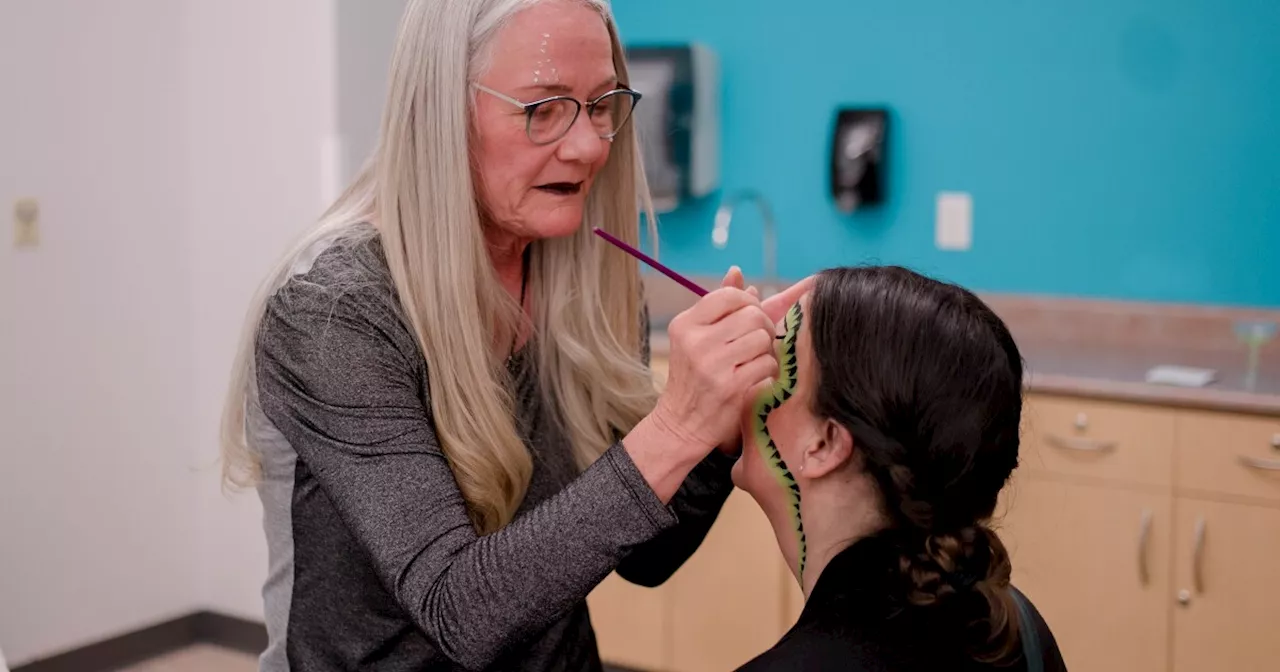 Women's Day events, Scottish barn dance, rodeo and MORE events happening this weekend across Utah!As the senior digital content producer, Melanie is focused on the digital presence of FOX 13 News on all platforms, including; fox13now.com, Facebook, Instagram, Twitter, TikTok, Youtube and other streaming platforms.
Read more »