
Not many people know the world's first detonation of an atomic bomb was on U.S. soil. It would be weeks later that humanity would witness the power of atomic weapons when bombs were dropped on Japan during World War II.
Downwinder Paul Pino heads through the SALA Event Center toward the screening of “First We Bombed New Mexico ” during the Oppenheimer Film Festival in Los Alamos , New Mexico on Saturday, Aug. 17, 2024. The documentary tells the stories of those who lived near the Trinity Test Site when the U.
S. government detonated the first atomic bomb and the Native Americans who worked in the uranium industry. Panelists answer questions during a discussion following the first screening of “First We Bombed New Mexico” during the Oppenheimer Film Festival in Los Alamos, New Mexico on Saturday, Aug. 17, 2024. Tina Cordova, founder of the Tularosa Basin Downwinders Consortium, discusses health disparities in New Mexico ahead of the first screening of “First We Bombed New Mexico” during the Oppenheimer Film Festival in Los Alamos, New Mexico on Saturday, Aug. 17, 2024. The documentary tells the stories of those who lived near the Trinity Test Site when the U.S. government detonated the first atomic bomb and the Native Americans who worked in the uranium industry. FILE - This photo shows an aerial view after the first atomic explosion at Trinity Test Site, in N.M., on July 16, 1945. FILE - This July 16, 1945, file photo, shows the mushroom cloud of the first atomic explosion at Trinity Test Site near Alamagordo, N.M. Tina Cordova, right, an activist with the Tularosa Basin Downwinders Consortium, offers a handshake to an attendee of a campaign event with House Speaker Mike Johnson and Republican U.S. House candidate Yvette Herrell of New Mexico, during a demonstration in Las Cruces, N.M., Wednesday, Aug. 21, 2024. The Consortium is asking Speaker Johnson to pass a Senate bill to expand the Radiation Exposure Compensation Act to include New Mexico Downwinders and post 1971 Uranium Miners. Downwinder Paul Pino walks into the SALA Event Center to attend the first screening of “First We Bombed New Mexico” during the Oppenheimer Film Festival in Los Alamos, New Mexico on Saturday, Aug. 17, 2024. The documentary tells the stories of those who lived near the Trinity Test Site when the U.S. government detonated the first atomic bomb and the Native Americans who worked in the uranium industry. New Mexico Sen. Leo Jaramillo walks into a theater for the first screening of “First We Bombed New Mexico” during the Oppenheimer Film Festival in Los Alamos, New Mexico on Saturday, Aug. 17, 2024. The documentary tells the stories of those who lived near the Trinity Test Site when the U.S. government detonated the first atomic bomb and the Native Americans who worked in the uranium industry. New Mexico Sen. Leo Jaramillo, center, is flanked by panelists and downwinders as they discuss the film “First We Bombed New Mexico” during the Oppenheimer Film Festival in Los Alamos, New Mexico on Saturday, Aug. 17, 2024. Advocates have been pushing for the reauthorization and expansion of the Radiation Exposure Compensation Act, saying the government has failed for decades to acknowledge New Mexico downwinders and people in other states exposed to radiation as a result of the government’s nuclear weapons work.Cancer survivor and Tularosa Basin Downwinders Consortium founder Tina Cordova, center, answer questions during a discussion following the first screening of “First We Bombed New Mexico” during the Oppenheimer Film Festival in Los Alamos, New Mexico on Saturday, Aug. 17, 2024. S. government detonated the first atomic bomb and the Native Americans who worked in the uranium industry. S. government detonated the first atomic bomb and the Native Americans who worked in the uranium industry. Panelists answer questions during a discussion following the first screening of “First We Bombed New Mexico” during the Oppenheimer Film Festival in Los Alamos, New Mexico on Saturday, Aug. 17, 2024. Panelists answer questions during a discussion following the first screening of “First We Bombed New Mexico” during the Oppenheimer Film Festival in Los Alamos, New Mexico on Saturday, Aug. 17, 2024. Tina Cordova, founder of the Tularosa Basin Downwinders Consortium, discusses health disparities in New Mexico ahead of the first screening of “First We Bombed New Mexico” during the Oppenheimer Film Festival in Los Alamos, New Mexico on Saturday, Aug. 17, 2024. The documentary tells the stories of those who lived near the Trinity Test Site when the U.S. government detonated the first atomic bomb and the Native Americans who worked in the uranium industry. Tina Cordova, founder of the Tularosa Basin Downwinders Consortium, discusses health disparities in New Mexico ahead of the first screening of “First We Bombed New Mexico” during the Oppenheimer Film Festival in Los Alamos, New Mexico on Saturday, Aug. 17, 2024. The documentary tells the stories of those who lived near the Trinity Test Site when the U.S. government detonated the first atomic bomb and the Native Americans who worked in the uranium industry. FILE - This photo shows an aerial view after the first atomic explosion at Trinity Test Site, in N.M., on July 16, 1945. FILE - This photo shows an aerial view after the first atomic explosion at Trinity Test Site, in N.M., on July 16, 1945. FILE - This July 16, 1945, file photo, shows the mushroom cloud of the first atomic explosion at Trinity Test Site near Alamagordo, N.M. FILE - This July 16, 1945, file photo, shows the mushroom cloud of the first atomic explosion at Trinity Test Site near Alamagordo, N.M. Tina Cordova, right, an activist with the Tularosa Basin Downwinders Consortium, offers a handshake to an attendee of a campaign event with House Speaker Mike Johnson and Republican U.S. House candidate Yvette Herrell of New Mexico, during a demonstration in Las Cruces, N.M., Wednesday, Aug. 21, 2024. The Consortium is asking Speaker Johnson to pass a Senate bill to expand the Radiation Exposure Compensation Act to include New Mexico Downwinders and post 1971 Uranium Miners. Tina Cordova, right, an activist with the Tularosa Basin Downwinders Consortium, offers a handshake to an attendee of a campaign event with House Speaker Mike Johnson and Republican U.S. House candidate Yvette Herrell of New Mexico, during a demonstration in Las Cruces, N.M., Wednesday, Aug. 21, 2024. The Consortium is asking Speaker Johnson to pass a Senate bill to expand the Radiation Exposure Compensation Act to include New Mexico Downwinders and post 1971 Uranium Miners. Downwinder Paul Pino walks into the SALA Event Center to attend the first screening of “First We Bombed New Mexico” during the Oppenheimer Film Festival in Los Alamos, New Mexico on Saturday, Aug. 17, 2024. The documentary tells the stories of those who lived near the Trinity Test Site when the U.S. government detonated the first atomic bomb and the Native Americans who worked in the uranium industry. Downwinder Paul Pino walks into the SALA Event Center to attend the first screening of “First We Bombed New Mexico” during the Oppenheimer Film Festival in Los Alamos, New Mexico on Saturday, Aug. 17, 2024. The documentary tells the stories of those who lived near the Trinity Test Site when the U.S. government detonated the first atomic bomb and the Native Americans who worked in the uranium industry. New Mexico Sen. Leo Jaramillo walks into a theater for the first screening of “First We Bombed New Mexico” during the Oppenheimer Film Festival in Los Alamos, New Mexico on Saturday, Aug. 17, 2024. The documentary tells the stories of those who lived near the Trinity Test Site when the U.S. government detonated the first atomic bomb and the Native Americans who worked in the uranium industry. New Mexico Sen. Leo Jaramillo walks into a theater for the first screening of “First We Bombed New Mexico” during the Oppenheimer Film Festival in Los Alamos, New Mexico on Saturday, Aug. 17, 2024. The documentary tells the stories of those who lived near the Trinity Test Site when the U.S. government detonated the first atomic bomb and the Native Americans who worked in the uranium industry. New Mexico Sen. Leo Jaramillo, center, is flanked by panelists and downwinders as they discuss the film “First We Bombed New Mexico” during the Oppenheimer Film Festival in Los Alamos, New Mexico on Saturday, Aug. 17, 2024. Advocates have been pushing for the reauthorization and expansion of the Radiation Exposure Compensation Act, saying the government has failed for decades to acknowledge New Mexico downwinders and people in other states exposed to radiation as a result of the government’s nuclear weapons work.New Mexico Sen. Leo Jaramillo, center, is flanked by panelists and downwinders as they discuss the film “First We Bombed New Mexico” during the Oppenheimer Film Festival in Los Alamos, New Mexico on Saturday, Aug. 17, 2024. Advocates have been pushing for the reauthorization and expansion of the Radiation Exposure Compensation Act, saying the government has failed for decades to acknowledge New Mexico downwinders and people in other states exposed to radiation as a result of the government’s nuclear weapons work.Cancer survivor and Tularosa Basin Downwinders Consortium founder Tina Cordova, center, answer questions during a discussion following the first screening of “First We Bombed New Mexico” during the Oppenheimer Film Festival in Los Alamos, New Mexico on Saturday, Aug. 17, 2024. Cancer survivor and Tularosa Basin Downwinders Consortium founder Tina Cordova, center, answer questions during a discussion following the first screening of “First We Bombed New Mexico” during the Oppenheimer Film Festival in Los Alamos, New Mexico on Saturday, Aug. 17, 2024. LOS ALAMOS, N.M. — It was the summer of 1945 when the United States dropped atomic bombs on Japan, killing thousands of people as waves of destructive energy obliterated two cites. It was a decisive move that helped bring about the end of World War II, but survivors and the generations that followed were left to grapple with sickness from radiation exposure.called it “the greatest scientific gamble in history,” saying the rain of ruin from the air would usher in a new concept of force and power. What he didn’t mention was that the federal government had already tested this new force on U.S. soil. Just weeks earlier in southern New Mexico, the early morning sky erupted with an incredible flash of light. Windows rattled hundreds of miles away and a trail of fallout stretched to the East Coast.rained down for days. Children played in it, thinking it was snow. It covered fresh laundry that was hanging out to dry. It contaminated crops, singed livestock and found its way into cisterns used for drinking water. The story of New Mexico’s downwinders — the survivors of the world’s first atomic blast and those who helped mine the uranium needed for the nation’s arsenal — is little known. But that’s changing as the documentary “First We Bombed New Mexico” racks up awards from film festivals across the United States.1 killed and 10 wounded in an overnight grenade attack outside a hotel in southwest PakistanOppenheimer Film Festival . It marks a rare chance for the once secret city that has long celebrated the scientific discoveries of J. Robert Oppenheimer — the father of the atomic bomb — to contemplate another more painful piece of the nation’s nuclear legacy. The film, directed and produced by Lois Lipman, highlights the displacement of Hispanic ranching families when the Manhattan Project took over the Pajarito Plateau in the early 1940s, the lives forever altered in the Tularosa Basin where the bomb was detonated and the Native American miners who were never warned about the health risks of working in the uranium industry. Their heart-wrenching stories woven together with the testimony of professors and doctors spurred tears in Los Alamos, as they have in Austin, Texas, Annapolis, Maryland, and every other city where the film has been screened. Andi Kron, a long-time Los Alamos resident, was in awe of the cinematography but also horrified as she learned more. “Just unbelievable,” she said, noting that even people who have been involved in studying different aspects of the Trinity Test decades later remain unaware of the downwinders’ plight. Lipman and others hope to distribute the documentary more widely as part of an awareness campaign as downwinders push for the federal Radiation Exposure Compensation Act to be reauthorized and expanded to include more people who have been exposed by nuclear weapons work carried out by the federal government. Over the past 10 years, Lipman has followed Tularosa Basin Downwinders Consortium co-founder Tina Cordova as she has appeared before Congress, held countless town halls and shared meals and prayers with community members. Lipman expressed her frustrations during the premiere in Los Alamos, noting that despite testimony about the injustices that followed the Trinity Test, the federal government has yet to acknowledge its failures in recognizing the damage that was done nearly 80 years ago. As the film notes, there were about a half-million people — mostly Hispanics and Native Americans — living within a 150-mile radius of the blast. The area was neither remote nor unpopulated, despite government claims that no lived there and no one was harmed. In the film, Cordova — a cancer survivor herself — tells community members that they will not be martyrs anymore. Her family is among many from Tularosa and Carrizozo who have had mothers, fathers, siblings and children die from cancer. “They counted on us to be unsophisticated, uneducated and unable to speak up for ourselves. We’re not those people any more,” Cordova said. “I’m not that person. You’re not those people.”Cordova and others turned out Wednesday in Las Cruces to demonstrate as U.S. House Speaker Mike Johnson visited New Mexico to campaign for Republican congressional candidate Yvette Herrell. The downwinders havein the must-win district as well as in the dozens of other Republican districts around the U.S. that would benefit from an expansion of RECA. At the film festival, Cordova told the audience that people for too long have been living separate lives, a poignant statement particularly for“There are no boundaries. We are not separate people. We all live in this state together and I would like to think that because of that we consider each other to be neighbors, friends, we’re relatives with some of you,” she said, thanking them for being there to hear another side of the story.The audience included workers from Los Alamos National Laboratory, county officials and a state senator. Bernice Gutierrez was born in Carrizozo several days before the bomb was detonated. She had no words to describe how important she believes it is for the people in Los Alamos to learn about the downwinders. “I think a lot of people were surprised,” she said after the first screening. “They don’t know the history.” The Trinity Site was on a short list for possible locations for testing the bomb. The others included two sites in California, one in Texas and another in Colorado. The flat, arid nature of the White Sands Missile Range won out, with scientists initially thinking that predictable winds would limit the spread of radiation. That ended up not being the case as erratic weather often accompanies New Mexico’s summer rainy season. Aside from shifting winds, rain the night after meant fresh fallout likely found its way into the rainwater that was captured by residents’ cisterns, according to a. The CDC also noted that another path of exposure involved dairy cows and goats, which residents depended on for sustenance.showed in 2023 that nuclear explosions carried out in New Mexico and Nevada between 1945 and 1962 led to widespread radioactive contamination. The team reported that the world’s first atomic detonation made a significant contribution to exposure in New Mexico and eventually reached 46 states, as well as Canada and Mexico. Cordova said the federal government didn’t warn residents before or after the detonation and continued for decades to minimize it because “we didn’t matter, we were expendable.”
New Mexico Los Alamos Nuclear Weapons General News KY State Wire TX State Wire CO State Wire CA State Wire AZ State Wire TN State Wire MO State Wire ID State Wire UT State Wire NM State Wire NV State Wire A Legislation Entertainment Science Climate And Environment Japan N Government And Politics P Health E U.S. News Climate Politics
United States Latest News, United States Headlines
Similar News:You can also read news stories similar to this one that we have collected from other news sources.
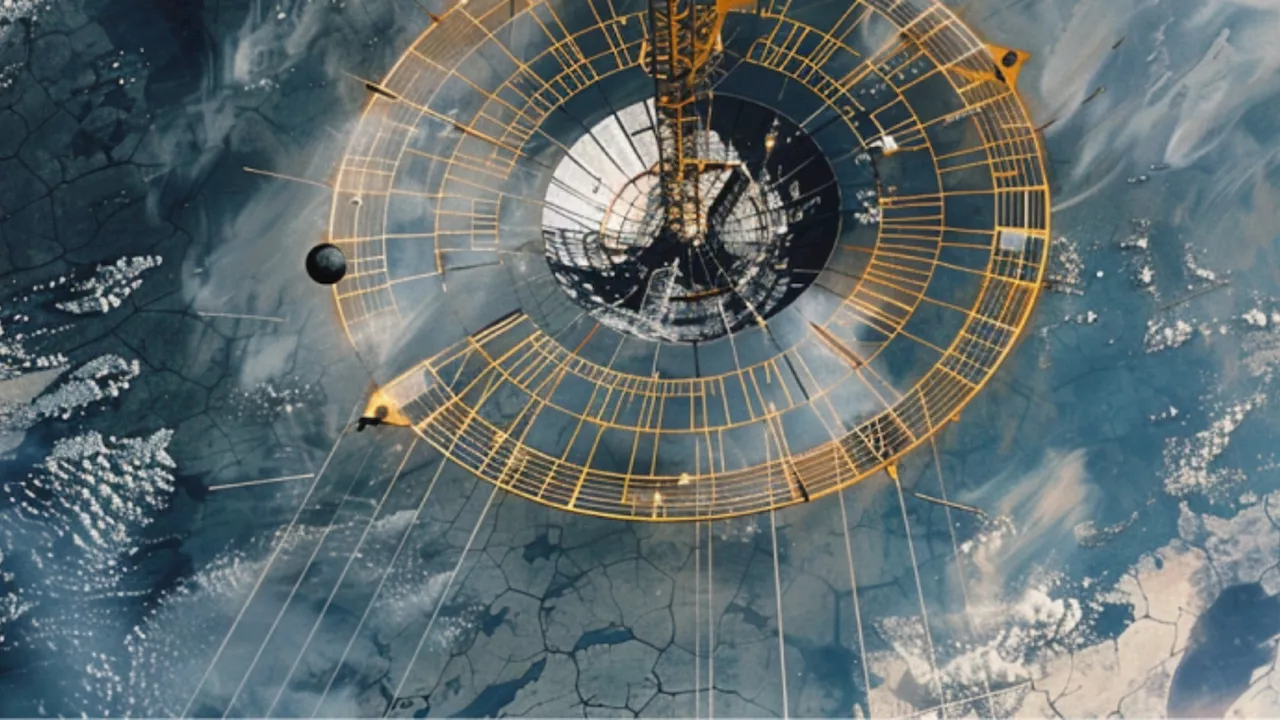 World’s 1st space solar power station that could beam energy to spacecraftStar Catcher Network aims to advance space operations by providing a reliable and abundant power source to the low-Earth orbit satellites.
Read more »
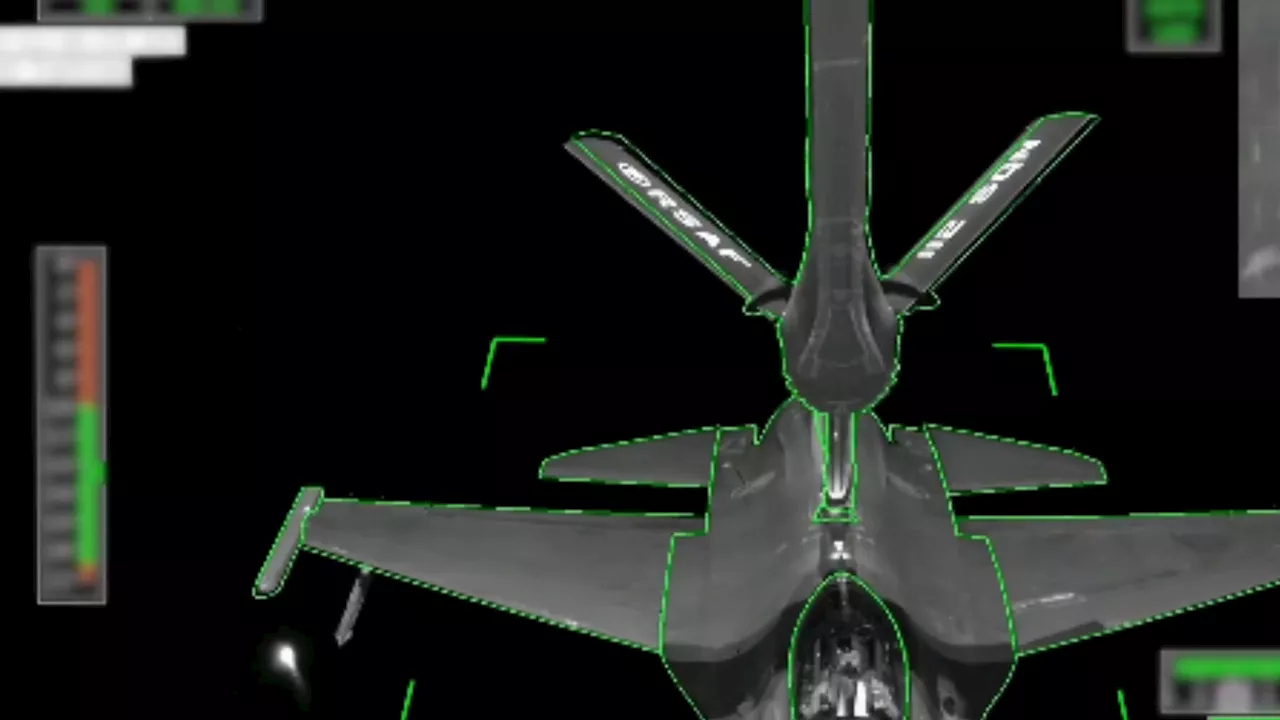 Dark Knight: Airbus A330 tanker aces world’s 1st aerial refueling at nightAccording to Airbus, an A330 MRTT from Singapore conducted 10 flights between May and June 2024, during which multiple aircraft acted as receivers.
Read more »
 With Congress in recess, nothing is in play for Utah victims of nuclear falloutBickering over the demise and potential revival of a compensation program for Utah's downwinders continues.
Read more »
 'We were expendable': Downwinders from world's 1st atomic test are on a mission to tell their storyNot many people know the world's first detonation of an atomic bomb was on U.S. soil.
Read more »
 'We were expendable': Downwinders from world's 1st atomic test are on a mission to tell their storyNot many people know the world's first detonation of an atomic bomb was on U.S. soil.
Read more »
 ‘We were expendable’: Downwinders from world’s 1st atomic test are on a mission to tell their storyLOS ALAMOS, N.M. (AP) — It was the summer of 1945 when the United States dropped atomic bombs on Japan, killing thousands of people as waves of
Read more »