


 +34

Researchers have discovered that virus-like nanoparticles can promote the multicellular organization and reproduction of host bacteria. These particles, which are evolutionarily related to phages (viruses that infect bacteria), contain an enzyme that helps shape the multicellular architecture and ultimately enhances morphological differentiation.
Researchers have discovered that virus-like nanoparticles can promote the multicellular organization and reproduction of host bacteria. These particles, which are evolutionarily related to phages , contain an enzyme that helps shape the multicellular architecture and ultimately enhances morphological differentiation.
Researchers from University of Tsukuba have discovered that virus-like nanoparticles can promote the multicellular organization and reproduction of host bacteria. These particles, which are evolutionarily related to phages , contain an enzyme that helps shape the multicellular architecture and ultimately enhances morphological differentiation. Viruses are ubiquitous in the environment, and organisms have developed various mechanisms to counter their threat. However, the genome of actinomycetes contains a highly conserved gene set encoding virus-like nanoparticles, although its biological significance has remained unclear., an actinomycete species, and discovered that it produces virus-like particles that facilitate host reproduction. Extracellular DNA, which serves as a scaffold for multicellular organization, was significantly reduced in the colonies of mutantstrains lacking virus-like particle production and cells trapped in abnormal aggregates. Detailed analysis revealed that the virus-like particles contain a unique enzyme crucial to their function, which partially degrades genomic DNA. The effector is released from the particle and localizes at the host cell membrane. The proposed model suggests that the effector partially degrades genomic DNA, bridging the intracellular and extracellular environments, thereby facilitating extracellular DNA release and providing a scaffold and nutrients for host cell reproduction. These findings reveal the exploitation mechanism of virus-related nanoparticles for bacterial proliferation and offer a novel strategy to reprogram virus-related nanoparticle functionality through modulation of effector activity for various applications in biotechnology. This work was supported by a Grant-in-Aid for Scientific Research from the Japanese Society for the Promotion of Science , the Japan Science and Technology Agency and the Suntory Rising Stars Encouragement Program in Life Sciences .Bacteriophages, also called phages, are viruses that infect and kill bacteria, their natural hosts. But from a macromolecular viewpoint, phages can be viewed as nutritionally enriched packets of ... Researchers have discovered how a new immune system works to protect bacteria from phages, viruses that infect bacteria -- new information that could be leveraged to improve treatment of ... Bacteriophages, viruses that infect bacteria, have been shown to preferentially bind to mucosal surfaces. This has been suggested to provide an extra level of immunity against bacterial infections. ... Researchers have discovered bacteriophages, viruses that infect bacteria, living in their kitchen sponges. As the threat of antibiotic resistance increases, bacteriophages, or phages for short, may ...Fishy Mystery of Marine Reptile Solved
Scratch the next story
Microbes And More Microbiology Genetics Biology Biotechnology Bacteria New Species
United States Latest News, United States Headlines
Similar News: You can also read news stories similar to this one that we have collected from other news sources.
 Avian Flu Virus Transmitted To Mice By Milk, According To ResearchersA Professor of Biology at Davidson College, David Wessner teaches courses about introductory biology, microbiology, and HIV/AIDS. His research interests include viral pathogenesis. He recently co-authored Microbiology, a textbook for undergraduate biology majors, and The Cartoon Guide to Biology.
Read more »
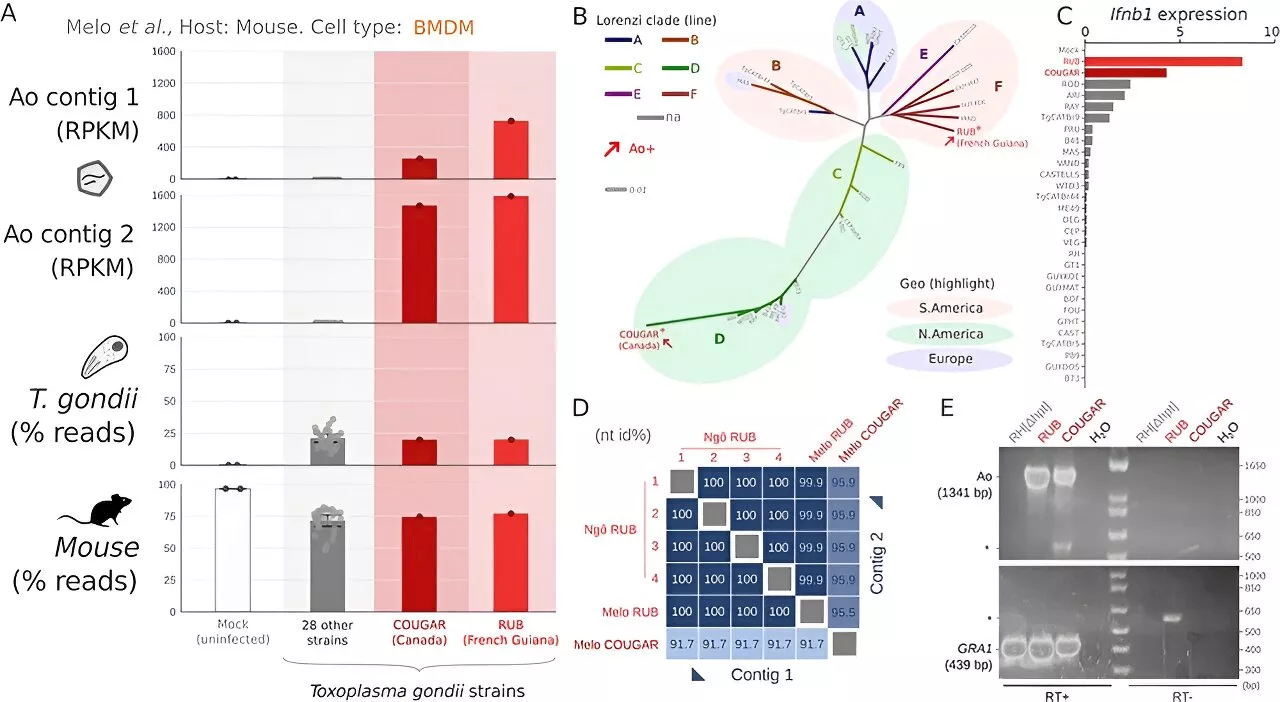 Researchers discover 'Trojan Horse' virus hiding in human parasiteAn international team led by researchers at the University of Toronto has found a new RNA virus that they believe is hitching a ride with a common human parasite.
Read more »
 Researchers discover 'trojan horse' virus hiding in human parasiteAn international team has found a new RNA virus that they believe is hitching a ride with a common human parasite. The virus is associated with severe inflammation in humans infected with the parasite Toxoplasma gondii, leading the team to hypothesize that it exacerbates toxoplasmosis disease.
Read more »
 Researchers explore the molecular mechanisms and therapeutic potentials of essential oilsEssential oils, also known as ethereal oils, are volatile, aromatic compounds derived from plants. Found in only about 10% of the plant kingdom, these oils are present in secretory structures such as glands, ducts, cavities, and hairs.
Read more »
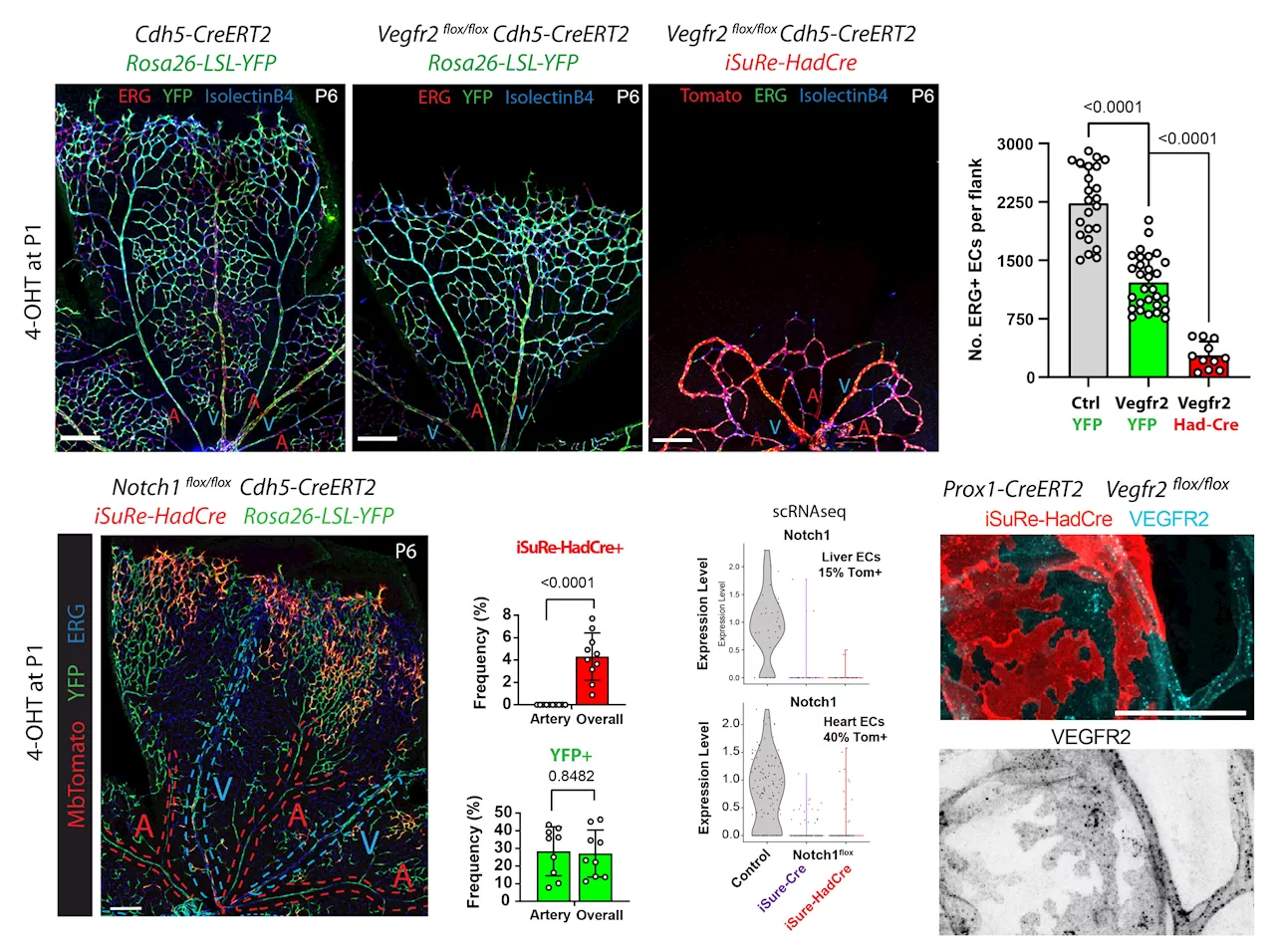 Researchers create an innovative tool for the reliable and efficient study of gene functionA team of scientists at the Centro Nacional de Investigaciones Cardiovasculares (CNIC) led by Rui Benedito has generated a novel genetic tool, called iSuRe-HadCre, that enables the induction of precise genetic alterations in whole tissues or in individual cells with high efficiency and reliability.
Read more »
 Chinese moon researchers gearing up for June 25 arrival of far side samplesLeonard David is an award-winning space journalist who has been reporting on space activities for more than 50 years. Currently writing as Space.
Read more »