
A judge in Utah has ordered both sides in a lawsuit challenging the state's $82 million voucher program to return to court with more historical information. The program, known as the Utah Fits All scholarship, allows parents to use state funds to pay for private school tuition, homeschooling, or other educational expenses. The Utah Education Association (UEA) argues that the program violates the state constitution by diverting income tax revenue away from its intended purpose of public education and creating a system that is no longer free for all children. Attorney General Sean Reyes and the Alliance for Choice in Education (ACE) counter that the program is constitutional and that the state has the authority to use public funds to 'support children'.
The fate of Utah ’s voucher program remains uncertain after a judge on Wednesday ordered the plaintiffs and defendants to return to court with more historical information to help determine whether the state’s $82 million Utah Fits All scholarship program is constitutional.
the state in May, alleging that the program was unconstitutional and an illegal use of the state’s income tax dollars — currently reserved only for public education, higher education and services for people with disabilities.Attorney General Sean Reyes and the Alliance for Choice in Education , the organization hired by the Utah State Board of Education to manage the voucher program — which ACE refers to as an “education savings account” program — and its application process.During the hearing, Scott questioned whether to rely on a narrow reading of Utah’s constitution and its relevant voter-approved amendments to make her decision — or instead, the plaintiff’s exhibits, which reflected how Utah voters from the 1980s or early aughts thought about how those amendments could apply at the time. In other words, could she consider whether Utah voters knew how education funding may change over time when they approved relevant constitutional amendments decades ago? Or should she rely on the plain language of the constitution, which allows lawmakers to fund programs using income tax revenue in order to broadly “support children”? Now, Scott wants more evidence to ascertain the “original public meaning” of the two relevant constitutional amendments — Proposition No. 3 and Amendment G — to help make her decision.For 50 years, Utah allocated 100% of its income tax revenue solely for public education. This changed in 1997, when voters amended the Constitution to allow income tax revenue to also go toward higher education.It also allowed the state and local governments to provide “certain types of indirect support” to schools partially or fully controlled by religious organizations, lifting the previous ban on any government appropriations to such schools. But the amendment still prohibited “direct support” without further defining what constituted “indirect support.”income tax revenue spending again with Amendment A, a ballot proposal that would have allowed the state to use income tax dollars for a “broader range of state needs.” UEA sued over Amendment A, too, tacking on a supplemental complaint to its original May lawsuit. In this case, the UEA asked the judge toScott ultimately ruled the ballot question void. That resolution followed the Utah Supreme Court’s ruling on Sept. 25 that upheld a lower court’s decision to void Amendment D, which would have given the Legislature the power to repeal citizen-passed ballot initiatives. In both cases, plaintiffs argued that the Utah Legislature violated Article XXIII of the Utah Constitution, which mandates that ballot language must be published in newspapers statewide at least two months before appearing on ballots. Scott on Wednesday ordered both parties to submit their supplemental briefings on Proposition 3 and Amendment G by Feb. 19, unless a different briefing schedule is agreed upon. The briefings must include any relevant legislative history and source materials, plus an explanation as to how that history supports their interpretation of the texts.this year, which they can use to send their kids to private school, homeschool them, or pay for a wide range of educational expenses, such as piano lessons or ballet. The maximum scholarship available — $8,000 — is nearly double what a student is traditionally designated in Utah’s public school system, under what is called the weighted pupil unit. That number is currently set at roughly $4,400 per child. The UEA asserts in its complaint that the voucher program violates multiple provisions of the state constitution, which requires Utah to establish a “free education system” that is equally accessible to every child. Creating a publicly funded voucher program — where taxpayer dollars can help fund private school tuitions, but likely won’t cover the entire cost of tuition — means the system supported by Utah is now no longer free, the union argues. The UEA also argues that the program diverts income tax revenue toward potentially paying for private education expenses when that revenue is currently only reserved for its three core purposes., arguing that the voucher program “is not an education system” and that the Utah Legislature acted within its constitutional authority to use public money to “support children.” Scott Ryther, with the attorney general’s office and representing the state, said at the December hearing that the phrase “to support children” is not ambiguous. It is “somewhat broad,” he said, but it’s clear. He preferred that Scott rely on the Utah constitution for her ruling, although he argued that even if she considered the plaintiff’s exhibits, she would come to the same conclusion. “There’s certainly a demand for more funding,” Sen. Kirk Cullimore, R-Cottonwood Heights, said Tuesday. “Obviously, with the budget circumstances as they are, it’s just a matter of what can we find. But there will be a request for more funding.”‘Discrepancies’ indicate dozens of Utah voucher recipients are enrolled in public school as lawmakers push for more voucher funding Lawmakers ‘just not listening’: Utah bill to end collective bargaining for public workers advances despite mass oppositionLibrarians featured in Sundance doc on book bans receive standing ovation from SLC audienceAre you a federal worker who received a ‘Fork in the Road’ letter? The Tribune wants to hear from you.DO NOT click, SLC warns as parking ticket scam circulates through Utah’s capital
VOUCHER PROGRAM CONSTITUTIONALITY UTAH EDUCATION TAX REVENUE
United States Latest News, United States Headlines
Similar News:You can also read news stories similar to this one that we have collected from other news sources.
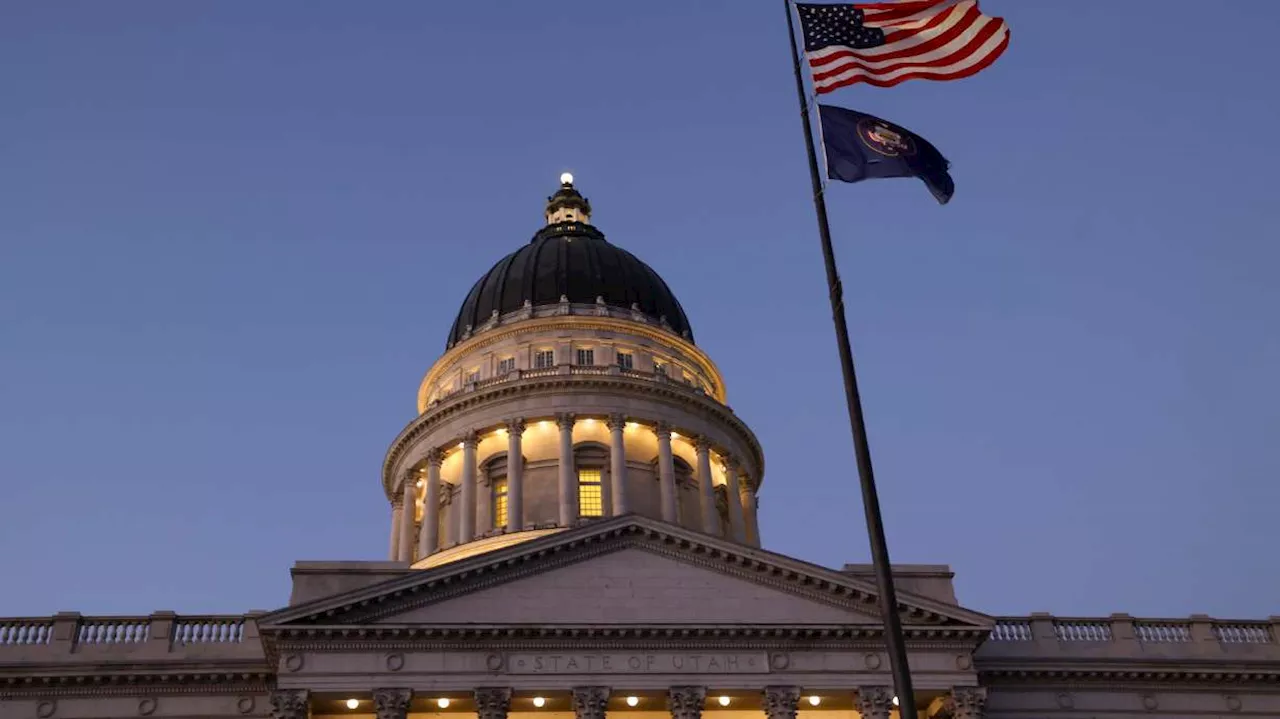 Higher education, voting in focus for Utah Legislature in 2025Utah lawmakers are expected to consider significant changes to higher education and election systems when they meet next year.
Read more »
 N.J. Man Accused of Sexting Utah Girl Remains Jailed in UtahA 45-year-old man from New Jersey, Paul T. Carroll, is facing charges in Utah for allegedly sexting with a minor. He is currently in custody in Cache County, Utah, while awaiting trial. Carroll was extradited from New Jersey and faces charges of seducing/luring a minor by internet or text and dealing in materials harmful to a minor.
Read more »
 The Utah Checkdown podcast: Utah football's plan comes into viewUtah football held a press conference with Kyle Whittingham, Morgan Scalley and Jason Beck earlier this week.
Read more »
 Utah Football, Runnin' Utes Struggles, and More on The Utah CheckdownThis episode of The Utah Checkdown covers two former Utah football players' impact on the AFC Championship game, the challenges facing the Runnin' Utes men's basketball team, and the success of the women's basketball team. The podcast also discusses the inconsistencies in gymnastics judging and invites listeners to subscribe and tune in.
Read more »
 Open house, dedication dates announced for Syracuse Utah Temple, the 31st in UtahThe Syracuse Utah Temple of The Church of Jesus Christ of Latter-day Saints will be dedicated on June 8, after an open house in May, the church announced Tuesday.
Read more »
 Discrepancies Highlight Enrollment Issues in Utah's Voucher ProgramUtah education officials are investigating why hundreds of students who received vouchers for private school are still enrolled in public schools, raising questions about the program's implementation and prompting lawmakers to consider increasing funding.
Read more »