
Science, Space and Technology News 2024
The Compton polarimeter’s laser system, used to measure the parallel spin of electrons, is aligned during the Calcium Radius Experiment at Jefferson Lab. Credit: Jefferson Lab photo/Dave Gaskell Measurement of electron beam polarization is sharpest ever reported, sets stage for future flagship experiments at Jefferson Lab.
Scientists are getting a more detailed look than ever before at the electrons they use in precision experiments. Nuclear physicists with the U.S. Department of Energy’s Thomas Jefferson National Accelerator Facility have shattered a nearly 30-year-old record for the measurement of parallel spin within an electron beam – or electron beam polarimetry, for short. The achievement sets the stage for high-profile experiments at Jefferson Lab that could open the door to new physics discoveries., a collaboration of Jefferson Lab researchers and scientific users reported a measurement more precise than a benchmark achieved during the 1994-95 run of the SLAC Large Detector experiment at the SLAC National Accelerator Laboratory in Menlo Park, California. “No one has measured the polarization of an electron beam to this precision at any lab, anywhere in the world,” said Dave Gaskell, an experimental nuclear physicist at Jefferson Lab and a co-author on the paper. “That’s the headline here. This isn’t just a benchmark for Compton polarimetry, but for any electron polarization measurement technique.” Compton polarimetry involves detecting photons – particles of light – scattered by charged particles, such as electrons. That scattering, aka the Compton effect, can be achieved by sending laser light and an electron beam on a collision course. Electrons – and photons – carry a property called spin . Like mass or electric charge, spin is an intrinsic property of the electron. When particles spin in the same direction at a given time, the quantity is known as polarization. And for physicists probing the heart of matter on the tiniest scales, knowledge of that polarization is crucial. “Think of the electron beam as a tool that you’re using to measure something, like a ruler,” said Mark Macrae Dalton, another Jefferson Lab physicist and co-author on the paper. “Is it in inches or is it in millimeters? You have to understand the ruler in order to understand any measurement. Otherwise, you can’t measure anything.” The Compton polarimeter’s laser resonates inside a locked optical cavity during the running of the CREX experiment. Credit: Jefferson Lab photo/Dave GaskellCalcium Radius Experiment , conducted in tandem with the Lead Radius Experiment “Neutron skin” refers to the distribution of protons and neutrons within the nuclei of denser atoms. Lighter elements – generally those with an atomic number of 20 or lower on the periodic table – often have an equal number of protons and neutrons. Medium-weight and heavy atoms typically need more neutrons than protons to remain stable. PREX-II and CREX focused respectively on lead-208, which has 82 protons and 126 neutrons, and calcium-48, which has 20 protons and 28 neutrons. In these atoms, relatively equal numbers of protons and neutrons cluster around the core of the nucleus while the extra neutrons get pushed to the fringe – forming a sort of “skin.”is comparatively thin and confirms some theoretical calculations PREX-II and CREX ran from 2019 to 2020 in Hall A of Jefferson Lab’s Continuous Electron Beam Accelerator Facility, a unique DOE Office of Science user facility that supports the research of more than 1,800 scientists worldwide. “The CREX and PREX-II collaboration cared about knowing the polarization well enough that we dedicated the beam time to make a high-quality measurement,” Gaskell said. “And we made full use of that time.” The Compton polarimeter’s laser system prepares the polarization state of green laser light during the running of the CREX experiment in Hall A at Jefferson Lab. Credit: Jefferson Lab photo/Dave GaskellDuring CREX, the electron beam’s polarization was continuously measured via Compton polarimetry to a precision of 0.36%. That blew past the 0.5% reported during SLAC’s SLD experiment. In these terms, the smaller number is better because the percentages represent the sum of all systematic uncertainties – those created by an experiment’s setup. They can include absolute beam energy, position differences, and knowledge of the laser polarization. Other sources of uncertainty are statistical, meaning they can be reduced as more data are collected. “Uncertainty is so fundamental, it’s hard to even describe because there’s nothing that we know with infinite precision,” Dalton said. “Whenever we make a measurement, we need to put an uncertainty on it. Otherwise, no one will know how to interpret it.” In many experiments involving CEBAF, the dominant source of systematic uncertainty is knowledge of the electron beam’s polarization. The CREX team used the Compton polarimeter to bring that unknown to the lowest level ever reported. “The higher the precision, the more strict a test one has for theoretical interpretation. You must be strict enough to compete with other methods for accessing the physics of PREX-II and CREX,” said Robert Michaels, Jefferson Lab’s deputy leader for Halls A/C. “An imprecise test would have no scientific impact.”Think of the Compton polarimeter as a pit road for electrons coming off the racetrack-shaped CEBAF. Magnets divert the electrons along this detour, where the beam overlaps with a green laser between reflecting surfaces inside a resonant optical cavity. When the laser is locked, the electron beam scatters with the light and creates high-energy photons. The photons are captured by a detector, which in this case is essentially a cylindrical crystal with a photomultiplier tube that passes the light signal to the data acquisition system. The difference between the number of hits when the electrons are flipped from a forward longitudinal state to a backward one is proportional to the beam’s polarization. This assumes the polarization of the laser is constant. “There’s a maximum energy when you work out the basic kinematics of two things smacking into each other at near light speed,” said co-author Allison Zec, who worked on University of Virginia Physics Professor Kent Paschke’s team and is now a postdoctoral researcher at the University of New Hampshire. Her doctoral dissertation focused partly on the Compton polarimeter in the PREX-II and CREX experiments, for whichis coming straight at it, and the photon gets scattered at 180 degrees,” Zec said. “That’s what we call the Compton edge. Everything is measured to that Compton edge and lower.” Throw in a suite of calculations and experimental controls, and the 0.36% relative precision was achieved. “It was basically the stars aligning in a way that we needed,” Zec said, “but not without the hard work to prove that we were able to get there. It took a little bit of luck, a little bit of elbow grease, a lot of paying attention, careful thought, and a little bit of creativity.”. MOLLER, which is in the design and construction phase, will measure the weak charge on an electron as a sort of test of theThe Standard Model is a theory that attempts to describe subatomic particles, such as quarks and muons, along with the four fundamental forces: strong, weak, electromagnetic and gravity.But the Standard Model isn’t complete. “It doesn’t explain what dark matter is. It doesn’t explain where CP violation comes from, or why there’s mostly matter in the universe and not antimatter,” Dalton continued. Each fundamental force carries a so-called “charge,” which dictates its strength or how strongly a particle feels the force. Theorists can use the Standard Model to calculate the weak force’s charge on the electron, while MOLLER would physically measure it and look for deviation from theory. “The catchphrase is always ‘physics beyond the Standard Model,’” Gaskell said. “We are looking for particles or interactions that may open a window to things that are missing in our description of the universe.” Another project with strong polarimetry requirements is the Electron-Ion Collider , a particle accelerator that will be built at Brookhaven National Laboratory in New York with the help of Jefferson Lab. The EIC will collide electrons with protons or heavier atomic nuclei to probe their inner workings and gain insight on the forces that bind them. “I can’t wait to see the Compton polarimeter get developed for things like the EIC,” Zec said. “Those requirements are going to be very different because it’s in a collider, where the same particles go through every so often. That’s going to call for further, precise measurements because so many of these experiments need to have it tamped down to lower their sources of uncertainty.” The result also sets the stage for other parity-violation experiments coming to Jefferson Lab, such as SoLID . These proposed experiments are discussed in “A New Era of Discovery: The 2023 Long Range Plan for Nuclear Science.” This document includes recommended research priorities for the next decade in nuclear physics, as proposed by the Nuclear Science Advisory Committee. NSAC is composed of a diverse group of expert nuclear scientists who were tasked by DOE and the National Science Foundation to provide recommendations on future research in the field. With this new confirmation of the precision polarimetry that can be achieved with electron beams, experimental nuclear physicists can feel much more confident about their results. “It’s broken through a barrier,” Zec said. “It’s going to make our results more significant, and it’s going to make Jefferson Lab a stronger facility for doing physics in the future.” Reference: “Ultrahigh-precision Compton polarimetry at 2 GeV” by A. Zec, S. Premathilake, J. C. Cornejo, M. M. Dalton, C. Gal, D. Gaskell, M. Gericke, I. Halilovic, H. Liu, J. Mammei, R. Michaels, C. Palatchi, J. Pan, K. D. Paschke, B. Quinn and J. Zhang, 23 February 2024,Bad Things Happen After Dark: Scientists Call for New Research on How Our Brains Change When We’re Awake After MidnightSciTechDaily: Home of the best science and technology news since 1998. Keep up with the latest scitech news via email or social media.NASA’s New Horizons has discovered unexpectedly high dust levels in the Kuiper Belt, hinting at a larger expanse or a new belt, reshaping our understanding…
United States Latest News, United States Headlines
Similar News:You can also read news stories similar to this one that we have collected from other news sources.
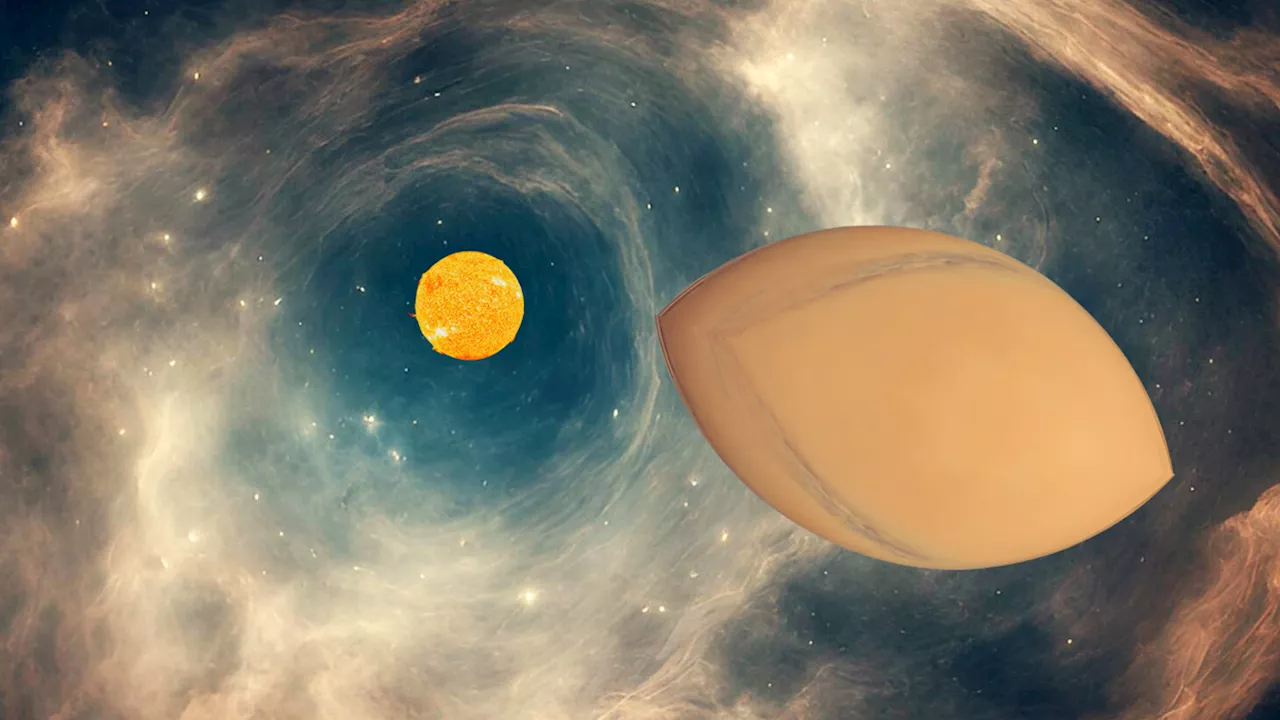 Surprise! Baby exoplanets might look like Smarties candies rather than spheresRobert Lea is a science journalist in the U.K. whose articles have been published in Physics World, New Scientist, Astronomy Magazine, All About Space, Newsweek and ZME Science. He also writes about science communication for Elsevier and the European Journal of Physics. Rob holds a bachelor of science degree in physics and astronomy from the U.K.
Read more »
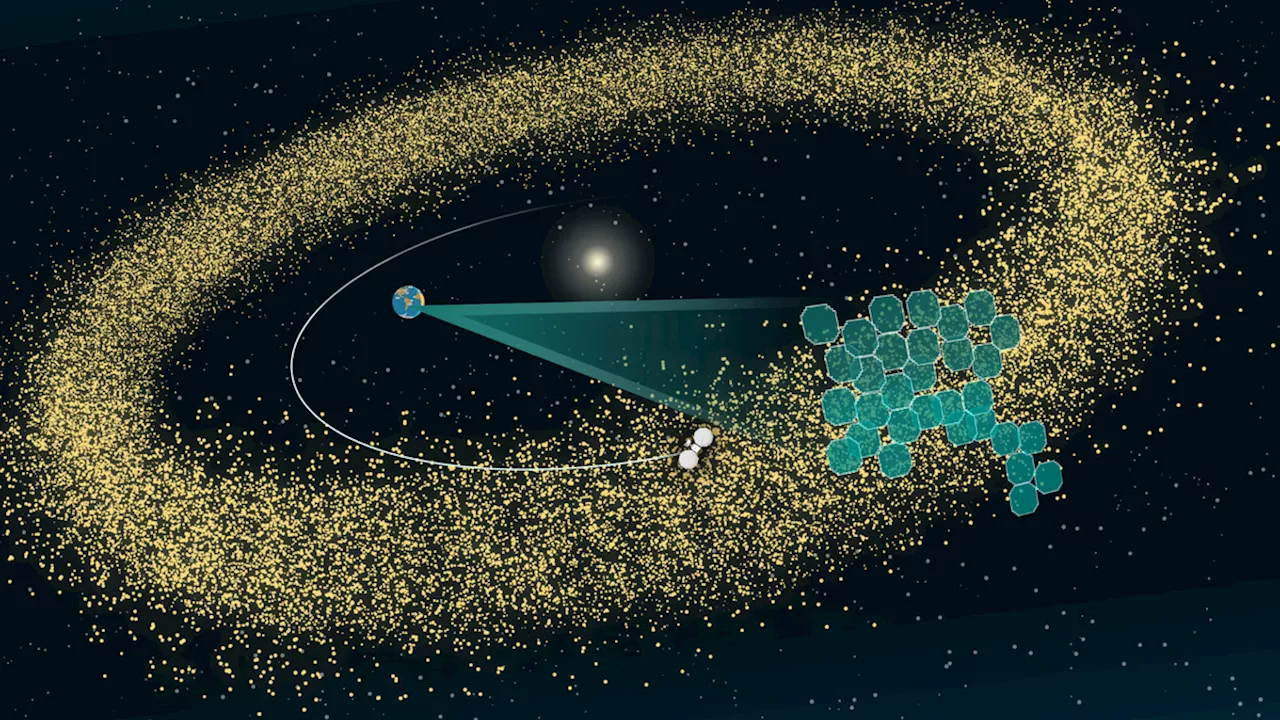 How Earth's new Rubin Observatory will usher in the next era of asteroid space missionsRobert Lea is a science journalist in the U.K. whose articles have been published in Physics World, New Scientist, Astronomy Magazine, All About Space, Newsweek and ZME Science. He also writes about science communication for Elsevier and the European Journal of Physics. Rob holds a bachelor of science degree in physics and astronomy from the U.K.
Read more »
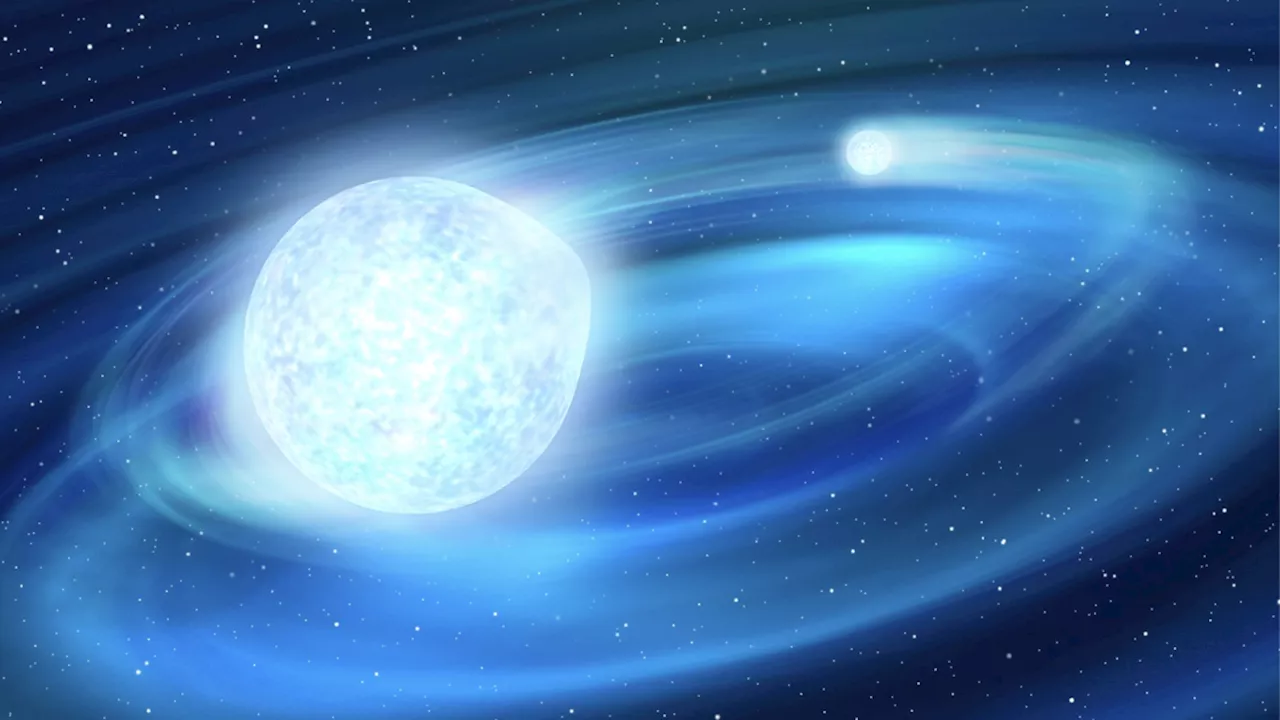 For this dead star, 72 years is a single Earth dayRobert Lea is a science journalist in the U.K. whose articles have been published in Physics World, New Scientist, Astronomy Magazine, All About Space, Newsweek and ZME Science. He also writes about science communication for Elsevier and the European Journal of Physics. Rob holds a bachelor of science degree in physics and astronomy from the U.K.
Read more »
 Scientists create 5 new isotopes to learn how neutron star collisions forge goldRobert Lea is a science journalist in the U.K. whose articles have been published in Physics World, New Scientist, Astronomy Magazine, All About Space, Newsweek and ZME Science. He also writes about science communication for Elsevier and the European Journal of Physics. Rob holds a bachelor of science degree in physics and astronomy from the U.K.
Read more »
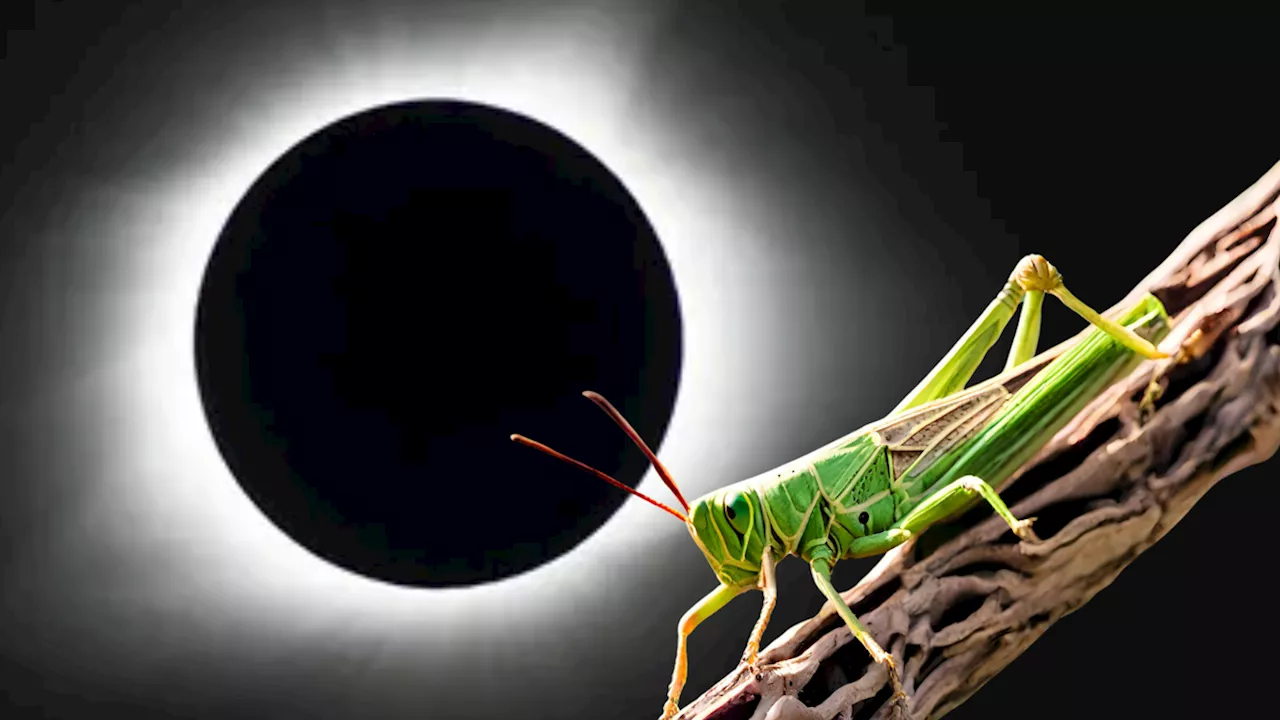 NASA Eclipse Soundscapes Project will record how 2024's total solar eclipse impacts natureRobert Lea is a science journalist in the U.K. whose articles have been published in Physics World, New Scientist, Astronomy Magazine, All About Space, Newsweek and ZME Science. He also writes about science communication for Elsevier and the European Journal of Physics. Rob holds a bachelor of science degree in physics and astronomy from the U.K.
Read more »
 Heaviest pair of black holes ever seen weighs 28 billion times more than the sunRobert Lea is a science journalist in the U.K. whose articles have been published in Physics World, New Scientist, Astronomy Magazine, All About Space, Newsweek and ZME Science. He also writes about science communication for Elsevier and the European Journal of Physics. Rob holds a bachelor of science degree in physics and astronomy from the U.K.
Read more »