Beyond the Breaking News

Understanding the hidden dangers of cognitive biases in relationships.

United States News News

Understanding the hidden dangers of cognitive biases in relationships.
United States Latest News,United States Headlines

Our minds have hidden cognitive biases that harm relationships. Learn how awareness and structured decision-making can help. Avoid "gut" decisions and navigate relationships well.

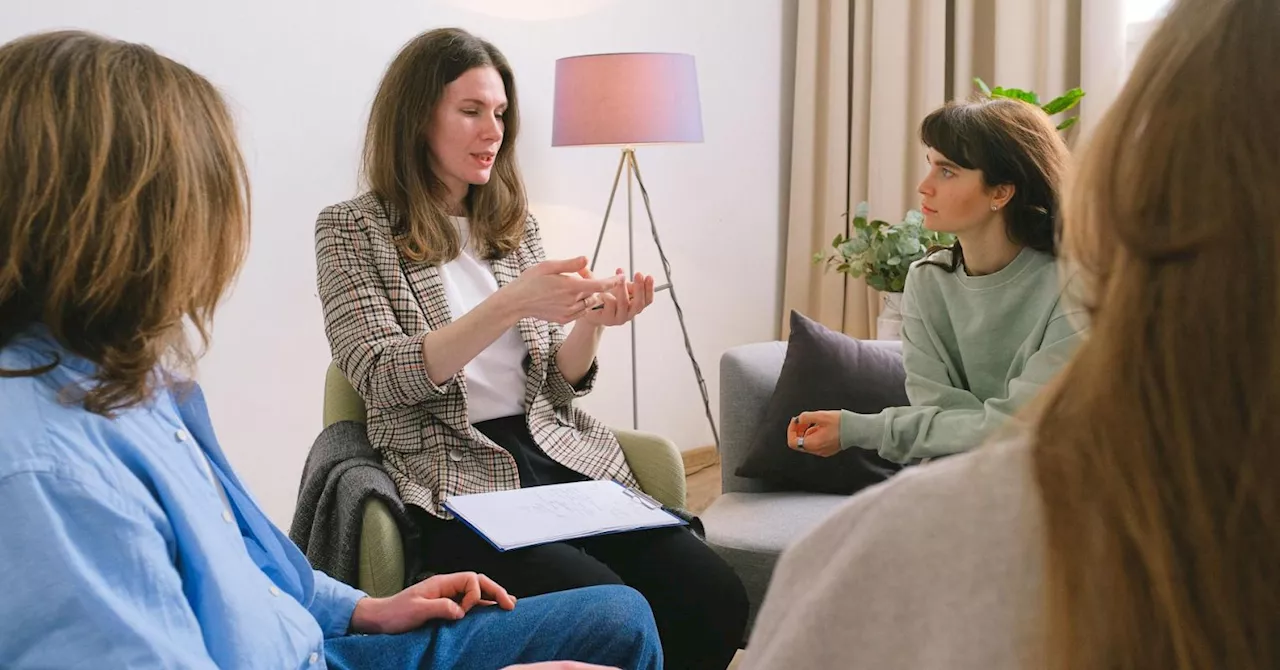
"Go with your gut" advice often leads to poor decisions, as instincts aren't suited for modern complexities.Source: SHVETS production/pexels Please look behind you. No seriously, turn your neck and look behind you.

What did you feel when you did that? Probably some discomfort in your neck, right? What did you see? Unless you have owl heritage, you couldn’t turn your neck 180 degrees, so your field of vision behind you was incomplete.to address the visual blindspots we all have. These blindspots behind our backs were obvious to us, posing a clear danger if we didn’t address them. You probably don’t even remember how you learned to twist your neck to protect yourself from those blindspots. However, you might remember better learning to address blindspots when you drive. Remember how your driving instructor taught you to not rely only on the car mirrors when changing lanes, but to make sure to peek over your shoulder to address the mirror’s blindspot? Unlike the blindspots behind our backs, these blindspots of our car mirrors are not at all obvious. However, failing to address them is very dangerous. These words might not be written if not for learning to defend against blindspots by following the driving instructor's directions. Several near-disasters on the highway were avoided by taking a quick glance before changing lanes.Unfortunately, we also have hidden blindspots in our minds that imperil our relationships and other areas of our lives. Yet there are no driving instructors to teach us to watch out for thesemental blindspots, what scholars term cognitive biases. Why is no one helping us to watch out for the devastating consequences of these dangerous judgment errors?, and related fields are still finding more and more cognitive biases every year. So far, over 100 have been identified, and with additional information emerging, the field of discovery is not yet settled. Even more-edge scholarship has emerged in the last few years in debiasing—the practice of reducing or eliminating cognitive biases—permitting us to gain many new techniques to address these mental blindspots. It’s immoral to wait for the many decades it usually takes for the field to settle sufficiently for the science to percolate into public consciousness through public. People are suffering disasters daily because they fall into cognitive biases. The resulting misconceptions, misunderstandings, and mistakes result in severely damaged or completely broken relationships with their romantic partners, friends, families, and work colleagues, as well as within community groups, and civic and political engagement. Cognitive biases also undermine our society as a whole. Some of the worst excesses of polarization and hatred stem from the consequences of failing to watch out for and address these blindspots between us.leads people to seek out information that confirms their preexisting beliefs, reinforcing divisions and escalating conflicts. In political contexts, thiscontributes to echo chambers where only like-minded views are considered, further entrenching polarization and reducing the possibility of constructive dialogue., where individuals judge the likelihood of events based on how easily examples come to mind. This can cause people to overestimate the prevalence of sensationalized news stories, such as violent crimes or terrorist attacks, leading to disproportionateThe sunk cost fallacy, which involves sticking to a course of action because of previously invested resources, often results in poorin both personal and professional contexts. This can perpetuate toxic relationships, unsustainable business practices, or ineffective policies, causing long-term harm and preventing necessary change.roles. Incompetent leaders may refuse to listen to expert advice or acknowledge their limitations, leading to poor organizational performance and even catastrophic failures in critical situations. Tragically, traditional relationship advice on how to deal with others in all areas of our lives—personal, professional, civic—suggests that you should “go with your gut.” Surely you heard this advice often, as well as some variations of that phrase, such as “trust your instincts” or “be authentic” or “follow your.” Yet such advice doesn’t account for the latest research on how our brain is wired and the mistakes we make as a result of problems with our brain’s basic wiring. It is deeply frustrating, saddening, and angering to see great relationships ruined because someone bought into the toxic advice of going with their gut. Perhaps they returned home from a Tony Robbins seminar and started to follow their instincts and behave like their “authentic selves,” shooting themselves—and their relationships—in the foot. Such advice is meant to make you feel good and appeal to your instincts and intuitions, which is why people embrace it, and why gurus like Robbins get paid megabucks to dispense it. As marketers say, “you can’t go wrong telling people what they want to hear” and people want to hear what’s comfortable for them. Regrettably, our gut reactions are adapted for the ancient savanna, not the modern world. Following our intuitions leads to terrible decisions in the modern environment. For the sake of our relationships, we need to avoid following our primitive instincts and instead be civilized about how we address the inherently flawed nature of our minds.The key to navigating modern relationships lies in understanding and addressing these cognitive biases. Our brains, evolved for a different time and place, often lead us astray in today's complex social landscape. Cognitive biases are essentially shortcuts our brains take to save energy, but these shortcuts often result in errors in judgment. By becoming aware of these biases, we can start to mitigate their effects. One effective strategy is to cultivate a habit ofto our thoughts and feelings without judgment. This practice can help us become more aware of our automatic reactions and question whether they are based on sound reasoning or cognitive biases. Another strategy is to seek out diverse perspectives. Engaging with people who have different viewpoints can challenge our assumptions and help us see issues from multiple angles. This can be particularly beneficial in professional settings, whereBuilding better relationships, whether personal or professional, requires more than just following our instincts. It necessitates a conscious effort to understand the limitations of our minds and to adopt strategies that help us make more informed and rational decisions. While the advice to “go with your gut” may sound appealing, it often leads us astray in the complex landscape of modern relationships. By addressing our cognitive blindspots, we can enhance our interactions, reduce conflicts, and foster deeper, more meaningful connections.Sticking up for yourself is no easy task. But there are concrete skills you can use to hone your assertiveness and advocate for yourself.

GooglePlease follow us on Google to support us
We have summarized this news so that you can read it quickly. If you are interested in the news, you can read the full text here. Read more:

PsychToday /  🏆 714. in US


United States Latest News, United States Headlines

Similar News:You can also read news stories similar to this one that we have collected from other news sources.
From Raw to Refined: Understanding Preprocessing, Cleaning, and Labeling in Data PreparationFrom Raw to Refined: Understanding Preprocessing, Cleaning, and Labeling in Data PreparationLearn about techniques like tokenization, part-of-speech tagging, and feature extraction, ensuring your dataset is optimized for various tasks.
Read more »

Unveiling the unseen and understanding the concept of invisible work.Unveiling the unseen and understanding the concept of invisible work.Learn how invisible work infiltrates 21st-century workplaces. From emotional labor to mentoring and bringing work home, it impacts our well-being. What invisible work do you do?
Read more »

Understanding Dataset Instances and RelationshipsUnderstanding Dataset Instances and RelationshipsExplore the composition of datasets, including instances, labels, data splits, errors, external resources, and considerations for confidentiality & sensitivity
Read more »

Earthquake Study Challenges Conventional Wisdom: 'New Way of Understanding'Earthquake Study Challenges Conventional Wisdom: 'New Way of Understanding'Researchers analyzed fault lines in California and found that geometrically complicated fault zones lead to more ground movement.
Read more »

Malaysia signs memorandum of understanding to purchase Turkish warshipsMalaysia signs memorandum of understanding to purchase Turkish warshipsAttending a ceremony in the capital Ankara, Defence Minister Mohamed Khaled Nordin presents Malaysia's letter of acceptance to procure the naval vessels to be built by Turkish defence firm STM.
Read more »
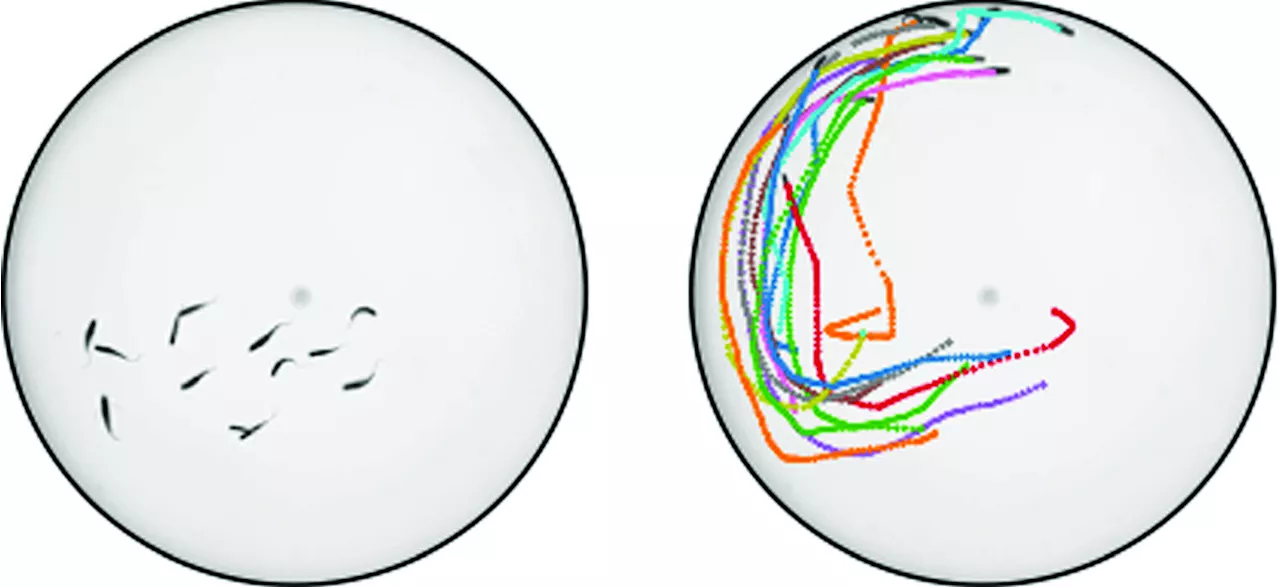
Investigating collective motions in schools of zebrafish could deepen understanding of active systemsInvestigating collective motions in schools of zebrafish could deepen understanding of active systemsActive systems display a wide range of complex and fascinating behaviors, many of which are not yet fully understood. Found on scales ranging from microbes and self-propelling particles to large groups of fish, birds, and mammals, they are made up of many individual parts, which each convert energy from their surroundings into motion.
Read more »


Render Time: 2026-07-18 00:07:04