


 +34
For Star subscribers: Tucson might leave more than 20% of its CAP supply in Lake Mead next year — and may even decide to take less than its full allocation for 2022 — to prevent deeper shortages. But the city…
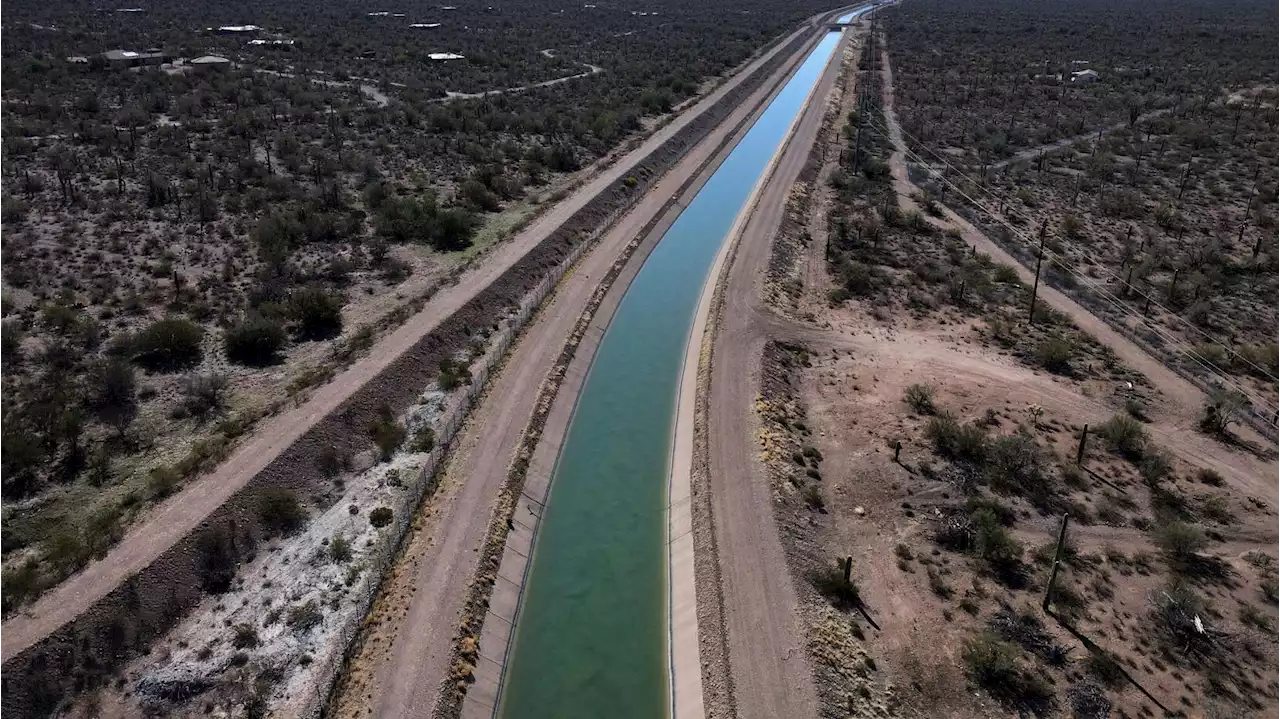
Tony Davis In a quick change of position, Tucson might leave more than 20% of its Central Arizona Project water supply in Lake Mead next year, with some reductions in deliveries possible this year, in an effort to prevent the lake from continuing its precipitous decline.
But the city's willingness to leave that much water in the lake apparently hinges on other Lower Colorado River Basin water users' willingness to follow suit — an uncertain prospect at this time. The City Council unanimously agreed Thursday to give the city attorney's office, Tucson Water and other city staff the authority to negotiate with other cities, tribes and other water users to find agreement to save enough Colorado River water to keep the lake from quickly falling too deep into shortage territory. The details of how this would happen remain to be worked out, said Victor Mercado, a spokesman for Mayor Regina Romero. In an interview before Thursday's council meeting, Romero said,"I believe to have meaningful impact, the city should consider 30,000 to 35,000 acre feet" in the lake. The city may even decide to take less than its full allocation for 2022, Romero and other city officials said. People are also reading… Increasingly direThe city's new position reflects what its officials see as an increasingly dire situation at Lake Mead, from which CAP water is delivered across the state, and Lake Powell, which stores river water for the Upper Colorado River Basin states for delivery to the Lower Basin states of Arizona, California and Nevada, as well as Mexico. The Upper Basin states are New Mexico, Colorado, Utah and Wyoming.In 2019, the basin states approved a drought contingency plan authorizing them to carry out a series of cuts based on how low Lake Mead falls. At the lowest lake elevation considered in that plan, 1,025 feet, the three Lower Basin states and Mexico would trim their total annual take from Mead by about 1.375 million acre feet a year. That's about 15% of their authorized supply of 9 million acre feet a year. Last December, Phoenix-area cities agreed to leave about 35,000 acre feet in the lake, as part of a Lower Basin-wide effort to leave 500,000 acre feet for the next two years. But Tucson opted out of that program. At the time, Assistant City Manager Timothy Thomure said Tucson had been assured by CAP officials that it didn't need to contribute because the project had received enough commitments from Phoenix-area cities. Now, conditions on the river have taken yet another turn for the worse due to continued warm and dry weather. Federal officials recently acted to keep Lake Powell from tumbling below 3,490 feet, at which Glen Canyon Dam's turbines could no longer generate power. The Interior Department announced in April it will hold back nearly 500,000 acre feet in Powell, cutting the annual delivery from Powell to Mead by about 6.4%. Just this week, the federal Colorado Basin River Forecast Center reduced its April to July forecast of runoff into Powell to 3.5 million acre feet, or 55% of average runoff totals from 1991 through 2020. That's down from 59% of normal in an early May forecast. In January, the prediction was for 99% of normal following a snowy December. "Do our small part""I think because of the dire water elevation predictions for Lake Powell and Lake Mead, we have to think creatively on how we can do our small part to mitigate falling water levels," Romero said. She said she's already having preliminary conversations with Arizona water users including cities such as Phoenix, and the Gila River Indian Community, about"how we can work together to reduce our collective burden on Lake Mead. "Of course we would have to be at one with other cities and native nations. In order for it to work it has to be a collective effort; and we have to have federal support and federal dollars, and we need to be assured participation from our neighbors in California," Romero said. Councilman Paul Cunningham introduced the motion Thursday to authorize such negotiations. The limits of the city's negotiating position were discussed in executive session, he said. By July, city staff is supposed to provide the council an update about the negotiations, he said. The mayor said she also wants Tucson Water and the City Attorney's Office to simultaneously advocate for a long-term approach to the river's problems. Federal and state officials are supposed to start negotiating soon to establish new guidelines to manage reservoirs after current guidelines expire in 2026. "I don’t think Lake Mead or Lake Powell can wait till 2026," Romero said."We really have to come back to the table I think, before 2026, to start negotiations." Councilman Steve Kozachik, who seconded Cunningham's motion, noted,"If all our users took all their allocations, they would suck it dry. We do a great job banking our water. We're good for six or seven years, but we've gotta look beyond that. Even if we had a decade straight of significant snowpack in the Rockies, that's not going to solve it for us. It’s great to take an interim step to deliver the message that we are all on the table. But this is just anteing up. The real poker game is coming." Warren Tenney, general manager of a Phoenix-area water users group, said this week"I don’t know if I have a good answer at this time" about whether those cities will negotiate another round of CAP delivery cuts. "Clearly each city has to look at its own situation and weigh the pros and cons as to what is the best way to utilize their water,," said Tenney of the Arizona Municipal Water Utilities Association. City would still meet daily needsA 30,000 to 35,000 acre foot cut in Tucson's CAP water deliveries would still leave the city enough water to meet daily delivery needs. Romero emphasized that the city's past practices of strong water conservation and recharging and storing some of its CAP allocation have put it in a strong position to be able to leave water in Lake Mead now. Every year, the city has 144,191 acre feet of CAP water delivered to five of its own recharge basin sites and to five farming areas, to replenish the aquifer. Tucson Water pumps and delivers a little more than two-thirds of that water to homes and businesses each year. The rest is stored in the aquifer to be pumped out and delivered when needed, at an unknown later date. In 2020, the most recent year for which statistics were immediately available, water users took about 98,000 acre feet of that water, leaving around 45,000 acre feet to be recharged. As of now, the city has about 515,000 acre feet of CAP water, or a bit more than five years worth,"banked" in its recharge basins. The city's attempt to save more water comes as Arizona endures its first CAP shortage this year, one that mainly hurts Pinal County farmers. Known as a Tier 1 shortage, it cut about 512,000 acre feet of CAP deliveries to Arizona, about one-third of the project's total supply. Next year, the Lower Basin is likely to face a Tier 2A shortage, which would trim CAP deliveries another 80,000 acre feet. City Council members said their immediate goal is now to head off a Tier 2B shortage, which would eliminate another 48,000 acre feet. Such a shortage is now possible but less likely for next year. Beyond that, the U.S. Bureau of Reclamation's most pessimistic forecast for 2024 shows the region falling into an even deeper, Tier 3 shortage. That would reduce CAP deliveries by another 80,000 acre feet, or 720,000 total. It would for the first time require a mandatory cut in Tucson's supply, of about 14%.Tags Subscribe to stay connected to Tucson. A subscription helps you access more of the local stories that keep you connected to the community.Tony graduated from Northwestern University and started at the Star in 1997. He has mostly covered environmental stories since 2005, focusing on water supplies, climate change, the Rosemont Mine and the endangered jaguar.
Scratch the next story
United States Latest News, United States Headlines
Similar News: You can also read news stories similar to this one that we have collected from other news sources.
 30+ historic photos of the Santa Cruz River through TucsonThe Santa Cruz River was the lifeblood of Tucson for early Native Americans, the Spanish Conquistadores and early American settlers. It languished for years and became dry most of the year as the water table dropped. It also became a…
Read more »
 Teacher shares story of attack at Tucson charter school“Monday morning a parent comes in the room. I was going to treat her like any other, greet them, and say good morning,” said Science Teacher Ralph Battaline. “This parent just kept coming.”
Read more »
 Recycling do's and don'ts in TucsonAccording to Ward 6 Councilmember Steve Kozachik the city is spending thousands of unnecessary dollars in tax money to cover the cost of having the wrong items tossed into recycling bins around town.
Read more »
 Plan for lane restrictions on SR 77/Oracle Road at Wetmore Road in Tucson tonight
Read more »
 This iconic Tucson diner sign is being restored by a local museumFor Star subscribers: The neon Grill sign on display for decades in downtown Tucson is being restored to its former glory by Ignite Sign Art Museum.
Read more »
 City of Tucson considers requirement to install electric vehicle chargers'We hope that this would help to put Tucson on a future path to covert from conventional vehicles to electric vehicles,' said City of Tucson Planning and Development Services Department, Daniel Bursuck.
Read more »