


 +34

President Trump has signed tariffs on goods from Canada, Mexico, and China, claiming they allow fentanyl to flow into the U.S. and contribute to a trade deficit. The tariffs are expected to raise prices for consumers on a range of goods, including cars, electronics, and lumber. While some businesses may seek alternative suppliers, others will be forced to absorb the costs, potentially leading to higher prices for consumers or reduced profits. Economists have previously found that Trump's tariffs on China had limited success in achieving their stated goals.
The new levies on America’s top trade partners could drive prices higher for cars, electronics, lumber and more, threatening to crimp an economy that the president has vowed to improve.has signed tariffs on goods coming into the U.
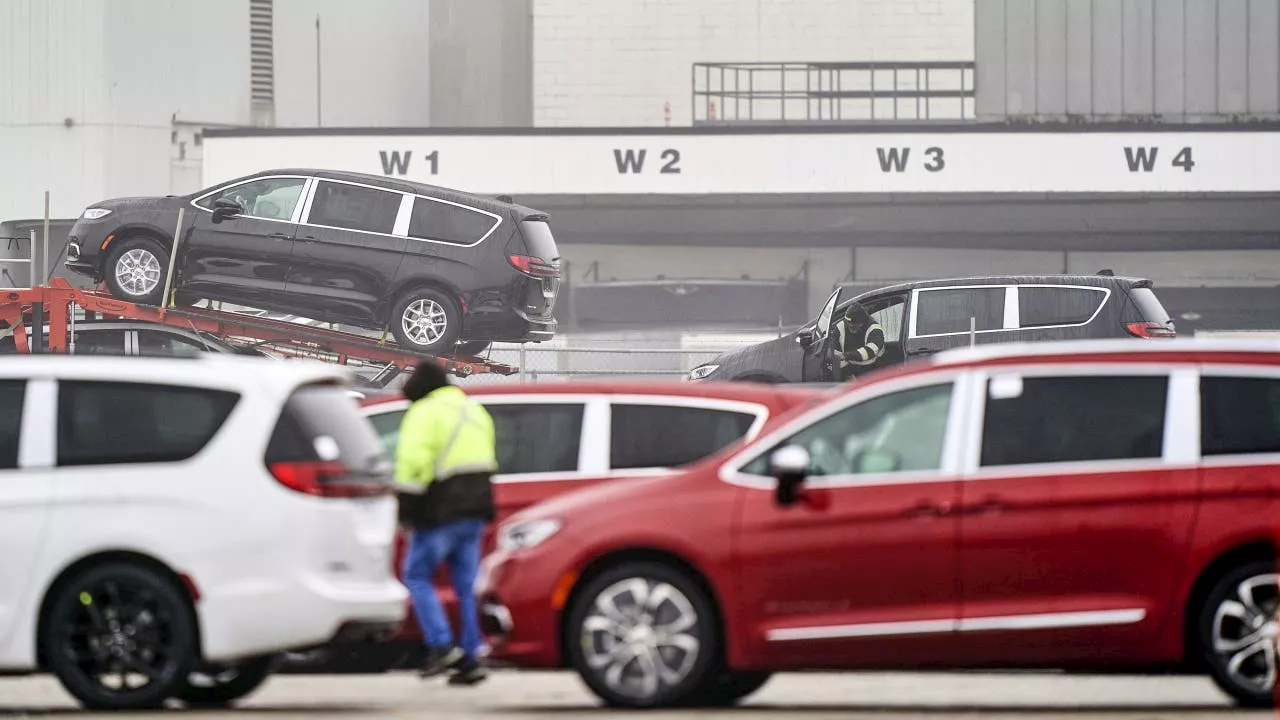
S. from Canada, Mexico and China, the White House said Saturday, raising the risk of aTrump said he was imposing the tariffs because he claimed the countries were allowing fentanyl to come into the U.S. More than 107,000 people died from drug overdose in 2023, with nearly 70% of those deaths from opioids, including fentanyl. Trump also said the tariffs were in response to a trade deficit between the U.S. and the three countries because the U.S. imports more from them than it exports. expect tariffs to increase what consumers pay for a range of goods, including vehicles, electronics, produce and lumber. Tariffs are paid by companies importing goods into the U.S., similar to a tax.While some businesses will look to source goods elsewhere, others with no alternatives will be forced to pay the fees. That means U.S. grocery stores will shoulder higher costs for fruits and vegetables grown in Mexico; homebuilders will pay more for Canadian lumber; and automakers will have to pay a tariff each time a component crosses the northern or southern border, which happens repeatedly during the production of a single vehicle. Companies will have to decide whether to pass these higher costs to consumers or absorb them, which would dent profits or require cuts to protect their margins. The implications could be wide-reaching across the U.S. economy, in part because American consumers and businesses imported more goods from Mexico than any other country.. He has argued the levies would protect American industries from unfair competition by making foreign goods pricier and encouraging companies to manufacture in the U.S. He has also proposed using revenue from tariffs to pay for other policy priorities and deploying them as a negotiating tool. "This is a beautiful, beautiful example of promises made, promises kept by President Trump," said a senior administration official. The official said there was no specific actions the U.S. was looking for the three countries to take in order to lift the tariffs, but rather an end to illegal immigration and fentanyl. "There’s going to be a wide range of metrics, and in Donald Trump’s golden age we will have only legal immigration and we will have zero Americans dying from Chinese, slash Mexican, slash Canadian fentanyl," the official said. But economists have found the tariffs Trump imposed on China during his first term did little to accomplish those goals. Instead, they drove up prices for many imports, led to a net loss of manufacturing he sent to American farmers to offset their losses from tariffs China imposed in response. The levies also didn’t generate significant concessions from Beijing, which has failed to meet many of its commitments under a trade deal negotiated during Trump’s first term. The president’s latest tariffs on Canada and Mexico threaten to upend one of his signature trade pacts, the United States-Mexico-Canada Agreement. Trump had touted the deal as a victory, as it largely allowed products to move between the three countries tariff-free, much as they’d done for decades under the NAFTA agreement that the USMCA replaced. The current trade deal isn’t up for review until July 2026, but the new tariffs could throw it into jeopardy much sooner. “This is not him changing some other administration’s work. This is him changing his administration’s work,” said Francisco Sanches, an international trade lawyer with Holland and Knight and a former U.S. undersecretary of commerce for trade during the Obama administration. The White House said Trump would be issuing the tariffs under the the International Emergency Economic Powers Act. Despite the USMCA, Trump said he has the legal While most of Trump’s tariff threats during his campaign focused on China, he has ratcheted up his focus on Canada and Mexico since he was elected. Both countries vowed to retaliate, which would make American products less competitive within their borders and hurt U.S. businesses that sell there. Cars, oil and gas, electronics, industrial equipment and agricultural products are among the top U.S. exports to Canada and Mexico.“What we’ve seen in these types of circumstances when the United States has put tariffs on another country is an attempt by our trading partners to target really sensitive stakeholders and locations,” said Greta Peisch, a trade lawyer at Wiley Rein who was general counsel for the U.S. Trade Representative during the Biden administration. “They’re very savvy and understand how our process works and what makes an impact potentially.” A senior administration officials said there is a"retaliation clause" in the executive order issuing the tariffs where if any country chooses to retaliate the U.S. will take further action. A trade war among the three countries would reduce the economic growth for all of them but could especially impact Mexico,“For Mexico, a 25% tariff would be catastrophic. Moreover, the economic decline caused by the tariff could increase the incentives for Mexican immigrants to cross the border illegally into the US—directly contradicting another Trump administration priority,” the report said. The U.S. auto industry is among the most vulnerable to tariff impacts. For decades, its supply chains have been heavily intertwined with America’s neighbors to the north and south. As vehicles and components cross borders multiple times during the production process, repeated 25% levies could quickly drive up vehicle costs. The U.S. also depends on agricultural products from Mexico, one of the top suppliers of tomatoes, avocados, berries and peppers. have been a top concern for consumers and voters, with grocery costs up around 25% over the past four yearsAlong with immigration, Trump and lawmakers have raised concerns that China could be using Mexico as a back door into the U.S. to avoid paying tariffs. Mexico has seen a in manufacturers relocating there from China as a way to avoid the tariffs Trump put on China during his first term.The tariffs on Canada are expected to drive up prices of Canadian lumber, known for being lighter and easier to work with, said Dustin Jalbert, a senior economist for wood products at Fastmarkets. Canadian lumber mills have already been struggling from previous duties imposed by the U.S. in recent years and the destruction of millions of acres of forest from a pine beetle infestation. More tariffs could hobble the industry further, he said. “Consumers are going to pay for that in some capacity because in the end, you have less supply available in the market, and prices are going to be somewhat higher on the margin,” said Jalbert.The tariffs could also drive up gas prices, as crude is among Canada’s top exports to the U.S., hamperingCouple balances 15 credit cards with no debt—it's helped them save nearly $500,000, but expert warns the strategy ‘isn't for everyone'
Scratch the next story
TRUMP TARIFFS CANADA MEXICO CHINA FENTANYL TRADE DEFERIT ECONOMY
United States Latest News, United States Headlines
Similar News: You can also read news stories similar to this one that we have collected from other news sources.
 Trump Threatens Tariffs on Canada, Mexico, and Plans to Rename Gulf of MexicoPresident-elect Donald Trump announced plans for 'very serious tariffs' against Canada and Mexico, citing illegal immigration and drug trafficking. He also declared his intention to rename the Gulf of Mexico to the 'Gulf of America'.
Read more »
 Trump says he'll place tariffs on Canada, Mexico and China on SaturdayPresident Donald Trump said Friday he would place 25% tariffs on imports from Canada and Mexico and 10% tariffs on goods from China effective Saturday.
Read more »
 China, Canada And Mexico Get Hit By Trump Tariffs, Sparking New Trade WarTesla could be targeted by Canada with a 100% tariff
Read more »
 Trump Imposes Tariffs on Canada, Mexico, and China, Triggering Price HikesPresident Trump's decision to implement tariffs on imports from Canada, Mexico, and China starting Saturday is expected to cause price increases for a wide range of goods, from gasoline and automobiles to agricultural products. The move comes despite Trump's promises to curb inflation and represents a departure from the trade agreement he negotiated with Canada and Mexico.
Read more »
 Live updates: Trump imposes tariffs on goods from Canada, China and MexicoNBC News' Brian Cheung explains how President Donald Trump's promised tariffs on Mexico, Canada and China will come into effect and the other tariffs that could possibly be coming in the future.
Read more »
 Trump Imposes Tariffs on Goods from Canada, Mexico, and ChinaPresident Donald Trump signed an executive order imposing tariffs on goods originating from Canada, Mexico, and China. The move aims to pressure these countries to curb the flow of fentanyl and illegal immigrants into the U.S. but raises concerns about a trade war and price hikes on various consumer goods.
Read more »