
The Trump administration is giving America’s schools and universities two weeks to eliminate diversity initiatives or risk losing federal money, raising the stakes in the president’s fight against “wokeness” and sowing confusion as schools scramble to comply.
Read full article: WATCH LIVE AT 1: Cold front, freeze update with Mia; strong cold front arrives this eveningRead full article: Controversial comeback: Kirby city council rehires former city managerRead full article: Families with school-age kids prep for cold weather childcare needsGet ready for some fabulous Insider Deals that will help you have a cozy night's sleep and elevate your style and beauty game.
SA Live deals this week: Jewelry, coffee & morePresident Donald Trump waves from his vehicle as he arrives at the Trump International Golf Club, Monday, Feb. 17, 2025, in West Palm Beach, Fla. or risk losing federal money, raising the stakes in the president’s fight against “wokeness” and sowing confusion as schools scramble to comply. In a memo Friday, the Education Department gave an ultimatum to stop using “racial preferences” as a factor in admissions, financial aid, hiring or other areas. Schools are being given 14 days to end any practice that treats students or workers differently because of their race.and decide whether to stand up for practices they believe are legal. The sweeping demand threatens to upend all aspects of campus operations, from questions on college applications to classroom lessons and campus clubs. It’s meant to correct what the memo described as rampant discrimination in education, often against white and Asian students. “Schools have been operating on the pretext that selecting students for ‘diversity’ or similar euphemisms is not selecting them based on race,” said Craig Trainor, acting assistant secretary for civil rights. “No longer. Students should be assessed according to merit, accomplishment and character.” The guidance drew sharp backlash from civil rights groups and university groups. Some believe its vague language is meant to have a chilling effect, pressuring schools to eliminate anything touching on the topic of race even if it may be defensible in court. “Creating a sense of risk around doing work that might promote diverse and welcoming campuses is much more of the goal than a clear statement of existing law,” said Jonathan Fansmith, senior vice president of government relations at the American Council on Education, an association of college presidents.programs. It essentially reflects a change in the federal government’s interpretation of antidiscrimination laws. As legal justification, it cites the 2023barring race as a factor in college admissions. Although the ruling applied only to admissions, the memo says it “applies more broadly.” “Put simply, educational institutions may neither separate or segregate students based on race, nor distribute benefits or burdens based on race,” it said. On Monday the Education Department announced it also cut $600 million in grants for organizations that train teachers. The programs promoted “divisive” concepts like DEI, critical race theory and social justice activism, the department said. The new guidance seeks to remove race from areas including financial aid, housing, graduation ceremonies, hiring and promotion. It also takes aim directly at college admissions, suggesting colleges have sought to work around the Supreme Court's decision. Using non-racial information “as a proxy for race” will now be viewed as a violation of federal law, the memo said. As an example, it said it's unlawful for colleges to eliminate standardized testing requirements “to achieve a desired racial balance or to increase racial diversity.” The guidance reaches beyond the scope of the Supreme Court's decision and is almost certain to be challenged in court, said Angel B. Pérez, CEO of the National Association for College Admission Counseling. While the Supreme Court decision bans race as a factor in evaluating applicants, the memo aims to ban race even in the recruitment of potential students, he said. Practices that have long been commonplace could suddenly become legal liabilities, Pérez said, including recruiting in underrepresented areas or buying lists of potential students with certain academic and demographic information. Companies including the College Board and ACT have long sold lists of students to colleges, acting as a matchmaker and providing a pool of potential applicants who meet certain criteria. “Colleges and universities are going to find themselves between a rock and a hard place,” Pérez said. “They know that what they’re doing is not illegal, but they are worried that if they do not comply, not having federal funding will decimate them.” College application essays are targeted by the memo, raising questions about how far colleges can go in inviting students to share their personal experiences, including their race. The guidance says colleges can't use essays as a way of predicting a student's race. In the Supreme Court decision, Chief Justice John Roberts said nothing in the ruling prevents colleges “from considering an applicant’s discussion of how race affected his or her life,” though he warned that colleges couldn't simply use essays as an indirect workaround to consider applicants' race. In a campus letter at the University of Michigan, President Santa J. Ono said leaders are working to understand the implications. Some colleges said they expect little change from the memo. At Oregon State University, a legal review concluded that its programs “are fully compliant with all state and federal laws,” according to a campus message from Rob Odom, vice president of university relations and marketing. The department memo appears to take aim at scholarships reserved for students from certain racial backgrounds. There’s been legal debate about whether the Supreme Court decision extends to financial aid, with some schools and institutions deciding to scrap racial requirements for certain scholarships. The National Association of Student Financial Aid Administrators said there’s no consensus on the question, and the group is trying to understand how the memo could affect student aid. “What we do know, however, is that 14 days is insufficient time for schools to assess and implement any necessary changes to be in compliance,” the group said in a statement. “The last thing students need when making plans about how to pay for college is uncertainty over when or whether they will receive financial aid they’ve been relying on.”for education secretary nominee Linda McMahon. Asked whether classes on African American history would run afoul of the president's order, McMahon said she wasn't quite certain.The Associated Press’ education coverage receives financial support from multiple private foundations. AP is solely responsible for all content. Find AP’s Copyright 2025 The Associated Press. All rights reserved. This material may not be published, broadcast, rewritten or redistributed without permission.Get ready for some fabulous Insider Deals that will help you have a cozy night's sleep and elevate your style and beauty game.SA Live deals this week: Jewelry, coffee & more
Rob Odom Race Education Ethnicity Craig Trainor Donald Trump U.S. News
United States Latest News, United States Headlines
Similar News:You can also read news stories similar to this one that we have collected from other news sources.
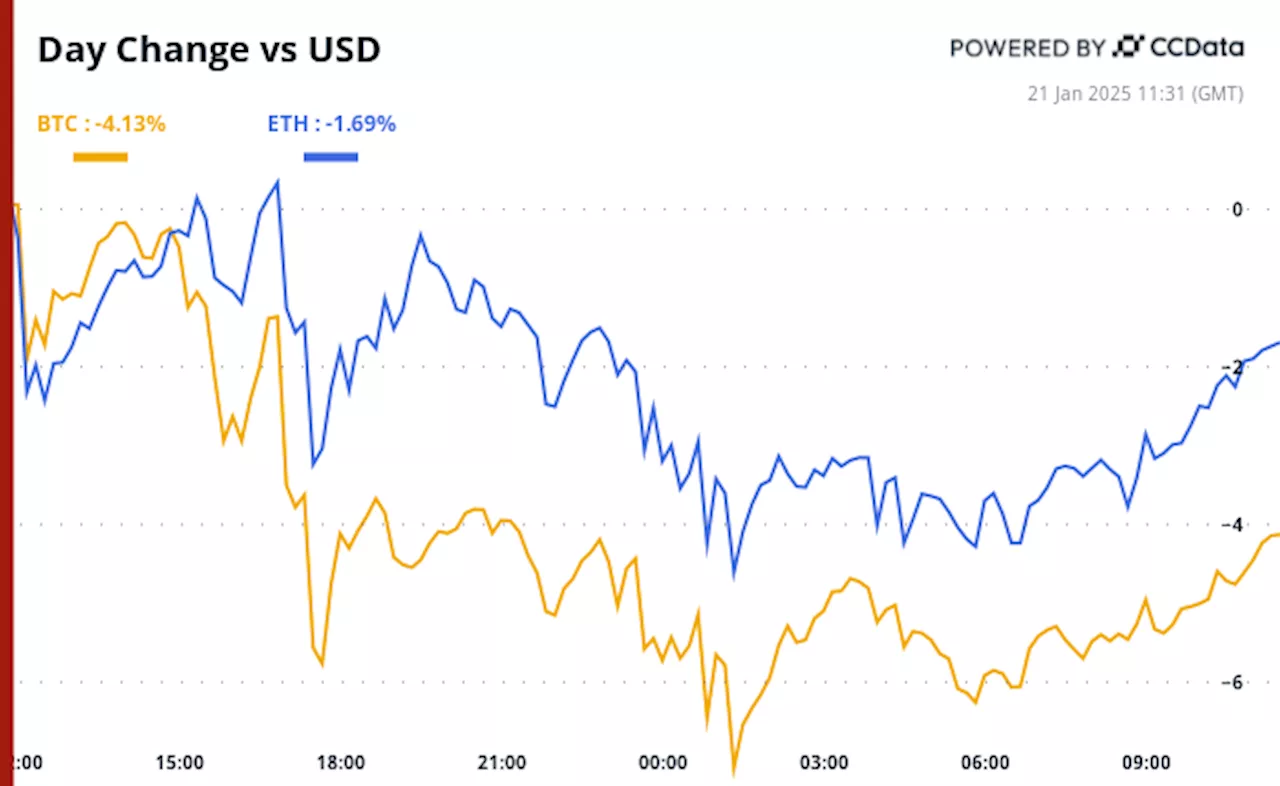 Crypto Daybook Americas: Bitcoin Holds Above $100K, Trump's Inauguration Sparks VolatilityCrypto Daybook Americas provides a morning briefing on the latest crypto market developments. Bitcoin remains above $100,000 despite volatility sparked by Trump's inauguration. Trump's inauguration speech didn't mention crypto, but the market is reacting with heightened expectations for short-term price fluctuations. The emergence of TRUMP memecoin has drawn attention and potentially positive catalysts for digital assets.
Read more »
 Crypto Daybook Americas: Trump's Executive Order, Bitcoin Stays Above $100,000, and MoreThis Crypto Daybook Americas update provides insights into recent developments in the cryptocurrency market, including Bitcoin's price movements, President Trump's executive order on crypto, and the Bank of Japan's rate hike.
Read more »
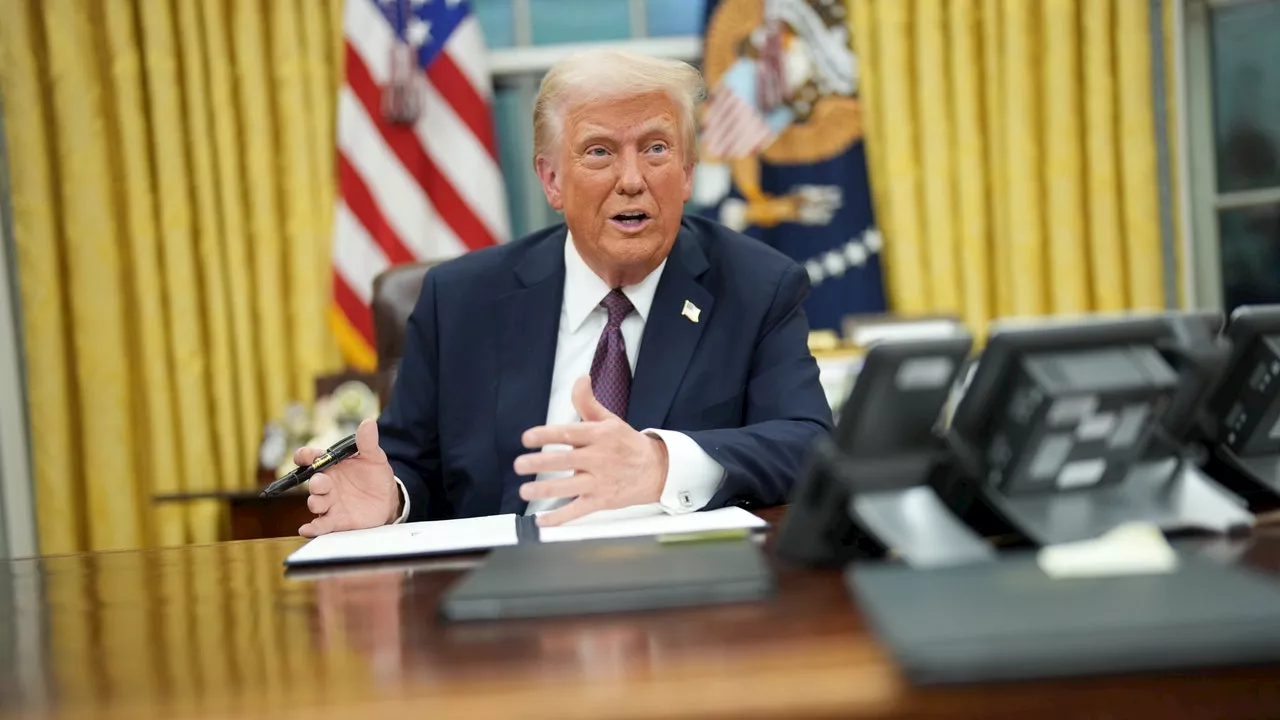 Trump's Anti-DEI Purge Sweeps Across Corporate AmericaFollowing a wave of controversial executive orders, the Trump administration is embarking on a purge of diversity, equity, and inclusion (DEI) programs across the federal government and beyond. Trump has labeled DEI initiatives as 'illegal and immoral discrimination,' echoing a broader right-wing backlash against such programs. This trend has seen numerous states consider anti-DEI laws, major companies like Ford and Boeing roll back their DEI efforts, and universities facing pressure to curtail their initiatives. Even some companies in Trump's immediate circle, like McDonald's and Walmart, have scaled back or ended their DEI programs, citing a shifting legal and political climate.
Read more »
 Crypto Daybook Americas: Crypto Daybook Americas: Bitcoin (BTC) Rebounds as DeepSeek Concerns Wane, AI Tokens RegroupThe day ahead in crypto: Jan. 28, 2025
Read more »
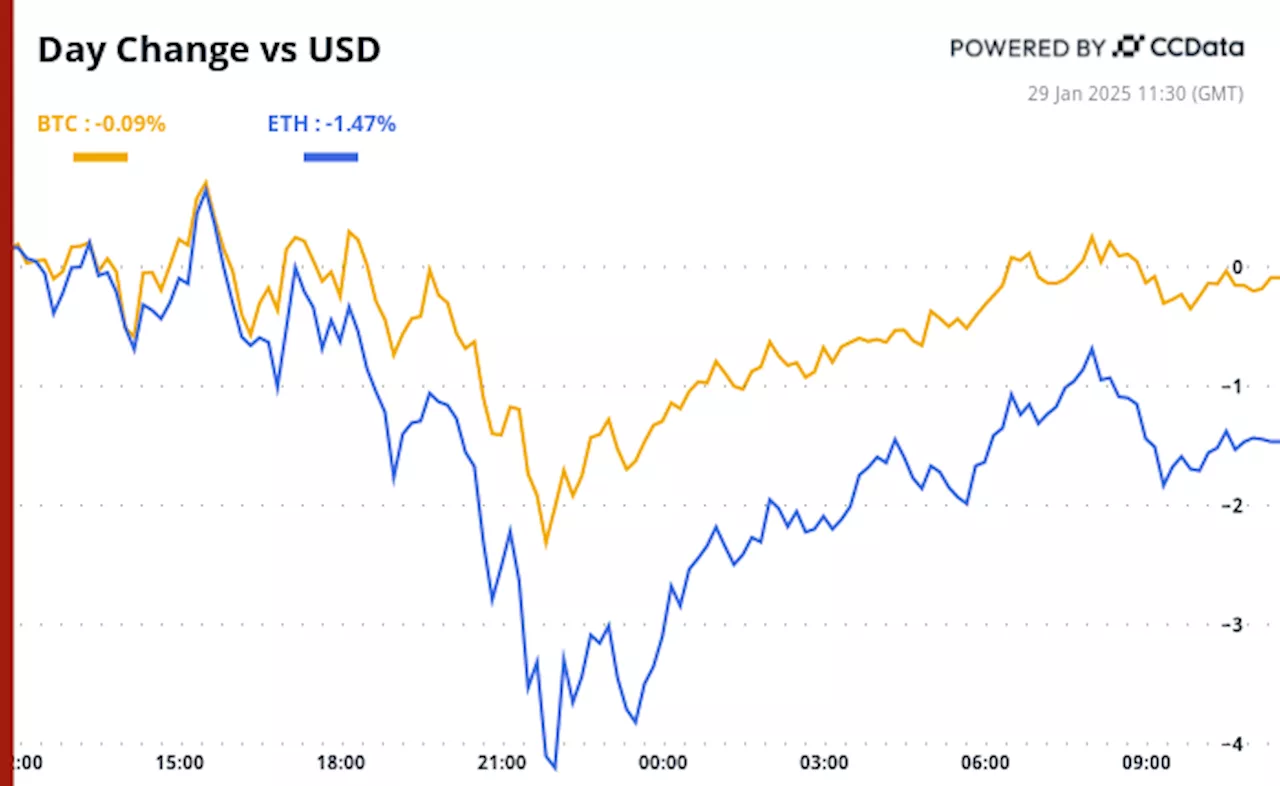 Crypto Daybook Americas: Trump Exports Bitcoin Enthusiasm as Price Rebounds, Investors Eye FOMCThe day ahead in crypto: Jan. 29, 2025
Read more »
 Crypto Daybook Americas: Donald Trump's Looming Tariff Escalation Fails to Rattle Bitcoin (BTC)The day ahead in crypto: Feb. 10, 2025
Read more »