


 +34
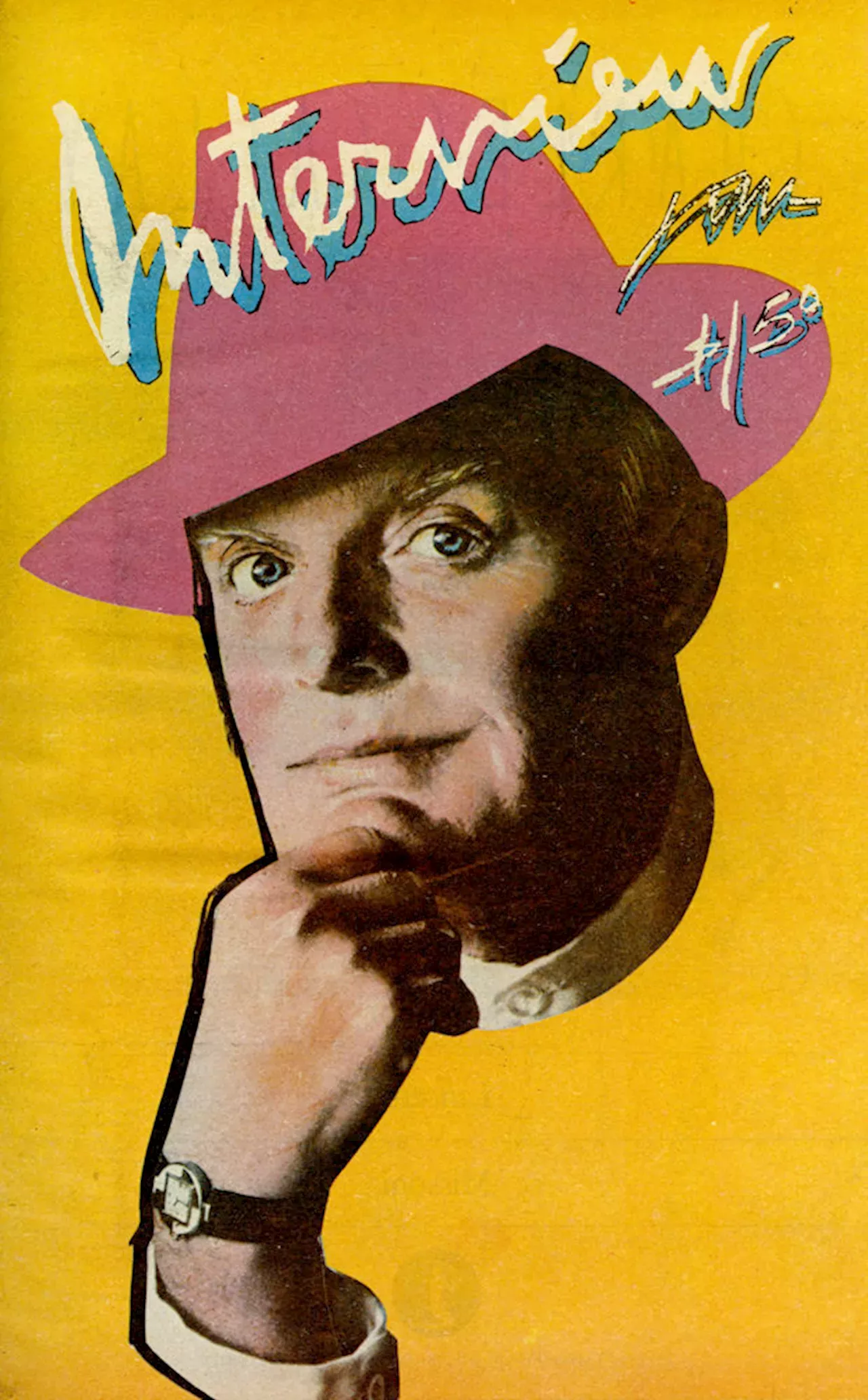
In honor of the new FX series, 'Feud: Capote vs. the Swans,' we're revisiting Truman Capote's January 1979 cover story.
the drama that erupted when Capote, a close friend and confidant of the glamorous New York socialities known as “the swans,” spilled the women’s darkest secrets to the press. In the feature, Andy Warhol and Bob Colacello pose the question “Is Truman Human?” as they follow Capote from his daily swim at a health club to his favorite restaurants, all while keeping up a running commentary on life, love, and decadent meals.
The interview took place five years before the author’s death in 1984., ANDY WARHOL and BOB COLACELLO are walking from Truman’s apartment building to the TURTLE BAY HEALTH CLUB in the UNITED NATIONS PLAZA HOTEL, where Truman swims each day. Truman is wearing a CONCORDE flight jacket, a white cotton shirt, khaki trousers, old moccasins and a red and grey plaid scarf.CAPOTE: Right up here. Do you not want to go to the pool? I know you’re not going in.COLACELLO: We went to the Palace last night, the most expensive restaurant in New York. It was $914 for six people.CAPOTE: Yes, when it first opened. I don’t remember it particularly except that I didn’t think it was very good. The decor was dreary. I like only three restaurants in New York.CAPOTE: I like Raphael. That’s number one. Number two is Grenouille. Number three I like Quo Vadis, just because I like it. I don’t think the food is very good but I like the people who run it. It’s nice, cozy, and comfortable. I like other restaurants for different reasons. I like Antolotti’s. I think it’s a great Italian restaurant. What restaurants do you like Bob?CAPOTE: I like Lutece too, although I think it’s very uncomfortable. I think the food is marvelous but the chairs and tables are uncomfortable. The lighting in there is bad.CAPOTE: I like mine, too. I like La Petite Marmite where I’m going to take you to lunch today, unless you’d rather go and have an Italian lunch.CAPOTE: Yes, and they have great omelettes, too. It’s worth your life to order an omelette in most restaurants. You never know what you’re going to get.CAPOTE: It’s so quiet up here. Usually there isn’t anybody up here. I sit up here and write and swim. It’s really great fun and it’s pretty, too. This is where I thought of giving a swimming party.CAPOTE: I don’t want to have a Toga party. I’ll leave that to the students at New York University.CAPOTE: I had acute appendicitis when I was in a remote part of Alabama when I was eight years old. There wasn’t any doctor for a hundred and twenty miles. I was going to die if they had to go that far. A horse doctor did it. Look at that terrible scar.CAPOTE: No, not both. I usually come in the morning. If I don’t come in the morning I come in the afternoon.CAPOTE: Yes. Especially if I come in the afternoon. I come here around one thirty and I stay ’til five thirty. I swim for fifteen minutes. Then I read or write for thirty minutes. Then I swim for fifteen minutes. I do that until it’s time to leave.CAPOTE: Yes. I’ve written most of my things on Big Chief pads. They have the head of an Indian on them.It’s made up of all non-fiction pieces, only three of which I’ve ever published. I could have published them. I’m just doing it for this book. Let’s go to lunch. I’ll get dressed.WARHOL: I think it’s great. The kids who work there want us to come back. They said they’d give us preferential treatment because we know you.COLACELLO: I should move to this neighborhood.CAPOTE: I have a great gym with a marvelous masseur. Ordinarily when I leave the pool I go over there and have a massage.WARHOL: That’s how you get your red eyes—it’s from the chlorine. Is Bob meeting us?WARHOL: What do you think of all those people killing themselves down in Guyana.CAPOTE: I’ve got a great new drink: I’ll have half orange juice and half tomato juice without ice in it.COLACELLO: I’ll have some fresh grapefruit juice.CAPOTE: Oh, you wretched boy. You must not drink anything. You should lead a healthy life with me. You should come and go swimming with me in the morning on your way to Union Square. COLACELLO: I should have a limousine pick me up in the mornings and take me to the doctor, the pool, and the office. CAPOTE: I’ll give you that for Christmas. David Selznick once gave me a limousine for six months as a Christmas present.COLACELLO: She went to California on a promotional tour. CAPOTE: I guess if you’re that thin and that small you don’t need to take up too much space or breathe that much air. You just keep on going.CAPOTE: No. I’m working on it.CAPOTE: I’ve been getting up at five-thirty in the morning and working from six ’til ten. Then I go to the pool. If I work all morning I go in the afternoon.I Will Survive . By the time I’ve finished all three of those I’ve done about a half hour of exercises. Then I rinse my face and take a fast bath and go in there and start writing.CAPOTE: I don’t know because I practically always throw out all my mail. I flip through those letters that say, “Won’t you sign this?” or “I’ve got to write a school paper about blah blah” or “Why don’t you tell me the whole story of your life?”CAPOTE: I don’t send them anything. I just throw the letters away. I can’t possibly cope with it and I just cease to bother.CAPOTE: They send them to Random House or they just write, “Truman Capote, United Nations, New York, New York,” and I get it. I get mail at several addresses because inCAPOTE: I don’t know. I haven’t decided yet. I just live one day at a time. That’s my new theory in life. I was always projecting all the time.CAPOTE: Every day is a new day with me. All holds are off. All contracts are forgotten. I used to spend all of my time projecting. I was never in the moment. It was always tomorrow or next week or two months from now. That was one of the reasons I always had this sense of anxiety. One of the things I learned at Hazelden was I just simply can’t do that. It’s one of those things that leads into drinking which I don’t want to do. WARHOL: I don’t understand. One day three weeks ago you went to the country and came back different. It was just overnight.WARHOL: It’s just incredible. You’re like a new same old person. You really are. How did the Stanley Siegel Show go?WARHOL: It has sugar in it. Do you think living is worth living?CAPOTE: Curiosity, if nothing else. Aren’t you curious? All this thing in Guyana is so fascinating. I think Norman Mailer ought to go there and do a book about it. It’s a perfect subject for him. He hasn’t had a good subject in a long time. He’s a very fast writer. He’s a good writer. I’m good but slow.CAPOTE: Creating. Personally, I rather think that if you’re not creative you’ve got a problem on your hands. If you are creative you’ve got a double problem.CAPOTE: In one way or another. Most people don’t find their creativity. There are more unsung geniuses that don’t even know they have great talent.they had maids on. They now call themselves household technicians. They’re trying to start a union of household technicians. It was really weird. They were all blacks. They didn’t have any white household technicians. CAPOTE: Do you know what they call the elevator man in our building now? They have it on their jackets—Lobby Director., all the chapters have titles. In a way each is very dependent on the other. Needless to say it’s a novel but in a way you can pull each one of them out. I finally found the title for the last chapter of the book which I wrote six years ago. I wrote the last chapter first. I always do that. I also write the last paragraph or page of a story first. That way I always know what I’m working towards. Anyway, the last chapter of the book is calledCAPOTE: The narrator in the story decides that in the abstract sense, the Valhalla or the grass-is-greener place that he wants to go is an imaginary cafe that he’s made up in his mind. It’s a kind of mental Studio 54. It’s calledCOLACELLO: You just said that you start writing the last paragraph first. In a sense isn’t that what you were always trying to do with your life?—anticipating the end first and then working towards it?COLACELLO: Maybe that has something to do with the way you write. CAPOTE: It has a good deal to do with everything. It really began when I was a child. I was locked up for long periods of time and didn’t know when anybody was going to come and let me out. It created a tremendous sense of anxiety and I’ve never gotten rid of it. I just shift the focus of the anxiety. That’s really the reason I started drinking too much. It was the one thing that would stop the sense of anxiety. Of course all it did really was create a new anxiety. Since I decided to reorganize my life I have a great deal less anxiety.CAPOTE: I know but I’m doing it without using any other substances.CAPOTE: Let’s take everything just as it is.COLACELLO: Do you think love is very important? Could you live without love?CAPOTE: I’ve never been without it so I’m not exactly sure.CAPOTE: When I was at Hazelden I didn’t have any sex. I must say that towards the end I was thinking about it a good deal.WARHOL: And money. CAPOTE: That comes under the heading of greed. Jane Austen always said, “There are only two things to write about—love and money.” I don’t agree with her at all.CAPOTE: I’ve lived a lot in communist countries and they’re intensely interested in money. I think they are more interested in money than capitalists are. They’re the most materialistic people in the world. What they’re actually living for is material things. The irony of that is that in communist countries there isn’t anything to buy.CAPOTE: We better order lunch. I’m going to have an omelette aux fine herbs and a cucumber and endive salad mixed.COLACELLO: I’ll have an omelette and endive and watercress salad. CAPOTE: I’ve found this chocolate shop on 73rd street that I’m obsessed by. I keep running up there in a taxi and getting boxes of chocolates and then I eat them all.CAPOTE: She had a drink? She promised me she wouldn’t have a drink. WARHOL: She bought the best scallops in South Hampton over the weekend and cooked them in the office in white wine. That started it all off. Then she had four big glasses of wine. Then she went to the bakery and brought back a chocolate cake and a pecan pie.WARHOL: She goes to OA and AA. Isn’t that cute? They have to hold hands and say The Lord’s Prayer at both places. I said, “Brigid, do you mean you hold hands with just any person next to you?”CAPOTE: No. Scott Newman, the boy that accidentally killed himself the other day, used to go with me.CAPOTE: He had been drinking and taking a lot of drugs ever since I had known him. He was very unhappy. He had lots of problems. He was in analysis. I never saw him without his therapist. He didn’t have any money.CAPOTE: He probably did. I know there was one person who was trying to help him. Paul used to call that person up and he was very grateful for all the person was doing for Scott, which was quite a lot. He was very concerned. Paul Newman is a very nice person and so is Joanne Woodward. He had two children, Scott and a daughter, by his first wife. He has three daughters with Joanne.CAPOTE: It’s a wonder Joan Crawford’s children didn’t—after reading that book. I didn’t like that book. I thought it was fantastically exploitative. I’m sure it was true. But you can see that she probably only wrote the book to make money. I have a feeling her husband had a great deal to do with it.CAPOTE: Books. I read an awful lot of magazines and newspapers, too.Dancer From The DanceCOLACELLO: I couldn’t get past the first page. But it’s funny to walk into a bookstore and see a whole rack that says,CAPOTE: Actually that’s very good to do. I make a cold Russian soup and I have to use a lot of cucumbers. I always take the centers out because they sort of make a mess. They only time they have them is in pickles.CAPOTE: Again for Christmas somebody gave me all these private cooking lessons with James Beard. Actually I knew how to cook before. I learned in New Orleans. I spent practically most of my childhood in a kitchen; I mean sitting there because it was the nicest room in the house. This was in Alabama. I knew a lot about cooking. I was a very good cook. But James Beard is a very good teacher.CAPOTE: Halston wanted me to think of some idea for his birthday party for Steve . WARHOL: He wants you to write a poem about Studio 54 or Steve and then perform it. Could you do that?WARHOL: You could live with a woman very easily, couldn’t you?COLACELLO: Liz Smith seems to have a short interview with you every other day.WARHOL: Truman, describe one of your days thirty years ago in New York. What would you be doing right now at this time?CAPOTE: Yes. Times Square was wild. The Astor bar was fabulous.CAPOTE: It was all over. There was a fabulous gay bar on Madison Avenue called Cerutti’s. It was really something. It was in two different rooms. The first room was all servicemen, and the second one was about this size and they had a wonderful pianist there called Garland Wilson. It was there that Jimmy Donohue, Barbara Hutton’s first cousin, picked up this soldier. I was there that night. Jimmie Donohue was giving this party and he came into Cerutti’s. I was only about seventeen or eighteen years old. He came into Cerutti’s with Fulco Verdura and they made a dragnet of the bar. They picked up all these marines and sailors. They had fleets of taxis outside. They got them all into this taxi and took them back to this party. I didn’t go to the party but I saw this all happen. One of the service men got very drunk in the middle of the party and they took off his clothes and they got out a razor and they were shaving off his pubic hairs.CAPOTE: They thought it was funny. They were all drunk and stoned. He came to in the middle of it and they cut his prick off accidentally.CAPOTE: They got into a terrible panic and they wrapped the guy up in a blanket without putting any clothes on him and they got him into a car and they dumped him on the 59th Street Bridge and they drove away. He was found by the police and taken to a hospital. When he came to he remembered he’d gone to Cerutti’s. The police went there. They said yes, the guy was there with Mr. Donohue. Fulco got into a lot of trouble about this. It was really all Jimmy Donohue. Mrs. Donohue chartered a plane and flew Jimmy and another friend of his that was somehow involved in it to Mexico. They stayed in Mexico for a year or two. They paid the boy off to not bring charges. And since he wouldn’t bring any charges it was never in prosecution.WARHOL: Who were you in love with then?WARHOL: You weren’t in love with anybody at seventeen? Oh, come on.WARHOL: Who were you just finished being in love with? CAPOTE: I was just about to be in love with somebody. The next person in my life who I spent a long time with was a professor at Harvard. WARHOL: Was he the one who had a lot of love letters that you wrote to him? I just heard about that from a friend of mine who went to Harvard.COLACELLO: Don’t letters that you write belong to you? CAPOTE: They do belong to me. But the property physically belongs to the person who received it. They can’t publish it without your permission. This guy that’s writing a book about me, Gerald Clarke, he read some of the letters. He went up to the library.CAPOTE: I was eighteen and he was forty-two.CAPOTE: I lived in Paris and Tangiers. WARHOL: I read Cecil Beaton’s books on going back to Paris after the war. They were fascinating. Where did you live in Paris?COLACELLO: Who did you live with on the top floor of the Ritz Hotel?CAPOTE: You’re right. It was fun. There were all kinds of marvelous clubs.CAPOTE: It depends on the person. With one exception everybody who has ever been involved with me is still a great friend of mine. I was with Jack for thirty years. For fifteen years I was faithful to Jack. When I wasn’t it was because I was with somebody else. We’re still the greatest friends. My life in that area has been pretty steady. The one exception was just terribly bad judgment on my part.CAPOTE: No. It depends on the quality of your relationship. Again, with one exception, I’ve never had an affair with somebody who wasn’t at the same time a very good friend of mine, if you see what I mean. I was friends with them before. They didn’t become friends of mine because of… It’s always the other way around.WARHOL: You did so much when you were with Jack. Why was he so great that you were able to turn out all that stuff?WARHOL: Does he have a boyfriend now?CAPOTE: He’s a very good writer. He does a lot of translations. He’s a big student of languages. He’s a great outdoors person. He’s a fabulous skier.CAPOTE: I have a house in Switzerland. He’s going in a few weeks. It’s right next to Gstaad—just one valley over.CAPOTE: No. It made it easier. He didn’t have to go to an office and that’s why we could live anywhere we wanted to in the world.CAPOTE: There’s no competition between me and Jack. There never was.WARHOL: Couldn’t it have been thirty?WARHOL: You just got tired or he got tired? CAPOTE: No. I didn’t want to go to Switzerland in the winter anymore. I’d been going there for many years.CAPOTE: We didn’t break up at all. We’re still very very good friends. Can’t you get it through your head?CAPOTE: I just stopped sleeping with him, that’s all. That’s not breaking up with somebody.CAPOTE: I don’t know. I haven’t discussed it. He’s very attractive and he’s very charming.WARHOL: I read a wonderful article in Christopher Street. It was about two boys that met and had an affair. Then they broke up. They had a few pictures they took of each other. Then from the pictures they recollected how their affair went. It was fascinating. It could have been a boy and a girl. It just happened to be two boys. Each boy had a different fantasy. It was fascinating how two people do things for different reasons. You can be really close and you’re still not really close at all. I’ll give it to you. CAPOTE: I think I might have a small piece of dessert if they’ve got anything decent. It will keep me from going up to that chocolate place. WARHOL: I’ll take you to really the best chocolate place. I buy my three-foot bunnies there. Kron’s—on 66th and Madison.WARHOL: All my Swiss friends bring me chocolate. Thomas Ammann brought me a pound last week. You have to eat it within five days because the milk curdles.COLACELLO: I’m always so chilly. Is it cold in here? CAPOTE: It’s because you’ve stopped drinking. Then your blood needs heating up. You’ll live to be as old as Anita Loos.WARHOL: Well, I don’t. COLACELLO: Well then, just die. Just think of all those nights at Studio 54 you’ll be missing if you die.COLACELLO: That’s what you tell me every morning when I don’t go.WARHOL: You’re going to love it. It’s the best.WARHOL: What’s a picture? CAPOTE: An injection. Everybody that I know who takes Vitamin B12 regularly has learned to do it. Swifty Lazar gives himself injections in his hip.CAPOTE: It doesn’t matter to Irving whether he’s your agent or not. He just will go out and sell your property.CAPOTE: I don’t want to do that. I could very easily but that pins you down in the wrong way.CAPOTE: It still has a good sale. It sold about fourteen million in paperback worldwide. Let’s go to Kron’s chocolate shop. It’s so exciting, the whole idea. I’m beside myself.CAPOTE: Attentiveness and thoughtfulness. I’ve got two theories. One is, there is nobody in the world that you can’t get if you really concentrate on it, if you really want them. You’ve got to want it to the exclusion of everything else. That’s how I got Jack Dunphy. Everybody said I could never get him. He was married to a terrific girl, Joan McCracken. I liked her too, very much. I was just determined. I concentrated on it to the exclusion of everything else. It turned out it was a very good thing on all fronts. It was even good for Joan who then married Bob Fosse. She died very young. She had a heart attack. Whatever relationship you have, man or woman, you have to be very attentive and you have to be a very good friend to them regardless of what they do. Really being friends is the most important part, I think, of any relationship. If you can’t be friends with a lover, then forget it. It’s not going to work. I think my greatest talent really is for friendship. It’s a great pity that this thing happened about. Certain people wanted to make trouble and they used this as an excuse. It was ridiculous and childish. I didn’t do anything. 8:00 p.m. TRUMAN, ANDY and BOB are joined for dinner at RAPHAEL by IVAN KARP, Impresario of O.K. HARRIS art gallery in Soho; his wife MARILYNN; and BOB MACBRIDE, computer expert and sculptor. Truman is wearing a custom-tailored brown suit, a pale peach sweater, paler peach shirt, and a brown knit tie.CAPOTE: It’s a cheese and spinach souffle in which you sink six poached eggs. The yolks have to be soft and run all through the spinach and the cheese.CAPOTE: It’s simply sensational. The trick is to have the yolks very very soft when the thing rises. If the eggs harden the whole thing is over. Apparently a chef of the Furstenbergs in Austria invented it. WAITER: This evening we have fresh quail with figs and kumquats. Then I have a fois gras de canard—a duck liver pate sauteed two minutes on each side, served with fresh pineapple. I have raw salmon marinated with oil, lemon, and dill. Then I have fresh raw scallops, marinated with fresh lime juice, and served with creme fraiche aux fine herbs. I have scallopine sauteed with sweet garlic and served with sweet and sour onion and carrots. I have the terrine de canard, a duck pate served with pickled strawberries. I have tiny snails out of the shells sauteed with creme fraiche and butter.WARHOL: What did you do after we left Kron’s? CAPOTE: I went home and ate all of those chocolate truffles. They were fabulous. Then I went and took two tetracyclines so my face wouldn’t breakout. I take two a day because it’s marvelous for your skin.CAPOTE: I think I’m going to Guyana to have a cannibal feast.CAPOTE: I make a great vinaigrette sauce. Then I slice up a lot of zucchini and onions and put them in the sauce and I just leave it in the refrigerator in one of those plastic containers for a few days. Then I take it out and it’s just great. I’ll tell you what my favorite dish to make is: it always comes as a great surprise when you serve it. You take a larger version of those Boston bean jars. You take those Italian beans, they have absolutely no taste and they’re white. I heat those up as hot as I can get them. Then I put in a fistful of caviar. Then I cover the whole thing with sour cream. They dig into it and they don’t know what it is. Then out comes all this sour cream, caviar and hot beans. It’s my favorite dish. I like it because people always go, “Ah…” I first had it at a health spa in Italy. KARP: I like to play with whatever ingredients I have and kind of invent things—to make fabulous new tastes. Do you know what potato pancakes are?KARP: I like them with sour cream or applesauce. CAPOTE: When I make fried chicken I always serve masses and masses of fresh mangos. It’s a great combination. KARP: I marinate the chicken in maple syrup and ginger two days before. When I fry it, I fry it in fat back so it has the bacon flavor. I also put a lot of salt and pepper in the flour. CAPOTE: That sounds fabulous. I love the idea of marinating it. I’ve never had marinated chicken for frying. I make a chicken dish that’s really great. It’s called Butter Chicken. You put two chickens in a clear casserole with three pounds of butter. You put it in the oven on a low heat and you cook it for about seven hours. It’s out of this world. I serve it with a ver very dryCAPOTE: I’ll give you a three course meal. First we’ll have the caviar. I make a Louisiana bouillabaisse. It’s sensational. Then we’ll have Butter Chicken. Andy, what are you going to contribute to this meal? Fudge?WARHOL: I liked that, this afternoon—the cab driver saying, “Thanks Mr. Caput.” Truman, what was the best version of your name?WARHOL: You left New York and went to Europe in 1949?WARHOL: You didn’t come back from Europe till 1968? CAPOTE: I came back but I never stayed here very long—only a couple of months. The only time I stayed here for any length of time was when I was doingCOLACELLO: Why did you prefer to live in Europe?CAPOTE: Not too far. It was about thirty kilometers away. I took the apartment at the UN Plaza in 1965. Then I got that house in Palm Springs. At that time I stopped going to Europe.CAPOTE: I was in Bloomingdale’s and I ended up buying a couple of cans of Paul Bocuse soup just out of curiosity. I haven’t tried them yet. There’s one really putting-off thing about it. He has a picture of himself on the label which I think is bad. KARP: Do you actually get in and out of Bloomingdale’s without being recognized? How do you get used to it?KARP: There’s a choice and that’s that you could change your lifestyle. CAPOTE: Bob MacBride does something funny when we’re walking down the street. People keep doing that double take. Sometimes they walk ahead and turn around and walk back slowly so they can get a real good look. Sometimes they’ll stop and say, “Aren’t you Truman Capote?” I always say, “Yes.” Bob will say, “Oh George, when are you going to stop that? Someday you’re going to get in serious trouble.” I think it’s funny when Andy and I are standing together in 54 and all these people keep coming up and talking to us. Neither one of us have the faintest idea who they are. WARHOL: We have the best time on the street. We get free umbrellas when it’s raining. We pick up all the girls. CAPOTE: Do you remember the day when we were walking along and this man walked by whistling? He stopped and said, “Well, two living legends!” COLACELLO: That reminds me of when Paulette Goddard ran into Greta Garbo about two years ago on East 57th Street. Paulette was wearing a white fox coat with a white sequined beret. Garbo didn’t really see her. Paulette stopped Garbo and said, “Greta, it’s Paulette.” Garbo looked at her and said, “Paulette, still wearing berets.”COLACELLO: They used to put LSD in Kool-aid. It’s like the ‘60s.CAPOTE: Jones came from Indianapolis with a church and a hundred people. He came with a hundred disciples to Mendocino. I’ve been to Mendocino. That’s a creepy place. WARHOL: I think they’re doing this just to get the Reverend Moon kids and everybody else. They want to get the Synanon people.CAPOTE: I had a tour of Synanon about a year ago in Santa Monica. Boy, what a creepy place.CAPOTE: He goes to every nut. What’s his name? KARP: Ron Portante. He doesn’t glow or anything. He’s rather ordinary looking. he just sits there and squints in difficult moments but he talks.CAPOTE: I want to go. How much does he charge? KARP: Seventy-five dollars. Bring a ninety minute cassette because he’ll take the whole thing for you to play back.CAPOTE: Maybe Dick Avedon will stop going to Dr. Manfred. I went to Dr. Manfred till I had the following conversation with him one day: I went to him for about eight months. I didn’t like him. He’s very German and very reserved. He’s very severe, ungiving, cold as all get out, and I used to go to him at eight thirty in the morning.CAPOTE: A hundred dollars. He said to me, “You should eat a good breakfast every morning.” I said, “I never eat breakfast.” He said, “It’s the most important meal of the day.” He said, “I have a huge breakfast every morning.” I said, “Do you make it yourself?” He said, “Certainly not. Of course I don’t make it myself.” I said, “Who makes your breakfast?” He said, “My‘ This was the first time I’d ever had an intimate conversation with Dr. Manfred. He said, “I get up every morning at five o’clock.” I said, “Does Mrs. Manfred get up at five o’clock to make your breakfast?” He said, “Certainly she does.” I said, “What would you do if she didn’t get up?” He said, ” I would kick her out of the bed and send her into the kitchen.” I said, “Suppose she didn’t want to get out of bed and make your breakfast.” He said,” She has to.” I said, “Why does she have to?” I will never forget it as long as I live, because this very reserved, distinguished man looked at me for a long moment: he had no humor at all, and dead seriously he said, “Because I bring home the moola.” I walked out of there that day and I never went back.CAPOTE: God no. WARHOL: Maxime de la Falaise went to a psychic who gave her an enema. I said, “Why are you doing this?” She said, “It’s good for an article.” He tell you your fortune while you’re having a high colonic. COLACELLO: Someone told me that rich old ladies have boys ejaculate in their face because it is good for their skin.WARHOL: That’s how they really got good faces?KARP: Minneapolis is the third or fourth largest art center in the country. More art is consumed there. It is a very complicated and mysterious city. There are a lot of decadent Swedes there.WARHOL: We looked in the phone book and there were forty Warhols. CAPOTE: I was sued by a girl for one million dollars. She claimed that she was the character in my book,. She claimed that she was Holly Golightly, I had to get a lawyer. I had never met, seen or heard of this girl but her name was Golightly. The case dragged on in the courts for four years. It was another one of those things that cost me thirty-five thousand dollars. It’s so ridiculous. I’ve been sued a couple of times and never justly. Her picture was inmagazine. She had no case at all. Talking about telephone books; we had been going through telephone books all over the country. We came up with about five thousand Golightlys. I had only heard the name once before in my life. It’s a name it turns out that’s really quite common in Texas where the character came from.CAPOTE: It’s English. I’ve been sued three times. Every time I win and every time it costs me a fortune. I was absolutely innocent every time.CAPOTE: Benjamin Sonnenberg, who ate every single meal in the Pavillon for fifteen years, died. He had that big house in Gramercy Park.CAPOTE: That’s what he always claimed. I thought that Albert Lasker did. KARP: Is there a particular time in history that you would like to be in the midst of? Sometimes Marilynn and I do this in the dead of winter when things are desperate. If you were offered a week in another time with full prosperity and with all the accoutrements, which time and which place would you pick?CAPOTE: I think it would have been nice. The climate was beautiful and it was a beautiful town, and there were lovely looking people.KARP: There’s some people I want to see. I have a real problem because I’d like to tell Van Gogh that everything would be alright.KARP: No, he must have been good company. CAPOTE: No. He wasn’t good company. I like Henry James as an artist but I just think he would have been a terribly boring man. I wouldn’t have wanted to know Proust either. I think he was a boring man. His letters are so hypocritical. I loveKARP: I’ve not read the letters. Are they very boring?CAPOTE: All kinds of people. There are two big volumes edited by Minne Curtis—a marvelous job of editing. They were translated by Minne Curtis and they’re very good translations I’m told. I would have liked to have known Oscar Wilde because I think he must have been very amusing and entertaining. I’m sure Proust was a big bore.CAPOTE: Not really. I think she’s a marvelous artist but I wouldn’t have wanted to know her. I think she was a mean bitch. She said that thing about Katherine Mansfield and I couldn’t believe it. In a recent journal of hers and she said, “Katherine Mansfield died yesterday—another rival removed.”CAPOTE: I would have liked to have known her just out of curiosity. I love her books.CAPOTE: My stepfather was Cuban so I used to go to Cuba a lot.KARP: Someone called me and offered me a million dollars for my life story. I didn’t accept it. CAPOTE: I’ll pay you a million dollars if you tell your life story for true. Bob, where would you go in time? MACBRIDE: I’d like to be in Paris during the hundred days in 1815 when Napoleon came back before he went to Waterloo.WARHOL: It would have been fun to go to Haight-Ashbury in the ‘60s, and see Janis Joplin and Jim Morrison.CAPOTE: He got all of Peggy Guggenheim’s money.A Chateau in Puerto Rico . And I may yet. When I was in the hospital there was this crazy man there. He used to go to the window and lean out into the street and yell down, “Send me up a six pack of Puerto Ricans.”CAPOTE: I know what it is. Radziwill.MACBRIDE: When the Earl of Raglan lead the Charge of the Light Brigade at Baklava in the Crimean War….MACBRIDE: Yes. He survived the charge and his horse jumped over the Russian cannon and there he was all alone surrounded by Russians. Do you know who came out and grabbed him and rescued him?MACBRIDE: No, Count Stanislas Radziwill who had visited his house many times in England. He told the Russians to quit killing him and they saved him. They took him back and gave him a drink.CAPOTE: Have you heard why the Poles stopped making icecubes? They forgot the recipe. Do you know how to sink a Polish naval ship? Put it in the water. COLACELLO: Do you know why the new Pope is going to travel a lot? He can’t stand living in that Italian ghetto. Do you know the national bird of Poland? The fly. Where’s the name Capote from? Is it Italian?COLACELLO: Where did you get Truman from?WARHOL: You fell in love with him. CAPOTE: No, I never met him. The man who is writing that book about me went to see him I think. He lives in Colorado.CAPOTE: It was the name of a New Orleans family that were relatives of mine. I’m from New Orleans.CAPOTE: He is living in Louisiana. He has been married nine times. He is a lawyer who never practiced the law. He married rich women. The only woman he ever married that wasn’t rich was my mother. She was only fifteen years old.WARHOL: Did your first agent, Marilyn Ives, die?WARHOL: She was really nice. I have all the letters she ever sent me. Did she really do a lot for you?CAPOTE: No.CAPOTE: I was the only child. Weird, isn’t it? My father was quite an attractive guy. He was very intelligent and very amusing. I didn’t like him. He was always very nice to me but I just didn’t like him. He always married women who were considerably older than he was. While he was married he always had two or three girlfriends living in New Orleans and Atlanta. He was an extraordinary man. He married these women mostly for their money. When he had gone through all their money he divorced them and married somebody else. My mother was very pretty.COLACELLO: I think Louis Malle is a great director.KARP: Do you do any public lecturing?WARHOL: Truman is really good. He doesn’t let them ask questions.KARP: The cook went home. I think it’s time for us to go too.“They’ll Still Call You a Bitch:” Maya Erskine Meets Zoë Kravitz
Scratch the next story
 Please follow us on Google to support us