
When she was growing up, Judge Debra Young worked hard to steer clear of the legal profession.
Coming of age with a brother with developmental disabilities, she knew she had a calling that involved empathy and understanding, but because she came from a family of lawyers, her mother always cautioned her about joining such a challenging profession.
It wasn’t until she started doing medical research at Albany Medical Center with an undergraduate degree in biology that she couldn’t ignore her curiosity about Albany Law School across the street. After she finally heeded the calling, her family history informed her approach to individuals in recovery court, treating them as she would hope her brother would be treated if he encountered the criminal justice system.“When I sit in court and I’m talking to people that participate… I can just see my brother in a lot of these people, and in a lot of their struggles and challenges. And I try to approach them and their issues the way I would hope somebody would for my brother if, God forbid, he ended up in the criminal justice system,” Young said. In February, Young was appointed as the statewide coordinating judge dedicated to the operation and expansion of the state’s 350 existing problem-solving courts, which are a top focus of the court administration under Chief Judge Rowan Wilson. It’s a common refrain to hear state court judges say that they’re motivated to impact people’s lives. But for Young, this calling entails a type of healing and personal recovery that’s more in line with what people might associate with social work. “That’s sort of what got me into the law to begin with. I said, ‘If I couldn’t be a doctor and help people that way, maybe I could do it in the law,’” Young said. “It can be a helping profession. And this kind of work really speaks to that passion as well: a desire to help and to make the world a better place.” problem-solving courts can vary in type — from mental health courts to drug treatment courts, veterans courts, integrated domestic violence courts, domestic violence courts and courts that address DWIs, among others. Just the other day, she said, the court system opened a Spanish language court in Queens for victims of human trafficking. Wilson has taken the mandate of these courts system-wide, tasking all judges to consider how they can take lessons from problem-solving court, even in more traditional adjudication. As the administrative judge specializing in this type of court, Young’s focus is on quality and quantity simultaneously. Her vision involves raising the bar for the court system’s training and protocols, providing earlier intervention in cases and adding new specialty courts. To execute this goal, she’s had to hit the road. In the last three months, Young said she’s visited problem-solving courts in over 20 of the state’s 62 counties to attend conferences to support existing courts, identify needs like wraparound services and housing and provide guidance. She continues to manage her own treatment court caseload in Rensselaer County. “I’m on the road about three days a week at this point, getting out there, sitting in staffing , going to treatment sessions, meeting with everyone,” she said.Photo courtesy of the Office of Court Administration But the task ahead of expanding the problem-solving courts across the state is not an easy one — in large part because the work of launching these courts requires a lot of community input as well as time and dedication from judges. For a wide-reaching expansion, the court system will also have to balance the availability of federal grant funding, which President Donald Trump has shown a propensity to cut — specifically on projects it sees as opposed to the administration’s values. Young said that it’s still “too early to tell how the federal landscape is going to impact New York State,” but said the governor and legislature have been “extremely supportive” of the court system’s desire to develop more of these courts. The bigger issue that she has encountered is finding existing resources to support problem-solving court participants at the community level. In mental health court, “we have some issues with finding appropriate placement for individuals — that can be a challenge. Making sure that treatment is available, that housing is available — those are the challenges that everyone sort of universally struggles with.” And it’s not just a problem in rural areas, but New York City too doesn’t have enough mental health treatment providers for the size of its population. Young said that she’s had to roll up her sleeves to make in-roads with community members and groups. Early on in the process of creating a mental health court in Schoharie County, for instance, she had concerns over insufficient resources before she started to talk to the neighbors. “We had a meeting, we had 35 people show up and say, ‘Oh, we’ve got this resource, we have that resource,’” she said. The issue that can be more common in rural areas, she said, is barebone judicial staffing. In lesser populated counties, judges already often perform multiple roles, so the time-intensive work of recovery or mental health treatment court can be a struggle for them. “I get emails from my participants multiple times a day. I sometimes feel like I know more about what’s going on in their life than I do in my own family because I am so deeply enmeshed in their universe,” Young said. Then there are ideological issues. It’s one thing to build out a problem-solving court in liberal Brooklyn or Manhattan, but setting up these courts involves collaboration between local prosecutors, defense attorneys and law enforcement — some of which might not be more used to a law-and-order approach to criminal law. “You can definitely run into some roadblocks outside of the more liberal areas of the state,” Young said, adding that, “education about the structure and benefits of treatment courts can overcome initial resistance, even in more conservative regions.” One idea she has pitched involves creating pre-arraignment courts that could connect criminal defendants with problem-solving court treatment options sooner. In Young’s county, for example, if someone gets arrested in the middle of the night, she won’t hear about it in time to send a peer specialist over to raise treatment as an option. “If you don’t get them at that moment when they’re standing in the courtroom, they’re gonna forget when they walk outside that they need to make this change,” Young said. “That might be the moment that we can get them interested in getting into recovery.” Chief Administrative Judge Joseph Zayas has said his goal is making sure that every county has access to a mental health court. As of now, 43 exist across the whole state. But improving the operation of problem-solving courts can be just as attention and resource-intensive as creating new ones. The court system has to make sure “that the judges that are in these parts and receive these assignments want to be there, that they’re willing to commit to being there for at least two years. Because you don’t want to put someone in the court and get them trained and have them forge these relationships with these participants and then just yank them out,” she said. Young’s early career trajectory pointed the way for her professional arc. With her medical background, Young joined a boutique medical malpractice firm in Albany out of law school where she worked for 15 years, representing physicians, nurses and pharmacists who struggled with addiction before their respective licensing boards. These cases left her with an understanding of the impact substance abuse could have on someone’s life. She also represented a hospital, which had a large psychiatric center, handling its involuntary retention and involuntary medication hearings, so she knew the mental health vernacular as soon as she joined the bench in 2013, when she took over a treatment court after being elected County Court Judge for Rensselaer County, a farmland-rich area that sits between Albany and the corner of Vermont and Massachusetts. When she started on the bench, “the court was really not being run the way it should have been,” Young said. “So we started from scratch, and reinvigorated and revitalized the program.” The experience of bringing the treatment court up to the national standards forced Young to dive into the world of judicial training. Her passion eventually attracted the attention of the president of the New York Association of Treatment Court Professionals, who asked Young to apply to be on the board. She was later elected to be president of the association in 2020.“I have to give them some grace. I have to understand that they’re not functioning at the level that everybody else is… and wait for them to sort of grow in our program and heal and be able to function better,” Young said. “That’s sort of where I approach every person that comes into my treatment court from, with that idea of where are they in the process? What can they handle? And how can I best help them?”pregnant people2025 Elections: Who are the Democrats running for NYC mayor in the June 24 primary?Barometers of empire: Klimt, colonial reverie, and the portrait that refuses to be forgottenCanadian resident accused of terror plot to ‘slaughter’ Jewish people in Brooklyn appears in courtLegal team for alleged crypto torturers in Soho say victim was ‘having the time of his life’
United States Latest News, United States Headlines
Similar News:You can also read news stories similar to this one that we have collected from other news sources.
 Staten Island’s top judge brings his roots and creativity to new roleWhen Staten Island’s top administrative judge Raymond L. Rodriguez was growing up in Midland Beach in a blue-collar, Puerto Rican household, the world of the
Read more »
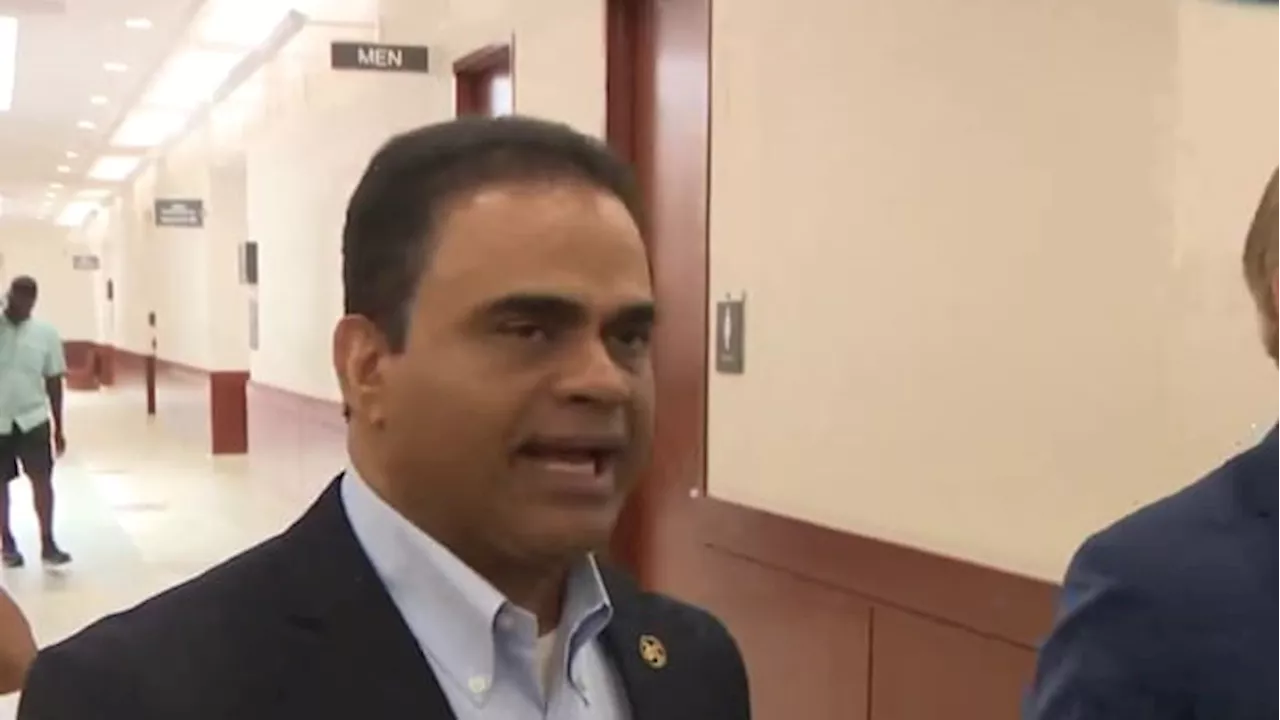 Fort Bend Co. Judge KP George files motion to recuse judge in felony money laundering caseCounty Judge KP George made his first appearance before a judge following his indictment last month for two felony money laundering cases. He and his attorneys did not spend much time in court, as the brief appearance lasted only a few minutes.
Read more »
 Top New York City judge Adam Silvera embraces conflict resolution to address court backlogA specialty of Adam Silvera, the top administrative judge for New York City courts who started his career as a personal injury attorney, is getting cases to
Read more »
 Signs You're No Longer 'Young-Young' According To The Internet'When cops started looking younger than me.'
Read more »
 Young Men Inc. program turning boys into young menRachael Wilkerson joined the WRTV family in September of 2021. Rachael comes from NBC 15 in Mobile, AL where she worked as an investigative journalist and fill-in anchor.
Read more »
 Tamra Judge Reacts to Shannon Beador’s Eddie Judge DissTamra Judge fired back after Shannon Beador called Eddie Judge out on 'RHOC' saying he gives 'small dick energy' during a 'Watch What Happens Live' appearance
Read more »