
The ESA Solar Orbiter reveals the secret behind the Sun's powerful solar wind: tiny plasma jets erupting from its surface.
Our Sun is a giant plasma windbag spewing a constant stream of charged particles called the solar wind. This stream leaves the Sun at speeds around 400 to 800 kilometers per second and extends to the outer edge of the Solar System to about 125 astronomical units. Astronomers have long wondered about what feeds this powerful outflow. Recently the ESA Solar Orbiter spacecraft observed tiny plasma jets a few hundred kilometers wide, occurring across the Sun.
Each one flashes for a brief instant above the solar surface. Just as a tiny stream expands to create a raging river here on Earth, these minuscule jets combine to provide “background” power that blossoms into the fast and slow parts of the solar wind.A research team led by Lakshmi Pradeep Chitta at the Max Planck Institute for Solar System Research, Germany used the probe’s onboard ‘cameras’ to spot more tiny jets within coronal holes close to the Sun’s equator. “We could only detect these tiny jets because of the unprecedented high-resolution, high-cadence images produced by EUI,” said Chitta. They used the extreme ultraviolet channel of EUI’s high-resolution imager, which observes million-degree solar plasma at a wavelength of 17.4 nanometers. At the time, scientists suspected these flares were at the heart of solar wind generation but didn’t understand how widespread they were. The team continued to use the Polarimetric and Helioseismic Imager (PHI), Solar Wind Plasma Analyser (SWA) and Magnetometer (MAG) to study the jets over the past year and a half. By combining these high-resolution images with direct measurements of the stream of particles and the Sun’s magnetic field around the Solar Orbiter, the researchers spotted more tiny flares within coronal holes close to the solar equator. Based on those observations, they directly connected the solar wind measured at the spacecraft back to those same jets.The solar wind comes in two flavors: slow and dense at the solar equatorial regions and fast and not-so-dense at the higher latitudes and the poles. The Ulysses spacecraft, which was in a near-polar orbit for nearly 18 years starting in 1990, mapped these regions of the solar wind closest to the Sun and found that the fast wind is relatively steady, while the slow solar wind is more variable in speed. The fast solar wind comes from the direction of dark patches in the Sun’s atmosphere called coronal holes. These are places where the solar magnetic field stretches out from the Sun through the solar system. Charged particles can flow along these “open” magnetic field lines, heading away from the Sun as the solar wind. It turns out that the slow solar wind also comes from equatorial coronal holes where nanoflares are also at work. So, what causes these tiny jets? Such nanoflare outbursts are called “picoflare jets”. They’re powered by a process called “magnetic reconnection.” This happens when magnetic field lines in a region of the Sun’s atmosphere get tangled and twisted together. Eventually, they break, similar to what happens when you twist a rubber band too much. That “break” releases heat and energy into the corona. New field lines reconnect to continue the process. This is the same mechanism that powers larger solar flares. Interestingly, we see similar magnetic reconnection in comet plasma tails. Magnetic field lines are entrained in the solar wind. They “drape” around a comet and its plasma tail. Those field lines have a specific polarity. As the comet passes through different “regimes” of the solar wind, it experiences different polarities. When that happens, the old-polarity plasma tail “breaks off” in a disconnection event and that releases energy. The new field lines build a new plasma tail in a case of magnetic reconnection. Comets are small-scale examples of this effect, while the Sun is a perfect example of the large-scale influence of magnetic reconnection. When you have countless numbers of these nanoflares releasing energy into the corona, it’s enough to power the entire solar wind
SOLAR WIND Nanoflares MAGNETIC RECONNECTION SOLAR ORBITER CORONAL HOLES
United States Latest News, United States Headlines
Similar News:You can also read news stories similar to this one that we have collected from other news sources.
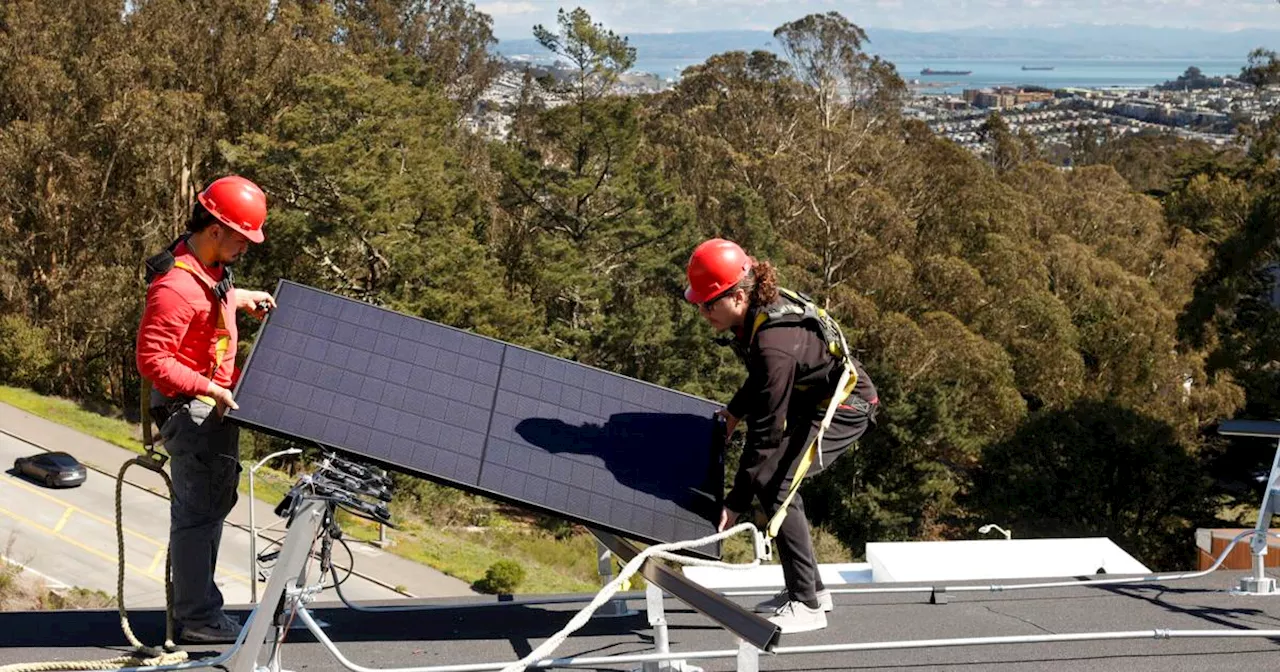 San Francisco Solar Company Aurora Solar Lays Off 58 WorkersAurora Solar, a San Francisco-based solar energy software company, has laid off 58 employees, marking the second round of job cuts in a year. The company cited 'ongoing macroeconomic challenges and continued uncertainty in the solar industry' as reasons for the layoffs. Aurora plans to refocus its business in response to the current market conditions.
Read more »
 Tiny tube experiments simulate solar system’s only moon with an atmosphereTitan is the only moon in our solar system with a significant atmosphere. Now we have a very good idea of how this dense atmosphere formed.
Read more »
 Jets Hire Tanner Engstrand as Offensive Coordinator, A New Era Begins for the Jets OffenseThe New York Jets have hired Tanner Engstrand as their new offensive coordinator, hoping to revitalize their offense and secure the future of Aaron Rodgers. This move marks a fresh start for the Jets, who are looking to turn around their offensive struggles and build a contender in 2025.
Read more »
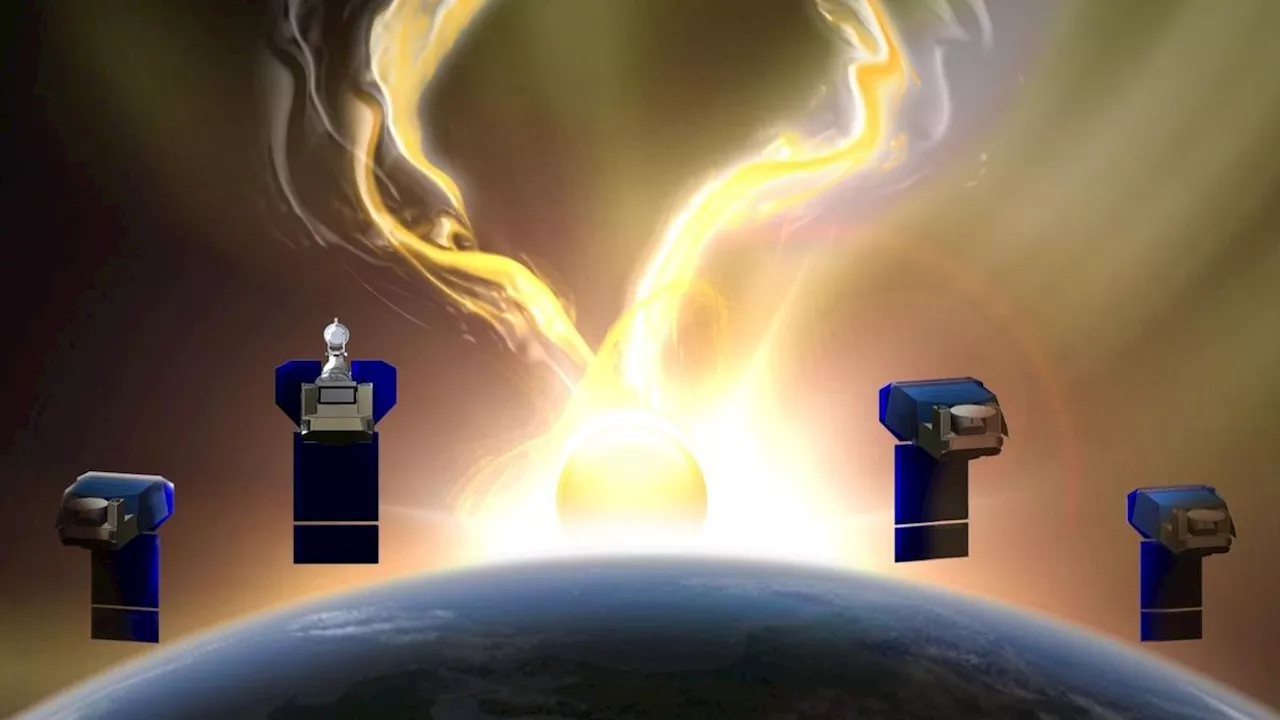 PUNCH Mission: Unifying Solar Physics and Solar Wind PhysicsThe PUNCH mission, a quartet of small satellites, aims to unravel the mysteries of the sun's corona and its connection to the heliosphere. By observing the corona in 3D and utilizing polarization measurements, PUNCH will provide unprecedented insights into the acceleration of the solar wind and the evolution of space weather.
Read more »
 Solar Orbiter Captures Incredible Footage of Tiny Jets Near the Sun’s South PoleThe jets were first discovered in 2023, and new evidence reveals they drive both fast and slow solar wind.
Read more »
 Tiny Solar Jets Power the Sun's Constant WindThe ESA Solar Orbiter spacecraft has observed tiny plasma jets erupting from the Sun's surface, providing the continuous energy source for the solar wind. Researchers have linked these 'picoflare jets' to variations in the solar wind's speed and density.
Read more »