
A new study has found that water moving across surfaces creates ten times more charge than previously thought.
Water flowing across surfaces is a ubiquitous phenomenon, from raindrops rolling across leaves to water flowing through pipes in our homes.However, water generating an electrical charge when moving across surfaces is a less-known phenomenon.
In a new study, researchers have found that water generates an electrical charge up to ten times greater than previously understood when moving across a surface.“Most people would observe that rainwater drips down a window or a car windscreen in a haphazard way, but would be unaware that it generates a tiny bit of electrical charge,” said co-author Dr. Sherrell from RMIT’s School of Science in a press release.The electrical charge is a result of the natural polarity existing in water molecules. When water interacts with certain surfaces, this polarity can lead to the electrical charges separating and accumulating.All charged upA water molecule consists of two hydrogen atoms and one oxygen atom. The polarity arises due to the inherent properties of these atoms, leading to a slight negative charge on the oxygen side and a positive charge on the hydrogen side.While water generating a charge when moving across certain surfaces is not new, previous studies only focused on scenarios where water transitioned from a wet to a dry surface.The researchers wanted to account for the complete electrical effects occurring during liquid-surface interactions.To do so, the researchers used a flat plate of Teflon, a plastic commonly used in pipes. They measured the electrical charge created as water droplets spread across the Teflon surface. This was captured using specialized cameras to capture the exact moments when droplets stuck and slipped across the surface.The stick-slip eventWater sticking to a surface and slipping across it is known as the stick-slip event.During this, the droplet gets temporarily pinned or stuck to the surface, causing force to build up as the droplet tries to continue moving.When it finally jumps or slips past the obstacle, the sudden release of energy creates a large charge.The researchers noticed that the first contact of water with the surface created the biggest change in charge, from 0 to 4.1 nanocoulombs , ten times more than previously observed.The charge generated was fairly consistent as the water droplets moved between wet and dry surfaces. Further, they noted that the charge did not disappear and is likely retained in the droplet as it moves over the surface.Although the amount of charge generated during the stick-slip phenomenon seems small , it has implications for fuel-holding systems.Small charge, big impactIn fuel systems, there is constant contact between liquids and wet and dry surfaces during filling, storage, and transportation. If enough charge accumulates, it can discharge as a spark, which in flammable environments is extremely dangerous.As the world transitions towards flammable renewable fuels, there is a need for better safety features in fuel systems. Today, charge build-up is combated by restricting flow or using additives that might not be effective for newer renewable fuels.“Understanding how and why electric charge is generated during the flow of liquids over surfaces is important as we start to adopt the new renewable flammable fuels required for a transition to net zero,” said co-author Dr. Berry from the University of Melbourne in the press release.While the work focuses on studying charge build-up in water, the researchers plan to extend their work to other liquids. In particular, they are planning to study the stick-slip phenomenon in the context of the safety design of fluid handling systems.The study is published in Physical Review Letters.
Physics Renewable Energy Renewable Fuels Water
United States Latest News, United States Headlines
Similar News:You can also read news stories similar to this one that we have collected from other news sources.
 This One Simple Tip Can Make Your Daily Walk 10x HealthierDiscover how humming while you walk can significantly boost your health by promoting nasal breathing, increasing nitric oxide levels, and supporting lung function, immune system, circulation, and mood.
Read more »
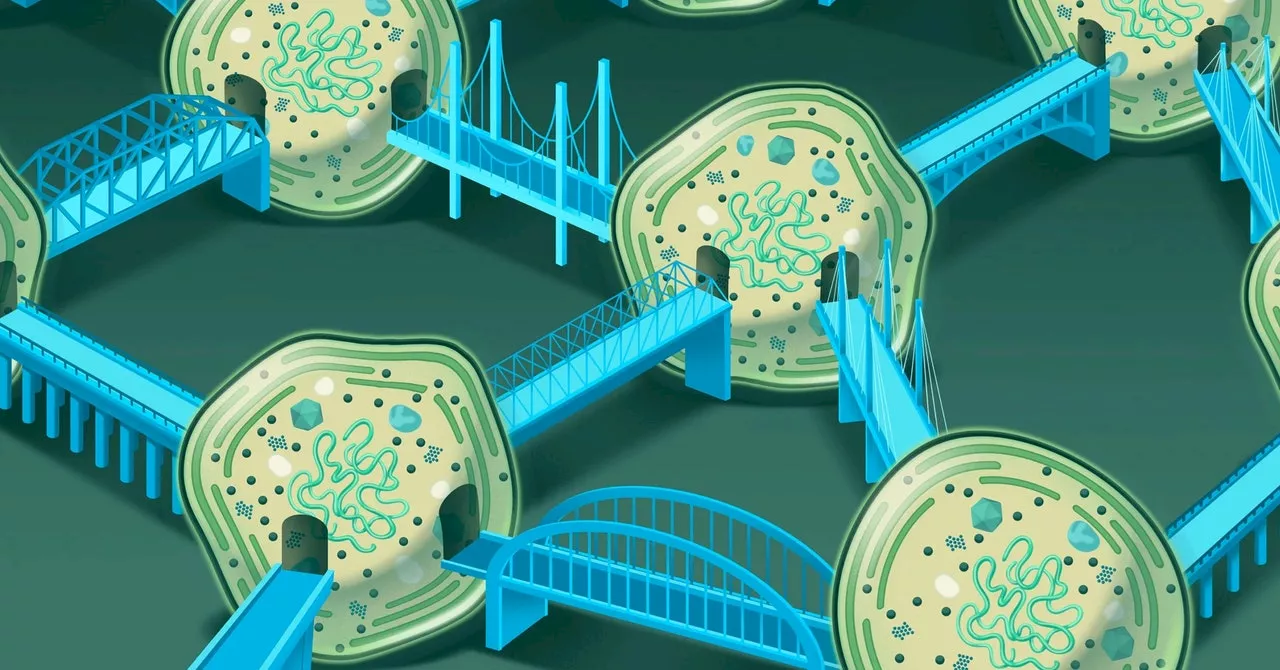 Tiny Ocean Bacteria Talk Through BridgesProchlorococcus, the tiny bacteria responsible for much of the Earth's oxygen production, may be communicating with each other through bacterial nanotubes. These tiny bridges made of cell membrane allow nutrients and resources to flow between cells, challenging our understanding of bacteria as single-celled organisms. Researchers have observed these nanotubes linking Prochlorococcus and Synechococcus bacteria, raising questions about the extent of bacterial interconnectedness and their complex social lives.
Read more »
 New mass-producible space-grade solar cell promises 10x cost reductionExtraterrestrial Power's new innovation allows space-grade solar cells to be mass produced alongside terrestrial solar cells.
Read more »
 Death pool with 10x more saltier water kills marine life, found below Gulf of AqabaA team of researchers has recently discovered deep-sea brine pools in the Red Sea that may offer insights into ancient life.
Read more »
 As Edward Sharpe and the Magnetic Zeros' Tiny Desk Trends, People Wonder What Happened to SingerMany of Edward Sharpe and the Magnetic Zeros' songs are about Jade Castrinos, frontman Alex Ebert's former longtime partner.
Read more »
 Nano-enhanced perovskite solar cells achieve 10x durability in extreme environmentsNano-enhanced perovskite solar cells last 10x longer by trapping iodine, paving the way for durable, affordable solar technology.
Read more »