
The pressure and depth at which the bubbles become trapped provide more precise measurements of magma movement, and could help better predict eruptions.
The pressure and depth at which the bubbles become trapped provide more precise measurements of magma movement, and could help better predict eruptions.Geologists turned to tiny bubbles to investigate the dynamics driving magma flow beneath Hawaii’s volcanoes as the country’s islands drift northwest on a tectonic plate.
They found that, as the islands slip away from the hotspot that fuels Kiluaea on the “Big Island, magma flow not only slows, but shifts deeper underground," according to a“This challenges the old idea that eruptions are fueled by magma stored in the Earth’s crust and suggests a new possibility that magma is stored and matures in the Earth’s mantle, and eruptions are fueled from this deep mantle reservoir,”To reach this conclusion, scientists employed a technique that will help increase understanding of what causes eruptions and help them predict those events more accurately. They focused on tiny gas bubbles that become trapped inside crystals within magmaCalculating the pressure and depth at which those bubbles are captured gives scientists more precise information about magma’s activity. “The technology allows us to measure pressure from depths with an uncertainty as small as just hundreds of meters, which is very, very precise for depths that are tens of kilometers below the surface,” Gazel said in the release. “Before this, measuring magma storage was much more difficult, with uncertainties that could span kilometers.” The scientists applied the method to samples from three Hawaiian volcanoes that are at different stages of their “lives.” Kilauea’s magma was stored at relatively shallow depths of about a mile, as predicted. They found two magma storage areas beneath Haleakala — a shallow one just over a mile down, and a deeper one at 12 to 16 miles in the Earth’s mantle. Diamond Head on the island of O’ahu, showed magma storage around 13 to 18 miles deep, all within the Earth’s mantle. “Knowing these depths precisely matters, because to understand the drivers of eruptions, one of the most important constraints is where magma is stored,” Gazel said in the release. “That is fundamental for physical models that will explain eruptive processes and is required for volcanic risk assessment.”use peer-reviewed studies and high-quality sources for our articles, and our editors review for scientific accuracy and editorial standards. Review the sources used below for this article:Before joining Discover Magazine, Paul Smaglik spent over 20 years as a science journalist, specializing in U.S. life science policy and global scientific career issues. He began his career in newspapers, but switched to scientific magazines. His work has appeared in publications including Science News, Science, Nature, and Scientific American.
United States Latest News, United States Headlines
Similar News:You can also read news stories similar to this one that we have collected from other news sources.
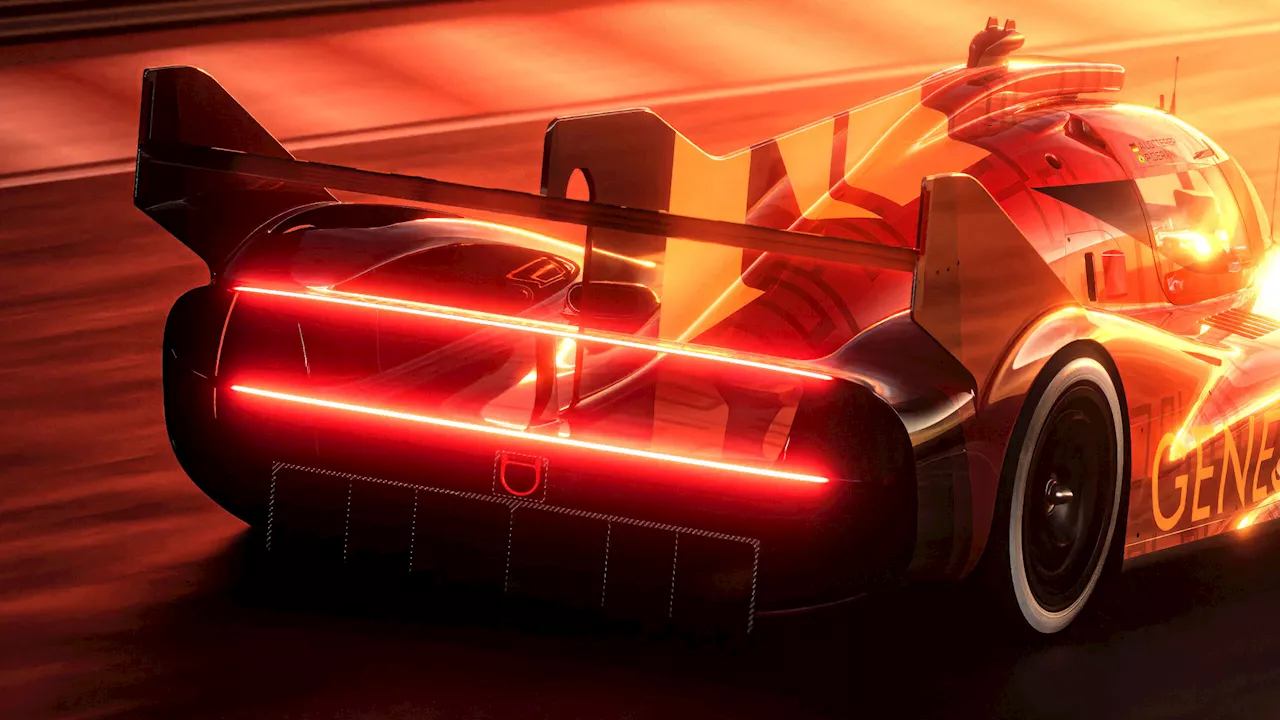 Genesis GMR-001 Hypercar Is Drenched In Le Mans Magma MadnessThe hybrid powertrain of the racing monster uses a Frankenstein twin-turbo V8 made from two WRC engines
Read more »
 Yellowstone’s Magma Reservoir Reveals Insights Into Future Volcanic ActivityLearn how the boundaries of the magma chamber beneath Yellowstone have been located, and discover how these boundaries hint at the volcano’s future behavior.
Read more »
 Hidden magma cap discovered at Yellowstone National ParkThe magma cap is critical for preventing eruptions at Yellowstone.
Read more »
 Scientists find 'breathing' magma cap inside Yellowstone supervolcanoPatrick Pester is the trending news writer at Live Science. His work has appeared on other science websites, such as BBC Science Focus and Scientific American. Patrick retrained as a journalist after spending his early career working in zoos and wildlife conservation.
Read more »
 A 'magma cap' discovered underneath Yellowstone could be moderating its volcanic potentialA new study shows a volcanic eruption of Yellowstone may be even less likely than we thought: Scientists have discovered a magma cap that may play a role in relieving volcanic pressure underground.
Read more »
 Tiny gas bubbles reveal secrets of Hawaiian volcanoesUsing advanced technology that analyzes tiny gas bubbles trapped in crystal, a team of scientists has precisely mapped how magma storage evolves as Hawaiian volcanoes age.
Read more »