Beyond the Breaking News

The Treasury Paradox

United States News News

The Treasury Paradox
United States Latest News,United States Headlines

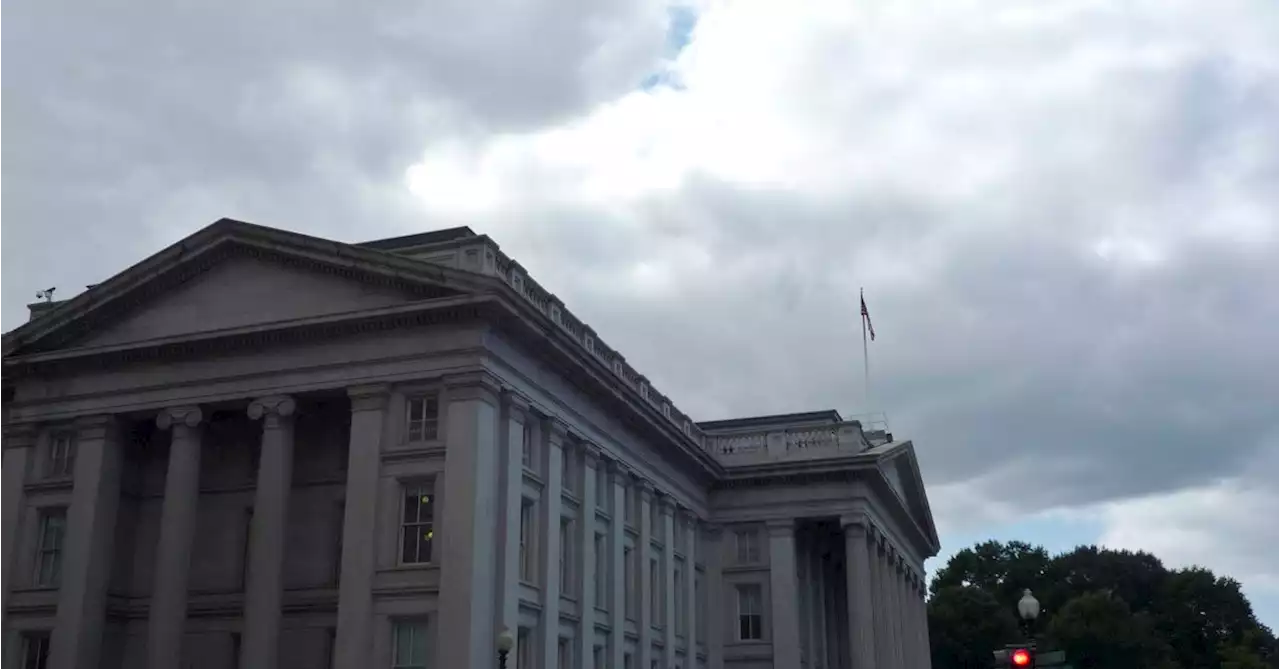
Treasury bonds have been viewed as the ultimate safe asset — the bedrock of the global financial system. But as the deadline for an agreement to avert a debt default loomed, Treasury bills due in June were priced as the near equivalent of junk bonds.

Treasury bonds have been at the heart of the debt ceiling drama. For decades, they have been viewed as the ultimate safe asset — the bedrock of the global financial system. But as the deadline for an agreement to avert a U.

S. debt default loomed, Treasury bills due in early June were priced as the near equivalent of junk bonds.In the credit default swaps market, Treasury bonds were suddenly deemed riskier than the sovereign debt of countries like Mexico, Bulgaria and Greece. President Joe Biden and Speaker Kevin McCarthy reached a deal to raise the debt ceiling — and set federal spending limits — but it was left to Congress to enact legislation before the United States ran out of money, which could have happened this week. With that deadline-beating deal, the United States averted a formal default, but it has been another wild, unnerving ride. What should wary investors take away from this close call with disaster? Paradoxically, the best answer may be exactly what it was before this crisis: For safety, buy Treasurys. That has been the time-tested solution to investment agita in the past. And it’s probably — though not certainly — going to be the solid answer to some basic investing problems now and for the foreseeable future, too.Through countless crises in the United States and abroad, investors have flocked to the $24 trillion Treasury market just about whenever they have needed a haven. For one thing, it is the deepest market in the world. Even with the sanctions and tariffs and money-laundering controls imposed by the United States in the past few decades, the U.S. Treasury market remains quite open and easily accessible, by international standards. If you want to buy and sell securities quickly and painlessly and at low cost, Treasurys, and the U.S. dollar, have been very good bets. No other global asset class offers the same advantages.The most important feature of Treasurys is the one that was so evidently vulnerable during the debt standoff: safety and stability. Treasury bonds have often been a balm. When everything else seemed unsafe, you could count on getting your money back if you stashed it in a Treasury bond and held it to maturity. Even now, the “full faith and credit of the United States” has never been breached. It has been guaranteed by the Constitution; by the nation’s long history as a stable country ruled by law; and by the combination of economic, military and political power that has made the United States unique.If you could rely on anything on this planet since World War II, it has been the ability of the United States to pay its bills. But each time the country has faced a debt ceiling standoff, that assumption has seemed naive. It has never been a question of having sufficient resources. What’s been in doubt is whether the political system would function well enough for the U.S. government to raise enough money to keep operating. Whenever the debt negotiations have gone down to the wire, they have been resolved without a default, and the Treasury market has ultimately rallied. Such rallies are typically what happens when world crises upset the fickle stock market and investors seek somewhere safe. Finding refuge in Treasurys makes sense when the crisis is overseas, as was the case in the early stages of Brexit, for example. Putting money into Treasurys when the crisis emanates from the United States may be counterintuitive, but it has happened many times. It’s “Ghostbusters” logic: Where else are you going to go? Back in 2011, for example, a protracted dispute over the debt limit nearly ended in a default and led to a downgrade in the pristine AAA rating of U.S. debt by Standard & Poor’s. Nonetheless, Treasurys rallied, even though they were the source of the trouble in financial markets. This time around, now that the threat of default is behind us, Treasurys are likely to resume their role as a haven in a storm.The fissures that became visible in the Treasury bill and credit default swaps market in May were real, and many financial contingency plans included a small probability of a dire event: a U.S. default. Further downgrades of U.S. debt could be coming if the country’s politics become increasingly fractious and dysfunctional, and skepticism about the solidity of Treasurys could still dim their luster. Financial services companies like Goldman Sachs and MSCI included bear markets for Treasurys in their low-probability, high-risk scenarios for the latest crisis.For now, the prospects for the Treasury market look rather bright. Recall that on May 24, the yield on Treasury bills with early June maturation dates shot above 7%, a sign that traders demanded a hefty risk premium for buying them. Those yields dropped to the 5% range after Memorial Day, according to data from FactSet. Prices, which move in the opposite direction of yields, soared. And in the credit default market, the price for insuring Treasury debt has fallen to roughly one-third of its peak during this latest crisis. Beyond the debt ceiling, other factors dominate the bond market. Foremost are the Federal Reserve’s long struggle to bring inflation under control by tightening monetary policy, the possibility of a recession and the pressure on regional banks resulting from rising interest rates. Will the Fed raise short-term rates at its next meeting, in mid-June? Traders are now betting that it won’t. In addition, many indicators suggest that a recession is on the way. Those factors make the argument for bonds — high-quality corporates as well Treasurys — quite compelling. Bond yields have already risen sharply over the last year, and those yields are a reasonably good predictor of bond market returns. Consider that if you hold a one-year Treasury bill for a full year, you can count on a return of more than 5%, which is a high threshold for riskier investments. Compared with stocks, short-term Treasurys are attractive. The case is a bit weaker for longer-term bonds because their yields are a lower. In bond market jargon, the yield curve is inverted. That suggests that traders are expecting a recession, in which the Fed would be compelled to lower short-term interest rates to stimulate the economy. Recessions are typically bad for most people — and for the stock market — but they tend to be great for Treasury bonds, because investors will seek their old standby, and as market yields fall, Treasury prices rise. In short, the past several weeks have threatened Treasurys. The risks of holding these supposedly risk-free assets have been all too evident lately. Yet with a little luck, Treasurys are again likely to emerge from a debt crisis as essentially what they have always been. In a world where nothing is entirely safe, Treasurys remain a relatively safe place to park your money.

We have summarized this news so that you can read it quickly. If you are interested in the news, you can read the full text here. Read more:

YahooNews /  🏆 380. in US


United States Latest News, United States Headlines

Similar News:You can also read news stories similar to this one that we have collected from other news sources.

Top concert picks for this weekend in San Diego: June 2-June 4Top concert picks for this weekend in San Diego: June 2-June 4Our recommendations include the 2nd annual Julian Town Square Music Festival, jazz virtuosos Pasquale Grasso and Konrad Paszkudzki at Dizzy's, and Arts Fishing Club at Soda Bar
Read more »

MakerDAO Paves Way for Additional $1.28B U.S. Treasury PurchaseMakerDAO Paves Way for Additional $1.28B U.S. Treasury Purchase.MakerDAO voted for onboarding a new real-world asset vault that would invest up to $1.28 billion in short-term U.S. Treasury bonds with asset manager BlockTower. sndr_krisztian reports
Read more »

Here's how to buy Treasury bills as yields top 5%Here's how to buy Treasury bills as yields top 5%Treasury bill yields have climbed over the past few months and currently top 5%. Here's what investors need to know before purchasing.
Read more »

Breakingviews - Treasury buyers live for the moment, unfortunatelyBreakingviews - Treasury buyers live for the moment, unfortunatelyThe mood music around American indebtedness is as ominous as ever, but investors in Treasuries have their fingers firmly stuck in their ears. The U.S. government’s bonds climbed in price on Thursday as Congress took a decisive step to lift a legislative cap on borrowing, a move that will stave off a looming sovereign default. Yet nothing has been done to curb the budget deficits that brought insolvency so close, and there is plenty to worry about between now and the next debt standoff in 2025.
Read more »

Debt limit: Yields on June Treasury bills fall back to earth after deal passes HouseDebt limit: Yields on June Treasury bills fall back to earth after deal passes HouseYields on Treasury bills maturing soon have fallen from recent highs, a sign that investors are no longer worried about the possibility of a default on federal debt now that the debt limit deal has passed the House.
Read more »

Friday is National Donut DayFriday is National Donut DayNational chains like Dunkin' Donuts and Krispy Kreme are giving away free or discounted doughnuts to celebrate NationalDonutDay. In Utah, those chains plus Shipley Do-Nuts, Maverik, and Duck Donuts have free or discounted doughnuts today. 🍩
Read more »



Render Time: 2026-06-07 23:44:32