


 +34

Science and Technology News and Videos
In 2010, scientists detected unusual seismic waves under Granada, Spain, which eventually led to a surprising finding: an oceanic slab that had completely flipped upside down as it was being pushed beneath its neighbor.
, the team found that the "Alboran slab," which meets the Eurasian slab just east of the Straits of Gibraltar, "has been overturned." It's the first time such a discovery has been made, the researchers claim. And it's due to "hydrous magnesium silicates," roughly 370 miles beneath the surface, indicating that water on the slab's surface had not only been pushed under, but had also been folded over and pulled beneath the slab as well. The research could shed light on how these pieces of the Earth's crust interact and how they relate to seismic activity back on the surface — in addition, that is, to giving us a fresh sense of wonder for the extraordinary geographical marvels of our home world.The researchers were originally looking for something entirely different when studying a 6.3 magnitude earthquake below Granada in April 2010. "Initially, we were not aiming to better understand the deep earthquake mechanisms, as several prior studies have studied the source nicely," said coauthor and University of Science and Technology of China seismologist Daoyuan Sun in a. "Our intent was merely to plot the waveforms out of curiosity, since there is so much to learn from individual waveforms when one takes the time to look at them closely." "Upon examination, we observed these strange arrivals, including the long coda and extra phase," he added, referring to unusually long residual vibrations. Low-velocity vibrations are conventionally the result of waves passing through either melted or liquid material. Since subducted slabs often carry water on their surface, they're a great explanation for these signals. "Considering a relatively young sea floor age in the western Mediterranean, for the slab to remain cool, the subduction speed must be quite fast, such as a moderate speed of about 70 millimeters per year," Sun said. "In other words, we think our study could offer a reasonable lower bound of the speed of subduction in this region."
Scratch the next story
United States Latest News, United States Headlines
Similar News: You can also read news stories similar to this one that we have collected from other news sources.
 The four Republicans who flipped on Johnson and killed the effort to impeach MayorkasHere are the four Republican lawmakers decided to kill the effort to impeach Homeland Security Secretary Alejandro Mayorkas.
Read more »
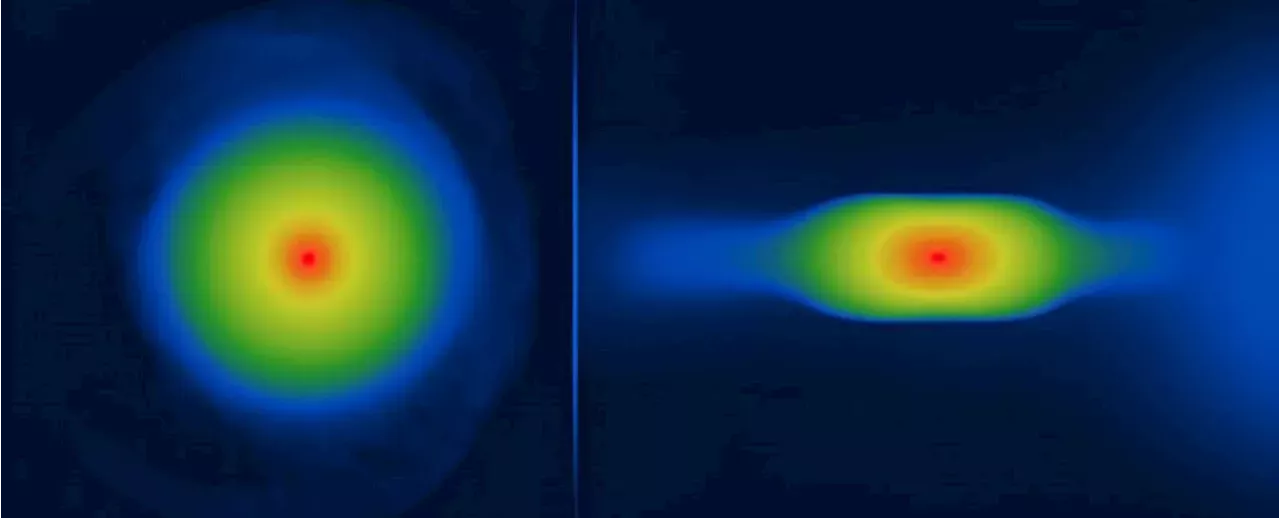 Earth Isn't Flat, But New Theory Suggests Jupiter Might Once Have BeenThe Best in Science News and Amazing Breakthroughs
Read more »
 New York Democrat Flips Seat in Blow to RepublicansDemocrats flipped a Republican seat in New York on Tuesday, networks project.
Read more »
 The Last Place on Earth: My Journey to Antarctica with National GeographicAntarctica might be the final frontier for terrestrial travel, but cruise lines like National Geographic make it a lot easier.
Read more »
 How global warming is disrupting life on EarthLearn about the effect of Global Warming: National Geographic.
Read more »
 Georgetown's Elite Consulting Clubs Come Down to EarthThe website that Washington lives by.
Read more »