
Jamie Carter is an award-winning reporter and experienced stargazer who covers the night sky, astro-tourism, the northern lights and space exploration. He received the 2023 Popular Media Award from the American Astronomical Society's Solar Physics Division and is the author of A Stargazing Program for Beginners. Writing for Forbes.
That moment 66 million years ago is a watershed in Earth’s history precisely because it permanently changed the climate, making about 70 percent of all animal species extinct. Termed the Cretaceous-Paleogene boundary, the post-impact Earth changed.
As the asteroid or comet struck Earth, it vaporized some of the planet’s bedrock, pushing fine dust particles into the stratosphere, obscuring the sun, preventing planets from photosynthesizing for several years, according to a widely accepted theory. It was Earth’s most recent mass extinction event.It Was A Comet Strike That Killed The Dinosaurs And It’s 10 Times More Likely Than We Thought Say Scientists The dust particles that blocked the sun eventually settled and, 66 million years later, formed a layer of sediment worldwide. The researchers from the University of Cologne in Germany analyzed samples of this rock layer—known to include traces of platinum-group metals that are otherwise rare on our planet. They are thought to have come from the asteroid itself. By studying the chemistry of those metals, the researchers now think they know where the asteroid came from. “The asteroid’s composition is consistent with that of carbonaceous asteroids that formed outside of Jupiter’s orbit during the formation of the solar system,”The study also revealed how rare the impact of an asteroid from the outer solar system is in Earth's history. They estimate that in the last 500 million years, Earth has been struck almost exclusively by asteroids—or fragments of asteroids—from the inner solar system. “We found that the impact of an asteroid like the one at Chicxulub is an infrequent and unique event in geological time,” said Professor Dr Carsten Münker, co-author of the study. “The fate of the dinosaurs and many other species was sealed by this projectile from the outer reaches of the solar system.”claimed that the rock was a “long-period” comet from the Oort Cloud—an icy sphere of debris around the outer solar system—and that Jupiter caused it to hit Earth. The researchers stated that such an impact should be expected every 250 to 730 million years.—at about 1,230 feet across, larger than 90% of space rocks—safely passes our planet. It will pass just 19,635 miles from Earth’s surface, just a tenth of the distance between Earth and the moon, the closest approach of an asteroid of this size that humankind has ever experienced—closer than Earth’s geostationary satellites. Apophis is an asteroid from the inner solar system and, upon its discovery in 2004, was thought to be a threat to Earth. It was named for the Egyptian demon of chaos and destruction.Our community is about connecting people through open and thoughtful conversations. We want our readers to share their views and exchange ideas and facts in a safe space.Insults, profanity, incoherent, obscene or inflammatory language or threats of any kindContinuous attempts to re-post comments that have been previously moderated/rejectedAttempts or tactics that put the site security at riskProtect your community.
What Killed The Dinosaurs Asteroid Comet Comet Tracker Where Is Comet Chicxulub Cretaceous-Paleogene Jupiter
United States Latest News, United States Headlines
Similar News:You can also read news stories similar to this one that we have collected from other news sources.
 Dinosaur-killing asteroid likely came from deep space beyond JupiterAndrew Paul is Popular Science's staff writer covering tech news. Previously, he was a regular contributor to The A.V. Club and Input, and has had recent work featured by Rolling Stone, Fangoria, GQ, Slate, NBC, as well as McSweeney's Internet Tendency. He lives outside Indianapolis.
Read more »
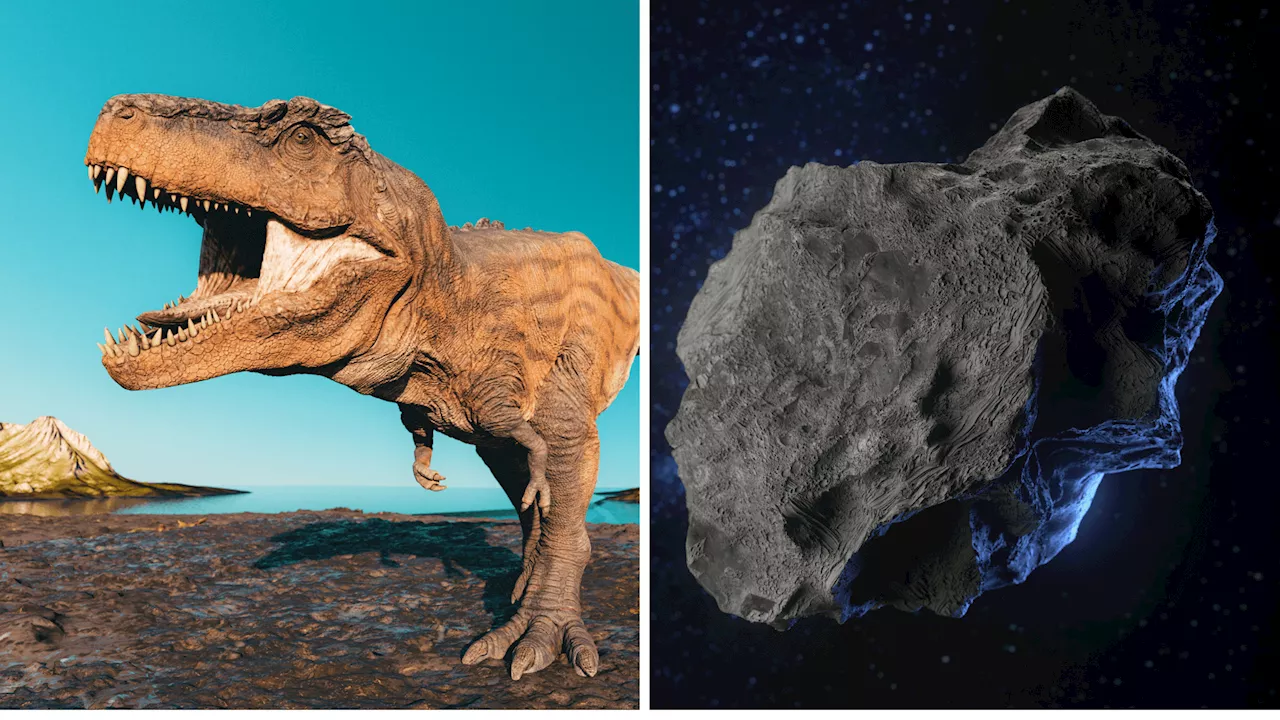 Dinosaur extinction caused by 6-mile-wide asteroid that came from beyond JupiterThe suspected 6-mile-wide (10-kilometer) asteroid was a rare carbonaceous asteroid that killed the giant dinosaurs and countless other ancient creatures.
Read more »
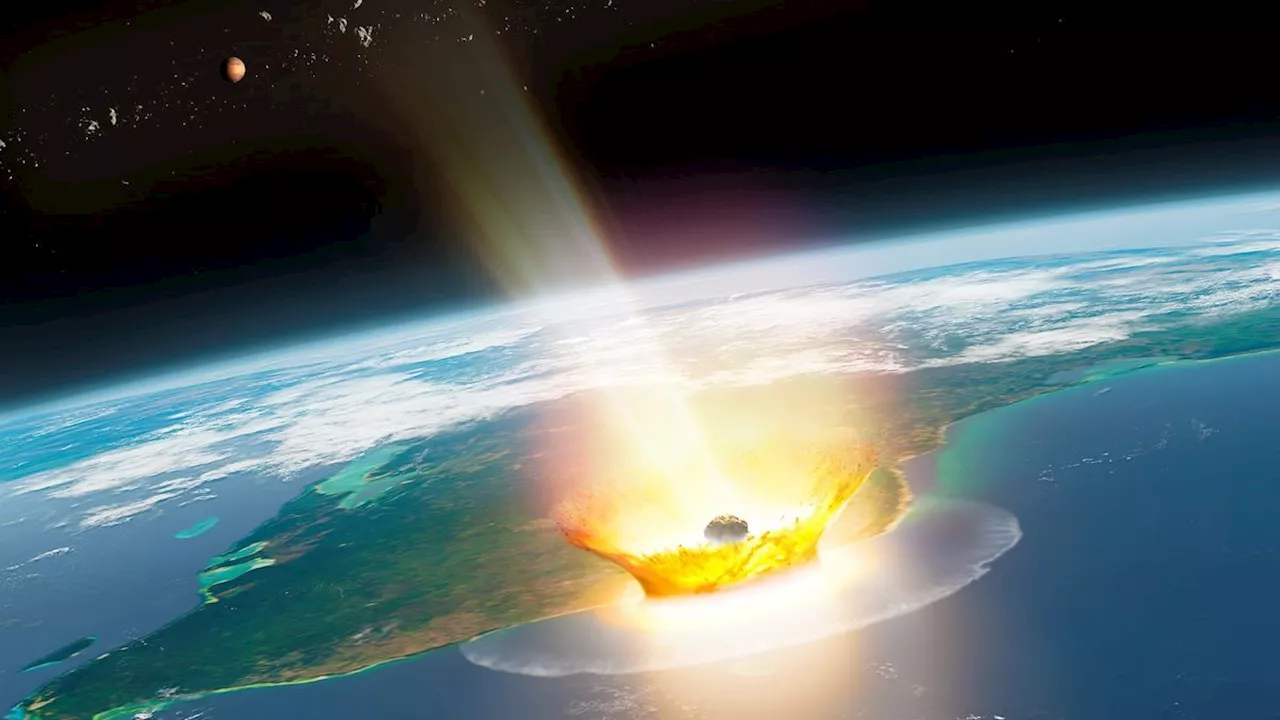 Dinosaur-killing asteroid was a rare rock from beyond Jupiter, new study revealsSharmila Kuthunur is a Seattle-based science journalist covering astronomy, astrophysics and space exploration. Follow her on X skuthunur
Read more »
 Dinosaur-killing asteroid was likely a clay-rich mudball, scientists sayA study reveals the chemical makeup of the Chicxulub asteroid that collided with Earth and resulted in the extinction of nearly all dinosaurs 66 million years ago.
Read more »
 Dinosaur-killing asteroid likely came from beyond Jupiter, study findsThe asteroid that wiped out dinosaurs after slamming into the Earth 66 million years ago is believed to have come from beyond Jupiter, a new study says.
Read more »
 Dinosaur killer was a rare asteroid from unusually far away, study showsNews Associate
Read more »