
Oscar-nominated production designer Judy Becker discusses the challenges and triumphs of bringing Brady Corbet's ambitious period epic 'The Brutalist' to life. From recreating a sprawling modernist community center to capturing the genius of a fictional Jewish Hungarian architect, Becker reveals the meticulous process behind the film's stunning visuals, achieved on a remarkably limited budget.
There is a moment, roughly a quarter of the way through Brady Corbet ’s period epic The Brutalist , when the audience in your theater may be prone to a collective gasp. It isn’t prompted by a shocking act of violence, nor an eye-popping sex scene. (Though both do occur during the film, you won’t find any spoilers here.) Instead, that sharp intake of breath is induced by a library. Of course, this is not just any library.
In The Brutalist, it’s one of the first glimpses we get of the genius of the film’s protagonist, the fictitious Jewish Hungarian architect László Tóth (Adrien Brody). A Holocaust survivor, Tóth has recently emigrated to the United States, where his Bauhaus training leads him to an unlikely assignment at a rural Pennsylvania mansion belonging to industrialist Harrison Lee Van Buren (Guy Pearce). As the twinkling, sostenuto piano of Daniel Blumberg’s score plays in the background, and slats of dappled light illuminate the elegant chair at the center of the space, the sleek cupboards Tóth has designed open up like the petals of a flower, revealing the minimal shelving underneath. It’s the point in the film when you realize that Tóth is, without a doubt, a master. For The Brutalist’s production designer, Judy Becker, who received an Oscar nomination for her work earlier this week (her second, after a nod for David O. Russell’s American Hustle in 2014), the project represented a rare opportunity. “A lot of times the design is important in expressing something about the characters, but I haven’t done a movie about an actual architect or a designer before,” says Becker. “I’m not a real architect, but I worked really hard to make it feel strong, and I’m really proud of it because I think it was successful—but it was a big challenge, for sure.” Much has been made of the film’s monumental scale—the fact it was achieved on just a $10 million budget continues to boggle the mind—and one imagines no other senior crew member felt the pinch quite like Becker. Tasked with inventing the Van Buren Institute, the sprawling modernist community center, designed by Tóth, that sits at the center of The Brutalist’s narrative, Becker began with sketches. Then came an intricate scale model (which was used extensively in the movie itself) before she constructed portions of it in the countryside outside Budapest, and scouted modernist buildings around Hungary she could dress to appear as part of the building’s whole—a process she likens to the assembling of a puzzle. Yet even if bringing Tóth’s uncompromising vision to life could be a grueling process at times—“I’m kind of a method designer,” Becker says, noting that spending many months inhabiting the mind of a fiercely individualistic, heroin-addicted creative required more from her emotionally than your average production design job—she wouldn’t have had it any other way. “I’ve been doing this for almost 25 years, and it’s probably the best filmmaking experience I’ve ever had,” she says, with a wide smile. “I really mean that.” Here, Becker tells Vogue about landing the job after almost a decade of following Corbet’s work, how she went about defining Tóth’s unique artistic identity, and her own lifelong passion for Brutalist architecture. Vogue: Take me back to the beginning of the project. I read that you were a fan of Brady’s work, and reached out when you heard about the film? Judy Becker: I was chasing Brady, basically. I try to work with directors that I admire, and there’s plenty that I admire, but they don’t have openings—often, they have a designer they work with a lot. I knew Brady as an actor, and when I saw The Childhood of a Leader , I was just totally astonished by it—not just in terms of storytelling and as a movie, but how fantastic the visuals were. It was clearly an auteur work, and a visionary work. So I told my agent that I had to work with him, and when The Brutalist was announced, I was like, “Pete, you got to get me in.” My agent knew that I love Brutalist architecture—even though at that point, I actually had no idea if it was even really about Brutalist architecture—so I was like, “Come on, this was made for me!” He got me a meeting with Brady, and we hit it off and I got the job. I think it was just one of those times when everything fell into place. It was a great group of people, and we had a great time working together. It was really a wonderful collaboration and it makes me really happy whenever we’re reunited for a Q&A or a premiere. I’ve been doing this for almost 25 years, and it’s probably the best filmmaking experience I’ve ever had. I really mean that. That’s so interesting to hear. Given how much conversation there’s been around everything you were able to achieve on a small budget, I’d think the making of it would have been quite grueling. I mean, not every minute of it was positive, but that’s true for any movi
The Brutalist Brady Corbet Judy Becker Production Design Brutalist Architecture Filmmaking Movie Making Oscar Nomination
United States Latest News, United States Headlines
Similar News:You can also read news stories similar to this one that we have collected from other news sources.
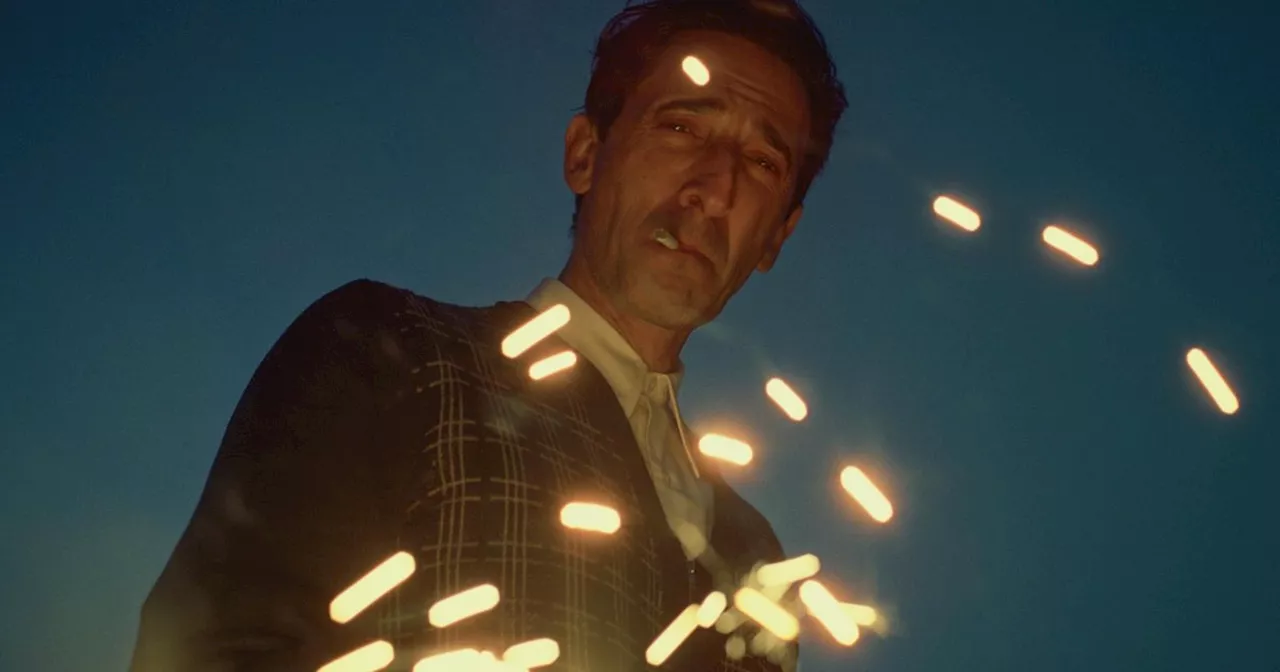 The Brutalist Director Addresses Backlash Over AI Use in FilmDirector has responded to criticism regarding the use of AI technology in his film, The Brutalist. Corbet clarified that AI was only employed in the editing of Hungarian dialogue, specifically to refine vowel and letter accuracy. He emphasized that the performances of Adrien Brody and Felicity Jones were entirely their own and that no English dialogue was altered. He also addressed concerns about AI-generated imagery in the film's closing sequence, stating that all building images were hand-drawn by artists.
Read more »
The Brutalist Director Addresses Backlash Over AI Usage in FilmDirector Yorgos Lanthimos has addressed the controversy surrounding the use of AI in his film The Brutalist. The film faced backlash after it was revealed that AI tools were used to enhance the Hungarian dialogue of lead actors Adrien Brody and Felicity Jones. Lanthimos released a statement clarifying that the AI technology was only used during the editing process of the Hungarian language dialogue, specifically to refine vowels and consonants for accuracy. He emphasized that the English language was not altered and that the AI was used in a manual process to preserve the authenticity of the actors' performances. Lanthimos also addressed concerns about the use of generative AI for the film's closing sequence, clarifying that all building images were hand-drawn by artists.
Read more »
 AI Used to Polish Accents in 'The Brutalist', Director ConfirmsDirector Brady Corbet has confirmed that AI technology was used in post-production to refine the Hungarian accents of Adrien Brody and Felicity Jones in his critically acclaimed historical drama, 'The Brutalist'. While emphasizing that the actors' performances remain authentic, Corbet explained that Respeecher AI was employed specifically to enhance the accuracy of certain vowels and letters in the Hungarian dialogue. Additionally, generative AI was used to create architectural drawings featured in the film's coda, though these were ultimately hand-drawn by artists.
Read more »
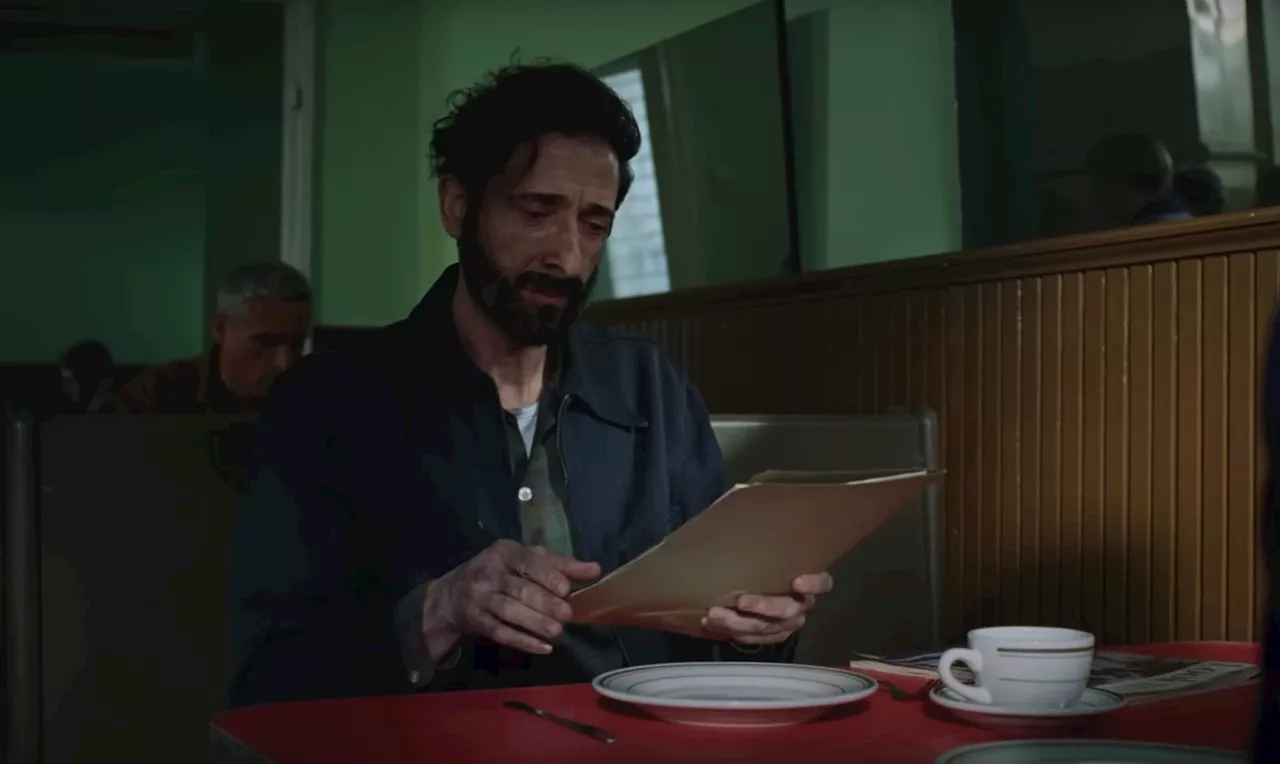 The Brutalist Controversy: When AI Voice Cloning Crosses The LineA new film, The Brutalist, has sparked debate about the ethical implications of using AI to enhance actors' performances. The filmmakers employed AI voice-cloning to perfect the Hungarian accents of Adrien Brody and Felicity Jones, raising questions about the authenticity of acting and the potential for AI to mislead audiences.
Read more »
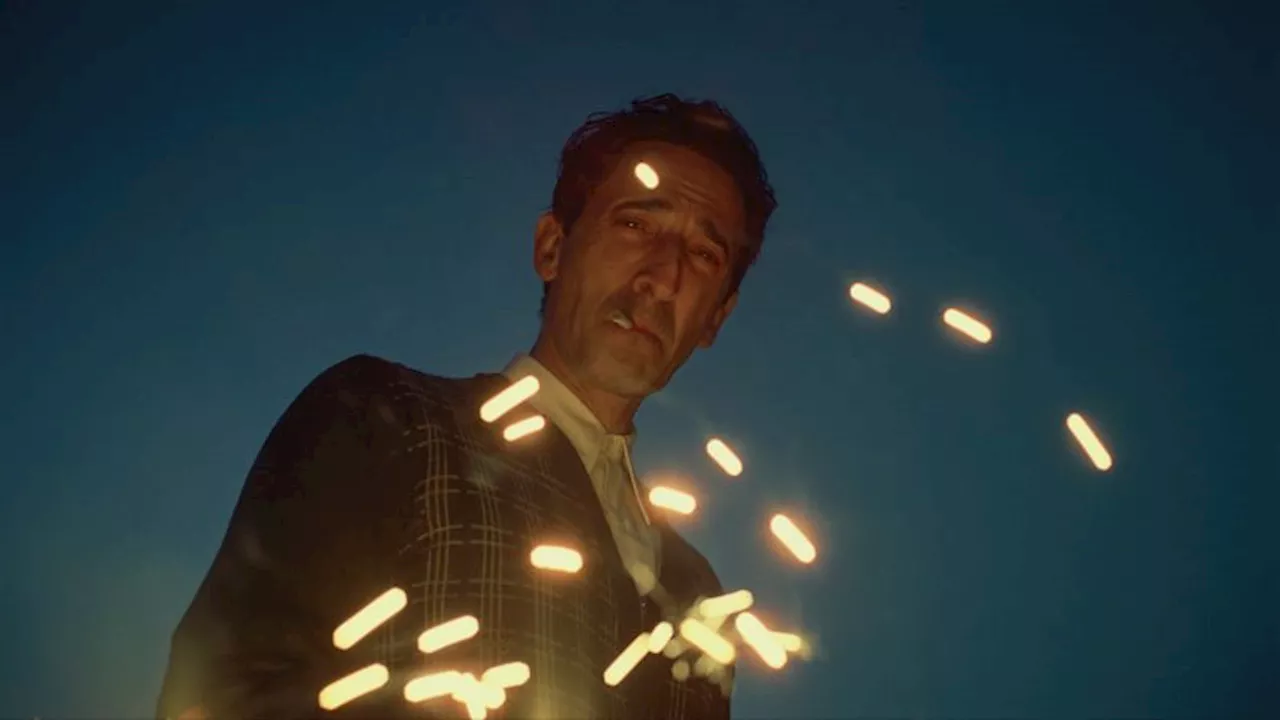 AI Voice Editing in 'The Brutalist' Sparks Debate About Technology in FilmThe use of AI to alter actors' voices in the new film 'The Brutalist' has ignited a debate about the role of technology in filmmaking. While some see it as a helpful tool, others worry about its impact on creative jobs and the authenticity of performances.
Read more »
 The AI Controversy Surrounding 'The Brutalist' and Its Oscar ProspectsThe Brutalist, a frontrunner for Best Picture, has sparked controversy due to the use of AI in its production. While praised for its technical achievements and artistic merit, the film's reliance on AI to enhance dialogue and visuals has led to debate about its ethical implications and potential impact on awards consideration.
Read more »