
A new simulation by researchers shows how a neutron star violently cracks seconds before vanishing into a black hole.
In a major breakthrough, scientists have simulated in unprecedented detail how a neutron star cracks just seconds before being swallowed by a black hole .The simulation, led by Caltech astrophysicist Elias Most, reveals how intense gravitational forces from the black hole begin to tear apart the neutron star ’s surface as the two objects spiral closer.
The phenomenon fractures the crust violently, triggering quakes similar to massive earthquakes.“The neutron star’s crust will crack open just like the ground in an earthquake,” Most says. “The black hole’s gravity first shears the surface, causing quakes in the star and the opening of rifts.”Starquakes send magnetic shocksResearchers found that this cracking sends powerful magnetic ripples, known as Alfvén waves, through the star’s magnetosphere. These waves are strong enough to generate bursts of radio signals that could be detectable by telescopes, offering a potential warning sign of an imminent cosmic collision.This snapshot from a simulation shows a magnetized outflow of plasma launched following the merger of a black hole and a magnetized neutron star. Yoonsoo Kim/CaltechWhile earlier models had predicted such crustal fractures, this is the first time researchers have captured the full physics of the process in action. The simulation also offers the clearest prediction yet of what kind of electromagnetic flare might accompany the moment of rupture.“This goes beyond educated models for the phenomenon—it is an actual simulation that includes all the relevant physics taking place when the neutron star breaks like an egg,” says co-author Katerina Chatziioannou, assistant professor of physics at Caltech and a William H. Hurt Scholar.The team used the Perlmutter supercomputer, one of the world’s most powerful GPU-based systems, to perform the simulation. GPUs—better known for running AI programs and video games—enabled the researchers to solve the highly complex equations needed to simulate the interactions between matter, gravity, and magnetic fields in such violent cosmic events.These three panels are taken from a supercomputer simulation of a merger between a black hole and a neutron star . The images, which move forward in time from left to right, show how the intense gravity of the black hole stretches the neutron star, before the black hole ultimately consumes it. Elias Most/CaltechThe actual simulations take about four to five hours to run. Most and his team had been working on similar simulations for about two years using supercomputers without GPUs before they ran them on Perlmutter.“That’s what unlocked the problem,” Most says. “With GPUs, suddenly, everything worked and matched our expectations. We just did not have enough computing power before to numerically model these highly complex physical systems in a sufficient detail.”Birth of pulsar phantomIn a second simulation, also run on Perlmutter, the team explored what happens in the final instant after the neutron star is consumed. The results show the creation of monster shock waves, first predicted by co-author Andrei Beloborodov of Columbia University, racing outward from the site of the collision.A side view from a simulation of a “black hole pulsar.” The yellow lines show where magnetic fields that are pointing in different directions meet up. Electric currents flow along this interface and heat up plasma, which takes on a characteristic “ballerina’s skirt” geometry. Yoonsoo Kim/CaltechThese strong waves could emit bursts of X-rays and gamma rays, adding another potential observational signal for astronomers.“It’s like an ocean wave,” Kim says. “The ocean is initially quiet, but as the waves come ashore, they steepen until they finally break. In our simulation, we can see the magnetic field waves break into a monster shock wave.”The same simulation also points to the formation of a rare and short-lived phenomenon, called the black hole pulsar.For a fraction of a second after the merger, magnetic fields left over from the neutron star are expelled by the black hole as spinning magnetic winds. These winds mimic the telltale beams of a pulsar—a rapidly spinning neutron star that sends out light in narrow, repeating pulses—before quickly fading away.The simulation is the first to show how the black hole pulsar could actually form in nature from the collision of a neutron star and black hole.“When the neutron star plunges into the black hole, the monster shock waves are launched,” says Yoonsoo Kim, lead author of the second study. “After the star is sucked in, whipping winds are formed, creating the black hole pulsar. But the black hole cannot sustain its winds and will become quiet again within seconds.”These findings open the door to identifying black hole–neutron star mergers using light-based observations. Until now, most such mergers have been detected through gravitational waves.But with simulations pointing to possible electromagnetic signals—such as radio bursts, X-rays, and gamma rays—astronomers may soon be able to observe these cosmic collisions with telescopes across the spectrum.In the future, the researchers hope to explore whether this same phenomenology extends to other types of binary systems.Both studies are published in The Astrophysical Journal Letters.
Astrophysics Black Hole Black Hole Pulsar Cosmic Collision Electromagnetic Flare Gravitational Waves Neutron Star Perlmutter Supercomputer Space Quakes
United States Latest News, United States Headlines
Similar News:You can also read news stories similar to this one that we have collected from other news sources.
 How Is Elon Musk Powering His Supercomputer?Bill McKibben on the tech mogul’s supercomputer Colossus—situated on the edge of a predominantly Black neighborhood in Memphis—which is raising concern among locals.
Read more »
 A supercomputer figured out when all life on Earth will endA supercomputer may have just predicted when life on Earth will end, and, thankfully, it's going to be a long time from now.
Read more »
 $2M supercomputer powered by NVIDIA delivers 80X leap in chip and drug designThe $2M Millennium M2000 Supercomputer from Cadence and NVIDIA reshapes chip, drug, and AI design with Blackwell-powered acceleration.
Read more »
 xAI to use Tesla Megapack batteries to power world’s largest AI supercomputerTesla Megapack batteries will help xAI's Colossus withstand outages and surges in demand, boosting reliability in Memphis.
Read more »
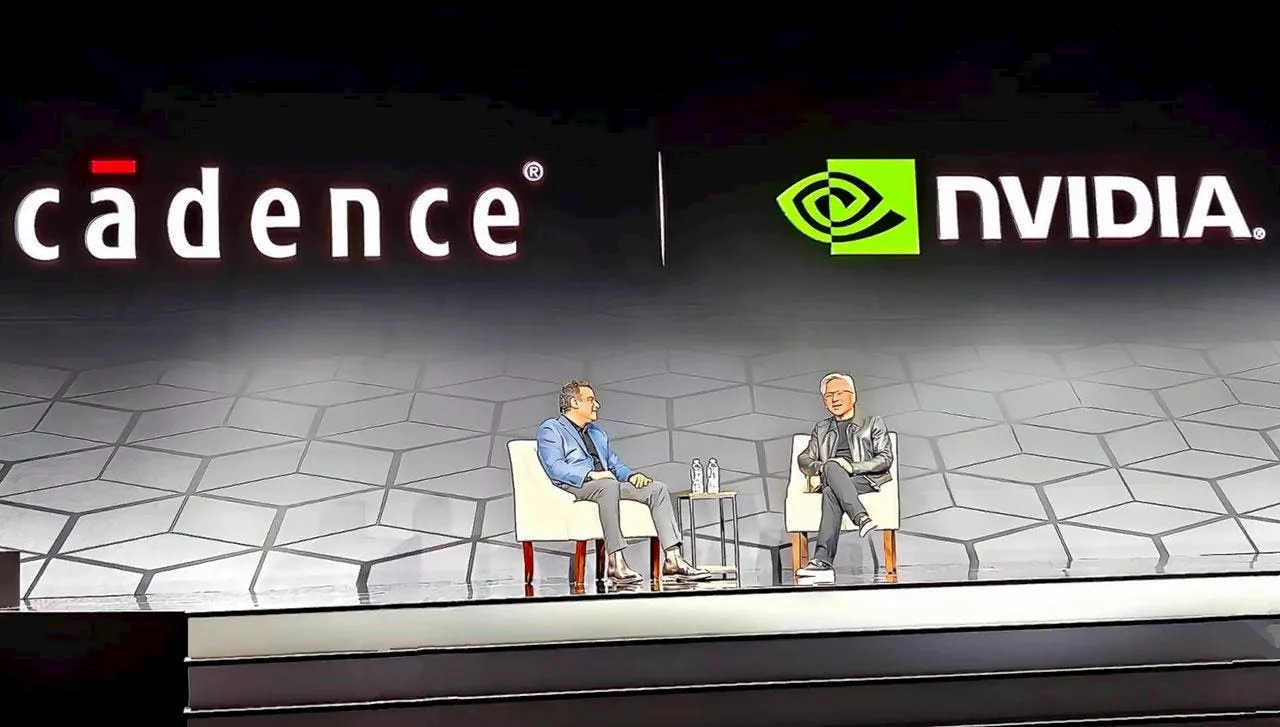 Cadence Unveils Millennium M2000 Supercomputer And Nvidia Is All InThe company isn’t just targeting chipmakers; it’s building a simulation platform and environment from silicon to systems, to science.
Read more »
 NAACP Wants Elon Musk’s Memphis Supercomputer Shut Down, Alleging Pollution of Black CommunitiesSource of breaking news and analysis, insightful commentary and original reporting, curated and written specifically for the new generation of independent and conservative thinkers.
Read more »