
Researchers have uncovered mechanisms that may link head injuries and concussions to the emergence of neurodegenerative disease, pointing to latent viruses lurking in most of our brains that may be activated by the jolt, leading to inflammation and accumulating damage over time.
Researchers have uncovered mechanisms that may link head injuries and concussions to the emergence of neurodegenerative disease, pointing to latent viruses lurking in most of our brains that may be activated by the jolt, leading to inflammation and accumulating damage over time.
The results suggest the use of antiviral drugs as potential early preventive treatments post-head injury. Concussions and repetitive head trauma in sports like football and boxing, once accepted as an unpleasant consequence of intense athletic competition, are now recognized as serious health threats. Of particular concern is the connection between head injuries and neurodegenerative diseases such as chronic traumatic encephalopathy, Alzheimer's disease, and Parkinson's disease, prompting sports governing bodies to adjust protective equipment and rules of play to minimize the risk. Researchers at Tufts University and Oxford University have now uncovered mechanisms that may connect the dots between trauma event and the emergence of disease, pointing to latent viruses lurking in most of our brains that may be activated by the jolt, leading to inflammation and accumulating damage that can occur over the ensuing months and years. The results suggest the use of antiviral drugs as potential early preventive treatments post-head injury. The findings are published in a study inThe microbiome -- which includes many hundreds of bacterial species that inhabit our bodies -- provides aid in digestion, immune system development, and protection against harmful pathogens. But the microbiome also includes dozens of viruses that swarm within our bodies at any given time. Some of these can be potentially harmful, but simply lie dormant within our cells. Herpes simplex virus 1 , found in over 80% of people, and varicella-zoster virus, found in 95% of people, are known to make their way into the brain and sleep within our neurons and glial cells. Dana Cairns, research associate in the Department of Biomedical Engineering at Tufts University and lead author of the study, had found evidence in earlier studies suggesting that activation of HSV-1 from its dormant state triggers the signature symptoms of Alzheimer's disease in lab models of brain tissue -- amyloid plaques, neuronal loss, inflammations, and diminished neural network functionality. "In that study, another virus -- varicella -- created the inflammatory conditions that activated HSV-1," said Cairns."We thought, what would happen if we subjected the brain tissue model to a physical disruption, something akin to a concussion? Would HSV-1 wake up and start the process of neurodegeneration?" The link between HSV-1 and Alzheimer's disease was first suggested by co-author Ruth Itzhaki, Visiting Professorial Fellow at Oxford University, who over 30 years ago identified the virus in a high proportion of brains from the elderly population. Her subsequent studies suggested that the virus can be reactivated in the brain from a latent state by events such as stress or immunosuppression, ultimately leading to neuronal damage. In the current study, the researchers used a lab model that reconstructs the environment of the brain to better understand how concussions may set off the first stages of virus reactivation and neurodegeneration. The brain tissue model consists of a 6mm wide donut-shaped sponge-like material made of silk protein and collagen, suffused with neural stem cells, which are then coaxed into mature neurons, growing axons and dendrite extensions and forming a network. Glial cells also emerge from the stem cells to help mimic the brain environment and nurture the neurons. The neurons communicate with each other through their extensions similarly to how they would communicate in a brain. And just like cells in the brain, they can carry within them the DNA of dormant HSV-1 virus. After enclosing the brain-like tissue in a cylinder and giving it a sudden jolt atop a piston, mimicking a concussion, Cairns examined the tissue under the microscope over time. Some of the tissue models had neurons with HSV-1, and some were virus-free. After the controlled blows, she observed that the infected cells showed re-activation of the virus, and shortly after that the signature markers of Alzheimer's disease, including amyloid plaques, p-tau , inflammation, dying neurons, and a proliferation of glial cells called gliosis. More strikes with the pistons on the tissue models mimicking repetitive head injuries led to the same reactions, which were even more severe. Meanwhile, the cells without HSV-1 showed some gliosis, but none of the other markers of Alzheimer's disease. The results were a strong indicator that athletes suffering concussions could be triggering reactivation of latent infections in the brain that can lead to Alzheimer's disease. Epidemiological studies have shown that multiple blows to the head can lead to doubling or even greater chances of having a neurodegenerative condition months or years down the line. "This opens the question as to whether antiviral drugs or anti-inflammatory agents might be useful as early preventive treatments after head trauma to stop HSV-1 activation in its tracks, and lower the risk of Alzheimer's disease," said Cairns. The problem goes far beyond the concerns for athletes. Traumatic brain injury is one of the most common causes of disability and death in adults, affecting about 69 million people worldwide each year, at an economic cost estimated at $400 billion annually. "The brain tissue model takes us to another level in investigating these connections between injury, infection, and Alzheimer's disease," said David Kaplan, Stern Family Endowed Professor of Engineering at Tufts."We can re-create normal tissue environments that look like the inside of a brain, track viruses, plaques, proteins, genetic activity, inflammation and even measure the level of signaling between neurons. There is a lot of epidemiological evidence about environmental and other links to the risk of Alzheimer's. The tissue model will help us put that information on a mechanistic footing and provide a starting point for testing new drugs." Dana M. Cairns, Brooke M. Smiley, Jordan A. Smiley, Yasaman Khorsandian, Marilyn Kelly, Ruth F. Itzhaki, David L. Kaplan.A new study finds concussions don't reduce the IQ of children. Findings may help to reduce parental fears regarding these common and concerning head injuries. Researchers looked at socioeconomic ... Adults who suffered any head injury during a 30-year study period had two times the rate of mortality than those who did not have any head injury, and mortality rates among those with moderate or ... Scientists saw for the first time hallmarks of concussions and other head trauma in the brains of deceased headbutting animals -- muskoxen and bighorn sheep. The results may contradict the ... New research shows that a single head injury could lead to dementia later in life. This risk further increases as the number of head injuries sustained by an individual increases. The findings also ...Brain Cells Remain Healthy After a Month on the International Space Station, but Mature Faster Than Brain Cells on Earth
Nervous System Brain Tumor Accident And Trauma Brain Injury Disorders And Syndromes Alzheimer's Dementia
United States Latest News, United States Headlines
Similar News:You can also read news stories similar to this one that we have collected from other news sources.
 Fertilized soil may be a major source of smog near Salton Sea, researchers sayA new study finds fertilized soil is a major driver of smog-forming pollution near the Salton Sea.
Read more »
 What the Last Trump Tariffs Did, According to ResearchersThe U.S.-China trade war from Trump’s first administration offers a glimpse of the effects a more protectionist trade policy might have this time around.
Read more »
 Everglades Researchers Study Water QualityResearchers from Florida International University are monitoring water quality in the Shark River Slough of the Everglades National Park using automatic sampling equipment.
Read more »
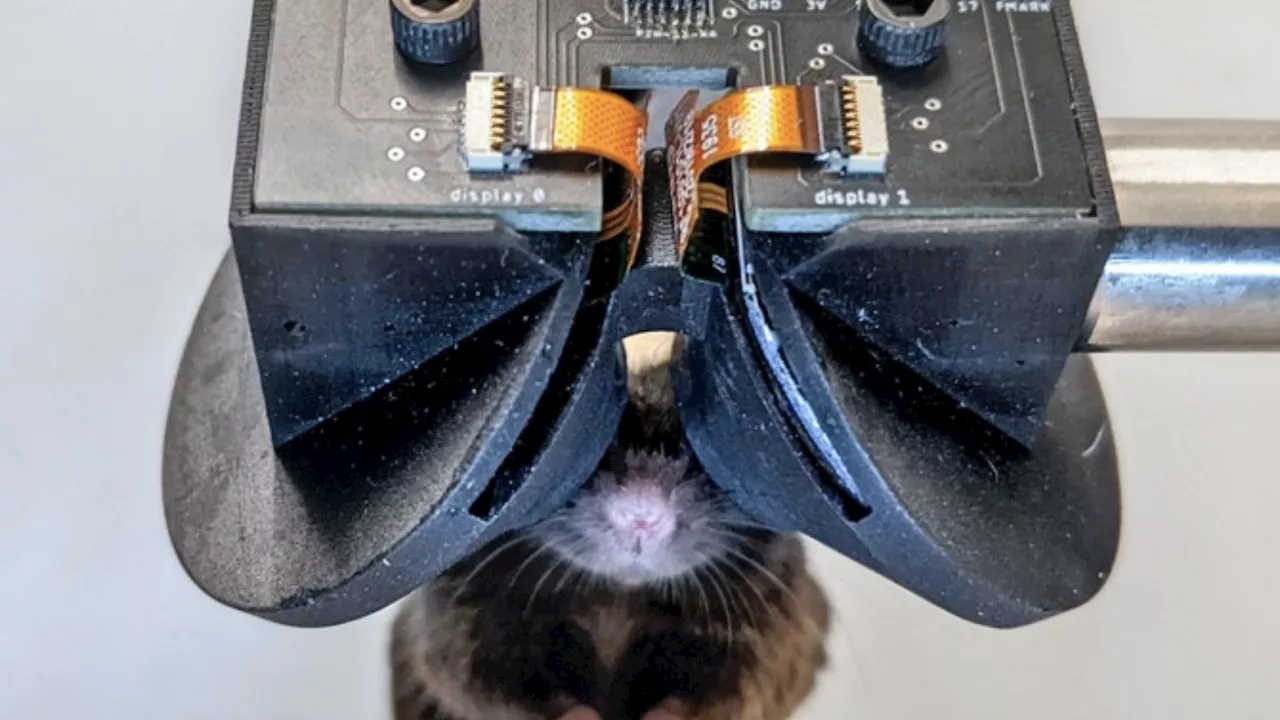 Cornell Researchers Develop Miniature VR Headsets to Study Mouse Brain ActivityResearchers from Cornell University have created MouseGoggles, miniature VR headsets designed to immerse mice in virtual environments. These headsets, built with affordable components, aim to provide deeper insights into the neural activity related to spatial navigation and memory function in mice. The technology holds potential for understanding disorders like Alzheimer's disease and exploring potential treatments.
Read more »
 Bristol researchers study impact of singing on wellbeingAbout 300 people took part in the Sing For Happiness research project in the run-up to Christmas.
Read more »
 Sandwich Carers Experience Worsening Mental and Physical HealthA new study published in the journal reveals that adults caring for both children and elderly relatives, known as 'sandwich carers,' are more likely to experience a decline in their mental and physical well-being. The study, conducted by researchers at University College London, found that parents providing care for an older relative experienced increased psychological distress, especially those spending over 20 hours a week on caregiving. Sandwich carers also saw a faster decline in physical health with increased care time. Researchers emphasize the importance of recognizing and supporting the unique needs of this growing population.
Read more »