
The Best in Science News and Amazing Breakthroughs
, modern humanity's ancestors were reduced to a breeding population of barely 1,300 individuals in a devastating bottleneck that brought us to the very brink of annihilation. Now, a new study has found that a mass migration of humans out of Africa occurred at the same time.
It's a discovery that confirms the previous dating of the population decline, and suggests that the two are linked to a common denominator; an event known as the The movement of early humans into and across Europe and Asia from Africa is difficult to reconstruct. The best evidence we have consists of a sparse record of bones and mostly stone artifacts, which can beTwo recent studies have linked human migration to a population bottleneck, based on different types of analysis. A close reading of the human genome found that a population bottleneck caused a loss of genetic diversityThis discrepancy makes it challenging to identify the climate event that may have caused or at the very least contributed to the temporary drop in numbers, so geologists Giovanni Muttoni of the University of Milan and Dennis Kent of Columbia University embarked on an effort to narrow down the timing of the bottleneck. First, the researchers re-evaluated records of sites of early hominid habitation across Eurasia, and found a cluster of sites reliably dated to 900,000 years ago. In comparison, the dating on older sites used as evidence of a population bottleneck was more ambiguous and They compared their findings to marine sediment records, which preserve evidence of changes in the climate in the form of oxygen isotopes. Ratios of oxygen trapped in sediment layers indicate whether the climate was warmer or cooler at the time the minerals were deposited. The genomic data and the dating of the hominid sites together suggest that the bottleneck and the migration were simultaneous. During the Mid-Pleistocene Transition,, and Africa and Asia dried out, with large patches of aridity. Hominids living in Africa would have faced horrible conditions depriving them of food and water. Fortunately, with the falling sea level, land routes into Eurasia became available and they were able to skedaddle, according to the researchers' model. This is not to say, they carefully note, that hominids had not migrated previously. Rather that the population bottleneck in the ancestor of modernand the migration thereof occurred at the same time as a result of the climate upheaval that was occurring some 900,000 years ago."Rapid migration in response to a severe climate trigger and concomitant means to escape is what can account for the … migration out-of-Africa at 0.9 million years ago and contribute to the modern genomic evidence in modern African populations of the bottleneck."
United States Latest News, United States Headlines
Similar News:You can also read news stories similar to this one that we have collected from other news sources.
 Alzheimer's Was 'Exceptionally' Rare in Ancient Greeks And Romans, Study SuggestsThe Best in Science News and Amazing Breakthroughs
Read more »
 Lavish Tomb Reveals Spine-Chilling Ritual of Ancient Coclé CultureThe Best in Science News and Amazing Breakthroughs
Read more »
 Mercury rising: Study sheds new light on ancient volcanoes' environmental impactMassive volcanic events in Earth's history that released large amounts of carbon into the atmosphere frequently correlate with periods of severe environmental change and mass extinctions.
Read more »
 Inbreeding Avoidance: Ancient DNA Reveals Unexpected Social Structures in Stone Age EuropeScience, Space and Technology News 2024
Read more »
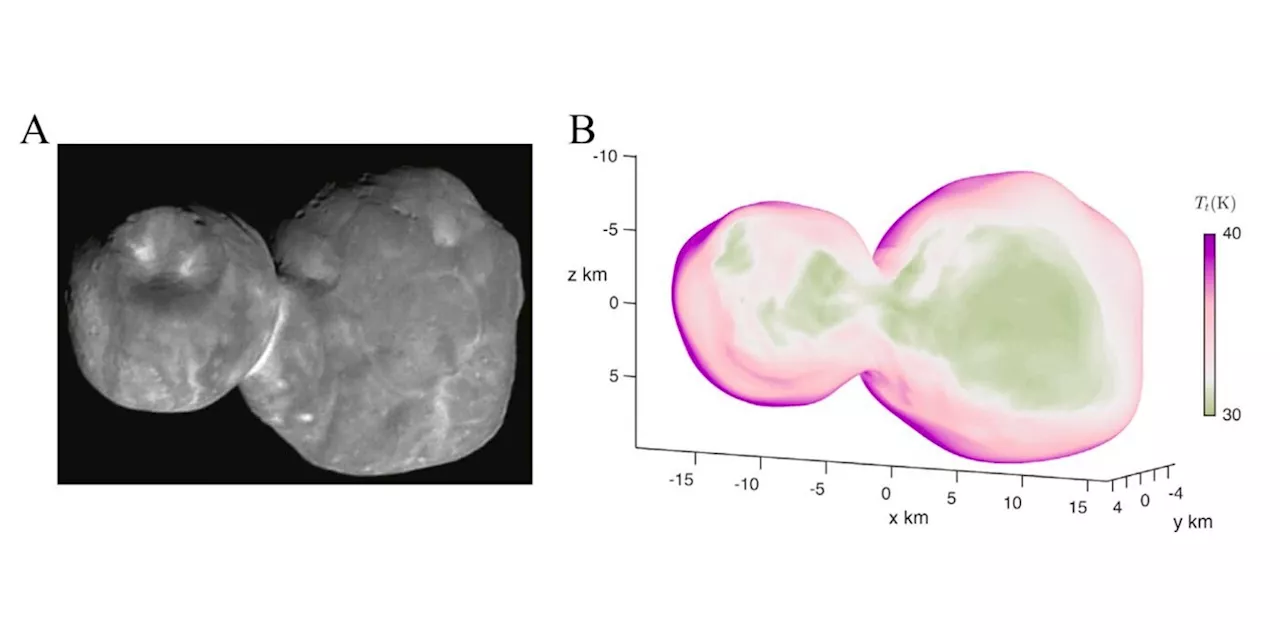 Study reveals ancient ice may still exist in distant space objectsA paper recently published in Icarus presents findings about the Kuiper Belt Object 486958 Arrokoth, shedding new light on the preservation of volatile substances like carbon monoxide (CO) in such distant celestial bodies.
Read more »
 The Last of the Hunter-Gatherers: New Study Challenges Theories on Ancient Scandinavian SocietiesScience, Space and Technology News 2024
Read more »