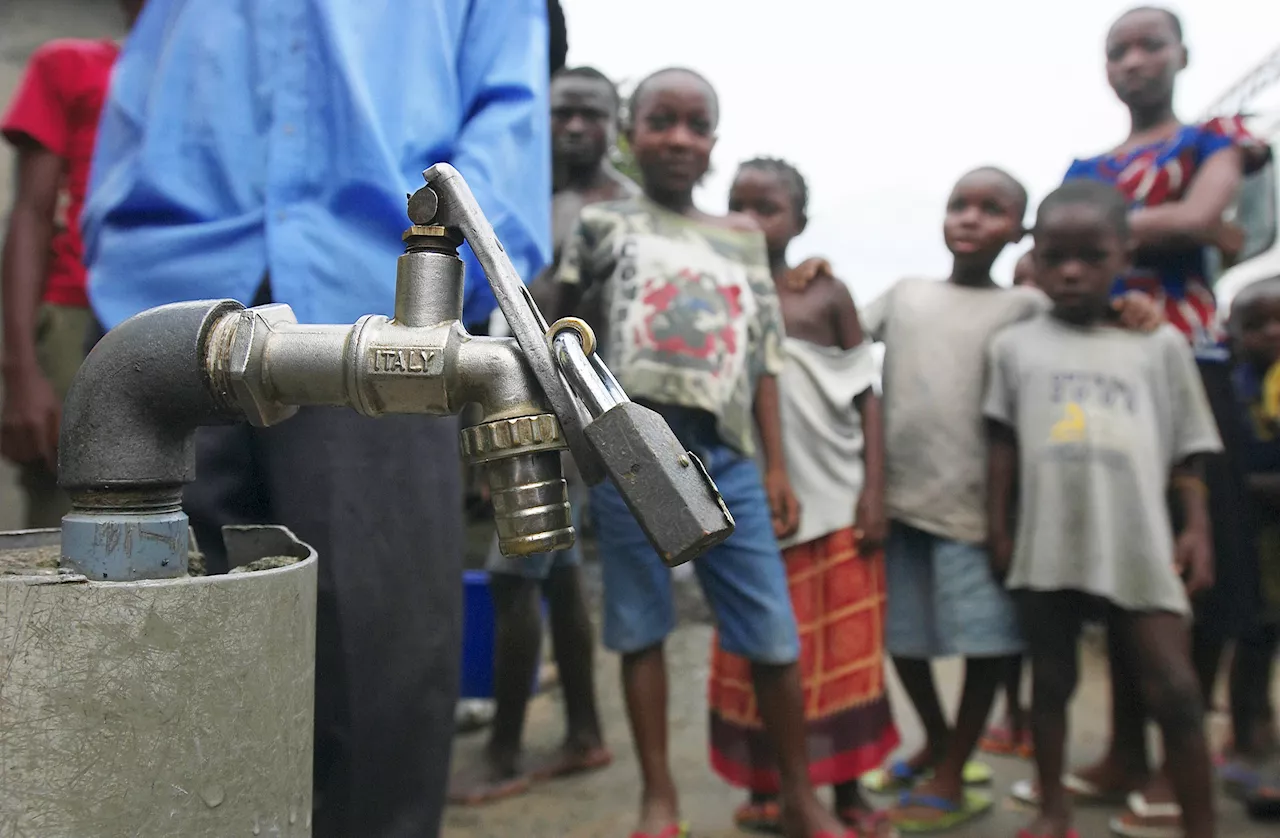
A Nigerian poet wonders what future lies ahead in the face of climate change impacts and resistance to large-scale emission reductions.
A Nigerian eco-activist and poet wonders what future lies ahead in the face of climate change impacts and resistance to large-scale emission reductions.Anthropological poems from around the globe speak to people’s creative will, resistance, and resilience—and the significance of our shared humanity.
Breakthrough treatments can now cure sickle cell anemia in the U.S. But the pricey therapies will hardly help in Nigeria, where social changes could do more for millions impacted by the disease.In a California gym, people living with Parkinson’s practice noncontact boxing to redefine their experience of the disease and maintain a sense of self.Tras los presuntos robos en el Museo Británico, una conservadora de museos explica los desafíos de llevar el registro de las colecciones —y las limitaciones legales para devolver material cultural a las comunidades de origen—.Public health officials say opioid use and related deaths have reached a crisis point in the U.S. An interview with anthropologist and psychiatrist Helena Hansen unpacks the racial disparities in how drug addiction is interpreted, portrayed, and treated.Two biological anthropologists analyze archaeological and physiological evidence to debunk enduring assumptions about the gendered division of labor in ancient times.A poet-anthropologist conveys her life when she was coming of age under the increasing mobilization of military forces in Indian-occupied Kashmir.East African runners wearing “super shoes” have outpaced global marathon records. But the shoe fervor—alongside older stereotypes about African runners’ “natural” abilities—means athletes’ hard work often gets sidelined.As homophobic and transphobic rhetoric sweeps the U.S., some churches are increasingly welcoming LGBTQ+ parishioners who participate in religious life and help reconcile Christianity with a spectrum of sexual and gender identities.Amid the war on Gaza and long before, anthropologists have been speaking out against Israel’s occupation of Palestine. Here’s a curated list of their perspectives as scholars and activists.In another year of exceptional challenges and hardships, anthropologists tackled a range of issues and questions about what it means to be human. Here are some of SAPIENS’ best from this year.After alleged thefts from the British Museum, a curator explains the challenges of keeping track of collections—and the legal limitations on returning cultural material to source communities.A new multimedia project connects the development of a Balinese regional painting style with anthropologists Margaret Mead and Gregory Bateson, who began commissioning art in the region in the 1930s.The Berlin Wall fell more than three decades ago—but political, social, and economic divides between East and West Germany continue to reverberate, even among those born after Reunification.A series of short videos captures a rare view into the lives of wild chimps through the eyes of a researcher.In response to news of ethical violations by museums, a curator reflects on the past and future missions of such institutions.Un antropólogo investiga cómo la rápida expansión del sistema de videovigilancia en una ciudad está transformando la investigación criminal, a veces de formas profundamente engañosas.A researcher explains why the Fulbright-Hays fellowship should change its rules that have kept native and heritage speakers from working where their languages are spoken.A tribal scholar from the state of Nagaland in India engages with the loss of traditional cultural practices and locates the creation of a new world order where the “natural” is increasingly isolated from the “human.”In a new book, an anthropologist and father of three, including a daughter with Down syndrome, reflects on the pressures of parenting.An Egyptologist’s study of hieroglyphic texts has revealed that ancient Egyptians likely understood the celestial origins of iron-rich meteorites.In Mexico, a growing animal protection movement often promotes harsh criminal punishment for those who abuse animals. But are these strategies working, or do they lead to further injustices? A Nigerian eco-activist and poet wonders what future lies ahead in the face of climate change impacts and resistance to large-scale emission reductions.My daughter insists we can build the world around usIf I stand by a riverside full of trash and plastic?When I love, I press every moment like a garlic clove.The long silence for the songs my grandmother taught meHere, the green pastures have become dust, carcassesAre pastoralists, yet the reverse is false. There has to beWhat about home? There is too much smog. I’m awake,It reminds me of everything we failed to do and what I doOjo Taiye is a Nigerian eco-activist, cultural worker, and artist who uses poetry as a tool to hide his frustration with society. His practice is collaborative, and his work often speaks to climate change, homelessness, migration, racism, Black identity, and mental health. His current project explores neocolonialism, institutionalized violence, and ecological trauma in the oil-rich, polluted Niger Delta. Taiye’s poems have been published or are forthcoming in the, among others. He has worked on the following projects: 2022—CHCI/MELLON Global Humanities Institute, South Africa; We Hear You—A Climate Archive, 2023; and the 2023–Environmental Humanities Justice Network , Denmark. His debut mixed media installation was exhibited in Linz, Austria, as part of the Ars Electronica Festival 2023. He is at work on his second poetry pamphlet.Nature-loving volunteers in the Mexican state of Chihuahua gather weekly on the banks of the San Pedro River to collect trash. But their aims are bigger.An impoverished region in Puerto Rico has long been under assault from environmental and social injustices. One remarkable woman is working to make sure the voices of disenfranchised local people are heard.U.S. government departments press pause on pipeline construction and call for serious talks on reform of the consultation process with Native American tribes for extensive infrastructure projects.Thawing permafrost isn’t just a problem facing the Arctic. An anthropologist who works with Indigenous communities in Siberia argues that the way to turn around climate catastrophe is by engaging all knowledge systems.Chestnut trees provide a key insight into how people can prepare for the storms that are growing increasingly destructive as a result of climate change.