Beyond the Breaking News

Some Thoughts About Labor & Capital For This Labor Day Weekend

United States News News

Some Thoughts About Labor & Capital For This Labor Day Weekend
United States Latest News, United States Headlines

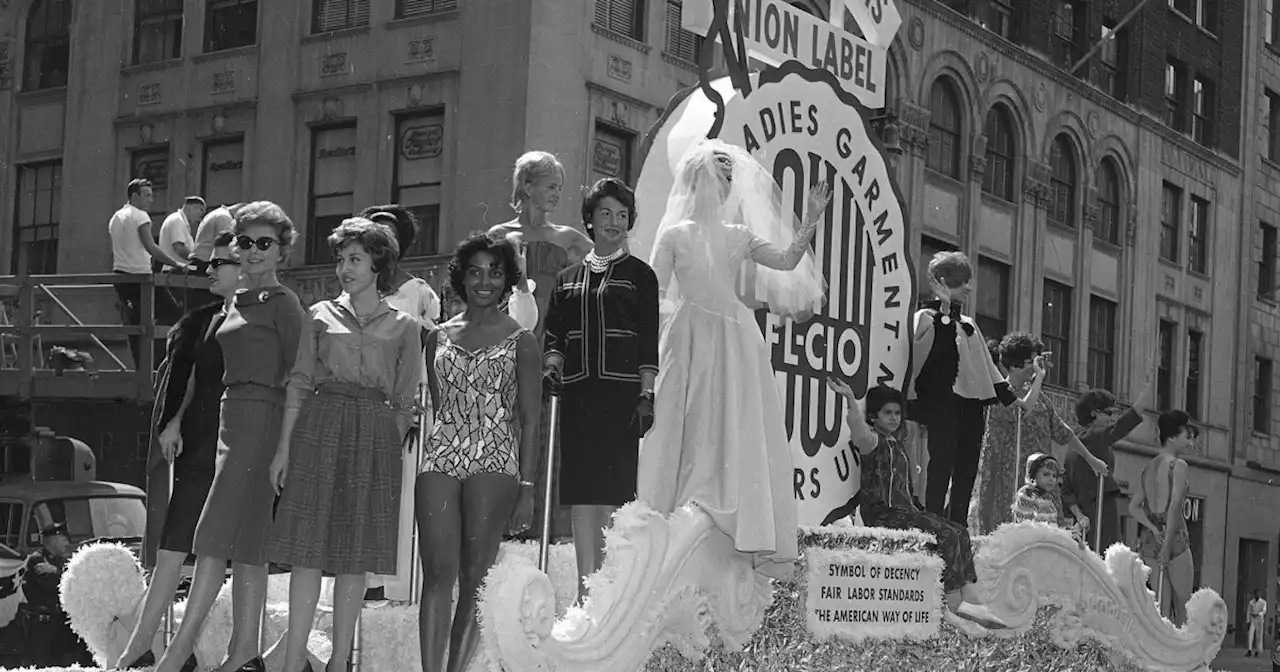
The historical roots of Labor Day are unknown to most Americans today. It is a symbol of the divisions in our culture today.

Labor Day is a federal holiday in the US and Canada that is designed to honor the efforts of the workers who produce the goods and services that power the economy., as the trade union and labor movements grew, trade unionists proposed that a day be set aside to celebrate labor.

“Labor Day” was promoted by the Central Labor Union and the Knights of Labor, which organized the first parade in New York City. In 1887, Oregon was the first state of the United States to make it an official public holiday. By the time it became an official federal holiday in 1894, thirty states in the US officially celebrated Labor Day.. Over the past few weeks, I have found her writing to be well informed and impeccably researched. If you want to be well informed amid today’s maelstrom of competing news sources, you may wish to subscribe to her daily post. If you should elect to become a paid subscriber, I’m quite sure she would not mind that at all. In today’s column, Cox focuses on the ongoing struggle between labor and capital that has been a staple of American politics since the nation came into existence. On March 4, 1858 South Carolina senator James Henry Hammond instructed his colleagues on how things work. “In all social systems, there must be a class to do the menial duties, to perform the drudgery of life.” That class, he said, needed little intellect and little skill, but it should be strong, docile, and loyal. “Such a class you must have, or you would not have that other class which leads progress, civilization and refinement,” Hammond said. His workers were the “mud-sill” on which society rested, the same way that a stately house rested on wooden sills driven into the mud. He told his northern colleagues that the South had perfected this system of enslavement based on race while northerners pretended that they had abolished slavery. “Aye, the name, but not the thing,” Hammond said. “[Y]our whole hireling class of manual laborers and ‘operatives,’ as you call them, are essentially slaves.” Hammond celebrated the fact that southern leaders had made certain their enslaved people were denied access to political power. He warned that northerners had made the terrible mistake of giving their “slaves” the vote. As the majority, they could, if they only realized it, control society. Then “where would you be?” he asked. “Your society would be reconstructed, your government overthrown, your property divided, not…with arms…but by the quiet process of the ballot-box.” Hammond cautioned his colleagues from northern states that it was only a matter of time before workers took over northern cities and began slaughtering men of property.Abraham Lincoln, who was a young politician on the move at the time, took the opportunity to respond to Hammond at the Wisconsin State Agricultural Fair in September of 1859. While Hammond argued that labor depended on capital to spur men to work — either by hiring them or enslaving them — Lincoln laid out an alternate vision of how the world ought to work. Lincoln’s constituency was composed of people who worked the land as farmers or relied on fishing to earn their living. Lincoln believed that “[l]abor is prior to, and independent of, capital; that, in fact, capital is the fruit of labor, and could never have existed if labor had not first existed — that labor can exist without capital, but that capital could never have existed without labor. Hence they hold that labor is the superior — greatly the superior of capital.” Lincoln himself had worked his way up from poverty while Hammond had married into a wealthy family. Lincoln went on to say, “[T]he opponents of the ‘mud-sill’ theory insist that there is not…any such things as the free hired laborer being fixed to that condition for life.” What Lincoln said next became the basis for the nascent Republican Party. “The prudent, penniless beginner in the world, labors for wages awhile, saves a surplus with which to buy tools or land, for himself; then labors on his own account for another while, and at length hires another new beginner to help him. This, say its advocates, is free labor — the just, and generous, and prosperous system which opens the way for all — gives hope to all, and energy and progress, and improvement of condition to all.” Richardson notes that in the worldview expressed by Lincoln, everyone shared a harmony of interest. What was good for the individual worker was, ultimately, good for everyone. There was no conflict between labor and capital. Capital was simply “pre-exerted labor.” Except for a few unproductive financiers and those who wasted their wealth on luxuries, everyone was part of the same harmonious system.Richardson emphasizes that the protection of property was crucial to Lincoln’s vision but so was opposition to great accumulations of wealth. Levelers who wanted to confiscate property would upset this harmony, as Hammond warned, but so would rich men who sought to monopolize land, money, or the. If a few people took over most of a country’s money or resources, rising laborers would be forced to work for them forever or, at best, would have to pay exorbitant prices for the land or equipment they needed to become independent. “A lot of water has gone under the bridge since Lincoln’s day,” Richardson writes, “but on this Labor Day weekend, it strikes me that the worldviews of men like Hammond and Lincoln are still fundamental to our society. Should our government protect people of property as they exploit the majority so they can accumulate wealth and move society forward as they wish? Or should we protect the right of ordinary Americans to build their own lives, making sure that no one can monopolize the country’s money and resources, with the expectation that their efforts will build society from the ground up?”The fracture lines in American society at the moment hark back to the philosophical differences Hammond and Lincoln expounded in the 1850s. The debate will never be settled, apparently. There are those who believe with all their heart that there are millions of human beings whose reason for living is simply to support their “betters” through their exertions.who labor all their lives long to support the indolent lifestyles of the wealthy. The conflict will never be resolved, apparently. The world has witnessed war after war between those on both side of the argument. And that’s really the problem, isn’t it? How are humans ever going to be able to find ways to keep the Earth from overheating if they can’t agree on whether we are all equal or whether some are more equal than others? The fact that many of those divisions have always been and continue to be is perhaps the best indication that humans are not ever going to figure this out — and that may be our ultimate undoing.I don't like paywalls. You don't like paywalls. Who likes paywalls? Here at CleanTechnica, we implemented a limited paywall for a while, but it always felt wrong — and it was always tough to decide what we should put behind there. In theory, your most exclusive and best content goes behind a paywall. But then fewer people read it! We just don't like paywalls, and so we've decided to ditch ours. Unfortunately, the media business is still a tough, cut-throat business with tiny margins. It's a never-ending Olympic challenge to stay above water or even perhaps —

GooglePlease follow us on Google to support us
We have summarized this news so that you can read it quickly. If you are interested in the news, you can read the full text here. Read more:

cleantechnica /  🏆 565. in US


United States Latest News, United States Headlines

Similar News: You can also read news stories similar to this one that we have collected from other news sources.

From strikes to new union contracts, Labor Day's organizing roots are especially strong this yearFrom strikes to new union contracts, Labor Day's organizing roots are especially strong this yearIt has been an official holiday for almost 130 years, but today's labor movement is creating an environment closer to the era from which Labor Day was born.
Read more »

Labor Day holiday comes with labor unions flexing their muscleLabor Day holiday comes with labor unions flexing their muscleWith Labor Day arriving and the Labor Department reporting hiring slowing, are unions a thing of the future?
Read more »

Labor Day is now a key to Election Day for Democrats and Republicans alikeLabor Day is now a key to Election Day for Democrats and Republicans alikeWith all that has shifted around in American politics, the Democrats' disconnect from the broad working class is the loss that has cost them the most and threatens them most in the years ahead.
Read more »

Labor Day is now a key to Election Day for Democrats and Republicans alikeLabor Day is now a key to Election Day for Democrats and Republicans alikeWith all that has shifted around in American politics, the Democrats' disconnect from the broad working class is the loss that has cost them the most and threatens them most in the years ahead.
Read more »

Union organizers talk about 'Hot Labor Summer' on Labor Day weekendUnion organizers talk about 'Hot Labor Summer' on Labor Day weekendAs the Bay Area settles into another Labor Day weekend, union organizers are rejoicing over the current state of organized labor.
Read more »


Render Time: 2026-08-10 10:41:33