
Inspired by the evolution of life from water to land, researchers at Cornell University have developed soft robots powered by 'embodied energy' – batteries integrated into the robot's body. These robots, a worm and a jellyfish, showcase increased battery capacity and power density, enabling them to travel longer distances. The worm robot utilizes a compartmentalized design, with each pod housing a motor and battery, allowing it to move along the ground and climb vertical surfaces. The jellyfish robot, meanwhile, leverages currents for efficient ocean exploration.
In the same way that terrestrial life evolved from ocean swimmers to land walkers, soft robots are progressing, too, thanks to recent research in battery development and design. In the same way that terrestrial life evolved from ocean swimmers to land walkers, soft robots are progressing, too, thanks to recent Cornell University research in battery development and design.
A modular worm robot and jellyfish demonstrate the benefits of"embodied energy" -- an approach that incorporates power sources into the body of a machine, to reduce its weight and cost. The worm and jellyfish are direct descendants of an aqueous soft robot, inspired by a lionfish and unveiled in 2019, that could store energy and power its applications via a circulating hydraulic fluid -- i.e.,"robot blood." Similar blood sustains the new species, but with an improved design for greater battery capacity and power density. "The jellyfish has much more capacity for its weight, so the duration it can travel is even longer than the fish," said Rob Shepherd, professor of mechanical and aerospace engineering, who led both projects."The worm is the first version we've done above ground. When it's underwater, you get buoyantly supported, so you don't need a skeleton. It doesn't need to be rigid." The key innovation of the worm robot was its compartmentalized design. The worm's body is a series of interconnected pods, each containing a motor and tendon actuator so the worm can compress and expand its shape, as well as a stack of anolyte pouches immersed in catholyte. "There are a lot of robots that are powered hydraulically, and we're the first to use hydraulic fluid as the battery, which reduces the overall weight of the robot, because the battery serves two purposes, providing the energy for the system and providing the force to get it to move," Shepherd said."So then you can have things like a worm, where it's almost all energy, so it can travel for long distances." The researchers tested two modes of movement. The worm can inch along the ground, with each pod contracting and then pushing itself forward; the worm can also push its way up and down a vertical pipe like a caterpillar, a technique known as two-anchor crawling. The robot is not exactly speedy -- it would take 35 hours to travel 105 meters in a single charging -- but it is faster than other hydraulically powered worm bots. As for potential applications, the worm is particularly well suited for exploring long and narrow passageways, such as pipes, and possibly conducting repairs. Likewise, the jellyfish robot would be an ideal low-cost tool for ocean exploration because it can be carried along with the current, then swim up to the surface to send and receive communications, before sinking back down.Researchers have developed electrically-driven soft valves to control hydraulic soft actuators. These valves could be used in assistive and therapeutic devices, bio-inspired soft robots, soft ... We've seen robots take to the air, dive beneath the waves and perform all sorts of maneuvers on land. Now, researchers are exploring a new frontier: the ground beneath our feet. Taking their cues ... Engineering researchers have developed soft robots inspired by jellyfish that can outswim their real-life counterparts. More practically, the new jellyfish-bots highlight a technique that uses ... Robots can be made from soft materials, but the flexibility of such robots is limited by the inclusion of rigid sensors necessary for their control. Researchers created embedded sensors, to replace ...Physicists Pioneer Entanglement Microscopy Algorithm to Explore How Matter Entangles in Quantum Many-Body Systems
SOFT ROBOTS BATTERY TECHNOLOGY EMBODIED ENERGY HYDROSTATIC ACTUATION ROBOT DESIGN
United States Latest News, United States Headlines
Similar News:You can also read news stories similar to this one that we have collected from other news sources.
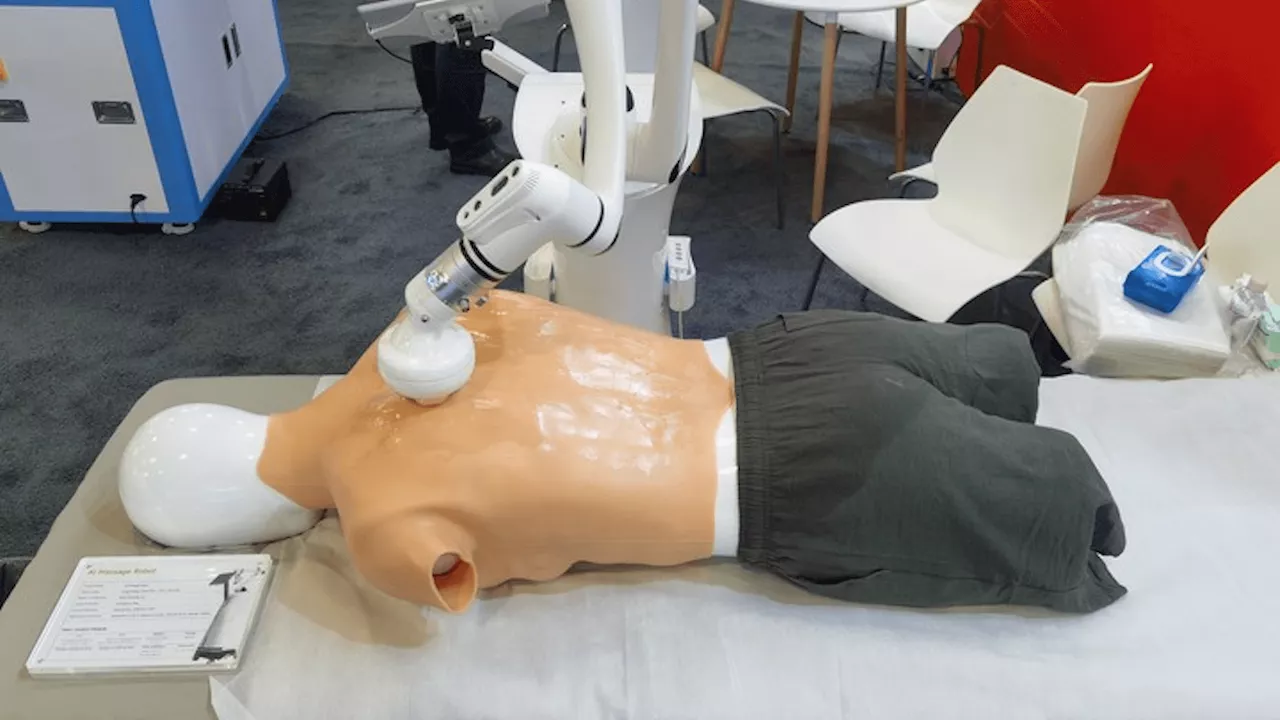 RealMan Robotics Showcases Affordable and Adaptable Robots at CES 2025RealMan Robotics unveils a range of innovative robots at CES 2025, emphasizing their potential for mass production and real-world applications. The company highlights its new GEN72 robotic arm, an affordable option for consumers and businesses alike.
Read more »
 The robots we saw at CES 2025: The good, the bad and the completely unhingedKarissa is a senior reporter at Engadget, covering Meta, Twitter, TikTok, Snap and all things social media. Her interests include tech policy, internet culture, and all the ways our online activities shape our IRL selves.
Read more »
 LG set to develop humanoid robots leveraging AI agent Q9 technologyThe South Korean electronics giant is focusing on humanoid robot development, utilizing its AI agent Q9 technologies for the project.
Read more »
 Should Fear of Robots Halt Progress of Self-Driving Cars?A recent incident involving a self-driving car and a sidewalk delivery robot, while comical, highlights the irrational fears surrounding autonomous vehicles. This article argues that data shows self-driving cars are safer than human-driven cars and that legislative efforts to limit their development are misguided and potentially dangerous.
Read more »
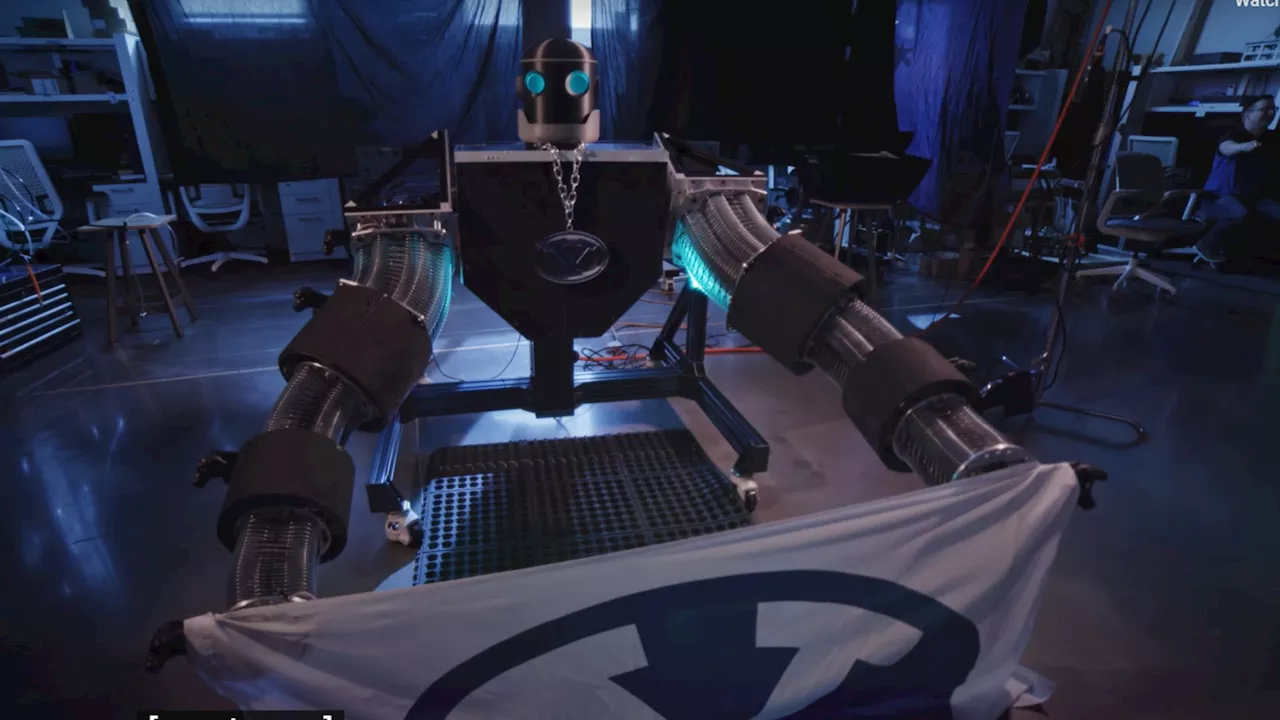 Soft Robots Revolutionize Human-Robot CollaborationResearchers at BYU are developing innovative soft robots that can safely and effectively collaborate with humans in various tasks. These robots, such as Baloo, are designed to be intuitive and adaptable, moving beyond the limitations of traditional rigid robots.
Read more »
 Powder Pink: The Soft Power Trend to Watch This SpringGet ready to embrace the blush hues of spring 2025 with powder pink, the season's hottest trend. This sophisticated take on pink moves beyond sugary sweetness to exude a nuanced strength and femininity. From elegant dresses to classic button-up shirts, powder pink is a versatile shade that's sure to elevate any wardrobe. Discover how to incorporate this trend into your look now and be ready to rock it all spring long.
Read more »