
Owen Hughes is a freelance writer and editor specializing in data and digital technologies. Previously a senior editor at ZDNET, Owen has been writing about tech for more than a decade, during which time he has covered everything from AI, cybersecurity and supercomputers to programming languages and public sector IT.
Scientists say this is the first time a specific type of error-resistant quantum state has been generated using a process compatible with conventional chip manufacturing.— a quantum bit powered by a particle of light — can detect and correct its own errors while running at room temperature.
They say it is a foundational step toward scalablein a pattern that enables small errors to be spotted and corrected. This means that each qubit is capable of correcting itself, without needing to be bundled into large arrays of redundant qubits — a common requirement in today’sMillions of qubits on a single quantum processor now possible after cryogenic breakthrough Quantum computing breakthrough could make 'noise' — forces that disrupt calculations — a thing of the past It marks the first time this type of error-resistant quantum state has been generated using a process compatible with conventional chip manufacturing, the scientists said. The breakthrough suggests that error-correcting quantum states could be produced with the same tools used to manufacture conventional computer chips — bringing reliable, room-temperature quantum hardware a step closer to reality.work very differently from the classical machines we use today. Classical computers store information in binary bits, represented as either 1s or 0s." of both states. This enables them to solve complex calculations in parallel, and they can one day perform far beyond the reach of conventional systems.Get the world’s most fascinating discoveries delivered straight to your inbox.Receive email from us on behalf of our trusted partners or sponsors using complex cooling systems to maintain"coherence" — the fragile quantum connection through which qubits perform calculations.While this cooling helps preserve quantum information, it also makes quantum computers bulky, expensive and impractical to scale. Xanadu’s solution seeks to address this by using photons — particles of light that don’t require deep cooling — to build qubits that run on silicon chips at room temperature.. Most quantum systems today rely on groupings of multiple physical qubits that work together to detect and fix errors, known as a"logical qubit." Xanadu’s photonic qubit sidesteps this by handling correction within each individual qubit, simplifying the hardware and paving the way for more scalable designs. "GKP states are, in a sense, the optimal photonic qubit, since they enable logic gates and error correction at room temperature and using relatively straightforward, deterministic operations,"'Reliable quantum computing is here': Novel approach to error-correction can reduce errors in future systems up to 1,000 times, Microsoft scientists say World's 1st mechanical qubit uses no light or electronics. It could lead to ultra-precise gravity-sensing tech. "This demonstration is an important empirical milestone showing our recent successes in loss reduction and performance improvement across chip fabrication, component design and detector efficiency.", a modular quantum computing platform that connects multiple photonic chips using optical fiber. While Aurora addressed the challenge of scaling across a network, this new chip focuses on making each qubit more robust — a critical requirement for building fault-tolerant systems. Xanadu representatives said the next challenge was reducing optical loss, which happens when photons are scattered or absorbed as they travel through the chip’s components.Owen Hughes is a freelance writer and editor specializing in data and digital technologies. Previously a senior editor at ZDNET, Owen has been writing about tech for more than a decade, during which time he has covered everything from AI, cybersecurity and supercomputers to programming languages and public sector IT. Owen is particularly interested in the intersection of technology, life and work – in his previous roles at ZDNET and TechRepublic, he wrote extensively about business leadership, digital transformation and the evolving dynamics of remote work.Breakthrough quantum computer could solve problems 200 times faster than a supercomputerQuantum computing breakthrough could make 'noise' — forces that disrupt calculations — a thing of the past'Quantum AI' algorithms already outpace the fastest supercomputers, study saysBreakthrough quantum computer could solve problems 200 times faster than a supercomputer IBM's monster 10,000-qubit quantum computer coming in 2029 after science behind fault-tolerenance 'solved'Neanderthal DNA may refute 65,000-year-old date for human occupation in Australia, but not all experts are convincedOur gut bacteria can absorb and remove toxic 'forever chemicals' — at least in lab mice
Trending
 A gorgeous April afternoon in store across the Denver metro area
  ‘Artemis Mission Cannot Lead To Interplanetary Wild West,’ Astronomer Warns
  Trump says US forces will ‘finish the job’ soon in first prime-time speech since starting Iran war
  Former Wisconsin football player, who left the sport amid mental health struggles, dead at 24
  Drew McIntyre Gives Honest Take About His Recent WWE Title Reign
  U.S. Sen. Bernie Sanders introduces bill that could keep the Padres in San Diego
 United States Latest News, United States Headlines
Similar News:You can also read news stories similar to this one that we have collected from other news sources.
 Hurricanes and sandstorms can be forecast 5,000 times faster thanks to new Microsoft AI modelOwen Hughes is a freelance writer and editor specializing in data and digital technologies. Previously a senior editor at ZDNET, Owen has been writing about tech for more than a decade, during which time he has covered everything from AI, cybersecurity and supercomputers to programming languages and public sector IT.
Read more »
 Historic 25th Street building is resurrected at site of previously faulty structureTim Vandenack covers immigration, multicultural issues and Northern Utah for KSL.com. He worked several years for the Standard-Examiner in Ogden and has lived and reported in Mexico, Chile and along the U.S.-Mexico border.
Read more »
 'A first in applied physics': Breakthrough quantum computer could consume 2,000 times less power than a supercomputer and solve problems 200 times fasterOwen Hughes is a freelance writer and editor specializing in data and digital technologies. Previously a senior editor at ZDNET, Owen has been writing about tech for more than a decade, during which time he has covered everything from AI, cybersecurity and supercomputers to programming languages and public sector IT.
Read more »
 'This result has been more than a decade in the making': Millions of qubits on a single quantum processor now possible after cryogenic breakthroughOwen Hughes is a freelance writer and editor specializing in data and digital technologies. Previously a senior editor at ZDNET, Owen has been writing about tech for more than a decade, during which time he has covered everything from AI, cybersecurity and supercomputers to programming languages and public sector IT.
Read more »
 Man police say escaped Anchorage reentry center previously convicted in 2022 assault caseMan who walked away from a residential reentry center in Anchorage Wednesday was previously convicted in a 2022 assault case that originally included two counts of attempted murder, according to court documents.
Read more »
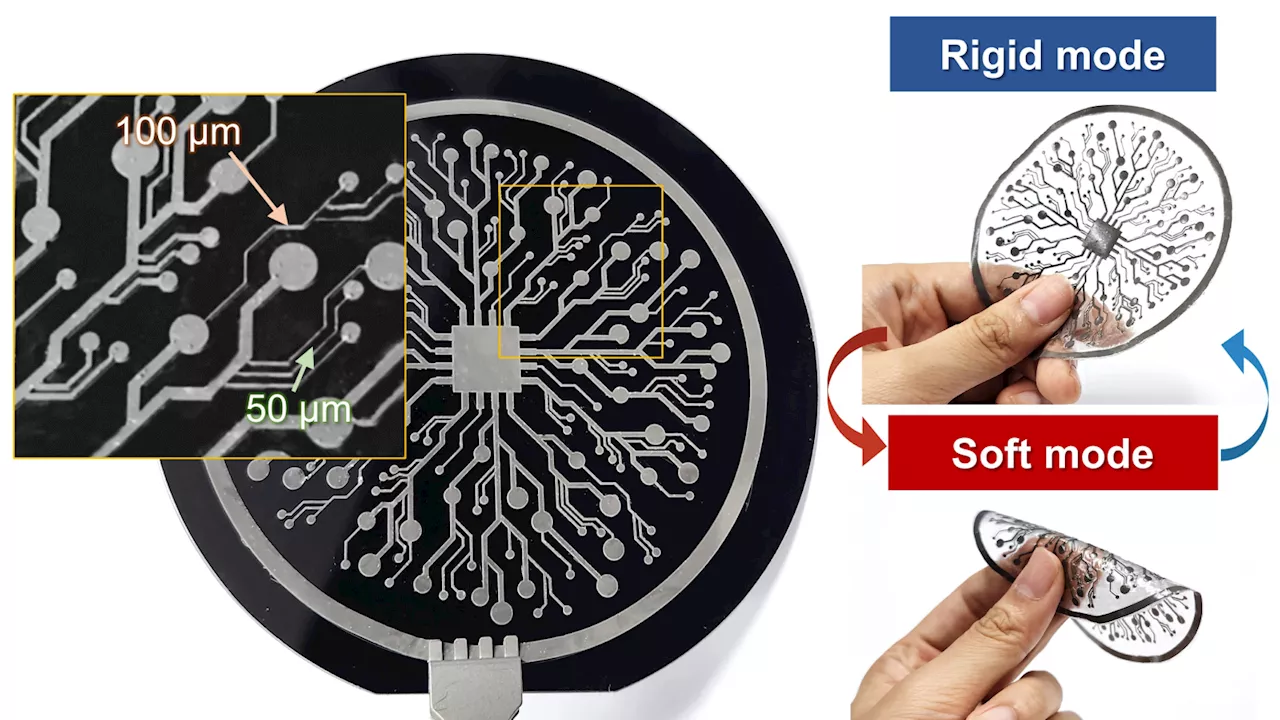 Scientists invent weird, shape-shifting 'electronic ink' that could give rise to a new generation of flexible gadgetsOwen Hughes is a freelance writer and editor specializing in data and digital technologies. Previously a senior editor at ZDNET, Owen has been writing about tech for more than a decade, during which time he has covered everything from AI, cybersecurity and supercomputers to programming languages and public sector IT.
Read more »