
While reports of a 'great planetary alignment' are exaggerated, a rare six-planet conjunction is visible in January. This event features Mars, Jupiter, Saturn, and Venus, with Neptune and Uranus also discernible with binoculars and telescopes. The conjunction peaks on January 25th, offering a spectacular celestial display.
Reports of a “great planetary alignment” have been making the rounds on the internet. And while these reports are greatly exaggerated, you still have a little time to head outside and see January’s rare six-planet planetary conjunction .
This event isn’t one we see very often, and while we previously reported on the four-planet conjunction you could view throughout most of this month, it’s become clear that there are two more planets visible in the conjunction—if you know where to look. According to EarthSky.org, you’ll not only be able to see Mars, Jupiter, Saturn, and Venus in the night sky, but with a pair of binoculars and a telescope, you’ll also be able to see two fainter planets, Neptune and Uranus, as part of the January conjunction. Both of these fainter planets will be visible somewhere between Saturn and Jupiter. If you head outside on January 25, when most people have reported the “great planetary alignment” will take place, you’ll be able to see Mars, Jupiter, Uranus, Neptune, Venus, and Saturn in that order from left to right in the sky when looking to the south. You will likely need to make use of star charts or apps that utilize these charts to find exactly where Neptune and Uranus are, especially since they’ll be much fainter than the brighter four planets found in January’s planetary conjunction. Binoculars will make it easier to spot Uranus, but Neptune will require a proper telescope. You’ll also want to ensure it is dark outside, with as little light pollution as possible. Otherwise, you might not be able to see Uranus and Neptune. But what is this “great planetary alignment” everyone keeps talking about? Unlike the January planetary conjunction—a rare event that has happened a few times over the past few years—the “great planetary alignment” is when all eight planets line up on one side of the sun. This is mathematically impossible in our lifetime, though, so any reports of this are greatly exaggerated. Still, going outside and being able to see upwards of four to six planets in the sky at the same time is very exciting. And skywatchers will want to take full advantage of this cosmic event while it is still ongoing throughout the rest of this month.
Planetary Conjunction Astronomy Space Observation Night Sky Uranus Neptune
United States Latest News, United States Headlines
Similar News:You can also read news stories similar to this one that we have collected from other news sources.
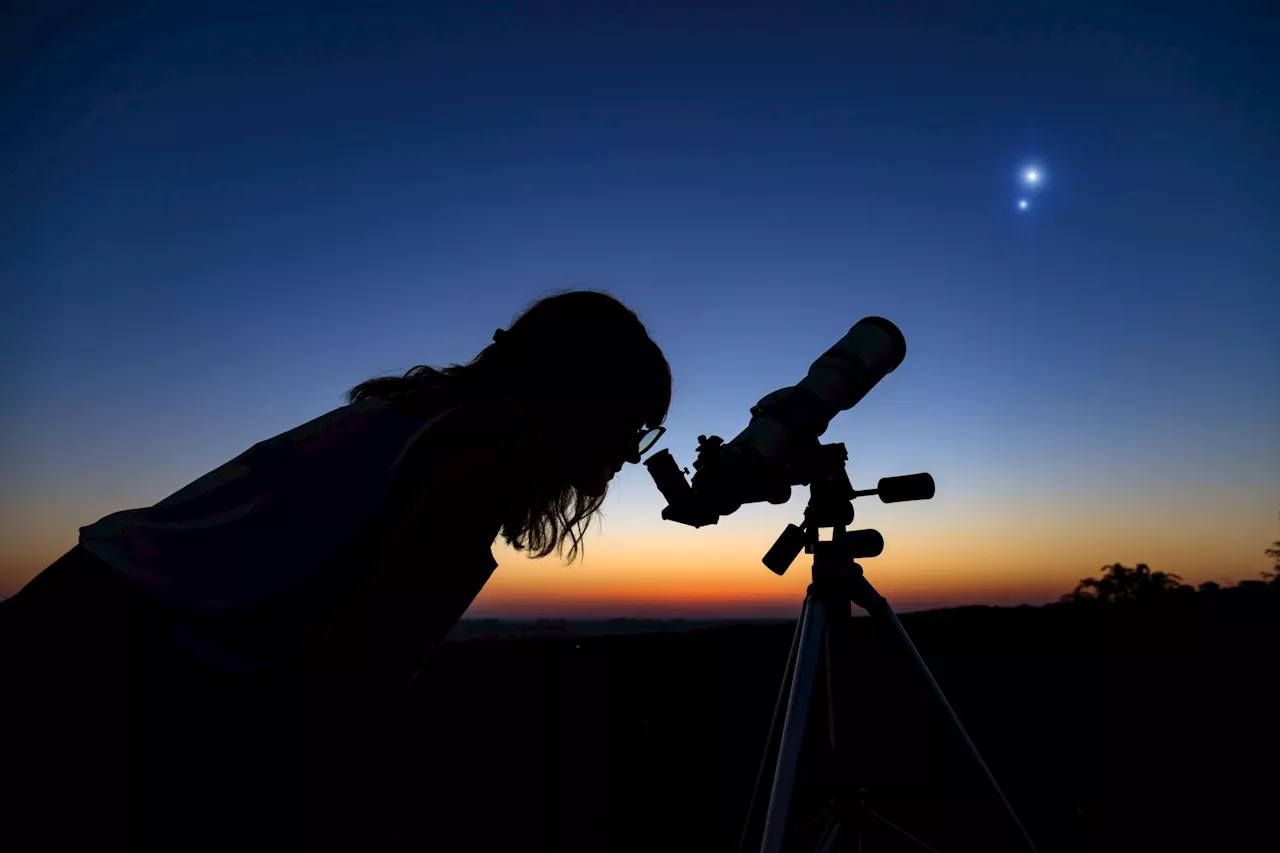 Four-Planet Conjunction Lights Up January SkyA rare celestial event allows stargazers to witness a spectacular alignment of four planets - Venus, Saturn, Jupiter, and Mars - this January.
Read more »
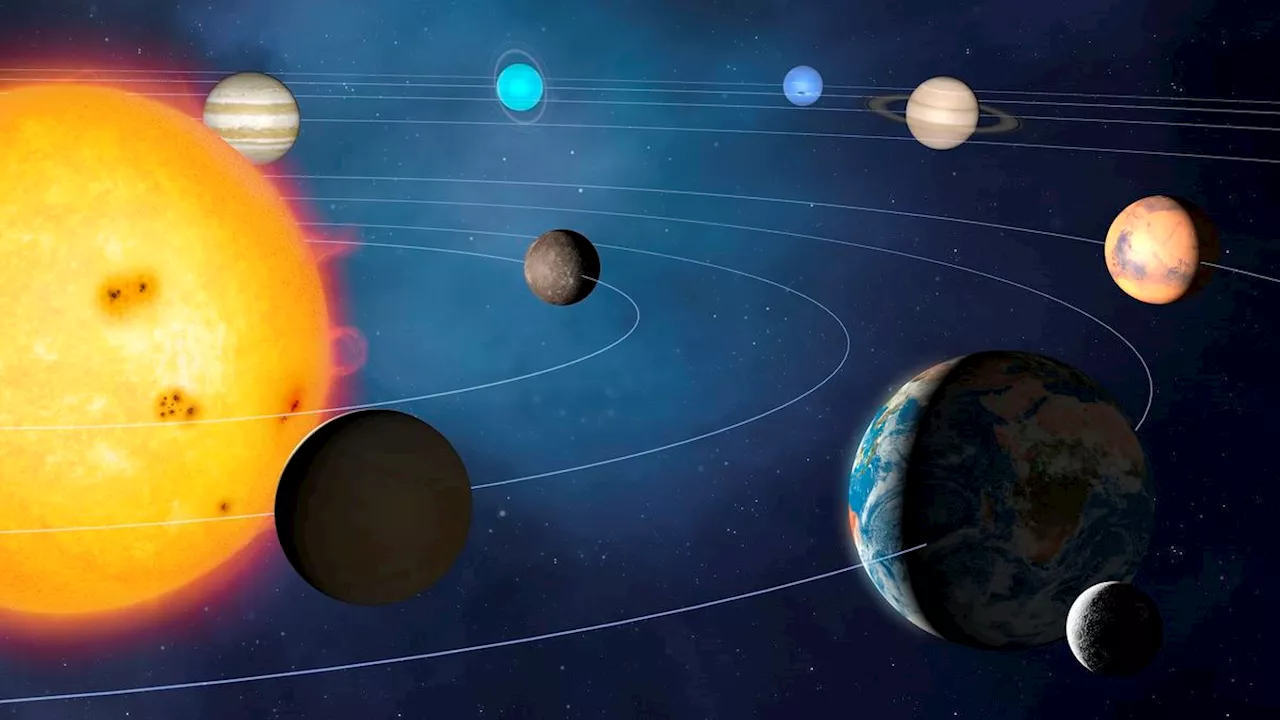 Planet Parade: Catch a Glimpse of Multiple Planets in January and MarchThis science and technology magazine article highlights the upcoming opportunity to see a spectacular alignment of planets in the night sky during January and March. The article explains how to view this celestial event, including the best dates and times, and mentions the visibility of planets like Jupiter, Mars, Venus, Uranus, Neptune, and Mercury. It also clarifies the misconception that planets are aligned during these 'parades'.
Read more »
 Catch Mars at its Best in January: The Red Planet Shines with a Lunar OccultationJanuary offers a spectacular opportunity to observe evening planets. Venus shines brightly in the west, reaching its greatest elongation on January 10th. Jupiter dominates the eastern sky, while Mars rises in the east later in the evening. A special event awaits observers in North America on Monday night, as the nearly full moon will occult Mars. This alignment marks the optimal time to observe Mars, as Earth's approach causes its apparent size to increase in telescopes. Mars will be near Pollux in late January, then move through Cancer and transit the open cluster Messier 44 on May 4th. It will pass near Regulus and remain visible in the evening sky throughout 2025 until it reaches solar conjunction on January 9th, 2026.
Read more »
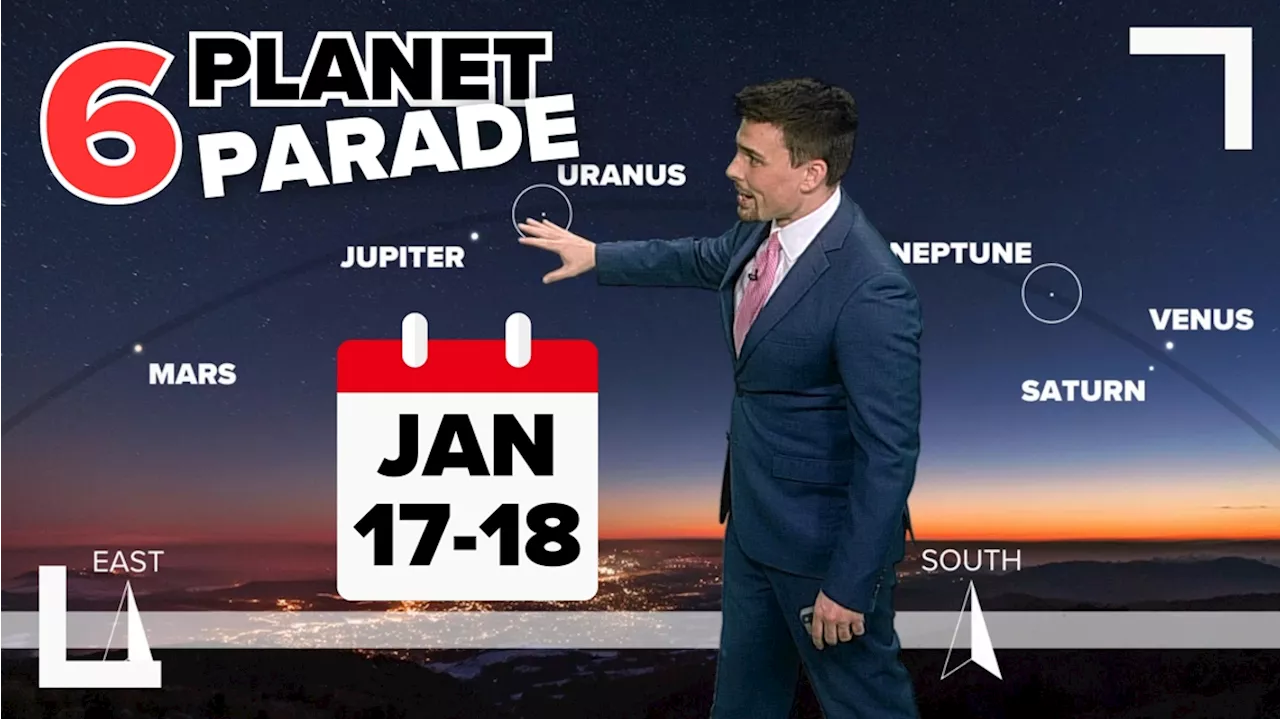 Six-Planet Alignment to Light Up Night Sky in Mid-JanuaryGet ready for a celestial show! A rare six-planet alignment will be visible in the early night sky in mid-January, offering a spectacular sight for skywatchers. While a seven-planet alignment is the maximum possible, this six-planet parade will feature Venus, Mars, Jupiter, Saturn, Uranus, and Neptune.
Read more »
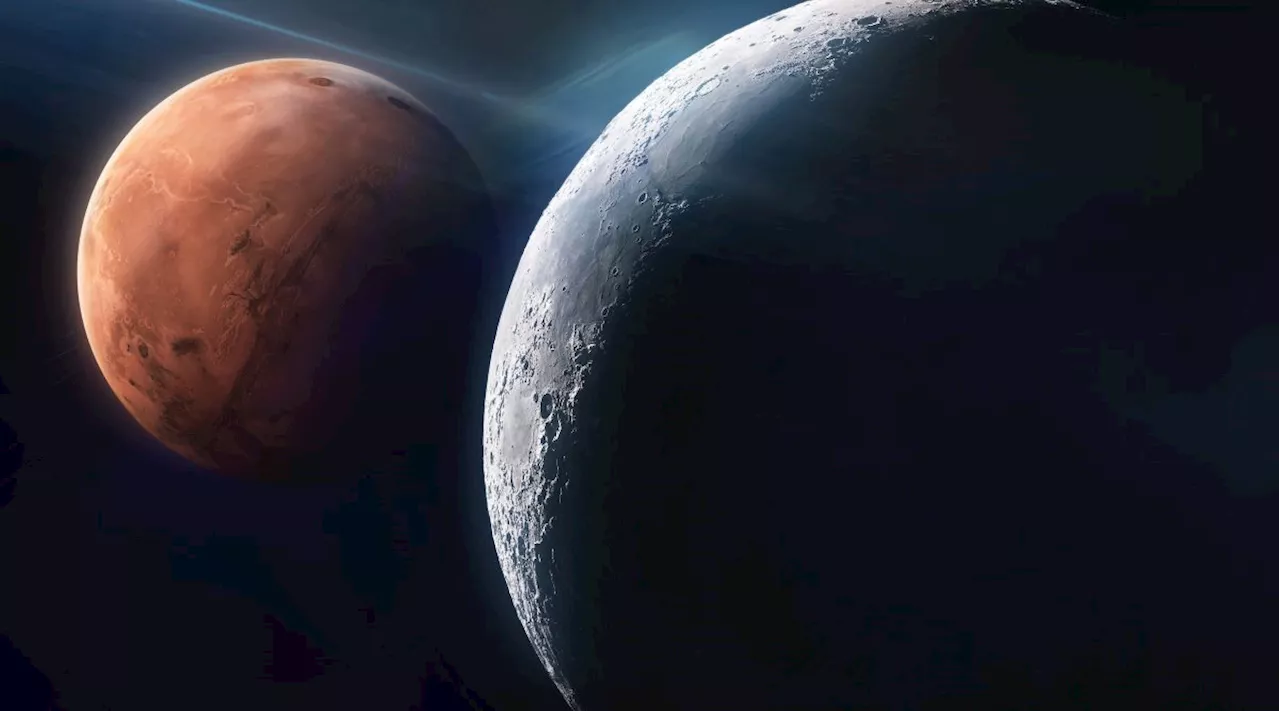 Wolf Moon and Mars: How to See January 2025 Full Moon With the Red PlanetJanuary's Wolf Moon is set to gobble up Mars tonight—you won't want to miss this.
Read more »
 Planet Parade to Light Up the January SkyThis January, skywatchers have the chance to witness a rare planetary alignment, with several planets visible to the naked eye. While the alignment itself isn't a particularly rare event, the visibility of four (or five) bright planets at once is less common. The peak viewing period is between January 21 and February 21.
Read more »