
Neuroscientists at the Sainsbury Wellcome Centre have developed a revolutionary experimental setup to understand how the brain distinguishes between self-motion and external motion. Their findings reveal that specific brain cells use motor and vestibular signals to make this crucial sensory distinction.
Neuroscientists have made a groundbreaking discovery in understanding how the brain differentiates between visual motion originating from the external world and motion caused by the observer's movement. This long-standing scientific puzzle, known as the 'motion-source separation problem,' has finally been illuminated by researchers who have identified the precise mechanisms at play.
Scientists at the Sainsbury Wellcome Centre (SWC) at UCL developed a novel experimental setup called the Translocator to isolate the fundamental elements of locomotion. This unique system consists of a passive treadmill coupled with screens displaying a virtual moving corridor. The treadmill apparatus is synchronized with the mouse's running speed, mimicking the experience of forward movement. This setup allowed researchers to record the speed profile of actively running mice and then replay the same speed while passively moving the animal, effectively separating the pure motor and vestibular signals.Using Neuropixels probes, state-of-the-art electrodes for simultaneous neural recording, the researchers observed that approximately 50% of cells in the primary visual cortex, particularly those in deep layers 5/6, responded to both visual flow, running, and translation. This convergence of inputs wasn't limited to the visual cortex; similar responses were found in other brain areas, including the somatosensory cortex and the retrosplenial cortex. These findings suggest that the integration of internal motion cues with sensory information is a fundamental property of many cortical areas. The team also discovered that the activity recorded from neurons in the primary visual cortex was remarkably similar for both natural and unnatural scenarios. Whether the mice were running actively or passively, the neural activity remained consistent, leading researchers to propose that running suppresses translation input. This theory was supported by a mathematical model developed in collaboration with Professor Claudia Clopath, which predicted that inconsistencies between running speed and head speed would trigger an error signal from the vestibular pathway
Neuroscience MOTION-SOURCE SEPARATION BRAIN VISUAL MOTION LOOMOTION NEUROSCIENTISTS VISUAL CORTEX MOTOR SIGNALS VESTIBULAR SIGNALS TRANSLOCATOR
United States Latest News, United States Headlines
Similar News:You can also read news stories similar to this one that we have collected from other news sources.
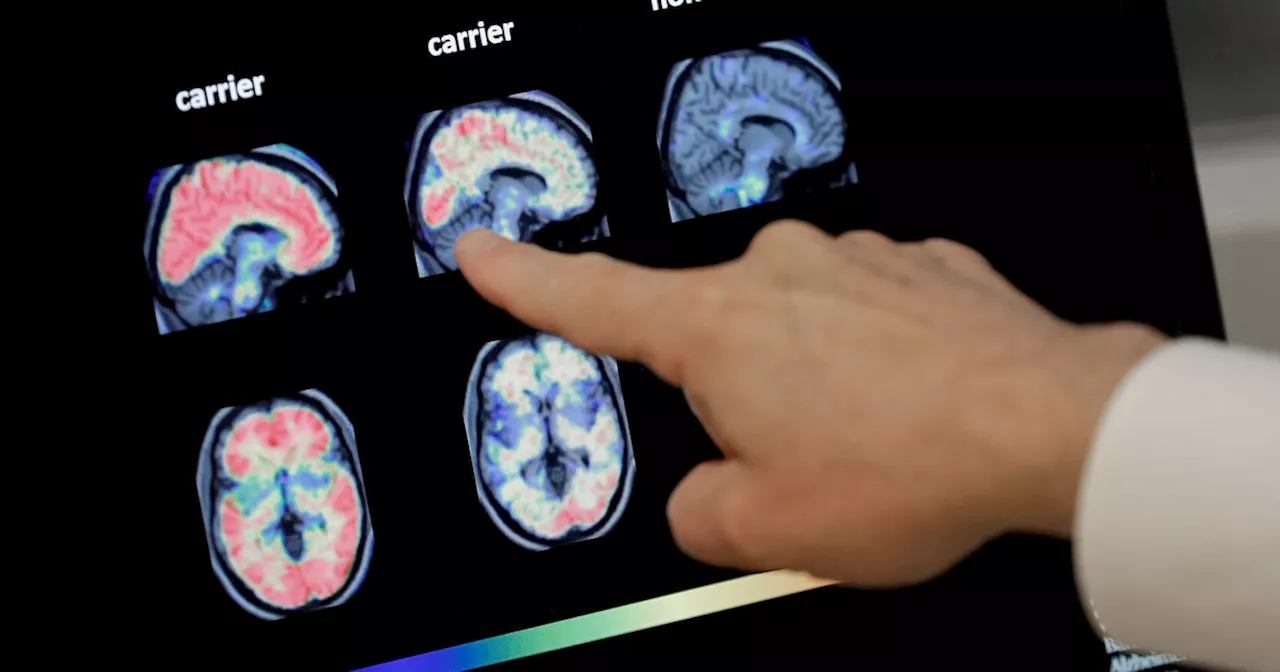 Scientists Pinpoint Brain Neurons Linked to SUDEPResearchers at Southern Methodist University have made a breakthrough in understanding sudden unexpected death in epilepsy (SUDEP) by identifying specific neurons in the brain's corticolimbic system that appear to trigger the deadly chain reaction. This discovery sheds light on the complex interplay between seizures, breathing, and heart function in SUDEP, offering potential avenues for future research and interventions.
Read more »
 Brain hack: Scientists find ‘off switch’ for anxiety without side effectsCornell researchers have identified a specific brain circuit that could lead to anxiety treatments without cognitive side effects.
Read more »
 Scientists identify Alzheimer's disease-protective genetic factors and unravel disease mechanismsAn international research team has identified key genetic factors that confer protective effects against Alzheimer's disease (AD) through a comprehensive genetic analysis of East Asian populations, including Chinese and Japanese, as well as European populations.
Read more »
 Scientists Unravel Titan's Orbital History Through Tidal DissipationResearchers have used the energy lost as Titan orbits Saturn to understand the moon's past. The study suggests that Titan's orbit has been perturbed within the last 350 million years.
Read more »
 Research Links Oral Health to Brain Health: Caring for Your Teeth May Benefit Your BrainA new study from Yale School of Medicine suggests a strong connection between oral health and brain health. Individuals with genes linked to poor oral health experienced more severe brain damage after a stroke, highlighting the importance of prioritizing oral hygiene.
Read more »
 Revolutionizing Brain Treatment: Lipid Nanoparticle Platform Crosses Blood-Brain BarrierA groundbreaking new platform using modified lipid nanoparticles successfully delivers mRNA to the brain, opening up exciting possibilities for treating neurological disorders.
Read more »