
Faye Brennan is a content strategist & consultant, editor, writer, digital creator, and entrepreneur. She’s been trusted by major magazines and sites like Best Life, Cosmopolitan, Women’s Health, Elite Daily, and Eat This, Not That! to lead the national conversation about health, wellness, food, fitness, relationships, lifestyle, and entertainment.
Live your best life with expert tips and news on health, food, sex, relationships, fashion and lifestyle. Subscribe to Best Life's newsletter now.Our content is fact checked by our senior editorial staff to reflect accuracy and ensure our readers get sound information and advice to make the smartest, healthiest choices.
We adhere to structured guidelines for sourcing information and linking to other resources, including scientific studies and medical journals.It’s a groundbreaking step forward, but these scans are also showing that the disease develops differently in Black patients.before symptoms even start? That’s what health experts across the U.S. are trying to find—and they're racing against the clock., the largest and most comprehensive study of the biological, medical, environmental, and social factors of Alzheimer’s and how it affects diverse communities. Currently, Black adults are disproportionately burdened with the disease, and by 2060, Hispanics are expected to experience the greatest increase. But now, a new brain scan discovered during HABS-HD research may help doctors catch Alzheimer’s earlier in many patients before it chips away at theirand cognitive abilities. Here’s exactly what the new brain scan is showing and how it may soon revolutionize your future care., researchers from the Keck School of Medicine of USC found that the buildup of tau protein, a key driver of cognitive decline in Alzheimer’s patients, can be seen in a “Tau PET” brain scan—indicating the likelihood of a patient to develop the disease. The scan uses a small amount of radioactive tracer to illuminate areas of the brain that have tau, which have been closely connected to memory loss and other symptoms of cognitive decline. Warm colors of yellow, orange, and red signal more tau, whereas cooler colors like green and blue show less tau.In the study, when the tau buildup crossed a certain threshold, the researchers considered the patient to be more at risk for Alzheimer’s disease. And this "cut-point" proved to be an effective method.—but only when another abnormal protein, amyloid, was also present," said Dr. Meredith N. Braskie, the study’s senior author and an assistant professor of neurology at USC. Still, the findings are significant, and "a key step toward defining tau positivity for both research and clinical applications," said lead author Victoria R. Tennant, a PhD candidate in USC’s Neuroscience Graduate Program.While the brain scan’s ability to detect signs of Alzheimer’s early is very promising, the researchers discovered a major issue: The scan only worked in Hispanic and non-Hispanic White participants. For non-Hispanic Black participants, tau buildup that crossed the threshold didn’t reliably signal Alzheimer’s risk.This discrepancy is a crucial development. It’s helping the scientific community understand why different populations can develop Alzheimer’s in unique ways—and why the disease can’t be treated the same in all patients. "This type of imaging is critical for understanding who is at risk and how the disease develops," said Dr. Arthur W. Toga, director of USC’s Stevens Neuroimaging and Informatics Institute. “We hope this work will lead to more personalized care and better outcomes for all communities." While it’s an exciting step forward in Alzheimer’s research, this new study revealed a major limitation. Clearly, there’s more work to be done before this brain scan method becomes an adopted practice throughout the U.S. The study authors are urging for more research, including a closer look at current diagnostic tools that may not be taking into account the racial disparities in Alzheimer’s development.in America will continue to improve. That means the tests performed by your doctor are on the verge of getting better, more accurate, and more precise. We offer the most up-to-date information from top experts, new research, and health agencies, but our content is not meant to be a substitute for professional guidance. When it comes to the medication you're taking or any other health questions you have, always consult your healthcare provider directly.
United States Latest News, United States Headlines
Similar News:You can also read news stories similar to this one that we have collected from other news sources.
 Scientists find Aleutian Range volcano offers clues to ‘stealthy’ eruptionsThe Mount Veniaminof study may help prepare for eruptions for other volcanoes near major population centers around the world.
Read more »
 Scientists find cancer-fighting sugar in sea cucumbers with no blood clotting riskA sugar in sea cucumbers may block a cancer-linked enzyme without affecting blood clotting or requiring pig-based drugs.
Read more »
 Scientists find universe's missing matter while watching fast radio bursts shine through 'cosmic fog'Robert Lea is a science journalist in the U.K. whose articles have been published in Physics World, New Scientist, Astronomy Magazine, All About Space, Newsweek and ZME Science. He also writes about science communication for Elsevier and the European Journal of Physics. Rob holds a bachelor of science degree in physics and astronomy from the U.K.
Read more »
 Scientists Find Universe’s Missing Matter in Intergalactic ‘Cosmic Fog’Researchers have used cosmic explosions called fast radio bursts to illuminate the intergalactic medium
Read more »
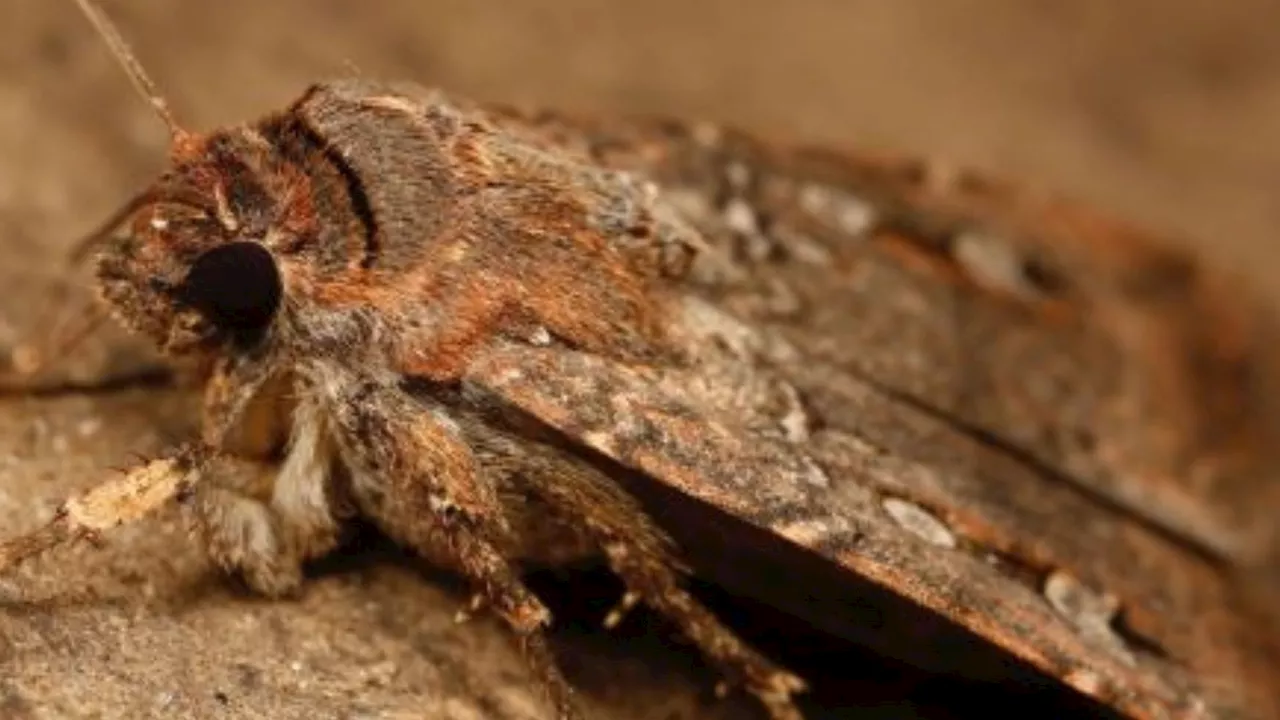 Moth travels 621 miles using stars as compass, scientists find in a world-firstWhen spring arrives, large moth swarms fly up to 1000 kilometers (roughly 621 miles) from their breeding grounds across southeast Australia.
Read more »
 MIT scientists find first evidence that rivers form coral reef passesResearchers found that reef passes provide circulation to corals by allowing saltwater and maintain their health by transporting nutrients.
Read more »