
The new strain, named Niallia tiangongensis, is a novel variant of a known Earth bacteria and was found in a cabin on the space station.
Chinese scientists have discovered a new bacterial strain aboard the Tiangong space station, the first of its kind found in China ’s orbital lab. The strain, named Niallia tiangongensis, is a new variant of a known Earth bacteria and was discovered on a cabin inside the space station.
Researchers from the Shenzhou Space Biotechnology Group and the Beijing Institute of Spacecraft System Engineering announced the discovery of the new bacterial strain in the International Journal of Systematic and Evolutionary Microbiology. Importance of microbial research in spaceflightThe study emphasized that understanding the characteristics of microbes during long-term space missions is essential for protecting astronaut health and maintaining the reliability of spacecraft systems, the South China Morning Post reported.The researchers found that the new strain has unique mechanisms for adapting to the extreme space environment, with potential real-world applications. It showed an enhanced ability to combat oxidative stress—an imbalance that damages cells and tissues—and to repair radiation-induced damage.Understanding how the strain survives in space could help scientists develop targeted strategies to control microbes, with potential applications in space technology, agriculture, and medicine. The China Manned Space Agency noted that Tiangong’s research would yield a “bumper harvest” of findings on microbial activity, genetics, and metabolism—insights that could translate into innovative uses on Earth.In a social media post, the agency said the discovery was part of the China Space Station Habitation Area Microbiome Programme , which monitors microbial changes during extended missions. The microbe was collected in May 2023, while the Shenzhou-15 crew was aboard the station.New space microbe may help convert waste into resourcesThe Shenzhou-15 crew spent six months on the space station, collecting microorganisms from the surfaces of the station’s modules using sterile wipes. These samples were frozen and brought back to Earth. Scientists then analyzed them using genome sequencing and metabolic analysis, leading to the discovery of the new strain.As Chinese media reports, the discovery offers two key insights. First, understanding how the microbe survives in space could lead to precise microbial control strategies, aiding the design of interventions in the fields of spacecraft, agriculture, industry, and medicine. Second, the microbe’s ability to break down specific organic compounds points to new, sustainable ways of converting waste into valuable resources, both in space and on Earth.Microorganisms survive in space stations by adapting to complex conditions such as microgravity, radiation, and confinement, an analysis of which could further our understanding of life in space. Despite these harsh environments, they are known for their strength, resilience, and ability to thrive.Ongoing missions aboard Tiangong are expected to produce a wealth of new genetic and metabolic discoveries. These findings from the space station’s unique environment could deepen our understanding of microbial life and potentially lead to innovative applications and environmental sustainability.
China Chinese Scientists Chinese Space Station Energy &Amp Environment Space Tiangong
United States Latest News, United States Headlines
Similar News:You can also read news stories similar to this one that we have collected from other news sources.
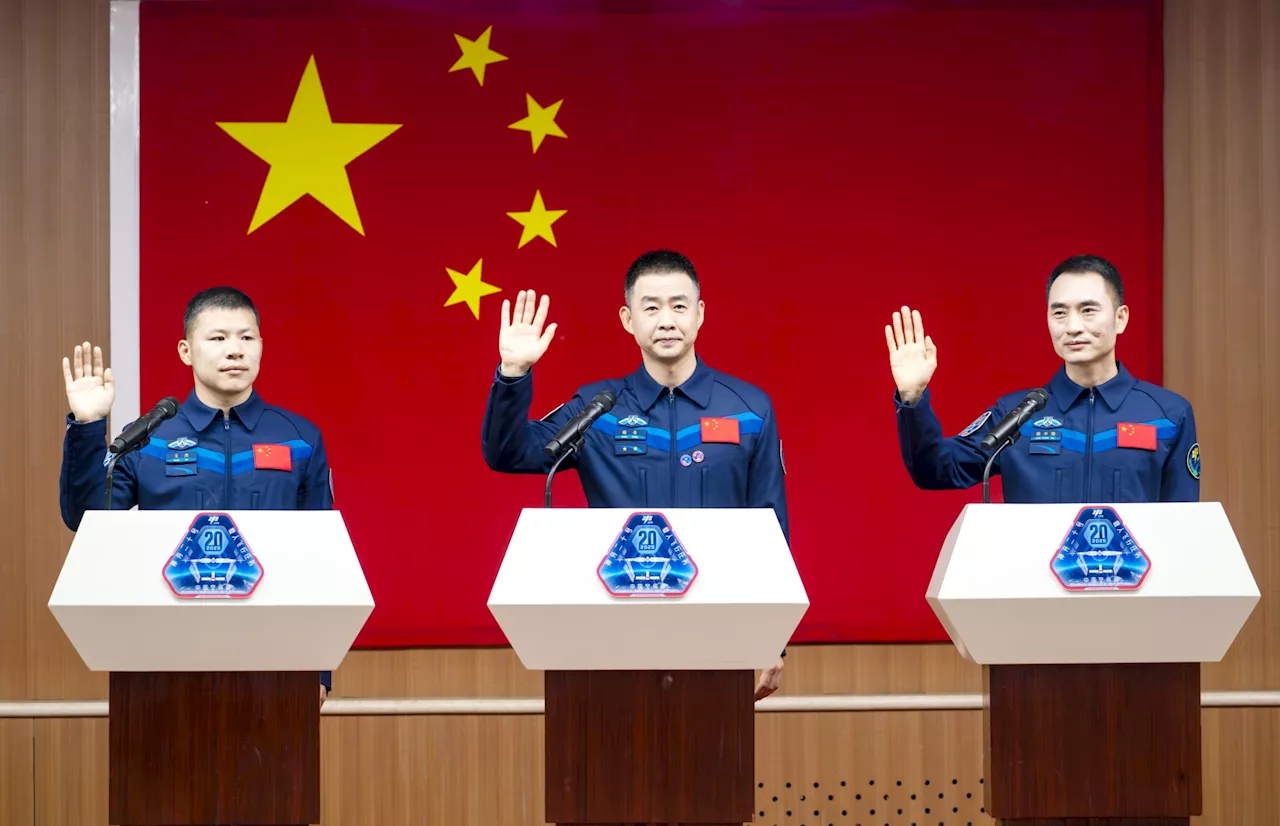 China reveals Shenzhou 20 astronaut crew launching to Tiangong space stationTariq is the Editor-in-Chief of Space.com and joined the team in 2001, first as an intern and staff writer, and later as an editor. He covers human spaceflight, exploration and space science, as well as skywatching and entertainment. He became Space.com's Managing Editor in 2009 and Editor-in-Chief in 2019. Before joining Space.
Read more »
 Watch live as China launches Shenzhou 20 astronauts to Tiangong space station on April 24Andrew is a freelance space journalist with a focus on reporting on China's rapidly growing space sector. He began writing for Space.com in 2019 and writes for SpaceNews, IEEE Spectrum, National Geographic, Sky & Telescope, New Scientist and others.
Read more »
 China launches 3 astronauts to replace crew on Tiangong space stationThe Associated Press
Read more »
 China's Shenzhou 20 astronauts arrive at Tiangong space stationMichael Wall is a Senior Space Writer with Space.com and joined the team in 2010. He primarily covers exoplanets, spaceflight and military space, but has been known to dabble in the space art beat. His book about the search for alien life, 'Out There,' was published on Nov. 13, 2018.
Read more »
 China's Shenzhou 20 astronauts take control of Tiangong space station (video)Andrew is a freelance space journalist with a focus on reporting on China's rapidly growing space sector. He began writing for Space.com in 2019 and writes for SpaceNews, IEEE Spectrum, National Geographic, Sky & Telescope, New Scientist and others.
Read more »
 China's Shenzhou 19 astronauts return to Earth after 6 months aboard Tiangong space station (photos)Michael Wall is a Senior Space Writer with Space.com and joined the team in 2010. He primarily covers exoplanets, spaceflight and military space, but has been known to dabble in the space art beat. His book about the search for alien life, 'Out There,' was published on Nov. 13, 2018.
Read more »