
A team of researchers has created a revolutionary new type of electronic fabric that can stretch, bend, and twist repeatedly while maintaining its functionality. This innovative material can produce bright light and clear sound, even when stretched to double its original size.
Scientists have created a revolutionary new type of electronic fabric that retains its functionality even when stretched, bent, and twisted repeatedly. This innovative material can produce bright light and clear sound while being stretched to double its original size.
Developed by a team of researchers from Korea University of Technology and Education and the University of California San Diego, the composite material is composed of three key components: Ecoflex, Triton X, and inorganic EL phosphor. The groundbreaking sound display seamlessly transforms auditory information into optical signals. This is achieved using transparent ionogel electrodes and a high dielectric layer made from Ecoflex, Triton X, and inorganic EL phosphor. This innovative design addresses the limitations of existing EL displays, particularly their limited stretchability and low brightness. The Triton X component plays a crucial role by efficiently storing electrical energy and enhancing the material's stretchability. When electricity flows through the composite, it causes the phosphor particles to emit light and simultaneously creates tiny vibrations that generate sound waves.The display boasts a remarkable brightness of 319 candelas per square meter, surpassing the luminosity of many smartphone screens, and generates sound at 73.7 decibels, falling within the range of normal conversation volume. These impressive capabilities remain stable even when the material is stretched to 200% of its original length. The design, featuring stretchable transparent ionogel electrodes sandwiching the high-dielectric-constant emissive layer, enables the easy fabrication of stretchable sound displays with exceptional brightness, stretchability, and acoustic output. Notably, both the electroluminescence and acoustic performance of the display remain consistent under various mechanical deformations. Researchers have demonstrated a stretchable, multicolored textile sound display that can be pixelated to achieve remarkably stable light and clear sound generation even when stretched. The display can illuminate letters, emit various colors of light, and generate sound simultaneously without any performance degradation, despite being stretched. This groundbreaking approach opens up exciting new possibilities for human-machine interface applications, particularly in wearable displays and smart textiles. It enables intuitive communication in next-generation interactive systems.Scientists emphasize that the strategic incorporation of Triton X in the emissive layer induces polarization and plasticization of Ecoflex, resulting in a high dielectric constant, minimal leakage current, and superior stretchability. However, the current version requires operating voltages of 400-500 volts to achieve optimal performance. The research team is actively working to reduce these voltage requirements while maintaining brightness and sound quality. They are also developing more sophisticated control systems for complex visual patterns and audio output
Electronic Fabric Stretchable Materials Sound Display Human-Machine Interface Wearable Technology
United States Latest News, United States Headlines
Similar News:You can also read news stories similar to this one that we have collected from other news sources.
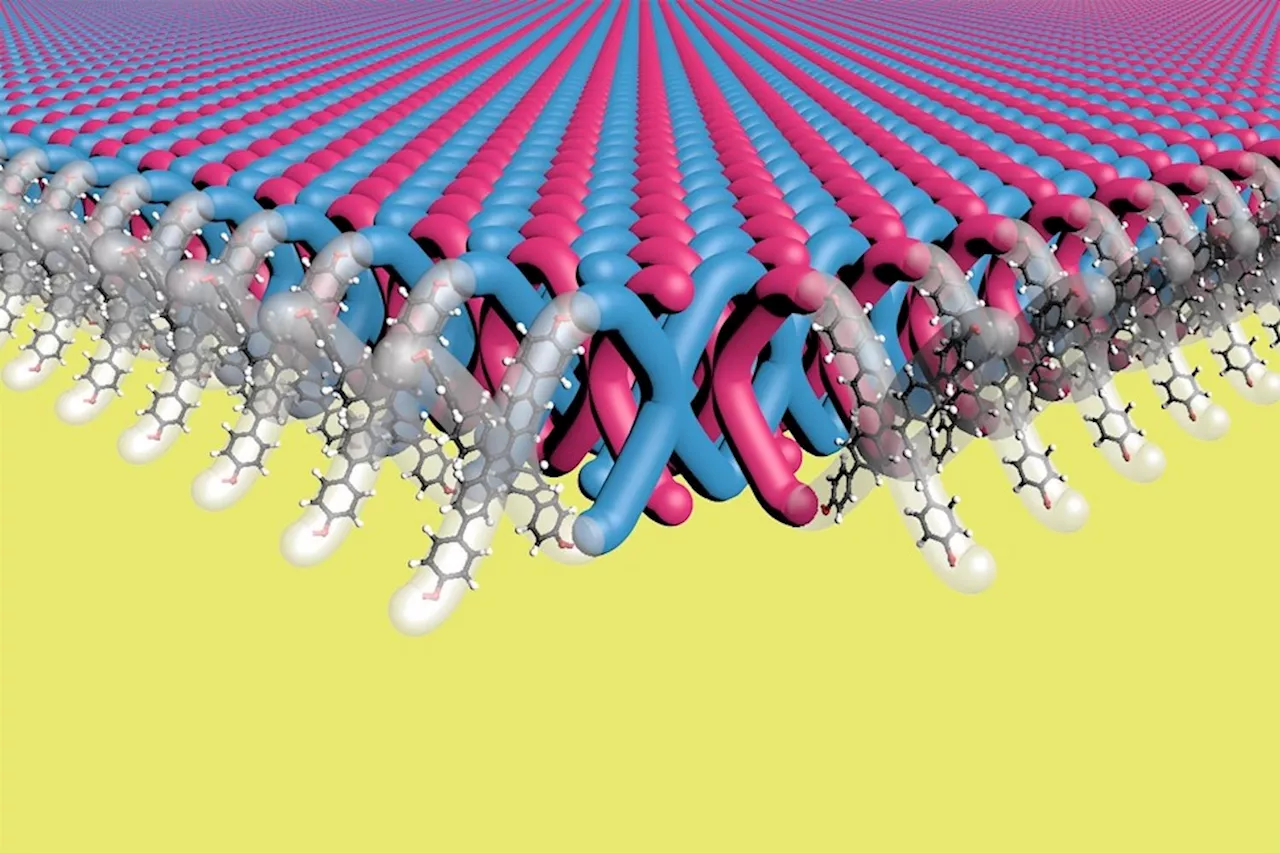 Scientists Develop Revolutionary 2D Material With Strength of Steel and Flexibility of FabricResearchers at Northwestern University have created a groundbreaking 2D material with exceptional strength and flexibility, potentially revolutionizing industries like body armor and ballistic fabrics. The material, built on a nanoscale level, features a unique structure of mechanically interlocked molecules, offering unparalleled toughness and resilience.
Read more »
 As bird flu concerns grow, scientists race to develop new vaccinesBerkeley Lovelace Jr. is a health and medical reporter for NBC News. He covers the Food and Drug Administration, with a special focus on Covid vaccines, prescription drug pricing and health care. He previously covered the biotech and pharmaceutical industry with CNBC.
Read more »
 Chinese Scientists Develop Underwater Sensor to Detect AircraftChinese researchers have made a breakthrough in underwater detection technology by developing a new sensor capable of detecting aircraft from miles away. This innovative technology, which utilizes a specially designed acoustic sensor array, could significantly enhance the capabilities of the People's Liberation Army navy, particularly its submarine fleet.
Read more »
 US scientists use neutrons to develop safer, faster-charging solid-state batteriesA US-based research team has used neutron scattering to study lithium movement in a promising solid-state battery material.
Read more »
 Scientists Develop New Material with Nearly Zero Thermal ExpansionResearchers from TU Wien and the University of Science and Technology Beijing have developed a new material called the pyrochlore magnet, which exhibits an extremely low coefficient of thermal expansion over a wide temperature range. This breakthrough is attributed to the material's unique heterogeneous structure, where different regions with varying cobalt content react differently to temperature changes, effectively canceling out the overall thermal expansion.
Read more »
 Scientists develop groundbreaking biosensor for rare earth element detectionSynthetic biologists have developed a prototype for an innovative biosensor that can detect rare earth elements and be modified for a range of other applications.
Read more »