
A groundbreaking new catalyst for hydrogen generation from ammonia becomes more active over time, thanks to unique atomic transformations revealed by researchers.
Scientists from the University of Nottingham, in collaboration with the University of Birmingham and Cardiff University, have developed a novel catalyst for hydrogen generation from ammonia. This catalyst, consisting of nanosized ruthenium (Ru) clusters anchored on graphitized carbon, becomes more active over time.
Through atomic-level analysis using scanning transmission electron microscopy, researchers discovered that ruthenium atoms rearrange into truncated nano-pyramids, maximizing active sites and enhancing hydrogen production. This self-improving behavior paves the way for sustainable ammonia-based hydrogen production, contributing to a zero-carbon future
CATALYST HYDROGEN AMMONIA GREEN ENERGY NANOTECHNOLOGY
United States Latest News, United States Headlines
Similar News:You can also read news stories similar to this one that we have collected from other news sources.
 Scientists develop 3D concrete printing method that captures carbon dioxideScientists have developed a 3D concrete printing method that captures carbon, demonstrating a new pathway to reduce the environmental impact of the construction industry.
Read more »
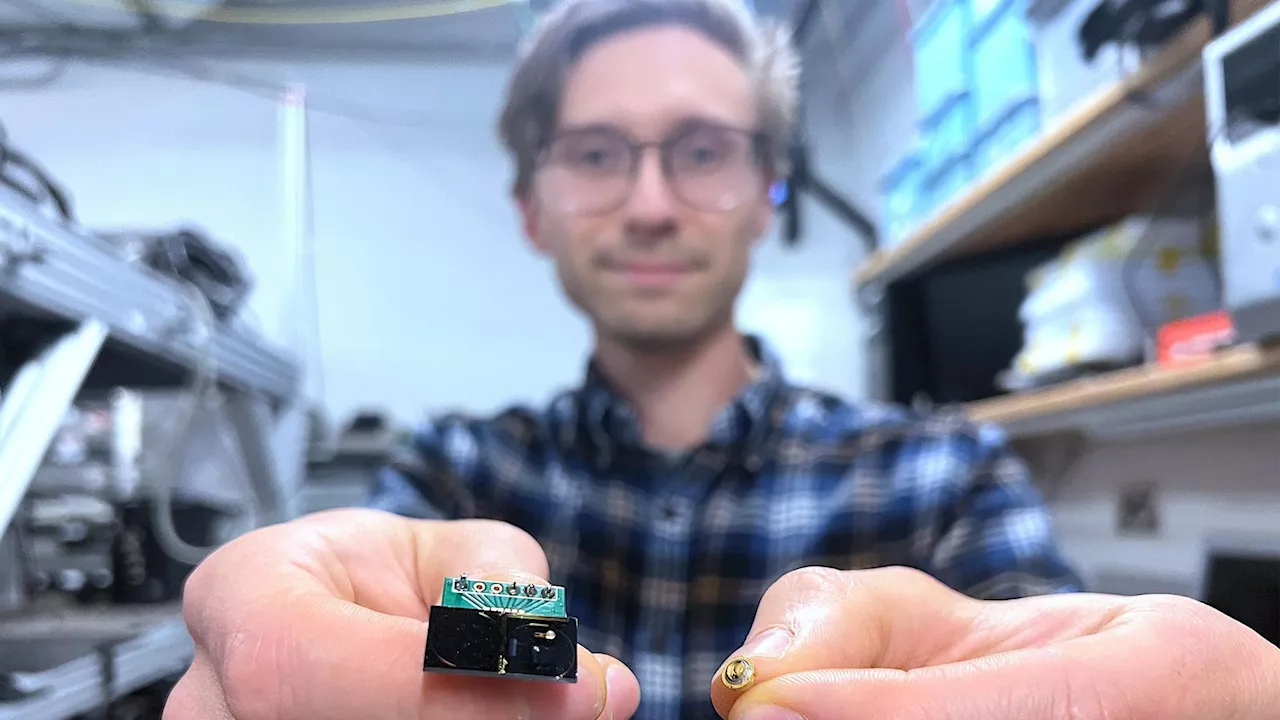 Scientists develop matchbox-sized laser in a bid to boost quantum researchA tiny chip-powered device has the power to replace the bulky lasers scientists use to study quantum applications and atomic clocks.
Read more »
 South Korean Scientists Develop a Wearable Robot to Help Paraplegic Users WalkResearchers at the Korea Advanced Institute of Science and Technology (KAIST) have created a lightweight, wearable robot that can assist paraplegic individuals in walking, maneuvering obstacles, and climbing stairs. The robot, which can lock onto the user, aims to seamlessly integrate into their daily lives.
Read more »
 South Korean Researchers Develop Self-Extinguishing, Explosion-Proof Solid-State BatteryDGIST researchers have created a groundbreaking solid polymer electrolyte battery with enhanced safety features and longer lifespan.
Read more »
 Scientists Develop Precise Method to Study Plasmonic WavesA new study combines time-resolved electron microscopy and multi-polarization lasers to create a highly accurate method for analyzing plasmonic waves, offering insights into their behavior and potential applications.
Read more »
 Scientists Develop Groundbreaking Device for Water Desalination Using Solar Power and Recycled TiresA new invention from Dalhousie University could provide a sustainable solution to global water scarcity.
Read more »