
The Gaublomme lab has developed a new optical pooled screening approach called CRISPRmap, which enables the coupling of optical properties of single cells to targeted genetic perturbations.
Scientists develop a new method to study gene function in cells and tissue retrieved 14 October 2024 from https://phys.org/news/2024-10-scientists-method-gene-function-cells.html This document is subject to copyright.
Apart from any fair dealing for the purpose of private study or research, no part may be reproduced without the written permission. The content is provided for information purposes only.Use this form if you have come across a typo, inaccuracy or would like to send an edit request for the content on this page. For general inquiries, please use ourThank you for taking time to provide your feedback to the editors. Your feedback is important to us. However, we do not guarantee individual replies due to the high volume of messages.to let the recipient know who sent the email. Neither your address nor the recipient's address will be used for any other purpose. The information you enter will appear in your e-mail message and is not retained by Phys.org in any form.Get weekly and/or daily updates delivered to your inbox. You can unsubscribe at any time and we'll never share your details to third parties.
Physics News Science News Technology News Physics Materials Nanotech Technology Science
United States Latest News, United States Headlines
Similar News:You can also read news stories similar to this one that we have collected from other news sources.
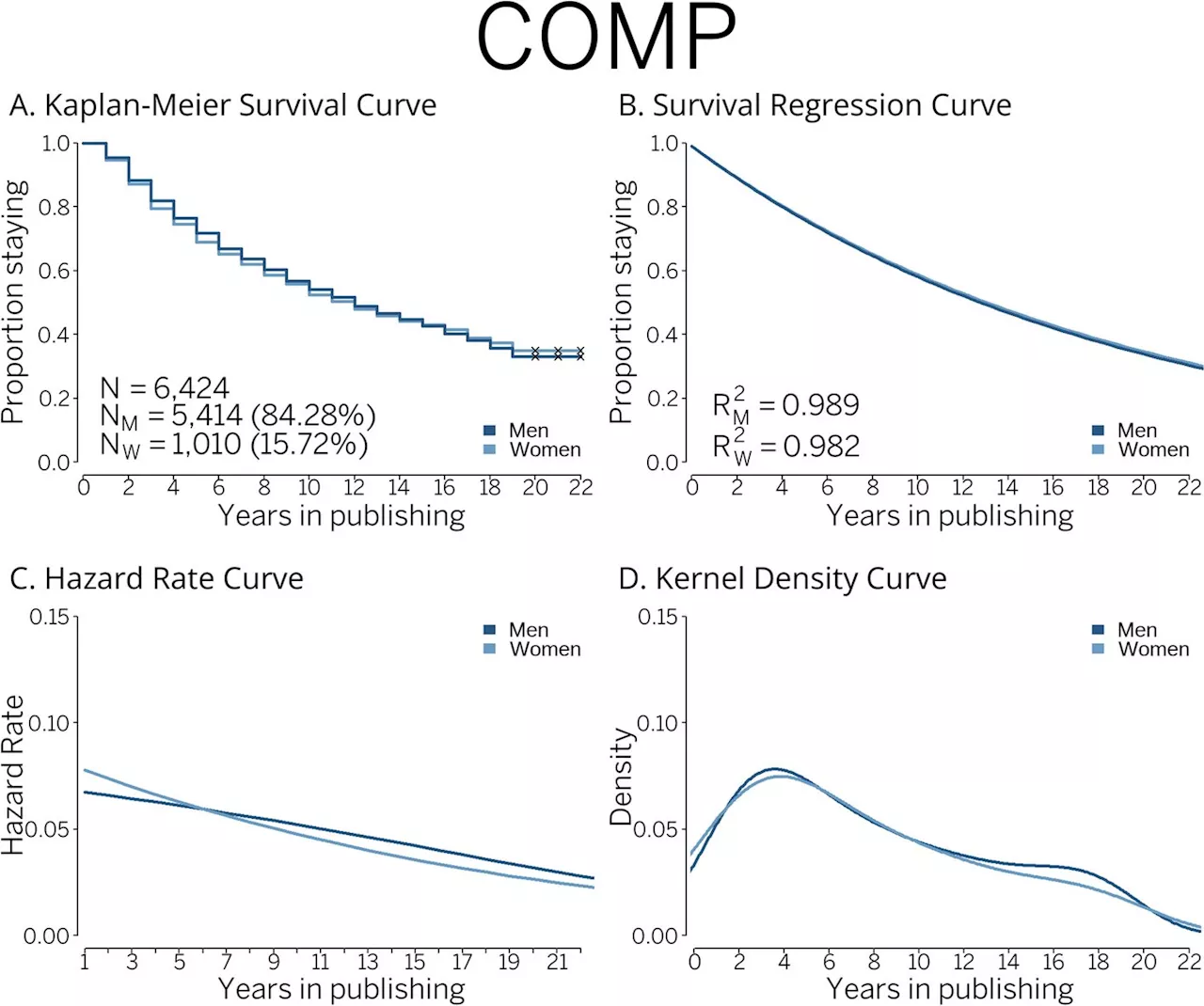 Disappearing scientists: Attrition and retention patterns of 2.1 million scientists in 38 OECD countriesResearch has been showing that women scientists continue to disappear from science at a significantly higher rate and in higher percentages than men. This is what social scientists have thought for decades—but this is no longer the case today, according to a study published in Higher Education.
Read more »
 Scientists decipher the energy patterns in our cellsOur cells harness energy for essential functions such as division, wound healing, and our immune response to diseases including cancer. But until now, the mechanics of how that energy affects cell behavior—and how this relates to health outcomes—have remained elusive.
Read more »
 Scientists discover novel approach to rejuvenate aged egg cellsResearchers have developed an innovative technique to rejuvenate aged oocytes, or immature egg cells, to boost their quality, paving the way for improved outcomes for in-vitro fertilization.
Read more »
 Scientists have just turned giant panda skin cells into stem cellsIf the pluripotent stem cells can be turned into precursors to egg and sperm cells, the feat could potentially be a big deal for giant panda conservation.
Read more »
 Scientists identify structural basis of stitched-together protein complexes that recycle most proteins in cellsResearchers have used cryo-electron microscopy to reveal the structure of a proteasome complex, shedding light on how these essential protein recycling machines work.
Read more »
 MIT Scientists Develop Chip-Based 'Tractor Beam' to Manipulate Cells and ParticlesResearchers at MIT have created a miniature chip that uses a focused light beam to capture and manipulate biological particles, offering a more accessible and versatile tool for studying cells and diseases.
Read more »