
Russian scientists have developed a novel tungsten-copper composite material for use in plasma-facing components of nuclear fusion reactors. This innovative material, created using hybrid additive manufacturing, addresses the challenges of tungsten's brittleness and thermal expansion mismatch with other metals. The composite exhibits superior heat dissipation and mechanical properties, paving the way for more efficient and robust fusion reactor designs.
Scientists at Russia’s MISIS and JSC NIIEFA have successfully created a new composite material for use in nuclear fusion reactors.This innovative material, which is a combination of tungsten and copper, is designed for the plasma-facing components within the divertor of Russia’s prototype TRT tokamak nuclear fusion reactor.
Tungsten is considered an ideal candidate for PFCs. Its exceptionally high melting point enables it to withstand the extreme temperatures generated within a fusion reactor. It also has superior resistance to erosion caused by the intense plasma.Besides, tungsten has a low retention rate for hydrogen isotopes, which is crucial for maintaining the efficiency of the fusion reaction.Utilizing tungsten is challengingHowever, tungsten’s inherent brittleness and incompatibility with other metals due to differing coefficients of linear thermal expansion have posed challenges for its use in heat-dissipating components.To overcome these limitations, the research team employed a novel approach using hybrid additive manufacturing.This technique involves creating a porous tungsten matrix on a substrate of solid tungsten and then infiltrating it with copper using a vacuum infiltration method.“This method allows synthesizing a part from metal powder layer by layer, controlling its properties for a specific task due to the possibility of optimizing the geometric structure,” Rosatom explained.The resulting tungsten-copper composite exhibits thermophysical and mechanical characteristics comparable to those produced through traditional methods.However, the hybrid additive technology enables more efficient heat dissipation and increased resistance to thermal cycling due to the unique design of the composite.Research came up with impressive findings“Samples of the new material have been subjected to mechanical tests, thermal conductivity analysis by laser flash method and microscopic studies, and demonstrated good performance,” highlighted Rosatom.The research team achieved a high relative density of 96.7% in solid tungsten samples through laser synthesis.They then created skeletal structures of tungsten gyroids, which resemble a curved mesh, and infiltrated them with copper at high temperatures while carefully monitoring the process.“Mechanical tests showed that the composite was significantly more ductile than pure tungsten. It could withstand deformation up to 35% without failure,” added the team.“Additionally, the university’s scientists, in collaboration with JSC “NIIEFA”, conducted thermal conductivity measurements over a wide temperature range .”It revealed that while reducing the size of the elementary cell structure slightly decreases thermal conductivity, it also increases strength characteristics.Could optimize fusion reactor designsThis breakthrough has significant implications for the development of nuclear fusion reactors.“In the future, we plan to move on to producing prototypes of PFCs and conducting thermally loaded cyclic tests. The tests will simulate conditions close to real operating environments in nuclear fusion installations,” concluded Stanislav Chernyshikhin, head of the laboratory at NUST MISIS.It is notable that many public and private institutions across the globe are working on perfecting the design of nuclear fusion reactors. However, they are still in the nascent stage.Recently, a US firm announced that it is on the path to build the world’s first grid-scale commercial fusion power plant and make it operational by 2030.
NUCLEAR FUSION COMPOSITE MATERIALS ADDITIVE MANUFACTURING PLASMA-FACING COMPONENTS THERMAL PROPERTIES
United States Latest News, United States Headlines
Similar News:You can also read news stories similar to this one that we have collected from other news sources.
 Pop-Tarts Bowl: New Name, New Popularity, New Viral MomentsThe Pop-Tarts Bowl has become one of the most popular postseason games thanks to its catchy name and creative marketing strategies. This year's game saw Iowa State quarterback Rocco Becht become an internet sensation, winning MVP and receiving a massive Pop-Tart trophy.
Read more »
 New Florida Law to Create Barrier Between First Responders and the PublicA new Florida law aims to create a physical barrier between first responders and the public at certain scenes, citing concerns about unpredictable situations.
Read more »
 New Year, New Laws in New York: Minimum Wage Hike, Paid Pregnancy Leave and MoreNew York kicks off the new year with impactful legislation aimed at improving the lives of residents. These changes include a minimum wage increase in Western New York, paid time off for pregnancy-related appointments, lower insulin costs, and heat mitigation plans in schools.
Read more »
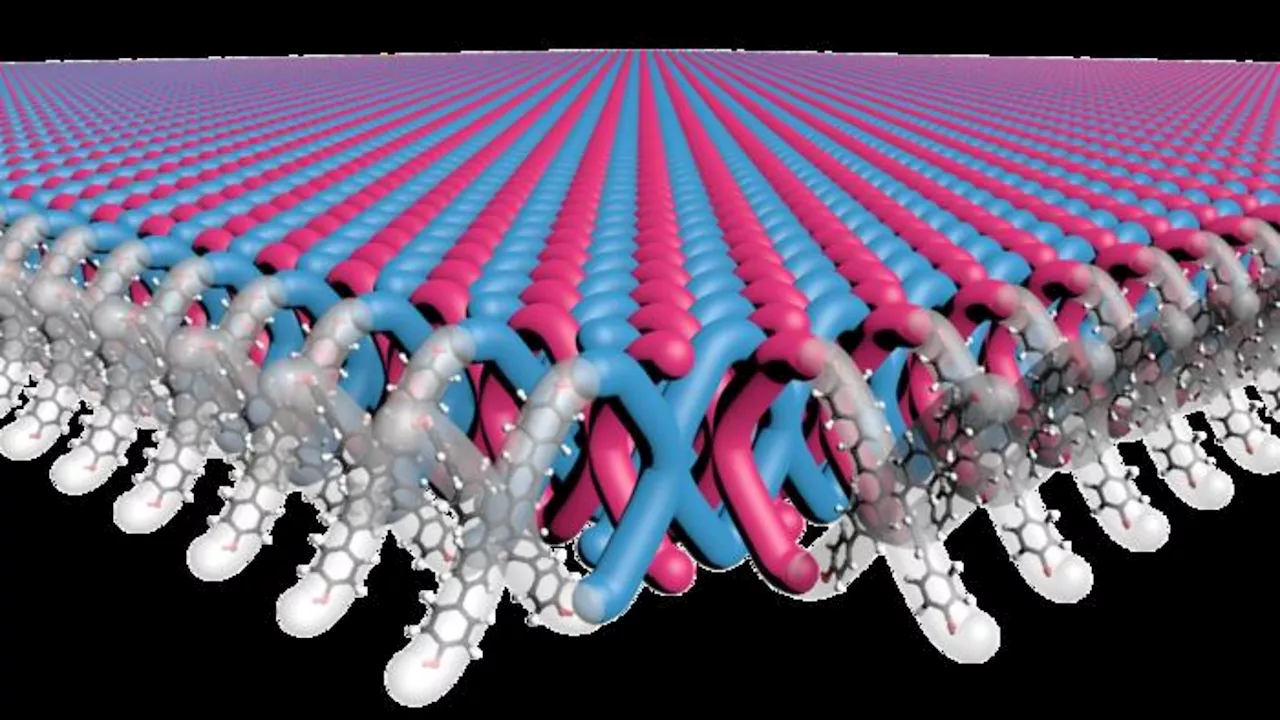 Scientists Create Flexible, Strong 2D Material with Mechanical InterlocksA research team from Northwestern University has developed the first-ever two-dimensional mechanically interlocked material, demonstrating high flexibility and strength. This breakthrough could lead to the development of lightweight yet high-performance body armor and other tough materials.
Read more »
 Japanese Scientists Create First-Ever Long-Term Dataset of Earth's Entire AtmosphereJapanese researchers have developed a comprehensive dataset of Earth's entire atmosphere, reaching up to space, providing unprecedented insights into the mysterious mesosphere.
Read more »
 Tianjin University Invites Overseas Young Scientists for 2025 Excellent Young Scientists Fund ProgramThe National Natural Science Foundation of China (NSFC) Excellent Young Scientist Fund (Overseas) program, hosted by Tianjin University, seeks to attract outstanding young scholars from overseas to contribute to China's scientific and technological advancement.
Read more »