
A Russian rocket company, Rosatom, has developed a prototype plasma electric rocket engine that could significantly reduce travel time to Mars to 30-60 days. While still in its early development phase, this technology could revolutionize spaceflight by leveraging charged particles and magnetic fields for propulsion.
A trip to Mars may be in the books for future astronauts, but current propulsion technology will have them floating in a spacecraft bound for the Red Planet for roughly six to nine months. Considering how spaceflight affects the human body, that’s not ideal.
A rocket company in Russia may have developed a solution to travel through the cosmos at much faster speeds using a new type of rocket engine. Scientists at Russia’s state-owned Rosatom corporation have developed a prototype of a plasma electric rocket engine that could reach Mars in just 30 to 60 days, Russian media. The rocket, which uses hydrogen as fuel, has the potential to revolutionize spaceflight, but it is very early in its development phase and will likely take several years before it can be used for a human mission to Mars. Still, this new kind of technology may be what’s needed to leave dusty footprints on the Martian surface. In most rocket engines, liquid hydrogen fuel and liquid oxygen oxidizer are pumped into a combustion chamber, where they ignite and produce hot exhaust to propel the rocket. A plasma rocket, on the other hand, is a type of electric propulsion system that uses two electrodes. When charged particles are moved between the electrodes, and a high voltage is applied, the current creates a magnetic field that pushes the particles out of the engine. The plasma receives a directed motion and creates thrust as a result, Egor Biriulin, a junior researcher at Rosatom’s scientific institute in Troitsk, told Russian newspaper Izvestia. Using regular fuel combustion, rockets have a maximum matter flow velocity of roughly 2.7 miles per second , but the plasma engine is capable of accelerating charged particles to a speed of 62 miles per second , according to the researchers. At those speeds, a rocket trip to Mars could take a month or two. The rocket engine prototype is currently being tested in a chamber that simulates the conditions of space. Although the rocket will use traditional chemical propulsion to launch, it will switch to electric propulsion once it reaches orbit.a collaboration with the Defense Advanced Research Projects Agency to demonstrate a nuclear thermal rocket engine in space to reduce transit time for human missions to the Red Planet. Meanwhile, SpaceX CEO and founder Elon Musk hasusing the company’s Starship rocket to launch uncrewed missions to Mars in 2026, followed by the first human mission in around four years’ time.How to Watch the Rare Planet Parade Twinkle Across the Night Sky Six planets are lining up in a row from our Earthly view of the cosmos, in a spectacle that'll be visible in January through to February.Elon Musk's company saw mixed results today, with Starship's booster sticking the landing while the upper stage failed during ascent.Toyota Enters the Space Game With $44 Million Rocket InvestmentThe Perseverance rover has been collecting Martian rock samples since 2021, but NASA is still figuring out how to bring them back to Earth.The space agency will provide a broadcast update on the marquee mission that is intended to recover samples of Martian rock for study on Earth.$40 for an All-in-One AI Tool Lifetime Plan, Get Access to ChatGPT, Gemini, and More With 1minAI at 82% Off‘s Season 3 Trailer Teases the Wild Road to the Last Battle$40 for an All-in-One AI Tool Lifetime Plan, Get Access to ChatGPT, Gemini, and More With 1minAI at 82% Off
MARS SPACE TRAVEL ROCKET ENGINE PLASMA PROPULSION RUSSIA
United States Latest News, United States Headlines
Similar News:You can also read news stories similar to this one that we have collected from other news sources.
 3 lawyers for the late Russian opposition leader Alexei Navalny are jailed by a Russian courtThree lawyers who once represented the late Russian opposition leader Alexei Navalny have been jailed in Russia as part of the Kremlin’s crackdown on dissent that has reached levels unseen since Soviet times. Vadim Kobzev, Igor Sergunin and Alexei Liptser were jailed on Friday from 3 1/2 to five years.
Read more »
 3 Lawyers for Late Russian Opposition Leader Alexei Navalny Jailed by Russian CourtA Russian court has jailed three lawyers who worked for the late Russian opposition leader Alexei Navalny. This move is seen as part of the ongoing crackdown on dissent in Russia.
Read more »
 Russian Missile Barrage Slams Kyiv, Ukrainian Drones Target Russian Industrial SitesA Russian missile attack on Kyiv, Ukraine, on Saturday, January 18, 2024, resulted in at least three deaths. The attack was met with retaliatory Ukrainian drone strikes on industrial targets in Russia.
Read more »
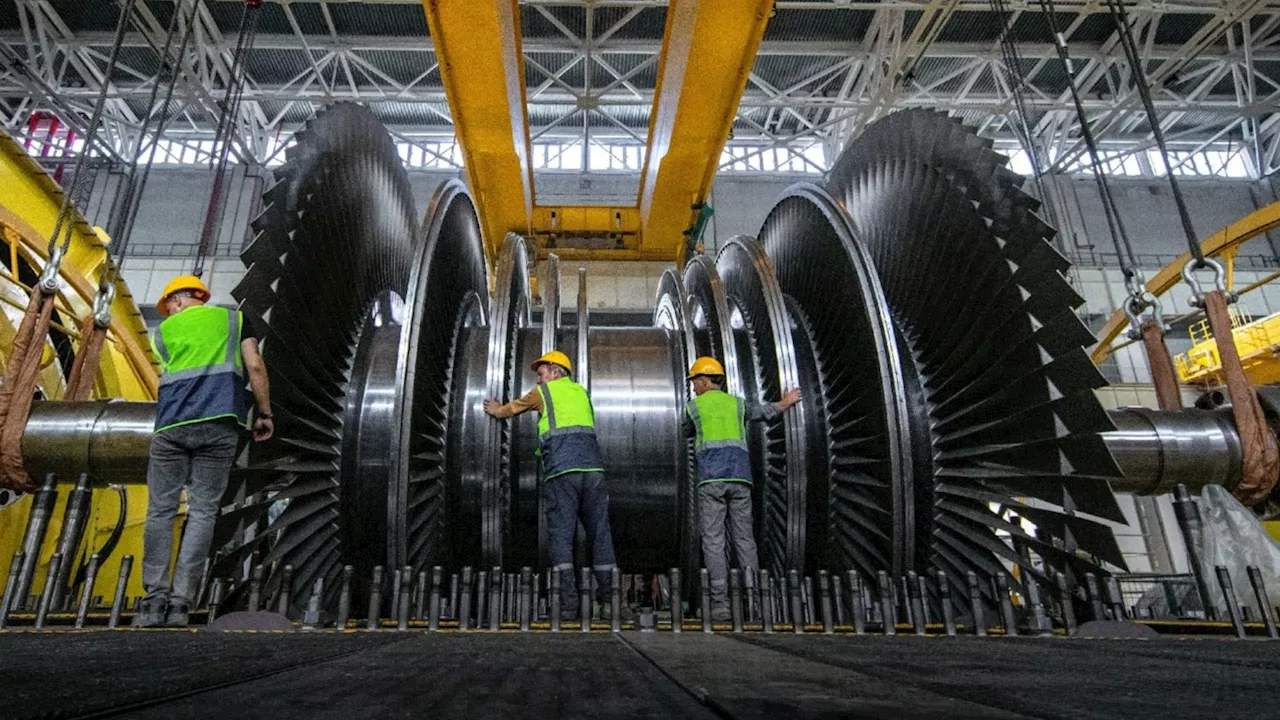 Russia’s plasma engine could reach Mars in 30 days, drastically reduce space travel timeRussian scientists have developed a plasma electric rocket engine that could enable travel to Mars in just one to two months.
Read more »
 NASA says Boeing-built SLS moon rocket is ‘essential’ as company warns of layoffsNASA responded to news that Boeing aims to lay off up to 400 workers from its Space Launch System program. The SLS rocket plays a key role in the Artemis moon program, the agency said..
Read more »
 Russian Missile Barrages Ukraine's Energy Grid, Ukraine Strikes Russian RefineryRussian forces launched a significant nighttime missile attack targeting Ukraine's energy and gas infrastructure, prompting emergency blackouts. Concurrently, Ukrainian drones struck an oil refinery in Russia's Saratov region, a facility supplying fuel to the Russian military. These developments occur amidst renewed diplomatic efforts to end the war, with President Trump's senior advisors planning to meet with Ukrainian President Zelenskyy in Munich.
Read more »