
The most important stories for you to know today
LAist is part of Southern California Public Radio, a member-supported public media network. For the latest national news from NPR and our live radio broadcast, visitA pair of rocket engines will make their way through Exposition Park to the California Science Center on Wednesday.
They are part of theAbout 12 miles of roadway will be closed between Inglewood to the California Science Center. The twin engines will exit the 110 Freeway at Figueroa Street at around 7:30 a.m. The motors will then trek northbound from 43rd Place to Martin Luther King, Jr. Boulevard before arriving at the finish line at 39th Street. The public is welcome to see the engines at 9 a.m. to celebrate their arrival.The twin engine arrival on Wednesday will be the best opportunity to see this part of the"Go for Stack" project. Visitors will still have a chance to see the Endeavor until Dec. 31, and when the Samuel Oschin Air and Space Center opens to the public in 2025.Israelis in L.A. React To Hamas Attack, Pasadena Considers Dumping Coal Energy, & Mission Viejo Taxpayers Could Be On the Hook For Legal Fees -- The A.M. Editioninto a rendering plants in Vernon facility and years of putrid odor complaints, today we are taking a look atthat still gets a lot of its energy from coal — the dirtiest energy source. On Tuesday, a city committee is set to vote on a plan to provide a pathway to transition off the stuff.. They’re demanding higher wages and a better contract. The strike has suspended all Santa Clarita Transit commuter services and most local routes, including the school tripper service for students in the Hart Union School District.Monday after last week’s meeting. Picketing continues after nearly three months, as performers fight for protections around artificial intelligence and the use of their digital copies, residuals increases and other demands.into a rendering plants in Vernon facility and years of putrid odor complaints, today we are taking a look atVernon — located about five miles southeast of downtown L.A.,— is self-described as an “exclusively industrial” city. It’s also a city known for a series of high-profile corruption prosecutions that involved outsized pay and benefits for city officials and lawmakers. Twelve years ago those scandals almost led to the dismantling of the city, which even today has just over 200 residents. Now, Vernon is trying to grow its residential areas despite ongoing environmental issues.Reporter Ted Rohrlich takes a deeper look at the changes in the city, which include its new expansion plan, and the troubles that led to those initiatives.We’re here to help curious Angelenos connect with others, discover the new, navigate the confusing, and even drive some change along the way.*At LAist we will always bring you the news freely, but occasionally we do include links to other publications that may be behind a paywall. Thank you for understanding! — the dirtiest energy source. On Tuesday, a city committee is set to vote on a plan to provide a pathway to transition off the stuff.. They’re demanding higher wages and a better contract. The strike has suspended all Santa Clarita Transit commuter services and most local routes, including the school tripper service for students in the Hart Union School District.Monday after last week’s meeting. Picketing continues after nearly three months, as performers fight for protections around artificial intelligence and the use of their digital copies, residuals increases and other demands.falsehoods and conspiracy theoriesIt might be the change in weather and consistently writing about food on Fridays, but I’ve been thinking about dumplings lately. And as I was searching last weekend for good dumpling restaurants, I stumbled upon ourfavorite: Tawainese chain restaurant Din Tai Fung. While I’ve already tried Din Tai Fung, I’m excited to try the rest on this list!Got something you’ve always wanted to know about Southern California and the people who call it home? Is there an issue you want us to cover?A wind advisory has been issued for the Interstate 5 and Highway 14 corridors, Antelope Valley and San Gabriel Mountains.In today's forecast you can expect cooler temperatures and windy weather. Along the coast, highs will be in the low 70s, and up to 76 in downtown Los Angeles with low clouds this morning.The valleys will also experience a major cooldown, with highs in the upper 70s, and the hottest parts reaching up to 82 — very nice weather for a stroll. More inland, temperatures have dropped with highs between 79 to 82 in Riverside and San Bernardino counties. In Orange County, expect highs in the upper 70s, and low 70s for coastal areas.The National Weather Service has issued a wind advisory for several parts of SoCal. You can expect northwest winds between 25 and 35 mph, gusts up to 55 mph along the Interstate 5 and Highway 14 corridors and western San Gabriel mountains. You can expect to winds to start at 10 p.m. tonight until 10 p.m. Wednesday. In the Antelope Valley, gusty winds up to 50 mph will be felt along the western foothills. Those winds will start blowing from 4 p.m. to 8 p.m. Wednesday. Ah, magnifique 🌀🫶 This low pressure system will first bring gusty west winds and cooler weather as it comes toward us through Wednesday. As it leaves Thursday, winds will flip around from the north/east with some places a touch warmer. On this day in 2012, waterspouts were seen off Newport Beach and San Clemente. You can see what those look likeThe Orange County Museum of Art, designed by Thom Mayne and Brandon Welling of Morphosis Studio, celebrates its first anniversary all week. Enjoy live performances, artmaking activities, curated tours, artist films, pet portraits, talks, an anniversary party and more.A dozen years after the State Legislature came close to abolishing the self-described “exclusively industrial” city of Vernon as hopelessly politically and ecologically corrupt, an LAist review found the city has made good on promises to reform its governance, but its pollution problems remain severe.Although the city attracts an estimated 40,000 workers per day who commute to jobs, housing has remained scarce. The city’s government acknowledges that this has been by design. Most of Vernon’s five square miles has been so befouled by industrial users that it is unfit for human habitation, according to a city report to the state.Despite this obstacle, the city now intends to increase its residential population dramatically along its western boundary — the area that is generally farthest removed from the worst pollutionas part of an effort to expand the city’s tiny electorate and make the city less vulnerable to corruption.for more on the city's tumultuous politcal history and more from our series on how rendering plants in, and near, the city of Vernon are impacting residents in Southeast L.A.Five miles southeast of Downtown Los Angeles lies a unique, bustling little city, self-described as “exclusively industrial.” It faced accusations of political and ecological corruption so serious that a dozen years ago the State Legislature came within a hair’s breadth of abolishing it. The city of Vernon survived that near-death experience, which would have seen it dissolved as an independent city and remade as an unincorporated area of L.A. County. Vernon’s survival was thanks to a huge lobbying campaign by its city government — as well as business interests anxious to preserve it as a sanctuary that offered firms substantial savings to locate there. Some labor unions joined the campaign, fearful that businesses might leave a disincorporated Vernon and take with them tens of thousands of jobs for blue collar commuters that included some union members. Ultimately, these pro-Vernon forces cut a deal with a key legislator who persuaded colleagues to let the city survive in return for its promise to reform its governance and double the size of its extremely small residential population.The South Coast Air Quality Management District estimates that Vernon’s cancer-risk rate is 40% higher than Southern California’s generally. Nearly 600 of approximately 1,800 businesses, located throughout the city, handle or store hazardous chemicals, mostly at high volumes, according to a city report. Records show that nearly 40 of these businesses handle high volumes of extremely toxic chemicals regulated by the state, such as ammonia and chlorine gas, whose accidental release could impact large areas. Long known as a transportation hub, the city is home to very high levels of truck and rail traffic. Much of the city is crisscrossed by 130 miles of railroad tracks and much of that has been contaminated by herbicides and spilled chemicals. Vernon is also laced with underground pipelines, many of which carry potentially explosive materials, according to a city report. Three facilities have been identified as hazardous materials release sites by the California Department of Toxic Substance Control, 25 sites have been found to have had leaking underground storage tanks. A city map shows dozens of other locations with real or suspected soil contamination issues.last year, “serious environmental conditions hazardous materials storage and processing, background contamination, noxious odors, noise pollution, and truck and railroad traffic generated by the City’s pervasive industrial land uses.…. render the majority of sites throughout Vernon unsuitable for residential development.”“Some people might say it’s still the same city,” said Fred MacFarlane, a media consultant who worked as the city’s spokesperson for five years during and after the disincorporation fight. MacFarlane was in this role as government reforms were being conceived and implemented.Former Assembly Speaker John Pérez, who led the attempt to disincorporate Vernon and is now on the board of regents for the University of California, acknowledged “positive steps” but added: “I don’t think anybody can look at this and say things have fundamentally changed.”off the effort led by Pérez, Vernon increased its decennial Census count from 112 residents to 222 with a new affordable housing project that opened in 2015. This added 45 new apartments to an existing total citywide housing stock of only 31 dwellings. This summer, in a major break with tradition, the city council opened the door for developers to further expand the number of dwellings in the city dramatically — from 76 to more than 900 — by building along the city’s western edge, the area farthest removed from the heaviest industry. Before the affordable housing project opened, Vernon’s electorate consisted mainly of city employees who were given heavily discounted rents for city-owned housing, according to court, legislative and city records. Since this was virtually the only housing in town, those in power were in a rare position to select nearly all the voters who could keep them in power and there was an expectation that those voters would do just that.lived in a wealthy enclave near San Francisco, flying first class to Southern California while earning $1.65 million in salary and consulting fees in a single year. Still another longtime administrator who was being paid as much as $900,000 per year pleaded guilty to misusing other public money for expenses thatThe second season starred Colin Farrell, Rachel McAdams, Taylor Kitsch, Kelly Reilly, and Vince Vaughn. These extreme practices ended after the disincorporation fight. Term limits were imposed, administrators’ salaries that were once among the highest in the state were reduced to normalcy, and a lottery procedure was implemented to decide who got to move into city-owned housing when vacancies occurred.Over a decade later, city government, Vernon-style, remains unusual, dedicated to what its website calls “a public-private partnership” — meaning business plays an outsized role, with its own designated representatives serving on city commissions. The leader of the business community says he is optimistic about the city’s ability to overcome its environmental problems. Steve Freed, a warehouse complex owner who holds the rotating chairmanship of the city’s Chamber of Commerce, said the city is “slowly and surely transitioning from heavy, heavy industry to businesses that are more environmentally friendly.” He estimated that half of all businesses in the city now are involved with goods storage and distribution rather than manufacturing. He also said he believes the city’s polluted soils can be made safe: “I don’t know of a single site in Vernon that couldn’t be remediated.”Vernon became an industrial mecca by welcoming businesses, including those that were unwelcome elsewhere, and offering them speedy government services and discounted fees, taxes and utilities compared to what they would pay elsewhere in the state. During the disincorporation fight, Vernon’s Chamber of Commerce quantified these discounts, asserting that Vernon businesses saved up to 2,000% on local fees and taxes and anywhere from 20% to 40% on electric bills by buying power from Vernon’s municipal utility instead of from Southern California Edison. The discounts continue, but no estimates of their current value were available. Following the disincorporation battle, the chamber has continued to play a dominant role in city politics through the financing of city elections. Five years of campaign contribution records reviewed by LAist show that political committees sponsored by the chamber have been the only reported source of funding for city council campaigns. These committees provided financial support for the campaigns of each of the five current part-time city council members, one of whom colleagues designate as mayor. None of the candidates’ campaigns reported receiving donations from anyone else.The chamber was especially active in 2021, in the most highly contested council races since the disincorporation threat passed. Business leaders who said they feared a return of corruption that could spark another disincorporation attempt backed the recall of two council members who’d pushed for a solar and wind project on land owned by the municipal utility — a main revenue source for the city. That set off alarms because some of the backers of that project were embroiled in a corruption probe in the City of Industry. Four menin that case, according to the L.A. District Attorney's office, with a preliminary hearing set for latest this week for three of the defendants. A chamber-sponsored political committee raised $78,000 for the successful recall campaign, in which the two council members denied any wrongdoing. Of those funds, $50,000 came from the national headquarters of a labor union, the International Brotherhood of Electrical Workers. One of its local branches represents workers at the municipal utility. The sums raised were extraordinary for a city with a total electorate of only 119. The council members were recalled and replaced by others whose candidacies received financial backing from the chamber., approved by the city council at the beginning of August, envisions Vernon’s newest residents living in a pedestrian-friendly neighborhood of mixed residential, commercial and light industrial uses on the city’s far western boundary — the area farthest removed from its heaviest industries. Most buildings in the area now are small warehouses.City planners say they hope the new neighborhood would eventually mesh with other neighborhoods developing in the Arts District of Los Angeles a few miles to the north. The city is billing the residential expansion idea in part as a good government move — a way to produce a more robust electorate better able to resist the influence of any would-be corrupters. City planners observed in the report to the state that the current population “is still inadequate to ensure good governance and to avoid the threat of disincorporation, as manipulation of a small number of voters by an individual or entity could allow for a relatively easy takeover of control of the city.” In approving the plan, the city council took pains to assure businesses that Vernon would not be straying from its primarily industrial nature. The council voted to require future renters or condominium buyers to sign acknowledgements that they are aware of the risks of living “in an industrial area in which annoyances or inconveniences associated with proximity to industrial uses such as odors, truck traffic, vibrations, noise and other neighborhood impacts are likely to be present.” Given the housing shortage in greater L.A., history suggests this will not be much of an obstacle. When just one of Vernon’s city-owned apartments became available this summer, the city reported that more than 170 people signed up for the lottery. As a resident, I always saw Vernon as a hub for endless economic growth and job opportunities. As a council member, I have encouraged and supported the city's direction on improving our environmental challenges.Despite the city’s moves toward government transparency, which include council meetings that are available to watch online, most of its part-time elected officials appear media-shy.The fifth, Melissa Ybarra, 46, responded to questions in writing. Ybarra is the only council member who grew up in Vernon. Asked how she dealt with the city’s environmental challenges, she wrote in an email: “As a resident, I always saw Vernon as a hub for endless economic growth and job opportunities. As a council member, I have encouraged and supported the city's direction on improving our environmental challenges.”of the disincorporation attempt, it wasn’t Vernon residents who were complaining about Vernon’s corruption and pollution problems. It was people who lived in the residential cities that surround it, whose air and land its industries were also fouling.They got the attention of then-Assembly Speaker Pérez, who represented Vernon and the surrounding area, and in December 2010 Pérez took the bold step of introducing the bill that would have disincorporated the city and placed it under the jurisdiction of the L.A. County Board of Supervisors as an unincorporated area — the same status held by East Los Angeles. His move set off a political firestorm that in turn launched a big payday for lawyers and lobbyists. The city spent about $9 million to fight disincorporation, while Vernon’s chamber mounted a smaller parallel campaign. Both predicted that disincorporation would lead to a regional economic catastrophe, with businesses choosing to leave once they no longer had their discounts, resulting in the loss of tens of thousands of blue-collar jobs. Although most of the workforce in the city was unorganized, major unions that represented slivers of the workforce, including the Teamsters, the International Brotherhood of Electrical Workers and the United Food and Commercial Workers, lined up with employers to make the same point. The fight was bitter, and Pérez, a former union official himself, recalls being at odds with old friends from labor, confronted by strangers in restaurants, tailed wherever he went by private detectives presumably hired by the bill’s opponents, and followed by Vernon police every time he drove through the city. These experiences were painful enough that, when LAist recently asked for his recollections, he wise-cracked, “Are you willing to pay the therapist’s bills after I talk to you?” Pérez’s legislation sailed through the Assembly. But it hit a roadblock in the state Senate, where a political rival who represented the same area objected. Then-state Sen. Kevin de León, who had lost a battle with Pérez to be Assembly Speaker before moving on to the Senate, recognized that Vernon had to change. But his method was to negotiate. De León, now on the L.A. city council, did not respond to interview requests. De León recently decided to run for reelection despite calls for him to resign following his participation in a secretly recorded conversation that featured racist language. To avoid disincorporation, the city agreed to de León’s demands that it make democratic reforms and agreed to hire the late John Van de Kamp, a former Los Angeles County district attorney and California attorney general, to advise it on ethics. The result was a sea change in governance culture. In a few years, administrators’ salaries were reduced to normal ranges. The city’s top administrator, a position that once paid as much as $1.65 million annually, is now paid $349,000. Competitive elections were held. City employees were accorded job security. Term limits on elected officials were imposed. Public records became easy to obtain, a lottery was created for city-owned residences and the city agreed to create additional housing in the form of the affordable housing project on city-donated land. Dilia Ortega, Youth Program Coordinator at Communities for a Better Environment, photographed near the now closed Exide plant. This is a stop in the "toxic tours" led by Ortega and other members of Communities for a Better Environment.The city disavowed only one aspect of the deal it had made with de León. Vernon city officials had pledged to make $60 million in contributions over 10 years to neighboring cities — as a sort of unofficial penance for having allowed its industries to pollute them. Once the city’s survival was assured, Vernon’s leaders backed away from that pledge, blaming a state action that restricted access to certain funds the city had counted on to fulfill its commitment. The city instead has doled out $10 million over 12 years, according to city spokesperson Margie Otto. De León, who had statewide political ambitions at the time, didn’t publicly object and got a nice political plum out of the abridged deal. Not only was he hailed by Vernon’s business interests, he was also treated as a hero in the neighboring city of Huntington Park, where Vernon helped pay foron the main public soccer field. When it was unveiled, that turf bore the politician’s name in big letters: “Hon. Kevin de Léon Campo de Fútbol.”We are here to investigate abuse of power, misconduct and negligence in government, business, and any venue where the public is affected.Pasadena is one of the few California cities that still gets a lot of its energy from coal — the dirtiest energy source. On Tuesday, a city committee is set to vote on a plan to provide a pathway to transition off the stuff.Changing where a city sources its electricity is one of the biggest actions local governments can take to reduce their planet-heating pollution. Across the Southland — and the world — cities are facing difficult choices to transition their energy supplies from fossil fuels such as gas and coal to renewable sources such as wind and solar.Pasadena has a 40-year contract with a coal-fired power plant in Utah, which is why most years the city gets nearly half of its energy from coal. Starting in 2018, a group of Pasadena locals — from scientists and engineers to civil rights and faith leaders — successfully pushed the city to commit to a policy of 100% clean energy by 2030.The city’s contract with the Utah coal plant ends in 2025. The Municipal Services Committee is expected to vote on a draft plan to transition from coalChanging where a city sources its electricity is one of the biggest actions local governments can take to reduce their planet-heating pollution. Across the Southland — and the world — city leaders are facing difficult choices to transition their energy supplies from fossil fuels such as gas and coal to renewable sources such as wind and solar. Here in California, most cities still generate the bulk of their electricity from gas-fired power plants. Pasadena, however, is one of few California cities that still gets some of the most of its power from coal, the dirtiest energy source. That fact is what spurred a coalition of community members to push the city to transition more quickly to cleaner energy. Starting in 2018, a group of Pasadena locals from a wide variety of personal and professional backgrounds — scientists, engineers, environmentalists, data analysts, lawyers, civil rights leaders, faith leaders and more — started meeting weekly and advocating at city council meetings. They compiled research and letters from renowned Pasadena scientists, met with the city-owned utility Pasadena Water and Power, and gathered signatures from residents to urge the city to draw all of its power from more sustainable sources.“We're not an organization, we're just community people getting together,” said Cynthia Cannady, chairperson of the coalition. “People have power. We just need to realize it.”Much of what makes a tangible difference to our world’s climate comes down to decisions made by individual cities across the globe. The world’s top scientistsThe reason Pasadena still runs on so much coal is because of a 40-year contract with Intermountain Power Project, a coal-fired power plant in Delta, Utah. The plant also provides power to cities including Anaheim, Burbank, Glendale, L.A. and Riverside. Pasadena’s contract with the coal plant expires in 2025, at which point the city’s power supply switches to methane gas through 2027. The city’s utility, Pasadena Water and Power, has already said they won’t renew the contract. But the challenge is building up resources from elsewhere in the meantime.Not enough local solar or otherwise renewable energy generation. Still needing to run the city’s gas-fired power plant, Glenarm, which is used to generate backup power in the case of extreme heat waves and other strains on power. A bottleneck in the infrastructure that prevents the city from receiving cleaner power from neighboring power providers, such as Southern California Edison and the L.A. Department of Water and Power. Competition with other cities who are also trying to transition to clean power in a limited, but expanding marketplace.In the last two years, Pasadena has spent some $700,000 on consultants to craft what’s called an Integrated Resource Plan, or IRP — a document all California cities are required to submit to the state to show how they’ll maintain electricity reliability, as well as how they’ll transition their electricity supplies in accordance with the state’s clean energy goals. “That can either be a ‘go-through-the motions’ kind of document, or it can be a strategic plan that will really get us to where we want to go,” said Cannady, whose day job is as a lawyer working with tech companies focused on environmental and climate issues. Cannady has also served on an advisory group for the city as they worked to develop the plan.of the IRP on Tuesday evening. If passed, it would later go to the city council to be formally adopted, then sent to the state.You can tune into the Oct. 10 meeting, which starts at 4 pm, via livestream or in person and view the agenda But Cannady and Pasadena 100 members want the committee to reject that plan and go back to the drawing board. They say it’s a “not-a-plan plan” because the city’s analyses have been based on extreme, unrealistic scenarios that make costs and rate increases seem higher than they should be. In the five scenarios the city analyzed for getting to carbon-free electricity by 2030, city staff estimated electricity rates would increase by 50% to more than 100% from 2024 to 2030. In their own analysis, Pasadena 100 estimates the rate increases would be closer to 8% to 17%, depending on the scenario. “They've built into it the idea that the city or the ratepayers are somehow going to pay for all my neighbors to have rooftop solar,” Cannady said. “The percentages are misleading.” Pasadena’s Vice Mayor Felicia Williams, who chairs the Municipal Services Committee, and Pasadena Water and Power declined to speak with LAist before the Oct. 10 meeting.Electricity rates are going up across California, even though the cost of renewable energy per kilowatt is actually cheaper than gas now. That’s largely because of volatile global gas prices and the fact that Building the needed infrastructure to support the energy transition is also adding to our bills as the state struggles more broadly to overhaul rate structures to alleviate that impact.“There are ways to mitigate that cost,” Cannady said. “You're going to have to pay for it anyway, it's just a matter of when you do it.”Councilmember Jason Lyons, who serves on the city’s Municipal Services Committee, told LAist the city is lagging on its efforts to support low- and middle-income families in the energy transition. “Right now we have a flat rate subsidy that we offer to people who qualify — a $10 discount which is not so helpful,” Lyons said. “We need something that's much more robust, much more responsive to the particular needs of that ratepayer. And then, when we do that, we have to figure out how to balance those costs. The next thing we need to do is take a deep dive into our rate structure.” Lyons said the cost can often push a practical conversation about the technical challenges of transitioning a city’s energy supply into the political realm. “The politics will come up mostly around cost and perceived cost and my approach to that is going to be pragmatic,” he said. “I think we probably can weather, as a community, some rate increase, but there are many people in our community who are just barely making ends meet. While we're working on the climate change problem, we're also working on the cost of housing that is rapidly pushing out everybody from the middle class down out of Pasadena. So we have to be mindful of that in all of this and try to balance these goals.”. If passed, it would go to the city council likely in early November. The IRP must be submitted to the state no later than Dec. 31. The Pasadena 100 coalition is hoping the city rejects the IRP draft and starts again, with more transparency on data for rate increases. They’re calling for, among other things: A more actionable plan to be submitted to Council no later than March 2024, even if this IRP is approved.A time frame for closing the city’s Glenarm gas-fired power plant. Help offsetting the burden of the transition on ratepayers by taking full advantage of federal clean energy funding. Aggressively improving education and outreach to help make the process smoother for people interested in rooftop solar. An immediate start of acquiring battery storage and commitment to doubling rooftop solar on residential, commercial and city buildings by 2030. A doubling down on developing robust programs and education outreach to get low- and middle-income homes access to rooftop andFires. Mudslides. Heat waves. What questions do you need answered as you prepare for the effects of the climate emergency?Mission Viejo taxpayers could have to pay $715,000 in attorneys' fees and court costs stemming from a pair of lawsuits filed after city councilmembers extended their own terms in 2020A few years back, the city of Mission Viejo was trying to work out a deal to implement a new election system after it got sued under thefor racially polarized voting. They ran out of time and the city council decided to extend the terms of its five members until they could get a new system in place. A resident sued them for it, arguing the extension was illegal because no election took place, and won.The city is still appealing the case, and the attorneys' fees. The appeals court is expected to issue a ruling around mid-December.Mission Viejo taxpayers could have to pay $715,000 in attorneys' fees stemming from a pair of lawsuits filed after the city council extended the terms of its entire membership in 2020 That’s the most recent tally stemming from Orange County Superior Court Judge Walter Schwarm’s order in one of the cases late last week. Schwarm previously found last year that former councilmembers Ed Sachs and Greg Raths, and current Councilmember Wendy Bucknum, had overstayed their terms in office by more than two years. Schwarm also ordered the city to put the two other council members, Brian Goodell and Trish Kelley, whose terms were up in 2022, on last year's ballot. The city is still fighting the case against Sachs, Raths and Bucknum. Goodell and Kelley were both reelected by voters in November. An appeals court is expected to issue a ruling in mid-December.In 2018, the city of Mission Viejo was studying the possibility of switching from at-large to by-district elections in order to stave off a legal threat under the. The law was intended to help remedy the lack of political power among Latinos and other groups in California whose votes have historically been diluted in local elections. Adopting by-district elections, where residents elect a representative from their geographic section of the city, is the standard remedy for challenges under the state voting right act. But Mission Viejo decided instead to adopt cumulative voting, where voters cast as many votes as there are seats, and they can cast multiple votes for one candidate.in 2019, leaving city officials scrambling to adopt a new voting system before the 2020 election. The city agreed with the voting rights' plaintiffs to put off the switch until the 2022 election, and in the meantime, the city council voted to extend their own terms to bridge the two-year gap. In 2021, some residents started questioning why three council seats hadn't been on their November 2020 ballot. Then they decided to take the city to court. The city argued that they were just trying to comply with the settlement agreement in the voting rights case, which had been signed off on by Schwarm, the Orange County Superior Court judge. But in 2022, Schwarm ruled against the city, finding that Goodell and Kelley could not remain in their seats until 2024, as the council planned, but rather had to run for their seats in the 2022 election. Then, just before the election, Schwarm ruled that Sachs, Raths and Bucknum had overstayed their terms in office by more than two years and should've had to run for re-election in 2020.So far, Schwarm has ordered the city to pay plaintiffs a combined $715,000 for attorneys fees in the two cases. Mission Viejo is still trying to fight off at least one of the rulings. City Attorney Wiliam Curley told LAist in an email that the sum awarded by Schwarm is about half as much as the plaintiff's initially sought. Curley said the city “has been working hard to seek proper fees and cut the chaff out of very inflated numbers." Lee Fink, one of the lawyers for the plaintiffs, said in an Oct. 8 news release that plaintiffs had offered to settle the question of attorneys' fees in February for $550,000 but the city rejected the offer. Meanwhile, the appeals court still has to make a final decision in the case. Michael Schlesinger, the lead plaintiff in the case, told LAist if the appeals court sides with him, it could put in question the validity of all of the decisions made by the Mission Viejo City Council during the two-year period in which three council members in question were acting without voter approval. Those decisions include a controversial vote to issue $19 million in bonds to purchase a downtown building, which forced the city toJill Replogle wants to know what you wished you knew more about in OC and what’s important to you that’s not getting enough attention.L.A. Leaders React To Hamas' Attack In Israel, SAG Back At Negotiating Table, & 1-Year After L.A. City Hall 's Tape Scandal — The P.M. ReportHollywood scriptwriters ratify their contract, while striking actors continue talks with studios.LAist's daily news program"AirTalk with Larry Mantle" is kicking off a new weekly series that will air Mondays on 89.3 FM looking at various aspects of SoCal history. In honor of Indigenous Peoples’ Day, we start this series with a conversation about the history and modern revitalization of indigenous culture, language, and community right here in Los Angeles.of any city in the country. Many local Native Americans are descendants of local tribes; most of them are not. Through massive displacement efforts and settler practices, Native people from tribes across the country were brought to Los Angeles and are part of the rich and complex history that makes this city so unique.There has been an increasing push over the last several years for more thoughtful recognition of Native peoples and greater accountability on behalf of government agencies for the harm they've caused. In 2021,what is now formerly known as"Columbus Day" as"Indigenous People's Day." Local tribes are reclaiming and revitalizing their traditions and values with hopes that the next generation will be able to keep their long and rich histories in the region alive and well.The arrival of European settlers brought the construction of Spanish missions from San Francisco all the way down to San Diego. The religious outposts served to evangelize indigenous people and expand the colonialist agendas. In addition to missionaries, indigenous people were forced into settlements know as"reductions." Some local tribes are federally recognized; others are not. Many local Native Americans are descendants of local tribes; most of them are not. Through massive displacement efforts and settler practices, Native people from tribes across the country were brought to Los Angeles and are part of the rich and complex history that makes this city so unique.is kicking off a new weekly series that will air Mondays on 89.3 FM looking at various aspects of SoCal history. In honor of Indigenous Peoples’ Day, we start this series with a conversation about the history and modern revitalization of indigenous culture, language, and community right here in Los Angeles.LAist itself operates on the homeland of the Gabrieleno Tongva people in what is now Pasadena. You can find Southern California Public Radio's Land AcknowledgementLong before the arrival of European settlers, L.A. County was home to a number of indigenous tribes. Just how long those tribes have been here is a moving target, with the date moving backward.Fenelon said there is strong evidence supporting the presence of Native Americans 7,000 to 10,000 years ago. The contemporary nations that we know today date back 1,000 to 3,000 years. The arrival of European settlers brought the construction of Spanish missions from San Francisco all the way to San Diego. The religious outposts served to evangelize indigenous people and expand the colonialist agendas. In addition to missionaries, indigenous people were forced into settlements know as"reductions.""There were rebellions at every single mission," Fenelon reminded us, with one of the largest taking place at the San Gabriel Mission in modern day Alhambra. The rebellions came as a result of massive oppression, rampant sexual assaults and the attempted destruction by the mission systems of subordinate indigenous culture and way of life.There has been an increasing push over the last several years for more thoughtful recognition of Native peoples and more accountability on behalf of government agencies for the harm they've caused. In 2020, theof indigenous peoples in Canada, Pope Francis went on what he called a"Pilgrimage of Penance" and issued an apology for the Catholic Church's role in establishing residential boarding schools where so many of the horrors inflicted upon indigenous people took place. And in 2021,Chief Anthony Morales of the Native American Tongva tribe watches as his son Andrew leads those gathered in prayer during a celebration of the first Indigenous People's Day, in place of previously celebrated Columbus Day, on October 8, 2018 in Los Angeles, California. - The City Council had voted last year to replace Columbus Day for Indigenous People's Day. is the tribal secretary for the Gabrielino-Tongva San Gabriel Band of Mission Indians. She said keeping their story front and center is not just about maintaining visibility but reclaiming and revitalization their traditions and values."Due to colonization, our people were stripped apart, moved around from mission to mission," she said. So trying to instill"traditional values" in this next generation is of utmost importance, she added." for those looking for educational resources. While the culture and physical presence in indigenous people in Los Angeles and beyond has been shattered, leaders, educators and activists are reminding us of just how deeply woven into the fabric of our city their stories are and always have been.A Washington D.C-based abortion provider has filed a lawsuit against Beverly Hills, accusing city officials of colluding with a landlord to prevent them from opening a location there. Beverly Hills Mayor Julian Gold, City Manager Nancy Hunt-Coffey, Deputy City Manager Keith Sterling, City Attorney Laurence Weiner and Chief of Police Mark Stainbrook are all named in the lawsuit filed last week by DuPont Clinic.for abortion rights. Gov. Gavin Newsom signed laws protecting pregnant people’s rights to an abortion, even requiring insurance companies to cover the procedure. Protections were also enshrined in the state constitution. At the time of the Dobbs decision, Beverly Hills also lit up City Hall in pink and councilmembers unanimously supported a resolution in favor of abortion rights. “Beverly Hills really advertised itself as a place that was safe for abortion care. And Douglas Emmett, the landlord, was fully supportive of this mission,” an attorney for the clinic said.The clinic was set to open on Wilshire Boulevard in Beverly Hills and had signed a lease with Douglas Emmett Inc. But the lawsuit alleges the city and the landlord colluded to rescind the lease after caving to pressure from anti-abortion protesters, despite “the right to abortion enshrined in the California Constitution.” A Washington D.C-based abortion provider has filed a lawsuit against Beverly Hills, accusing city officials of colluding with a landlord to prevent them from opening a location there. Beverly Hills Mayor Julian Gold, City Manager Nancy Hunt-Coffey, Deputy City Manager Keith Sterling, City Attorney Laurence Wiener and Chief of Police Mark Stainbrook are all named in the lawsuit filed last week by DuPont Clinic. The clinic was set to open on Wilshire Boulevard in Beverly Hills and had signed a lease with Douglas Emmett Inc. But the lawsuit alleges the city and the landlord colluded to rescind the lease after caving to pressure from anti-abortion protesters, despite “the right to abortion enshrined in the California Constitution.”In September 2022, the lawsuit states that DuPont entered into a lease agreement with Douglas Emmett, and a month later began discussions with the city about the clinic. “The City expressly confirmed to DuPont that the City approved of DuPont's intended use of the Premises, and DuPont began planning the construction of its clinic,” the lawsuit states. According to Jessica Corpuz, an attorney for DuPont Clinic, the city and landlord were aware of the services the clinic planned to provide. However, Corpuz added, everything changed when a group of anti-abortion protesters got wind of the intended use of the clinic.First, the lawsuit alleges, the city held up permits. Wiener, the city attorney, then asked the clinic to sign a letter stating that they will not violate any California laws, according to the lawsuit. “That is not something that is required of any other medical practice, that would not have been a request if DuPont Clinic was opening a dentist practice,” Corpuz said. “He was doing this specifically because they're an abortion provider.”But Corpuz said police then sent a letter the landlord warning that the clinic would attract violence and vandalism and the safety, putting the security of other tenants at risk. “Once the chief of police sent that letter, Douglas Emmett clearly felt that it had no option and that it bowed to the pressure of the city and it sent a letter to DuPont quote-unquote rescinding the lease,” she said. A representative for Douglas Emmett said the company"has a well-established policy of refraining from discussing leasing matters with external entities. We will respond following the legal framework."The city, Corpuz added, told the protesters that the clinic would not open and that the landlord rescinded the lease — information she said was shared on the eve of a big protest. DuPont Clinic also filed a lawsuit against the landlord in August, in part, citing a letter it received from Douglas Emmett attorneys who said part of the reason for rescinding the lease offer was due to the discovery that the clinic would be providing “late term abortions” and attract potentially unsafe conditions. “DuPont Clinic provides an absolutely critical service,” Corpuz said. “These are people who often can't get treatment elsewhere. These are people who need critical life-saving care, and DuPont Clinic planned to open here in order to provide that.”for abortion rights. Gov. Gavin Newsom signed laws protecting pregnant people’s rights to an abortion, even requiring insurance companies to cover the procedure. Protections were also enshrined in the state constitution. At the time of the Dobbs decision, Beverly Hills also lit up City Hall in pink and council members unanimously supported a resolution in favor of abortion rights. “Beverly Hills really advertised itself as a place that was safe for abortion care. And Douglas Emmett, the landlord, was fully supportive of this mission,” Corpuz said. “Everyone says these things, but when it came down to actually supporting an abortion clinic, the city tripped over itself instead of supporting this clinic.”
Trending
 A gorgeous April afternoon in store across the Denver metro area
  ‘Artemis Mission Cannot Lead To Interplanetary Wild West,’ Astronomer Warns
  Trump says US forces will ‘finish the job’ soon in first prime-time speech since starting Iran war
  Former Wisconsin football player, who left the sport amid mental health struggles, dead at 24
  Drew McIntyre Gives Honest Take About His Recent WWE Title Reign
  U.S. Sen. Bernie Sanders introduces bill that could keep the Padres in San Diego
 United States Latest News, United States Headlines
Similar News:You can also read news stories similar to this one that we have collected from other news sources.
 How magnetic fusion plasma engines can take us to outer spaceInteresting Engineering is a cutting edge, leading community designed for all lovers of engineering, technology and science.
Read more »
 New Jersey woman one step closer to home after surviving rocket attacks in IsraelTomeeka Collins says one minute she was enjoying a trip to the Holy Land, and the next she was learning how to best stay safe during a rocket attack.
Read more »
 Massive rocket motors will roll to LA’s Science Center, poised for vertical reunion with shuttleStarting Tuesday, the rocket motors will travel from the Mojave Air and Space Port in the desert and arrive in Exposition Park on Wednesday.
Read more »
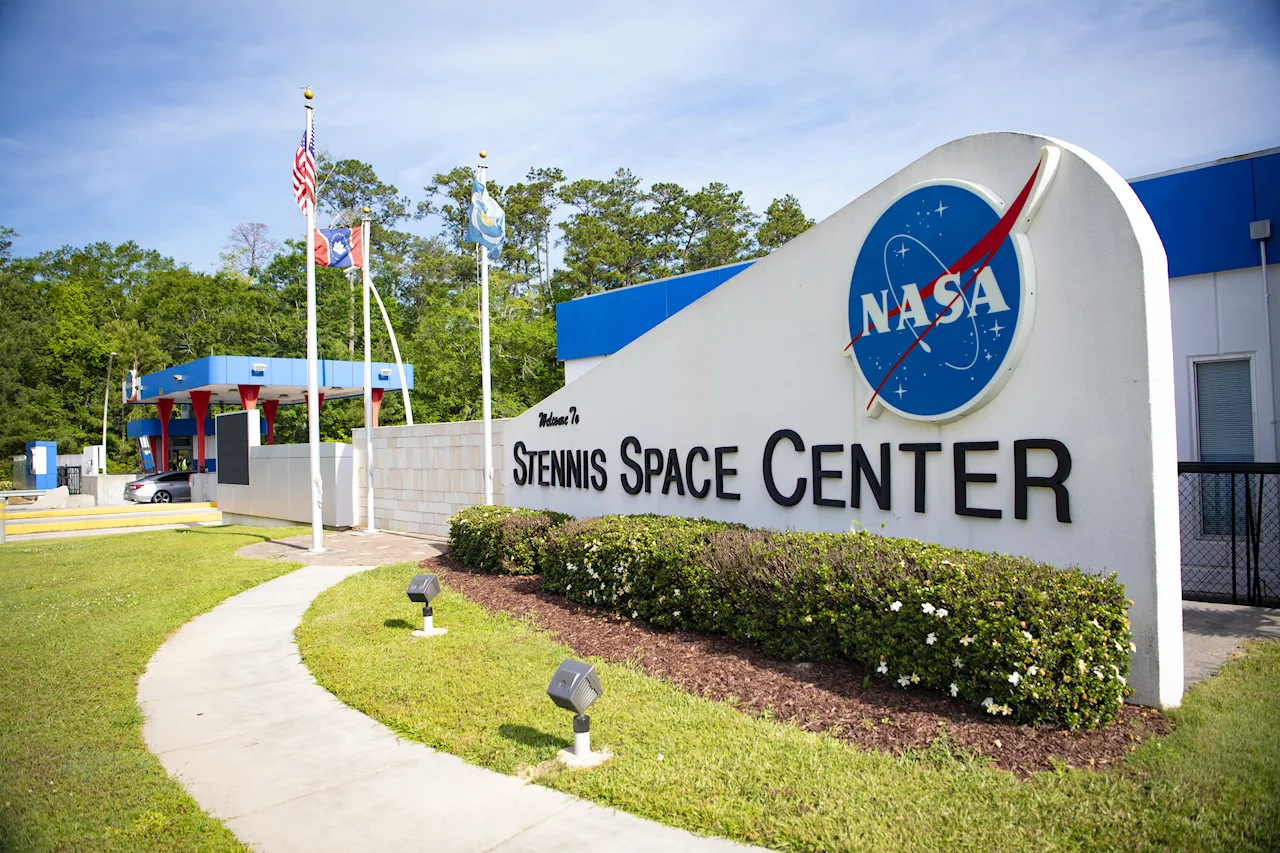 Evolution Space to Produce and Test Solid Rocket Motors at NASA Stennis - NASANASA’s Stennis Space Center near Bay St. Louis, Mississippi, joined with Evolution Space on Oct. 10 to announce plans for the aerospace company to establish
Read more »
 WSJ Correspondent Shelters From Rocket Attack in Southern IsraelWSJ Correspondent Dion Nissenbaum reports from the southern Israeli city of Sderot as a number of rockets fired from Gaza land nearby. Israeli tanks and troops are surging towards the south, as 100,000 Israeli reservists mass in preparation for a broad offensive against Hamas. Photo: Dion Nissenbaum
Read more »
 Move Over Pikachu - Team Rocket's Ticket to Riches Was Under Their Noses the Whole TimeTeam Rocket spends a lot of time trying to steal Pikachu, but they already have a far rarer and more valuable Pokémon they're neglecting.
Read more »