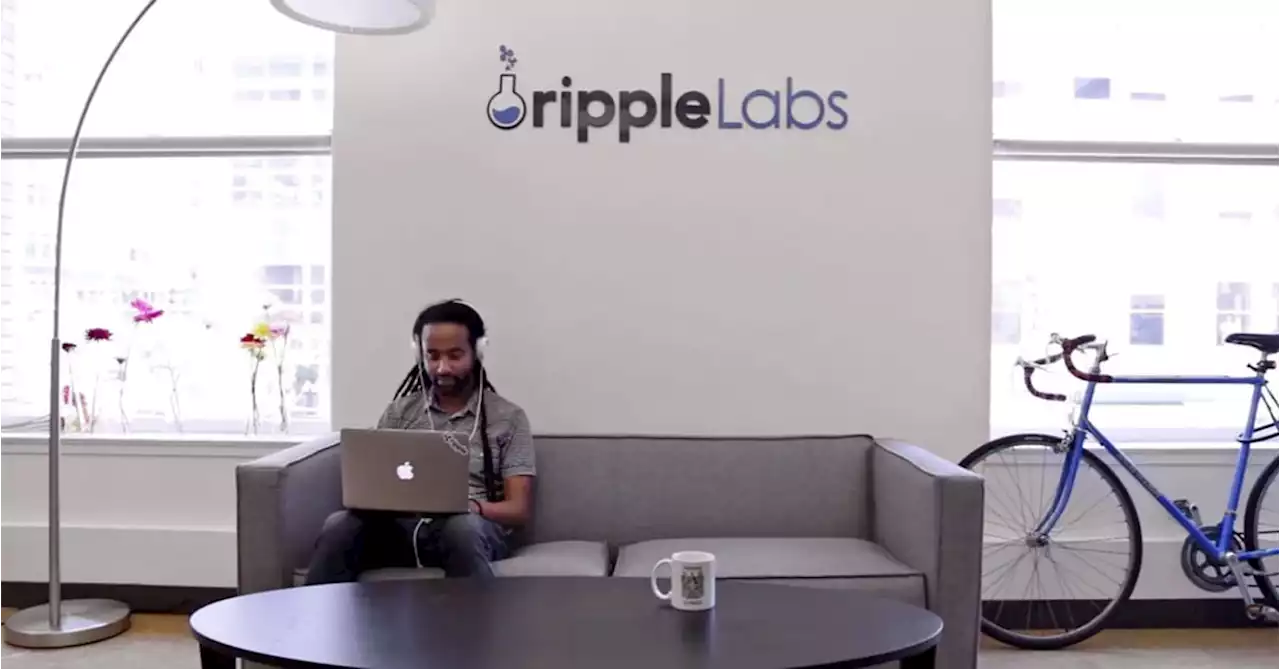
Ripple fought to release hundreds of internal SEC documents showing disagreement and a potential conflict of interest in how the agency would regulate cryptocurrencies, danielgkuhn writes. Opinion for The Node newsletter
Instead of arguing on similar grounds that XRP has “decentralized” over time, Ripple is trying to argue that Hinman’s theory was not grounded in a proper understanding of securities law. In short, Ripple fought to see these documents and then fought to release them to the public because they sowed discord.
., Garlinghouse said it's"absolutely unconscionable" that Hinman gave his speech despite the lack of consensus agreement within the SEC, adding that the speech “deliberately created confusion.” This is apparently supportive of the company’s actual defense that the SEC sued Ripple and its executives without a clear legal basis. Further, Ripple is arguing on procedural grounds that the SEC violated its due process rights by failing to provide “fair notice” of potential securities regulation violations.out of the public view , based on the view that Hinman’s statements were his and his alone, did not represent the agency’s understanding and are irrelevant to the lawsuit. Indeed, while the internal communications at the SEC concerning Hinman’s presentation – including feedback he solicited from colleagues before the summit – show that many SEC officials were aligned, it’d be hard to say it represented everyone’s views. For instance, SEC Director Brett Redfearn, suggested Hinman use stronger language to make it clear that ETH circa 2018 was not a security while others noted that Hinman’s speech would lock the agency into a position if it wanted to take a “different position on ether in the future.” It turns out that that wouldn’t be a problem for Gensler, who seems entirely unconcerned about contradicting earlier views he or his predecessors have held. Perhaps that is par for the course at the SEC. During Ripple's protracted fight to get the documents into the public, the judge overseeing the case said theby trying to keep the speech drafts out of court. Moreover, one of Ripple’s key arguments in that Hinman’s speech showed a clear conflict of interest, considering that he had a stake in a law firm that was a member of the, according to an email exchange between Hinman and the SEC’s ethics office. For its part, Ripple argues a few things about XRP. First, the for-profit company has for years said that it did not create the network or the token, although it is a primary developer on the chain and perhaps the organization that stands to gain the most materially from XRP’s adoption. Further, perhaps confusingly, the company has argued that XRP is commodity money, a type of resource that has trade value for a diverse cast of investors, coders and companies – like bitcoin and ether . There are a few things that point in favor of the idea that the XRP network has decentralized over time. Like any public blockchain, anyone can build using XRP or use the network to transfer assets. In late-2013, Ripple Labs released Ripple’s full code base, which was not always public, theoretically offering tools to the world necessary to maintain the network without the involvement of any specific party. Several companies, most notably MoneyGram, rely on the network for some types of cross-border transactions., Ripple has been something like a canker on the blockchain industry. This perhaps started with Ripple Labs’ token distribution plan, the very thing being questioned by the SEC. Similar to some token treasuries today, Ripple decided it would control the disbursement of the 100 billion XRP units that will ever exist, distributing them to the community, early investors and the company’s founders. This is partially why Jeb McCaleb, the founder of Ripple who left to found the competing payments-focused blockchain Stellar, has had so many tokens available to dump on the market over the years. And while the company may argue against this point, Ripple the network really hasn’t decentralized much from its point of creation. For years, all of Ripple’s clients were set to trust only Ripple’s validation nodes by default. Unlike Bitcoin or Ethereum, where “trustless transactions” are the default, Ripple uses validators to help untrusting partners find trusted routes to trade: meaning if Ripple the company controls the validators, it basically controls the XRP ledger. This is a point the SEC latched onto in its suit. “During the process to achieve consensus with respect to a new proposed state of the XRP Ledger, each server on the network evaluates proposed transactions from a subset of servers it trusts not to defraud it, also known as the server’s UNL,” the SEC wrote, referring to Unique Node Lists , or the gateways that control who can participate in the blockchain consensus mechanism. While users can control their own UNLs, most use the XRP Foundation’s dUNL . Rarely do discussions of Ripple’s suit discuss technical details like this. In fact, most of the conversation seems to be rooted in a total misunderstanding of the company’s strategy. Part of the reason the XRP Army has been dragging someone like Vitalik Buterin, the creator of Ethereum, today is because he took a call with the agency as Hinman was drafting its speech. Ripple’s case absolutely matters for the future of the blockchain industry. It was hugely significant when Coinbase and other U.S. exchanges delisted XRP in 2020, when the SEC first alleged the token was a security – a type of action it would be hard to imagine happening today . The case specifically involves a legal interpretation of cryptocurrencies as meeting the prongs of the SEC’s Howey Test, which asks whether an “investment contract” is an investment of money in a common enterprise with the expectation of profit to be derived from the efforts of others. Ripple denies that XRP qualifies as a security, because there was no “investment contract” and that XRP has more in common withIn other words, Ripple cares whether the SEC is right or wrong. But it never cared about decentralization.
United States Latest News, United States Headlines
Similar News:You can also read news stories similar to this one that we have collected from other news sources.
 Saquon Barkley not ruling out holdout as Giants hold contract leverage: ‘Not a rush’Saquon Barkley understands that the Giants hold the leverage in these contract negotiations, and he has understood that since the day they placed the franchise tag on him in March.
Read more »
 Ripple CTO Wants Community Input on His 'Funny' Address to Metaco StaffersRipple's JoelKatz stirred up the community with a new speech meant for metaco_sa staff
Read more »
 How a self-care expert takes care of herselfDr. Beth Frates, director of lifestyle medicine and wellness in the department of surgery at Massachusetts General Hospital in Boston, talks about what self-care looks like in her life.
Read more »
 Ripple CTO Reveals Strategic Shift and Vision for XRP LedgerWhy was XRP Ledger created? Original architect unveils untold journey xrp xrparmy xrpcommunity xrpl xrpledger xrpthestandart ripple $xrp
Read more »
 Ripple CBDC Advisor Excited at XRPL's Real-world Utility: Details.AntonyWelfare Ripple CBDC advisor showcases XRPL real-world utility in NFTs RippleXRP XRPCommunity XRPArmy $XRP NFT XRPHolders
Read more »
 Pro-Ripple Lawyer Supports Cardano Founder's Defense of ADA, Suggests Key Thing.attorneyjeremy1 Pro-XRP lawyer agrees with Cardano founder IOHK_Charles on ADA, suggests something important
Read more »