
Science, Space and Technology News 2024
Pioneering work in laser physics has laid the foundation for significant advancements in precision measurement, enabling the development of techniques that significantly reduce residual amplitude modulation.
Within atomic and laser physics communities, scientist John “Jan” Hall is a key figure in the history of laser frequency stabilization and precision measurement using lasers. Hall’s work revolved around understanding and manipulating stable lasers in ways that were revolutionary for their time. His work laid a technical foundation for measuring a tiny fractional distance change brought by a passing gravitational wave. His work in laser arrays awarded him the Nobel Prize in Physics Building on this foundation, JILA and NIST Fellow Jun Ye and his team embarked on an ambitious journey to push the boundaries of precision measurement even further. This time, their focus turned to a specialized technique known as the Pound-Drever-Hall method , which plays a large role in precision optical interferometry and laser frequency stabilization. While physicists have used the PDH method for decades in ensuring their laser frequency is stably “locked” to an artificial or quantum reference, a limitation arising from the frequency modulation process itself, called residual amplitude modulation , can still affect the stability andpaper, Ye’s team, working with JILA electronic staff member Ivan Ryger and Hall, describe implementing a new approach for the PDH method, reducing RAM to never-before-seen minimal levels while simultaneously making the system more robust and simpler. As the PDH technique is implemented in various experiments, from gravitational wave interferometers to optical clocks, improving it further offers advancements to a range of scientific fields., the PDH method has been cited and utilized thousands of times. “Setting up a PDH lock is something you might learn in an undergraduate lab course; that’s just how central it is doing all the experiments we do in atomic physics,” explained recent Ph.D. graduate Dhruv Kedar, the paper’s co-first author. The PDH method uses a frequency modulation approach to precisely measure the laser frequency or phase fluctuations. The frequency modulation adds special “sidebands” around a main light beam, known as the “carrier.” Comparison of these sidebands against the main carrier helps measure any slight changes in the frequency, or phase, of the main light beam relative to a reference. This technique is especially useful because it’s very sensitive and can reduce unwanted noise and errors. Physicists can then use these combined light beams to interrogate different environments, such as an optical cavity made of mirrors. To do this, the researchers must “lock” the laser to the cavity, that is, have the laser probe the cavity at a particular frequency. “What that means is that you’re trying to lock your laser to the center of your resonance,” Kedar added. This allows the laser to reach state-of-the-art levels of stability, which is especially important when trying to tease out tiny changes in the optical length or when monitoring quantum dynamics, such as energy shifts or spin changes in atoms and molecules. Unfortunately, “locking” a laser doesn’t always mean it stays stable or “in resonance with the center of the optical cavity, as noise like RAM can change the relative offsets of the reference light beams and introduces frequency shift,” co-first author and JILA Postdoc Zhibin Yao elaborated. “The RAM can contaminate your PDH error signal.” As the JILA researchers quickly realized, along with the rest of the laser physics community, reducing this RAM is crucial for improving the stability of the PDH technique and, in turn, their laser measurements. Overcoming the RAM problem has been a long struggle, but the new approach would make the fight much easier.The two-reference-light “sidebands” are essential for the PDH locking method. To generate the ‘sidebands,’ the JILA researchers needed to use a frequency modulator, either an electro-optic modulator or an acousto-optic modulator . Historically, EOMs have been employed in various optical systems by applying electric fields to optical crystals to change the phase of laser light coming through the crystal. When an electric field is applied to certain types of crystals, it modulates the laser phase by altering the crystal’s refractive index. This process allows EOMs to add sidebands to the carrier beam easily. However, the effective phase modulation of the crystal used in EOMs is easily altered by environmental fluctuations, introducing RAM into the PDH error signal and, consequently, making it less stable. In contexts where ultra-high precision is required, such as running an optical timescale or operating an atomic clock, even minuscule amounts of RAM can introduce fluctuations at undesired levels. “EOMs add sidebands to the carrier laser in the optical domain, which is more challenging for us to control,” Kedar explained. “So instead, we can try to generate these sidebands in the electronic domain and translate them to the optical by using an AOM.” AOMs represent a newer approach to reducing RAM by using sound waves to modulate the laser light. When a sound wave propagates through a crystal or a transparent medium, it creates a diffraction pattern that bends the laser light in various amounts. As a light beam passes through this sound wave-altered medium, the variations in refractive index act like a series of tiny prisms, altering the path and, thus, the frequency of the light. Kedar added, “If you want to control the amplitude of each sideband, you control the amplitude of the main tone that you’re generating in the microwave domain via the AOM.” Because the AOM doesn’t modulate the laser frequency based on the electro-optic effect, it produces much less RAM noise than EOM, reducing the overall RAM level of the system. All of the beams coming out of the AOM crystal can be combined in a single optical fiber, and putting all frequency shift beams into a single, common spatial mode profile.To measure the advantages of this new PDH approach, Kedar, Yao, Ye, and the rest of the team ran an experiment using both the traditional EOM and their improved AOM setup and compared the results. They found that with the AOM, they could reduce the RAM levels from parts per million to a small fraction of parts per million. Equally important, this approach allows much more flexibility in controlling relative strength between the carrier and two sidebands. The AOM advantage is much more obvious when the carrier becomes vanishingly small. “Instead of parts per million, you can do like 0.2 parts per million, which seems like a small improvement, but that’s kind of toeing the line for acceptable levels of RAM for us,” Kedar elaborated. “Even though this RAM level is so small, it’s still a significant roadblock to improving our cavities and making them slightly better. That extra factor of two or three is enormously helpful in pushing the frontiers of state-of-the-art laser stabilization.”The simple implementation of AOM instead of EOM suggests an answer even Hall would be proud of. “It’s simple enough that, in principle, someone can look at this scheme and see it as a natural method to interrogate a spectral feature,” Kedar elaborated. “In the end, this speaks to the research style that Jan and Jun both create: a very elegant, simple solution.” Reference: “Synthetic FM triplet for AM-free precision laser stabilization and spectroscopy” by John L. Hall, Dhruv Kedar, Ivan Ryger, Jun Ye and Zhibin Yao, 19 January 2024,SciTechDaily: Home of the best science and technology news since 1998. Keep up with the latest scitech news via email or social media.Cyclones, Wind Shear, Violent Storms Churn in Jupiter’s Atmosphere The largest and nearest of the giant outer planets, Jupiter’s colorful clouds present an ever-changing kaleidoscope…
United States Latest News, United States Headlines
Similar News:You can also read news stories similar to this one that we have collected from other news sources.
 Palworld Technology List: All Items Unlocked With Technology PointsThe amount of unlockable tech in Palworld can get overwhelming, so here's a full list to help you decide how to spend those points.
Read more »
 From Cloud to Carbon: Revolutionizing Product Development with PTC Arena, ProGlove, YookClean Tech News & Views: EVs, Solar Energy, Batteries
Read more »
 Real-time wearable human emotion recognition technology developedA research team has unveiled a groundbreaking technology that can recognize human emotions in real time.
Read more »
 Revolutionizing EV Batteries: Innovative New Binder Doubles PerformanceScience, Space and Technology News 2024
Read more »
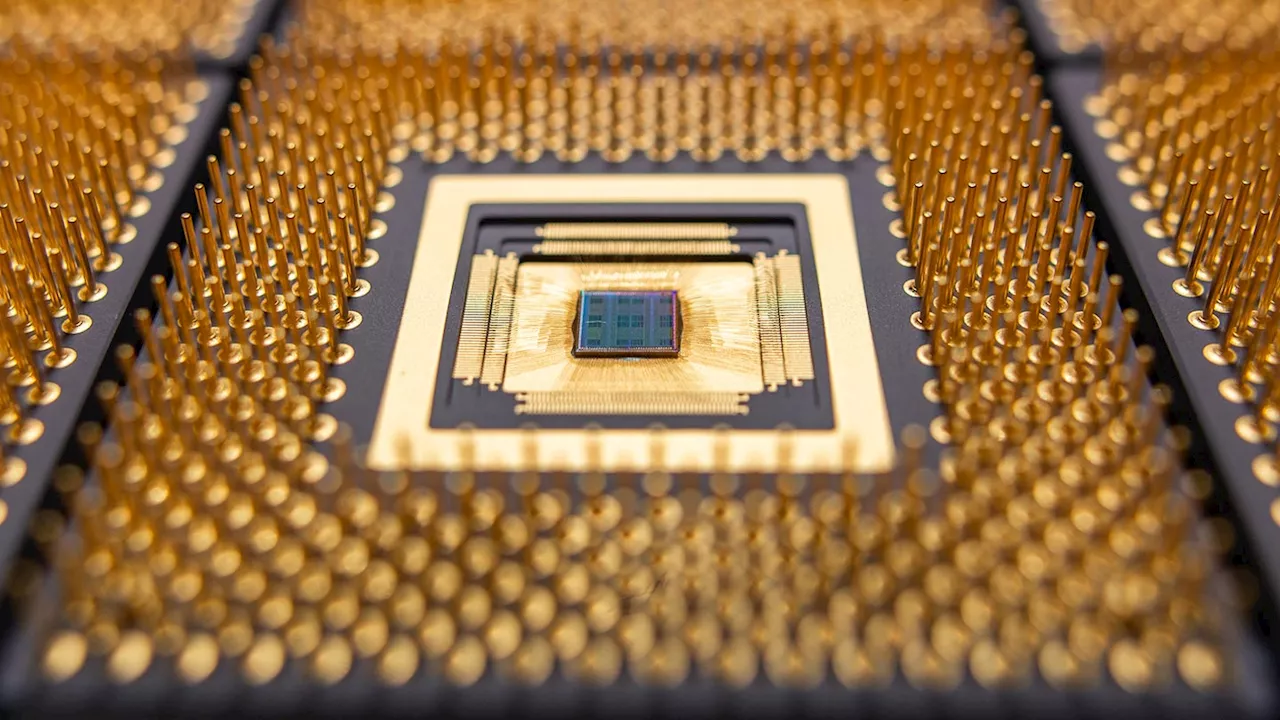 Revolutionizing Computing: Inside Princeton’s Trailblazing AI Chip TechnologyScience, Space and Technology News 2024
Read more »
Southern University of Science and Technology: Advancing Science and Technology in ChinaSouthern University of Science and Technology (SUSTech) is a public research university in Shenzhen, China. It aims to be a globally-renowned university that excels in interdisciplinary research and contributes to the advancement of science and technology. SUSTech's School of Medicine, founded in 2018, focuses on integrating medicine with sciences, engineering, and humanities to train leading medical talents.
Read more »