
Science, Space and Technology News 2024
The AI-NERD model learns to produce a unique fingerprint for each sample of XPCS data. Mapping fingerprints from a large experimental dataset enables the identification of trends and repeating patterns which aids our understanding of how materials evolve.
Credit: Argonne National LaboratoryThis method generates detailed “fingerprints” of materials, which are interpreted by AI to reveal new information about material dynamics. The approach, known as AI-NERD, leverages unsupervisedto recognize and cluster these fingerprints, enhancing understanding of material behavior under different conditions. Like people, materials evolve over time. They also behave differently when they are stressed and relaxed. Scientists looking to measure the dynamics of how materials change have developed a new technique that leverages X-ray photon correlation spectroscopy ,This technique creates “fingerprints” of different materials that can be read and analyzed by a neural network to yield new information that scientists previously could not access. A neural network is a computer model that makes decisions in a manner similar to the human brain. In a new study by researchers in the Advanced Photon Source and Center for Nanoscale Materials at the U.S. Department of Energy’s Argonne National Laboratory, scientists have paired XPCS with an unsupervised machine learning algorithm, a form of neural network that requires no expert training. The algorithm teaches itself to recognize patterns hidden within arrangements of X-rays scattered by a colloid — a group of particles suspended in solution. The APS and CNM are DOE Office of Science user facilities. “The goal of the AI is just to treat the scattering patterns as regular images or pictures and digest them to figure out what are the repeating patterns. The AI is a pattern recognition expert.”“The way we understand how materials move and change over time is by collecting X-ray scattering data,” said Argonne postdoctoral researcher James Horwath, the first author of the study. These patterns are too complicated for scientists to detect without the aid of AI. “As we’re shining the, the patterns are so diverse and so complicated that it becomes difficult even for experts to understand what any of them mean,” Horwath said. For researchers to better understand what they are studying, they have to condense all the data into fingerprints that carry only the most essential information about the sample. “You can think of it like having the material’s genome, it has all the information necessary to reconstruct the entire picture,” Horwath said.The project is called Artificial Intelligence for Non-Equilibrium Relaxation Dynamics, or AI-NERD. The fingerprints are created by using a technique called an autoencoder. An autoencoder is a type of neural network that transforms the original image data into the fingerprint — called a latent representation by scientists — and that also includes a decoder algorithm used to go from the latent representation back to the full image. The goal of the researchers was to try to create a map of the material’s fingerprints, clustering together fingerprints with similar characteristics into neighborhoods. By looking holistically at the features of the various fingerprint neighborhoods on the map, the researchers were able to better understand how the materials were structured and how they evolved over time as they were stressed and relaxed. AI, simply put, has good general pattern recognition capabilities, making it able to efficiently categorize the different X-ray images and sort them into the map. “The goal of the AI is just to treat the scattering patterns as regular images or pictures and digest them to figure out what are the repeating patterns,” Horwath said. “The AI is a pattern recognition expert.” Using AI to understand scattering data will be especially important as the upgraded APS comes online. The improved facility will generate 500 times brighter X-ray beams than the original APS. “The data we get from the upgraded APS will need the power of AI to sort through it,” Horwath said.The theory group at CNM collaborated with the computational group in Argonne’s X-ray Science division to perform molecular simulations of the polymer dynamics demonstrated by XPCS and going forward synthetically generate data for training AI workflows like the AI-NERD.Reference: “AI-NERD: Elucidation of relaxation dynamics beyond equilibrium through AI-informed X-ray photon correlation spectroscopy” by James P. Horwath, Xiao-Min Lin, Hongrui He, Qingteng Zhang, Eric M. Dufresne, Miaoqi Chu, Subramanian K.R.S. Sankaranarayanan, Wei Chen, Suresh Narayanan and Mathew J. Cherukara, 15 July 2024,Authors of the study include Argonne’s James Horwath, Xiao-Min Lin, Hongrui He, Qingteng Zhang, Eric Dufresne, Miaoqi Chu, Subramanian Sankaranaryanan, Wei Chen, Suresh Narayanan and Mathew Cherukara. Chen and He have joint appointments at theSciTechDaily: Home of the best science and technology news since 1998. Keep up with the latest scitech news via email or social media.Mushroom gummies marketed for brain health have been found to contain illegal psilocybin and other dangerous ingredients. UVA Health’s research reveals these risks following multiple…
United States Latest News, United States Headlines
Similar News:You can also read news stories similar to this one that we have collected from other news sources.
 AI robot Misso makes knee replacement surgeries more precise, affordableIndian firm's surgical robot streamlines orthopedic joint-replacement procedures with precise planning and real-time adjustments.
Read more »
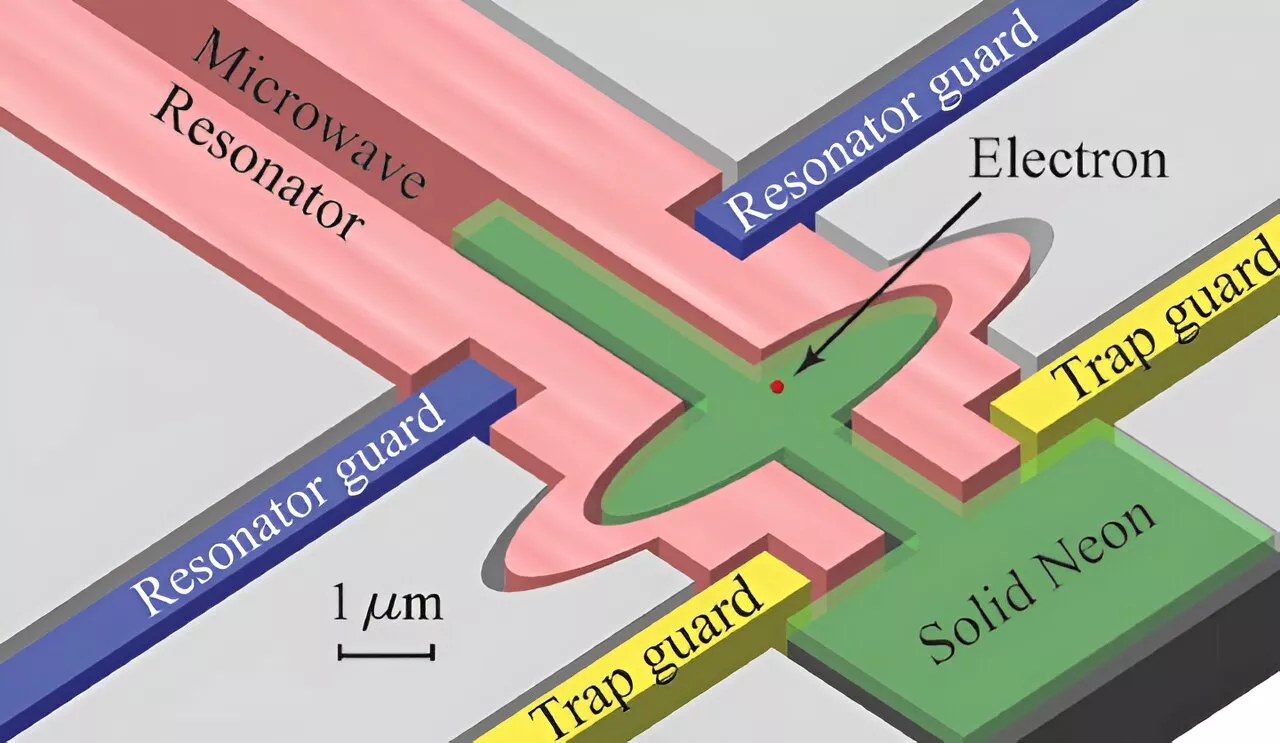 Understanding quantum states: New research shows importance of precise topography in solid neon qubitsQuantum computers have the potential to be revolutionary tools for their ability to perform calculations that would take classical computers many years to resolve.
Read more »
 Dunes decoded: A comprehensive and precise mapping for coastal conservationCoastal dunes are complex and rich areas at the interface between terrestrial and aquatic ecosystems. They are extremely rich in biodiversity and play a crucial role in both environmental and human well-being, such as protecting inland settlements from marine floods.
Read more »
 Understanding quantum states: New research shows importance of precise topography in solid neon qubitsA new study shows new insight into the quantum state that describes the condition of electrons on an electron-on-solid-neon quantum bit, information that can help engineers build this innovative technology.
Read more »
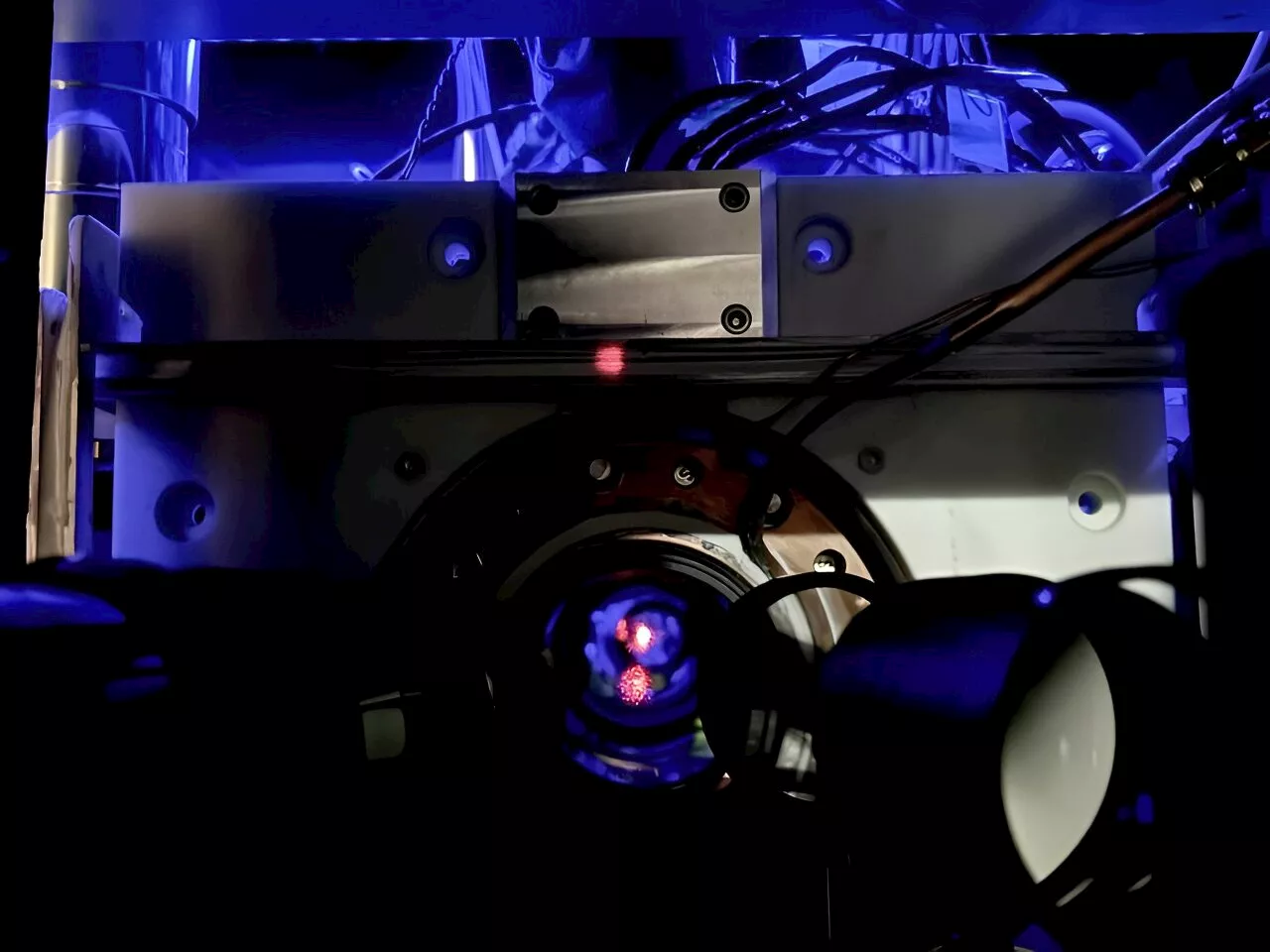 World's most accurate and precise atomic clock pushes new frontiers in physicsIn humankind's ever-ticking pursuit of perfection, scientists have developed an atomic clock that is more precise and accurate than any clock previously created. The new clock was built by researchers at JILA, a joint institution of the National Institute of Standards and Technology (NIST) and the University of Colorado Boulder.
Read more »
 Novel physics simulator creates precise 3D prints of multi-layer cheesecakeThe digital simulator predicts food behavior pre-printing, potentially reducing waste and enhancing design capabilities.
Read more »