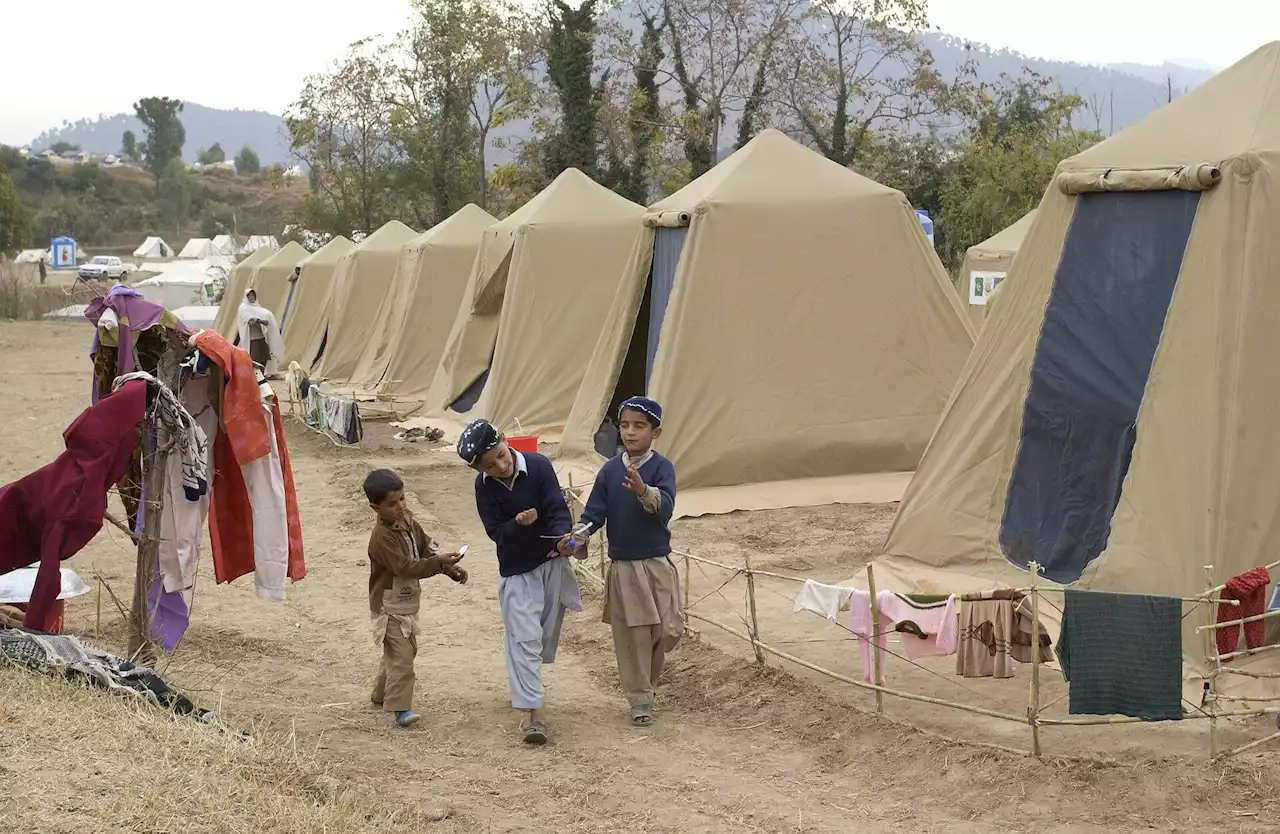
Waterborne illness is one of the leading causes of infectious disease outbreaks in refugee and internally displaced persons (IDP) settlements, but a team led by York University has developed a new technique to keep drinking water safe using machine learning, and it could be a game changer. The research is published in the journal PLOS Water.
Waterborne illness is one of the leading causes of infectious disease outbreaks in refugee and internally displaced persons settlements, but a team led by York University has developed a new technique to keep drinking water safe using machine learning, and it could be a game changer.
The research is published in the journalAs drinking water is not piped into homes in most settlements, residents instead collect it from public tap stands using storage containers. "When water is stored in a container in a dwelling it is at high risk of being exposed to contaminants, so it's imperative there is enough free residual chlorine to kill any pathogens," says Lassonde School of Engineering Ph.D. student Michael De Santi, who is part of York's Dahdaleh Institute for Global Health Research, and who led the research.during its collection, transport and storage has been a major factor in outbreaks of cholera, hepatitis E, and shigellosis in refugee and IDP settlements in Kenya, Malawi, Sudan, South Sudan, and Uganda.at that collection point, but once you bring it home and store it, sometimes up to 24 hours, you can lose that residual chlorine, pathogens can thrive and illness can spread," says Lassonde Adjunct Professor Syed Imran Ali, a Research Fellow at York's Dahdaleh Institute for Global Health Research, who has firsthand experience working in a settlement in South Sudan. Using machine learning, the research team—including Associate Professor Usman Khan, also of Lassonde—has developed a new way to predict the probability that enough chlorine will remain until the last glass is consumed. They used an artificial neural network along with ensemble forecasting systems , something that is not typically done. EFS is a probabilistic model commonly used to predict the probability of precipitation in weather forecasts. "ANN-EFS can generate forecasts at the time of consumption that take a variety of factors into consideration that affect the level of residual chlorine, unlike the typically used models. This new probabilistic modeling is replacing the currently used universal guideline for chlorine use, which has been shown to be ineffective," says Ali. Factors such as local temperature, how the water is stored and handled from home to home, the type and quality of the water pipes,and whether a child dipped their hand in the water container can all play a role in how safe the water is to drink. "However, it's really important that these probabilistic models be trained on data at a specific settlement as each one is as unique as a snowflake," says De Santi."Two people could collect the same water on the same day, both store it for six hours, and one could still have all the chlorine remaining in the water and the other could have almost none of it left. Another 10 people could have varying ranges of chlorine." The researchers used routine water quality monitoring data from two refugee settlements in Bangladesh and Tanzania collected through the Safe Water Optimization Tool Project. In Bangladesh, the data was collected from 2,130 samples by Médecins Sans Frontières from Camp 1 of the Kutupalong-Balukhali Extension Site, Cox's Bazaar between June and December 2019 when it hosted 83,000 Rohingya refugees from neighboring Myanmar. Determining how to teach the ANN-EFS to come up with realistic probability forecasts with the smallest possible error required out-of-the-box thinking. "How that error is measured is key as it determines how the model behaves in the context of probabilistic modeling," says De Santi."Using cost-sensitive learning, a tool that morphs the cost function towards a targeted behavior when using machine learning, we found it could improve probabilistic forecasts and reliability. We are not aware of this being done before in this context." For example, this model can say that under certain conditions at the tap with a particular amount of free residual chlorine in the water, there is a 90 percent chance that the remaining chlorine in the stored water after 15 hours will be below the safety level for drinking.
United States Latest News, United States Headlines
Similar News:You can also read news stories similar to this one that we have collected from other news sources.
 How machine learning can help identify new, deeply buried porphyry copper depositsTwo novel machine learning techniques are able to identify new, deeply buried porphyry copper deposits by characterizing magma fertility.
Read more »
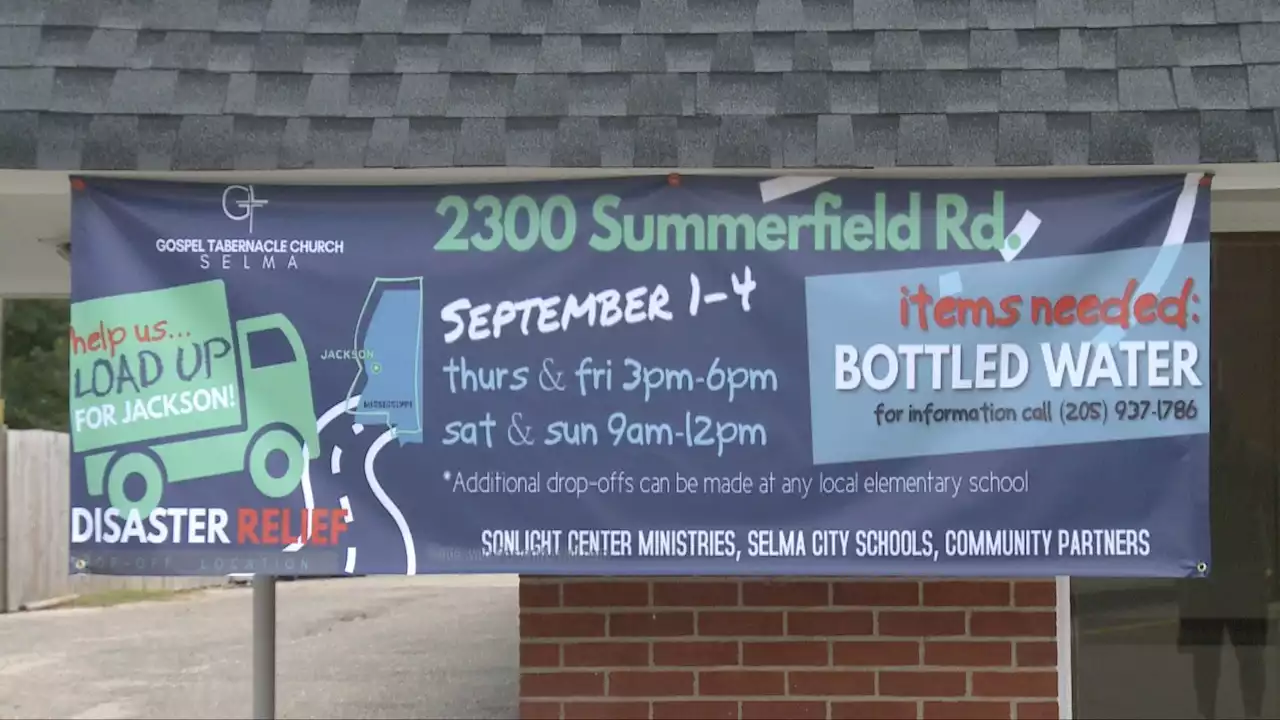 Selma Churches Respond to Water Crisis in Jackson, Mississippi - Alabama NewsTODAY: Bottled water that has been collected for the past several days in Selma is now heading to Jackson, Mississippi, where people are faced with a water crisis. alnews selma alabamanewsnetwork
Read more »
 Medicaid Extensions for New Moms Grow, May Run Into LimitsStates around the country are making it easier for new moms to keep Medicaid in the year after childbirth, a time when depression and other health problems can develop.
Read more »
 Fact check: Saturn V was as loud as 10,000 jet engines, but it didn't melt concreteA group of researchers used acoustical models and historical data to disprove misinformation about Saturn V.
Read more »