
The sun's most active phase, solar maximum, kicked off in 2024, leading to an unusually high number of powerful X-class flares. The spike in solar activity has surprised scientists, leaving them to debate whether the increase is solely due to the solar cycle or if improved detection methods are playing a role.
The ultimate action-packed science and technology magazine bursting with exciting information about the universeEngaging articles, amazing illustrations & exclusive interviewsThe sun's most active phase, solar maximum, kicked off in 2024, allowing an unusually high number of powerful X-class flares to explode from our home star.
— the most powerful and potentially dangerous class of solar eruption — hit a new record high in 2024. The spike highlights that we are currently experiencing a surprisingly activeBut solar activity may not be the only reason the number of supercharged solar explosions skyrocketed last year, experts told Live Science., which maintains the oldest and most accurate publicly available dataset on solar flares. That is the highest total since at least 1996, when this dataset began.activity since the mid-1970s, but earlier data has not been made publicly available and is less reliable than modern records, SpaceWeatherLive.com representatives told Live Science in an email. The previous record number of X-class flares in the dataset was 34, recorded in 2001, and only on four other occasions — in 2000, 2003, 2005 and 2014 — has the annual total risen above 20. So last year's total represents a surprisingly sharp spike in X-class flare frequency.On Oct. 3, 2024, an X9 magnitude solar flare — the most powerful of the current cycle — erupted from the sun, launching a CME directly at Earth.The effects of the more frequent X-class flares were widely felt on Earth in 2024. For example, in May, aSo why was there such a big jump in X-class flares last year?Get the world’s most fascinating discoveries delivered straight to your inbox.The obvious reason for the increased frequency is the arrival of solar maximum. This peak in the sun's roughly 11-year cycle of activity, which is triggered by the weakening and eventual. For example, in August, the number of visible sunspots on our home star, which is a key metric for monitoring solar activity, In August, the number of visible sunspots on the solar surface hit a 23-year high. This timelapse image shows how they each moved across the sun's near side. But the number of X-class flares has been the biggest shock for most solar physicists."I think we have all been surprised ,"Some researchers like Hudson believe that the increase in X-class flares can be solely attributed to the increased activity during solar maximum. However, other experts think that although the sun's peak has undoubtedly played a key part in the spike, it is not the only reason. These researchers argue that the record number of observed X-class flares is also down to the fact we have gotten a lot better at spotting them, which is slightly throwing off the grading curve., a solar physicist and vice president of the new space weather solutions company Lynker Space, told Live Science."These events are so massive they kinda smack you in the face," he said.For starters, we can only properly see solar flares on the side of the sun facing Earth, although some farside explosions are so massive that. This doesn't change much because we have only ever been able to see the sun's nearside eruptions. But it can also be hard to spot and properly measure solar flares around the edge of the sun's limbs because we cannot always see them properly.However, over the last few decades, scientists have launched several new spacecraft to monitor the sun, which have likely gotten better at spotting some of the flares that might previously have been missed, McIntosh said."The new assets have highlighted how many events have been pointed away from us on Earth," he added. It is also possible that we have previously missed some X-class flares that were right on the threshold between being rated X-class and M-class — the second-highest soflar flare category., a space systems scientist at the University of Luxembourg and an advisor at private space weather forecasting company Mission Space, also believes that we are getting better at spotting X-class flares."Advances in science and technology are continuously improving our ability to monitor solar activity and its impact on Earth's environment," Shneider told Live Science."Every new mission, observational point, numerical model or theory improves our understanding." However, these advances can also be a double-edged sword, because"this progress makes it hard to directly compare modern data with past observations," Shneider added. But not everyone is convinced. Hudson, who has been studying solar flares for decades, believes that"the rules have not changed" and says that we have likely missed"zero" of these outbursts over the last few solar cycles.Solar maximum is expected to continue well into 2025 and potentially even into 2026, although we won't know when it ends until after it has happened. While solar maximum is often considered to be the most active phase of the solar cycle, the number of flares can remain high for several months or years after this phase ends. New research also suggests that solar activity can peak a few years after solar maximum, during a period when different parts of the sun's magnetic field vie for dominance, which some"I think the record will continue to grow ," McIntosh, who is one of the main proponents of the battle zone concept, said. However,"we cannot really tell," he added. Shneider also believes we have not yet seen the peak in solar activity and says,"The frequency of these events could remain high for several more years." 'Like they were demon possessed': Geomagnetic super storms are causing tractors to dance from side to side across US farms Sunspots surge to 23-year high as solar maximum continues to intensify far beyond initial expectations It is also possible that we could see much more powerful X-class flares in the coming years. The most powerful flare of the current solar cycle was anon Oct. 3, 2024. But during the last two solar cycles, there have been 14 different X-class flares with a higher magnitude, despite flares being less frequent at the time. Hudson said that increased frequency does not guarantee more powerful flares."But I do think it is odd ," he added. Harry is a U.K.-based senior staff writer at Live Science. He studied marine biology at the University of Exeter before training to become a journalist. He covers a wide range of topics including space exploration, planetary science, space weather, climate change, animal behavior and paleontology. His recent work on the solar maximum won"best space submission" at the and was shortlisted in the"top scoop" category at the NCTJ Awards for Excellence in 2023. He also writes Live Science's weekly 'The Majoran' — a bizarre particle that's its own opposite — could explain the biggest mysteries of the universe, scientists claim
SCIENCE TECHNOLOGY SOLAR ACTIVITY SOLAR MAXIMUM SPACE WEATHER SOLAR FLAIRS SUNSPOTS
United States Latest News, United States Headlines
Similar News:You can also read news stories similar to this one that we have collected from other news sources.
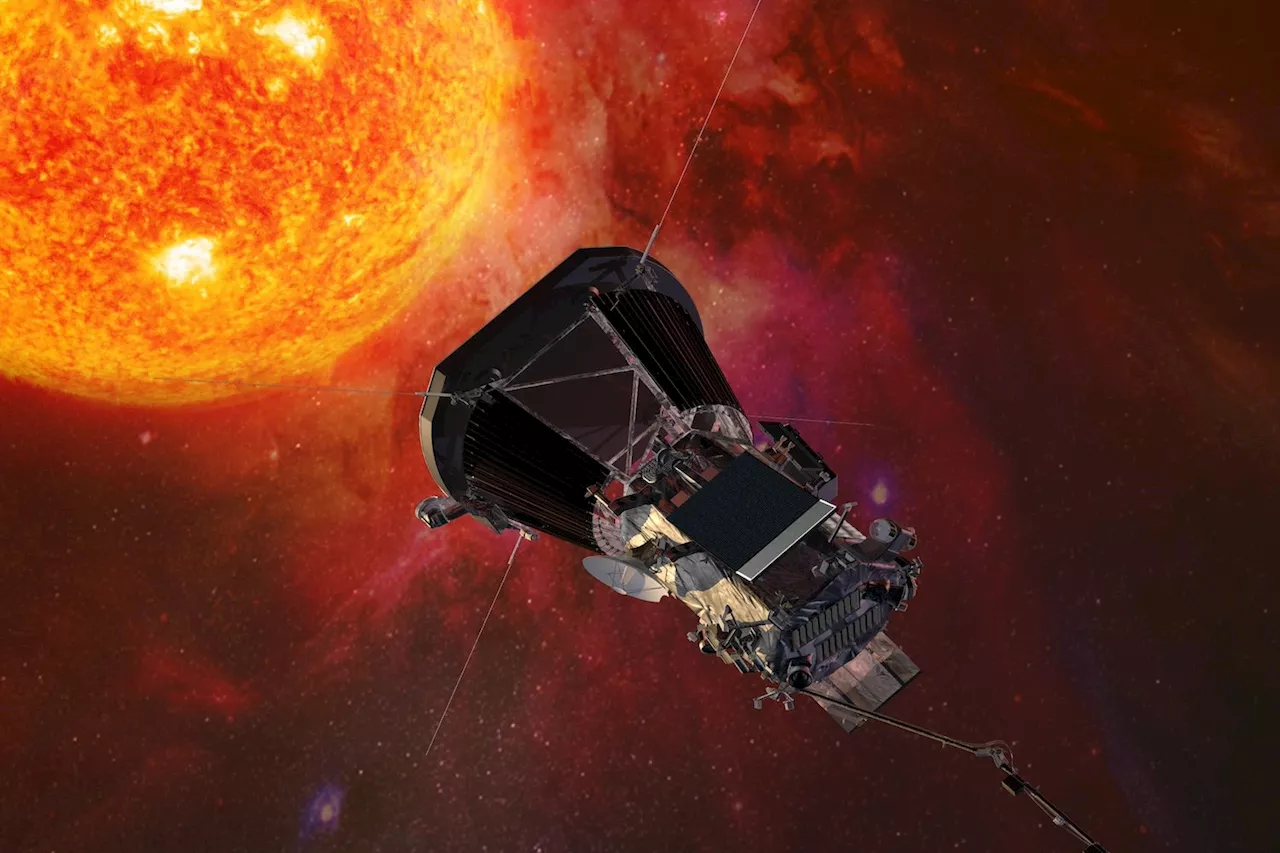 NASA's Parker Solar Probe to Make Record-Breaking Close Approach to the SunNASA's Parker Solar Probe is set to make its closest approach to the Sun yet on December 24th, venturing within 3.8 million miles of the star's surface.
Read more »
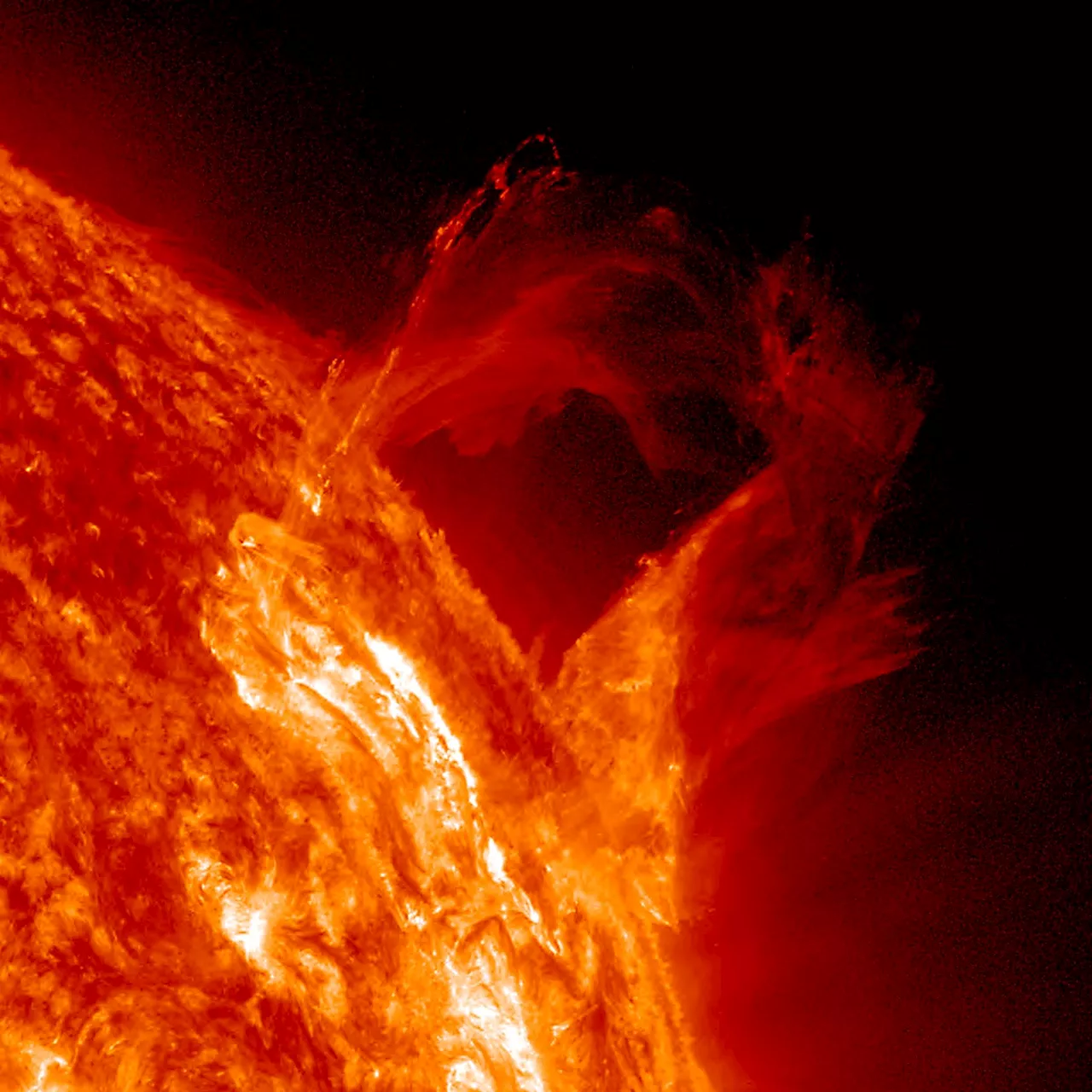 Parker Solar Probe to Make Record-Breaking Close Approach to the Sun on Christmas EveThe Parker Solar Probe, a NASA spacecraft, will make its closest-ever flyby of the Sun on Christmas Eve, December 24th. This historic approach will bring the probe within 6.1 million kilometers of the Sun's surface, allowing scientists to gather unprecedented data about the Sun's corona, solar wind, and other mysteries.
Read more »
 Parker Solar Probe to Make Record-Breaking Flyby of the SunThe Parker Solar Probe will make history on Tuesday with its closest-ever approach to the sun, coming within 3.8 million miles of the solar surface. This record-breaking flyby will make the probe the fastest human-made object, traveling at 430,000 miles per hour. The mission has been collecting data for six years to shed light on some of the sun's greatest mysteries, such as the generation of the solar wind and the reasons behind the corona's high temperature.
Read more »
 NASA's Parker Solar Probe Makes Record-Breaking Flyby of the SunNASA's Parker Solar Probe achieved a historic milestone on Christmas Eve by flying closer to the sun than any spacecraft before, setting a new record for the fastest human-made object.
Read more »
 NASA's Parker Solar Probe Survives Record-Breaking Sun FlybyNASA's Parker Solar Probe successfully completed its closest approach to the sun yet, transmitting a signal confirming its survival and continued operation.
Read more »
 NASA's Parker Solar Probe Completes Record-Breaking Close Approach to the SunNASA's Parker Solar Probe has successfully completed its closest approach to the Sun, reaching a historic distance of 3.83 million miles. The spacecraft is designed to withstand extreme temperatures and provide valuable data about the Sun's atmosphere.
Read more »