
Using a 5,564-qubit quantum annealer, scientists observed the intricate 'dance' of the bubbles that form as the universe decays into its true state.
A collaborative effort in quantum research from scientists at The University of Leeds in the UK, Forschungszentrum Jülich in Germany, and the Institute of Science and Technology Austria has shed light on an elusive phenomenon that could help us understand the ‘vacuum state’ of our Universe, a press release said.
Most quantum research focuses on using quantum bits or qubits to advance computing capabilities in the near future. The collaboration used a quantum simulation in their experiments not to generate error-free computation data but to solve deep problems in theoretical physics, which involves understanding the state of our Universe and where it will ultimately end up. True vacuum stateNearly five decades ago, scientists theorized that while our Universe appears stable, it is likely trapped in a false vacuum and could be on the verge of transitioning to a more stable, true vacuum state. Jean-Yves Desaules, a postdoctoral fellow at ISTA who was involved in the work, compares this to a rollercoaster with multiple valleys but only one ‘true’ lowest state at the ground level. However, he also warned that quantum mechanics would eventually allow the Universe to reach its lowest energy or ‘true’ vacuum state, which would be a cataclysmic event. “We’re talking about a process by which the Universe would completely change its structure. The fundamental constants could instantaneously change and the world as we know it would collapse like a house of cards,” added Zlatko Papic, a professor of theoretical physics at the University of Leeds. Experts believe that identifying a timeline for such an event is challenging but is likely to occur over millions of years. “What we really need are controlled experiments to observe this process and determine its time scales,” explained Papic in a press release. D-Wave quantum annealer in the JUNIQ building at Forschungszentrum Jülich. Image credit: Forschungszentrum Jülich / Sascha KreklauQuantum simulationTo find answers, the researchers used a quantum annealer – a device designed to solve optimization problems. Designed by D-Wave Quantum Inc., the annealer placed 5,564 qubits into a specific configuration representing the false vacuum. The False Vacuum Decay Theory states that the transition of false vacuum to true vacuum would mirror the formation of bubbles. The researchers used a one-dimensional model to observe this transition and coupled the annealer to the Jülich Unified Infrastructure for Quantum Computing, or JUNIQ, to conduct the analyses. The simulation experimental setup allowed the researchers to observe the intricate “dance” of the bubbles, including how they form, grow, and interact. The simulation demonstrated that the transition involves complex interactions and not an isolated event. It is likely that similar interactions took place shortly after the Big Bang, which could open up research avenues about the origins of our Universe as well. “By leveraging the capabilities of a large quantum annealer, our team has opened the door to studying non-equilibrium quantum systems and phase transitions that are otherwise difficult to explore with traditional computing methods,” said Jaka Vodeb, a postdoctoral researcher at Forschungszentrum Jülich. The effort also shows that research about the Universe’s origins and fate is not solely dependent on mega projects like the Hadron Collider but can be unlocked with quantum computing. “It’s exciting to have these new tools that could effectively serve as a table-top ‘laboratory’ to understand the fundamental dynamical processes in the Universe,” Papic concluded in the press release. The research findings were published in the journal Nature Physics.
United States Latest News, United States Headlines
Similar News:You can also read news stories similar to this one that we have collected from other news sources.
 D-Wave CEO Says Nvidia's Quantum Claims Are 'Dead Wrong'D-Wave CEO Alan Baratz disputes Nvidia CEO Jensen Huang's assertion that quantum computers are decades away, stating that D-Wave has commercial clients currently using their quantum computing technology.
Read more »
 Record cold quantum refrigerator paves way for reliable quantum computersQuantum computers require extreme cooling to perform reliable calculations. One of the challenges preventing quantum computers from entering society is the difficulty of freezing the qubits to temperatures close to absolute zero.
Read more »
 Simulation of non-Hermitian skin effect in 2D with ultracold fermionsA research team has achieved a groundbreaking quantum simulation of the non-Hermitian skin effect in two dimensions using ultracold fermions, marking a significant advance in quantum physics research.
Read more »
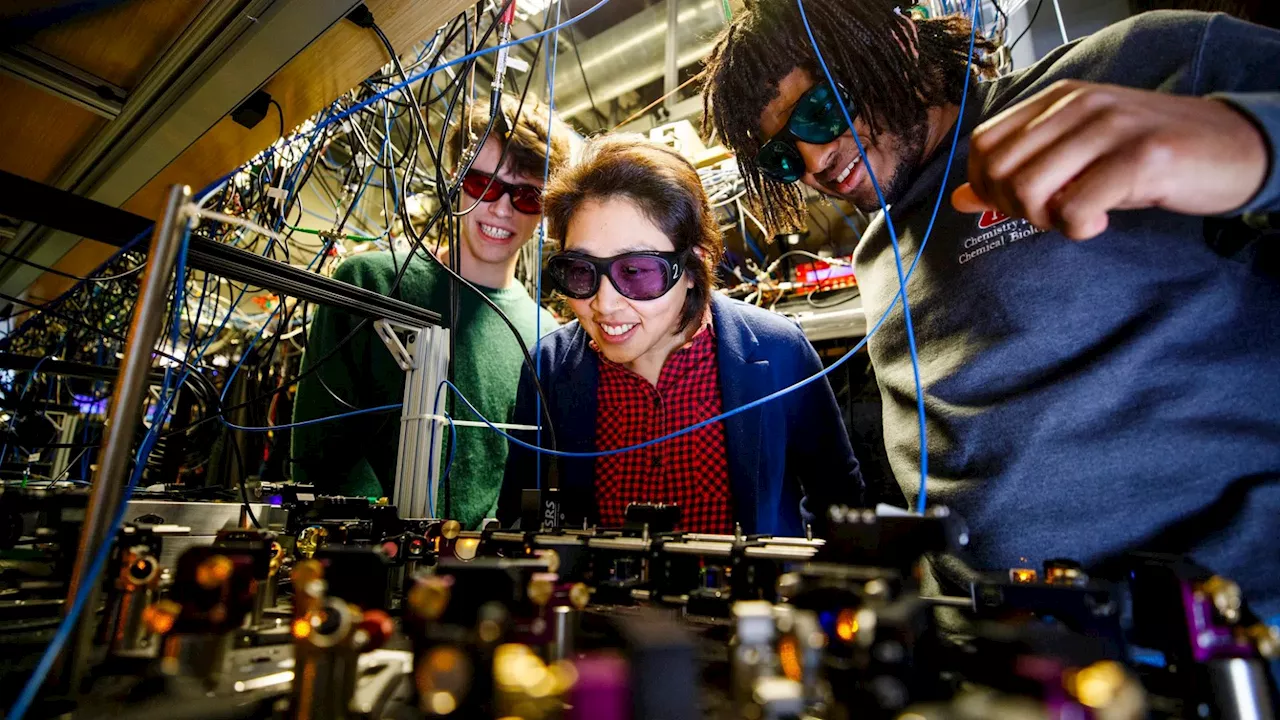 Harvard Scientists Trap Molecules for Quantum Operations, Ushering in a New Era of Quantum ComputingFor the first time, scientists have successfully trapped molecules and used them to perform quantum operations, marking a significant leap forward in the field of quantum computing. This breakthrough opens up new possibilities for building more powerful and versatile quantum computers.
Read more »
 Researchers Achieve Quantum Teleportation with Error CorrectionA team of researchers has successfully demonstrated quantum teleportation with error correction using a trapped-ion quantum computer. This breakthrough utilizes entanglement and quantum error correction techniques to transfer quantum information reliably, overcoming the limitations of traditional methods.
Read more »
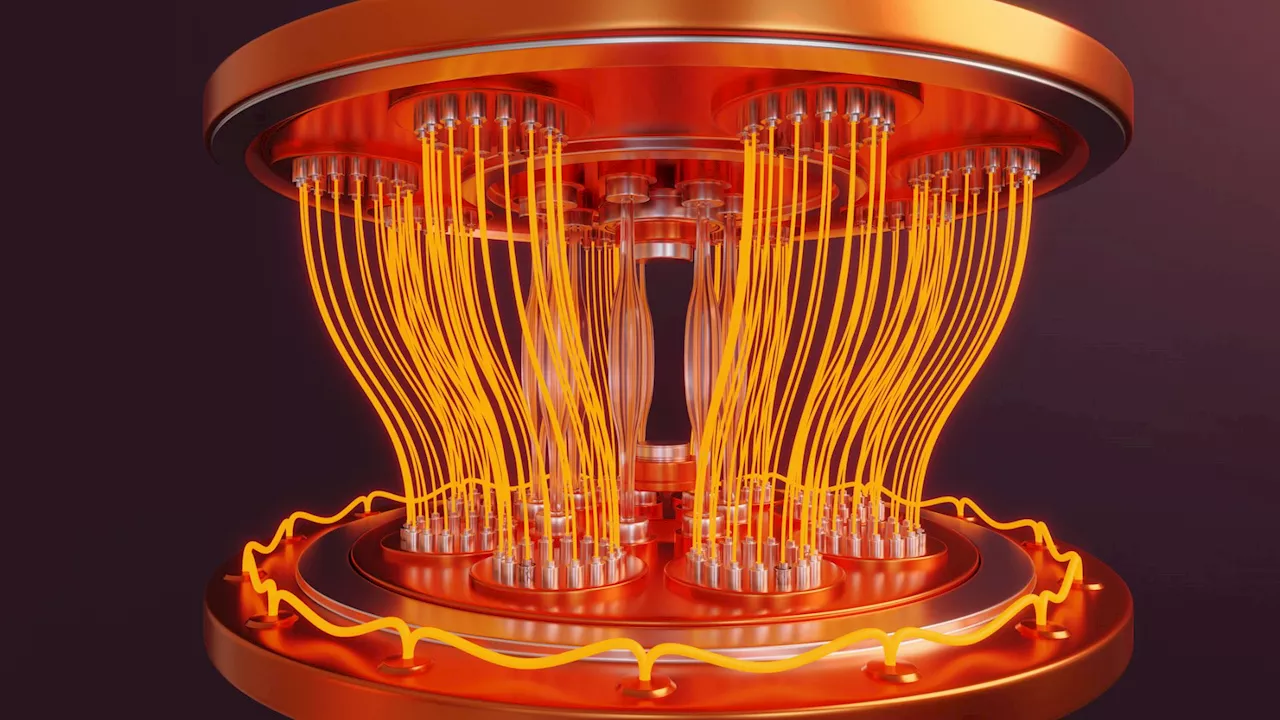 SEALSQ Unveils World's First Quantum-Resistant Secure HardwareSwiss semiconductor company SEALSQ introduces its latest platform, QS7001, designed to provide quantum-resistant security. This breakthrough technology utilizes post-quantum cryptography algorithms, KYBER and DILITHIUM, to protect against attacks from both current and future quantum computers. The platform meets FIPS and Common Criteria standards and offers advantages in energy efficiency and performance compared to traditional secure microcontrollers. This development positions SEALSQ as a leader in the quantum-resistant hardware market, addressing the growing need for secure solutions in the age of quantum computing.
Read more »