
More than 14 million low-income households have enrolled the U.S. Affordable Connectivity Program which provides $30 per month for broadband internet.
those who access the ACP by reducing available state benefits. Fortunately, other states have not followed California’s lead.There is broad bipartisan support for broadband support to low-income Americans, though the path through Congress is uncertain at this time.
that based on current trends, the ACP is likely to run out by mid-2024. Extending these trends, funding the ACP broadband benefit for an additional five years could cost $30-$35 billion.Garnett suggests that the most immediate path is for state broadband offices — using discretion granted to them under the infrastructure bill’s BEAD Program, as well as other federal funding programs — to extend ACP funding for eligible households in their states. Not every state will be able to extend the ACP’s duration or widen its eligibility, but that should not stop states that can close the ACP funding gap from doing so. States can gather the funding for proven programs.Universal Service Fund reform is overdue. It has grown inefficient in overhead cost, and are built on unsustainable funding through fees on declining telephone landline services. The ACP could be funded through USF, albeit with a reformed program. USF provides some $9 billion annually to close the digital divide, deliver telehealth, support broadband infrastructure in rural areas, and reduce the cost of connectivity for low-income income Americans, hospitals, schools, and libraries. However the program is predicted by to implode before the end of the decade because contributions are accessed on declining telephone subscriptions. The natural, logical solution is to fund the program with revenue from the services which benefit directly from connectivity, namely trillion-dollar internet companies Alphabet, Amazon, Apple, and Microsoft.including transit fees based on traffic levels and user bases, ad taxes, interconnection surcharges, and fair and proportional cost recovery from streaming video entertainment. Netflix, YouTube, Amazon Prime and Disney+ account for as much as 80 percent of internet traffic in the U.S. South Korea – the world’s leader for broadband access, use, and skills – has already implemented a successful program, while Japan, the nations of the European Union, and the International Telecommunications Union are exploring these options. Importantly in the U.S, a diverse and wide-ranging group of commenters to the FCC, from free market think tanks to advocates in the social justice community, call for assessing the services offered by large technology companies in a fair and equitable manner. Notably this can be done as much of Big Tech’s revenue reflects business to business interactions and would not be passed on to consumers. Congress should continue to work aggressively to incorporate technology companies in the broadband funding mix. The bipartisan Funding Affordable Internet with Reliable Contributions Act, S. 2427, led by Senators Wicker , Lujan and Cantwell and the companion House bill H.R. 8575 by Markwayne Mullin directs the FCC to study the feasibility of incorporating internet software and technology companies into the broadband funding mix. Importantly, these bills have a Congressional Budget Office score of zero, meaning this important work will have no financial impact on taxpayers. Congress would then presumably have options to modernize Universal Service based on the research and recommendations of the FCC.The most efficient and most sustainable solutions incorporate the market in the product and service design. For example, internet services like search, social media, and peer to peer messaging like WhatsApp are made available without cost to consumers because they effectively have a built-in voucher/funding source: advertising. We should enjoy the same benefits with broadband service itself. Consider the wildly popular free and zero-rated music, video and gaming services attempted by broadband providers in recent years. These programs created competition and offered incentives for people to try and switch broadband providers. Unfortunately, however, some of these early programs wereand ultimately ended by self-proclaimed broadband advocates. They claim that competitive, consumer-centric innovation which reduce a consumer’s financial outlay for broadband is “discriminatory.” However the real reason seems to to limit broadband service innovation is to protect advertising dollars destined for big tech companies. Outside the United States, Meta partners with mobile operators in dozens of countries to offer Free Basics and Discover, providing zero-rated access to Facebook and connecting as many as 1 billion users to the internet for the first time. One policy innovation could be to promote this world-class engineering in the U.S. by designing a service which allows a free set of basic internet services available to all users while high cost, privately valuable services like streaming video entertainment would be covered separately.A short term appropriation to provide a bridge to create time for Congress to pass a fiscally responsible and sustainable long term funding plan is the most likely path forward. More government spending at a time of runaway inflation and a growing national debt is rarely the answer, but spending on broadband to connect low-income Americans is a good investment, however it is funded. Enabling broadband for low-income Americans is one of the few social investments which can create financial benefits in improved health, greater education, more applications to jobs, and greater use of online government services, and reduced offline, in-person cost.
United States Latest News, United States Headlines
Similar News:You can also read news stories similar to this one that we have collected from other news sources.
 Panther Talks ‘Masked Singer’ Elimination & Why the Big-Cat Costume Was a ‘No-Brainer’Panther’s classic execution of “Born to Be Wild” threw judges off with a bellowing rock tone.
Read more »
 Airbnb lists 999 Brannan St. for sublease - San Francisco Business TimesThe company has previously announced that its employees will have the freedom to travel and work from any location they choose.
Read more »
 SF tech company lays off hundreds in 'restructuring'The layoffs will cost the company $30 million to $40 million.
Read more »
 White House analysis finds Biden plan to cancel some student loan debt costs $379 billion | CNN PoliticsPresident Joe Biden’s order to cancel student loan debt for millions of Americans will cost an average of $30 billion per year over the next decade and $379 billion over the course of the program, according to a Biden administration cost estimate.
Read more »
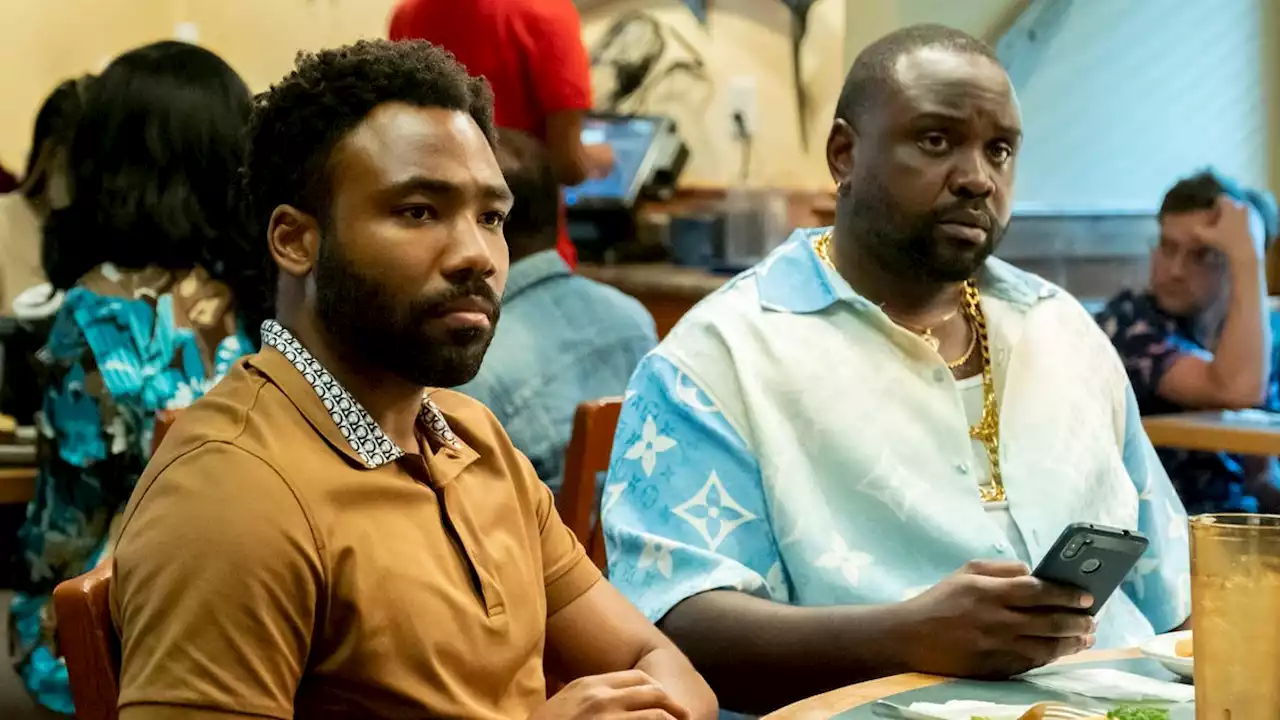 Earn deals with family beef in a grounded, spectacular AtlantaThe show brings back Earn and Al's extended family for its best episode in four years
Read more »
 CMS Spent Billions on Meds Without Confirmed Benefits OIG SaysCMS spent more than $18 billion over 3 years on medications for which there was no proof of a significant clinical benefit, according to a new OIGatHHS report on its ongoing evaluation of medicines cleared through the FDA's accelerated approval process.
Read more »