
A new study reveals that pet owners often experience feelings of guilt related to their caregiving responsibilities, highlighting a need for greater understanding of this understudied phenomenon.
The mournful eyes, the lingering stares, the sad sighs. Many pet parents leave the house each day with a dog or cat watching somberly from the window. Social scientists have found that pet owners experience ongoing guilt about wanting to do better for their animals.
Researchers have called it an understudied topic that needs to be better considered, particularly as more workers are called back into the office full-time.felt guilty about leaving her dogs alone during her long work days. She knew they looked forward to their walks, but frigid weather made her cut their outings short, which made her feel even more guilty. “I felt guilty going out on the weekends or the evening, and the guilt was killing me,” says Kogan, a professor of clinical sciences at Colorado State University., Kogan and her research partners surveyed 592 pet owners in the U.S. who had their dog for at least six months. In the survey, the team measured pet owners’ sense of guilt with questions like, ‘I feel guilty when I can’t afford higher-priced food’ or ‘I feel guilty when I do not take my dog to doggie daycare.’ The types of guilt were categorized into five factors related to time/attention, time away from home, leaving the pet alone, physical health, and furniture rules. The study also measured the respondents' bond with their dogs, what they felt were attributes shared among ideal dog owners, and how they described themselves as pet parents. In their assessment tools, the researchers used a scale intended for parents, replacing the word “child” with “pet.” Not surprisingly, they found that dog owners articulated similar guilt as parents did in studies about parenting guilt. “We also find that this guilt is not related to other types of guilt,” Kogan says. “This is a different type of guilt. Being a guilty-prone person does not predict if you will feel guilty about your pet.”Similar to parents who feel guilty, pet owners have emotional responses to their sense of failure. Almost half said they were just resigned to feeling guilty about their dog. Most said they tried to remind themselves their dog has a good life. Others changed their behavior in response to their guilt. Forty percent admitted they reduced their socialization or recreation time in order to be with their dog; and 35 percent said they spent time with their dog at the “expense of other family members.” The study found that having dog-related guilt was predictive of other mental health issues. “We found that it is related to depression and anxiety. The more guilt you feel, the worse you feel,” Kogan says. As a psychologist, Kogan says this makes the isolating behaviors even more concerning. “If people are already feeling depressed and they reduce their social interactions, that’s a double whammy,” she says.Social media can make parental guilt — both human and animal — worse. Influencers post videos that depict themselves as ideal, which can make viewers feel as though they aren’t living up to the standard. Watching reels of dogs surfing on the weekend, riding along on a boat, or competing on an agility course can make a pet parent feel inferior when their dog’s big Saturday plans are limited to a short walk and a nap on the couch. Guilt from social media can manifest in compensatory behaviors. “I think that what drives a lot of this behavior in terms of buying special food or expensive toys,” Kogan says., Kogan and her research partners found that cat owners experience a similar level of guilt and that such guilt is indicative of anxiety and depression. Kogan says that society’s expectations that cats don’t need people make it harder for cat people to decline invitations when they feel their kitty has been alone for too long. “It’s one thing to be at work and say, ‘I need to go home because my dog has been home for 8 or 10 hours.’ Most people will understand. But if you say my cat? They won’t understand,” Kogan says. Kogan classifies the guilt that pet parents feel as “disenfranchised” because it is not well-recognized or well-studied. Pet parents feel responsible for the well-being of their animals, and work-life conflicts can limit the extent to which they can provide for their pets. The resulting guilt may be something that people deal with quietly, which can further their isolation. Ideally, more workplaces would allow people to bring their pets to the office, Kogan says. If that’s not an option, occupying the dog with a dog walker or doggy daycare may help a person feel less guilty about their dog’s long day alone. Talking about pet-parent guilt might also be helpful. Friends or family may be open to allowing a dog to attend a social event. At the least, they may start a dialogue in which others express an understanding.use peer-reviewed studies and high-quality sources for our articles, and our editors review for scientific accuracy and editorial standards. Review the sources used below for this article:Emilie Lucchesi has written for some of the country's largest newspapers, including The New York Times, Chicago Tribune and Los Angeles Times. She holds a bachelor's degree in journalism from the University of Missouri and an MA from DePaul University. She also holds a Ph.D. in communication from the University of Illinois-Chicago with an emphasis on media framing, message construction and stigma communication. Emilie has authored three nonfiction books. Her third, A Light in the Dark: Surviving More Than Ted Bundy, releases October 3, 2023, from Chicago Review Press and is co-authored with survivor Kathy Kleiner Rubin.
Pet Guilt Animal Welfare Dog Owners Parenting Guilt Research
United States Latest News, United States Headlines
Similar News:You can also read news stories similar to this one that we have collected from other news sources.
 10 Surefire Pet Toys If You're An Animal Lover With Limited MobilityHaley Zovickian is a staff writer at HuffPost, where she covers shopping and lifestyle trends. She is based in California.
Read more »
 ‘The pet effect': Exploring research on the human-animal bondMany feel that seeing their pet after a long day benefits their emotional health. Now there's research that shows it's true, not just for humans.
Read more »
 J.D. Vance 'Childless Cat Lady' Clip Affecting Pet Adoptions, Animal Shelters SayJ.D. Vance's infamous 'childless cat ladies' clip seems to be affecting people's feelings toward owning cats ... based on what animal shelters across the country are seeing.
Read more »
 Pet Prescription Team brings dogs to OC jail to provide pet therapy for inmatesThree times a week, the Pet Prescription Team brings dogs to the Intake Release Center at the Orange County Jail to offer pet therapy and play time for inmates struggling with certain mental health and behavioral issues.
Read more »
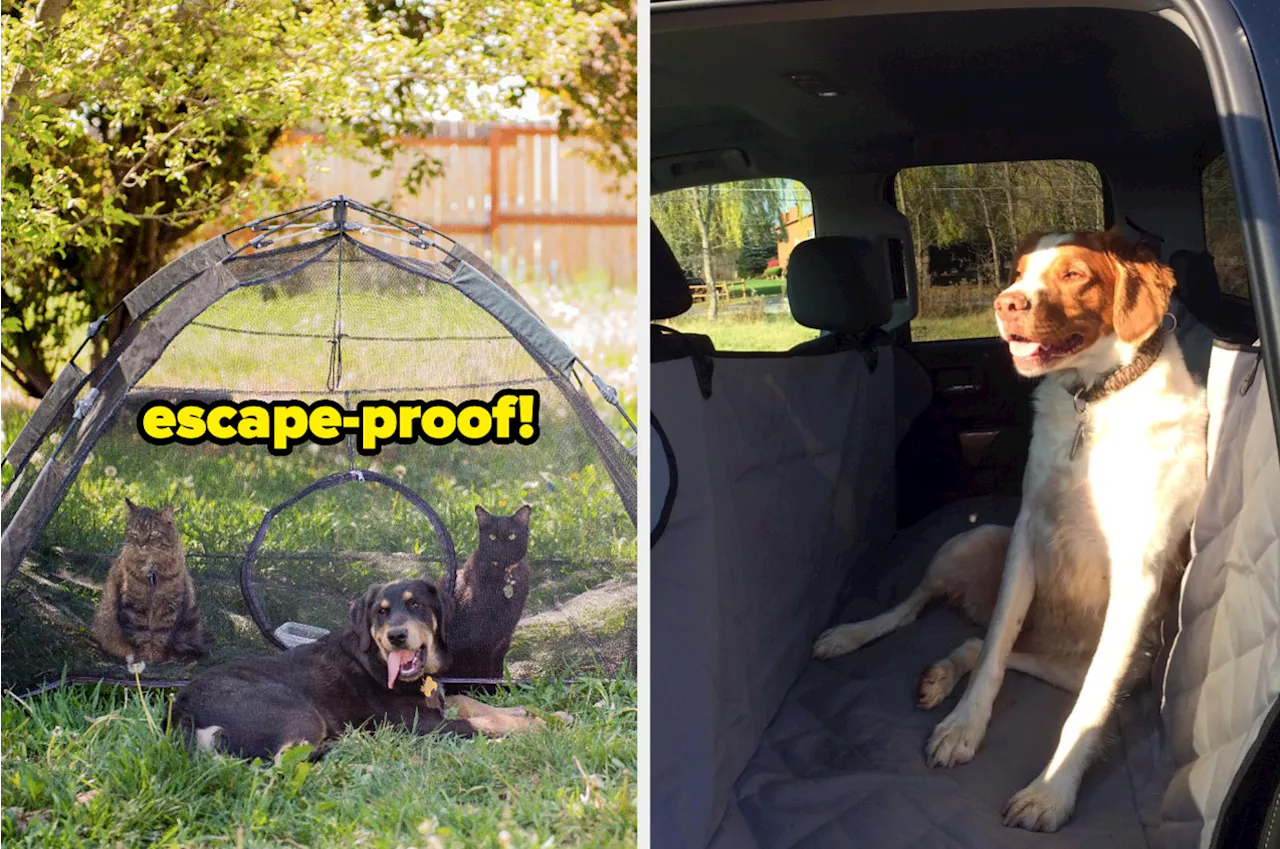 32 Products Pet-Owning Reviewers Say Are Totally Pet-ProofLike dog toys that won't get chewed to pieces after 0.1 seconds and litter box liners your cat can't shred with their claws.
Read more »
 Pet food recall: Do not feed your pet these 2 brands, dispose of ASAPSeveral pet food brands are being recalled due to the presence of listeria and salmonella.
Read more »