
A public trial of humanoid robot Pepper shows how people react to AI in real life—revealing curiosity, discomfort, and key insights.
Humanoid robots powered by AI are beginning to make their way into everyday public spaces—and people are starting to form first impressions. At a recent innovation festival, researchers from the University of Canberra introduced attendees to “ Pepper ,” a humanoid robot equipped with ChatGPT, to study how the public reacts to such technology in real-world settings.
The findings revealed mixed emotions, from fascination to unease, and highlighted how people respond to the robot’s humanlike form, movement, and conversational abilities. The study also highlighted inclusivity issues and social expectations in human–robot interactions. According to researchers, as social robots become more visible in commercial and community environments, such “in the wild” encounters offer valuable insights into how society adjusts to this new wave of AI-powered companions.Robots meet realityResearchers introduced Pepper to the public at an Australian innovation festival in a trial blending robotics and AI. The event marked a rare opportunity to capture first impressions of a humanoid chatbot “in the wild,” offering insight into how everyday people react to advanced, embodied AI systems outside of lab settings.The research team modified Pepper, built by SoftBank Robotics , to use ChatGPT, enabling natural-language conversations. Festival attendees—many encountering such technology for the first time—were invited to interact with Pepper and share their thoughts. Feedback was collected from 88 participants, revealing a spectrum of reactions including curiosity, discomfort, and wonder.Pepper captures audio, sends it for transcription, gets a ChatGPT reply, then speaks it via text-to-speech using its built-in engine.The study highlights the weight of first impressions, which researchers note are key in shaping future relationships with technology. It also points to the importance of real-world contexts in understanding how AI-powered robots might be accepted in domains like healthcare, retail, and education.According to researchers, while much existing research focuses on technical performance in controlled environments, this project embraced the unpredictability of public spaces. Doing so captured a richer, more human-centered view of how society may engage with humanoid robots as they become more common in everyday life.Human-robot frictionResearchers point out that four crucial themes surfaced from the survey. These include user ideas for enhancement, expectations of human-like interaction, emotional responses, and views of Pepper’s physical shape.Participants reported a wide range of emotions—curiosity, amusement, frustration, and disappointment. Many found the encounter interesting but noted contradictions between Pepper’s human-like appearance and limited capabilities. While some appreciated the robot’s gestures and eye contact, others were frustrated by its inability to respond to simple physical prompts or recognize facial expressions.The public expected Pepper to follow social norms like role- and turn-taking, core elements of natural human interaction. Failures in these areas, such as the robot talking too much or not responding to cues, often led to dissatisfaction.Technical and social suggestions were provided in the feedback, ranging from increasing accessibility and cultural sensitivity to speeding up response times. Accents and linguistic inclusion issues were brought up by several participants, especially for Indigenous users.The study, according to researchers, emphasizes the value of testing social robots in real-world settings and provides information on how to make these technologies more inclusive, relevant, and responsive.The details regarding the team’s research were published in the journal Nature.
Australia Chatgpt Human-Robot Interaction Humanoid Pepper Research Robot
United States Latest News, United States Headlines
Similar News:You can also read news stories similar to this one that we have collected from other news sources.
 ChatGPT is my therapist — it's more qualified than any human could beToday's Video Headlines: 05/13/25
Read more »
 ChatGPT ‘Reads’ Photo of Coffee Cup and Tells Woman Her Husband is CheatingA woman is reportedly divorcing her husband after she uploaded photos of their coffee cups to ChatGPT which told her he was cheating on her.
Read more »
 Student Livid After Catching Her Professor Using ChatGPT, Asks For Her Money BackScience and Technology News and Videos
Read more »
 OpenAI’s GPT-4.1 is available in ChatGPT as of todayOpenAI has made its new GPT-4.1 model available directly in ChatGPT for Plus, Pro, and Team users in the model picker.
Read more »
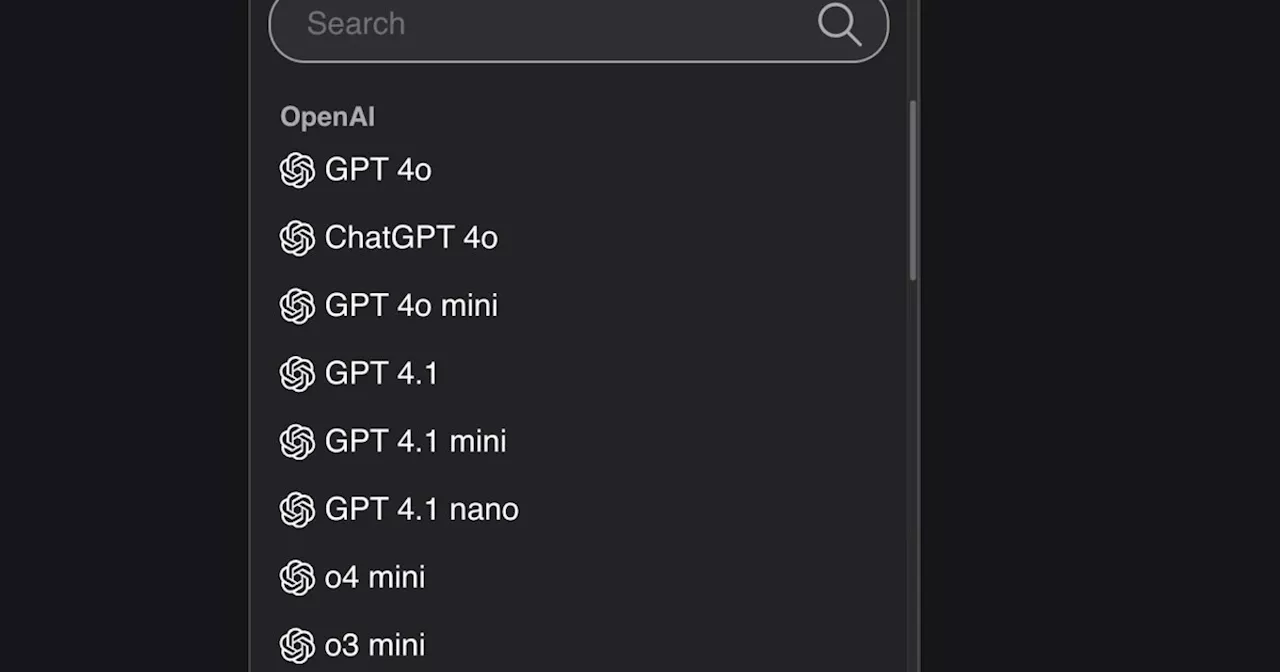 OpenAI makes its most advanced coding model available to paid ChatGPT usersOpenAI's latest AI model, GPT-4.1, is now accessible to ChatGPT Plus, Pro, and Team users, bringing its enhanced coding capabilities and speed to a wider reach.
Read more »
 OpenAI tops 3 million paying business users, launches new features for workplaceThe users include ChatGPT Enterprise, ChatGPT Team and ChatGPT Edu customers, OpenAI said.
Read more »