
The federal Pell Grant program is projected to have a $2.7 billion funding shortfall later this year, potentially leading to eligibility or funding cuts for students. This comes despite efforts to simplify the FAFSA application and increase Pell Grant access. The shortfall is partly attributed to a surge in college enrollment, especially among low-income students, and the Pell program's reliance on both mandatory and discretionary funding.
New projections for the federal Pell Grant program now estimate a $2.7 billion funding shortfall later this year."If program funding is not shored up, students could face eligibility or funding cuts for the first time in more than a decade," said Michele Zampini, senior director of College Affordability at The Institute for College Access & Success.
24/7 New York news stream: Watch NBC 4 free wherever you are"If program funding is not shored up, students could face eligibility or funding cuts for the first time in more than a decade," said Michele Zampini, senior director of college affordability His company operates over 500 private jet flights a day: This is the No. 1 thing the very rich value most The new, simplified FAFSA, which first launched in 2023, was meant to improve access by expanding Pell Grant eligibility to provide more financial support to low- and middle-income families.In fact, the number of Pell Grant recipients peaked over a decade ago, when 9.4 million students were awarded grants in the 2011-12 academic year, and sank 32% to 6.4 million in 2023-24, according to the Now data from the Department of Education shows that many more students are on track to receive Pell Grants this year: As of Dec. 31, more than 9.3 million 2024–25 FAFSA applicants were eligible for a Pell Grant. Among recent high school graduates attending college for the first time, the number of Pell recipients is up 3.3% compared to a year earlier, an increase of approximately 30,000 students.Although there have been other times when the Pell Grant program operated with a deficit, this year's shortfall"was perhaps made worse by the changes to Pell Grant eligibility that increased the number of students eligible for the Pell Grant starting in 2024-25," said higher education expert Mark Kantrowitz. Not only do more students now qualify for a Pell Grant because of changes to the financial aid application, but more students are also enrolling in college — a reversal from the significant decline in college-bound students after the pandemic. Freshmen enrollment jumped 5.5% this fall compared with last year, with the sharpest gains among those from the lowest-income neighborhoods, according to a recent analysis by the"Program costs are based on how many students are expected to enroll in a given year and how many of those students will be eligible for Pell funding." The Congressional Budget Office's projected change from a surplus to a deficit is due in part to that shift in enrollment figures from a decrease to an increase, according to Kantrowitz.The Pell program functions like other entitlement programs, such as Social Security or Medicare, where every eligible student is entitled to receive a Pell award. However, unlike those other programs, the Pell program does not rely solely on mandatory funding that is set in the federal budget. Rather, it is also dependent on some discretionary funding, which is appropriated by Congress. In 2024, the discretionary portion of Pell Grant program was estimated to cost about $24.5 billion, funded with $22.5 billion of appropriations, $1.2 billion of mandatory dollars and less than $1 billion of reserves, according to theBecause Congress appropriates discretionary funds for the program based on projections of how much it will cost in the upcoming year,"there is an inevitable annual mismatch between how much the program costs and how much funding is actually available," Zampini said.In previous years, Congress has provided supplemental funding to avoid a shortfall. But if Congress doesn't fix this problem,"the U.S. Department of Education would be forced to respond by either cutting eligibility or the average grant," Kantrowitz said.Meanwhile, tuition and fees plus room and board for a four-year private college averaged $58,600 in the 2024-25 school year, up from $56,390 a year earlier. At four-year, in-state public colleges, it was $24,920, up from $24,080, according to the College Board. Future deficits could be even greater if the maximum Pell Grant award is adjusted to keep pace with inflation in the years ahead. In one scenario, the Pell Grant program could face a $38 billion cumulative shortfall over the next decade as awards are inflation adjusted, the Committee for a Responsible Federal Budget also found. "I am very concerned about the idea that there would be no Education Department," Zampini said, but"the Pell program has always been bipartisan given its effectiveness and we are hoping that will continue to be the case."The IRS has issued 3.2 million tax refunds. Here’s the average payment
Pell Grants Funding Shortfall College Affordability FAFSA Enrollment Increase
United States Latest News, United States Headlines
Similar News:You can also read news stories similar to this one that we have collected from other news sources.
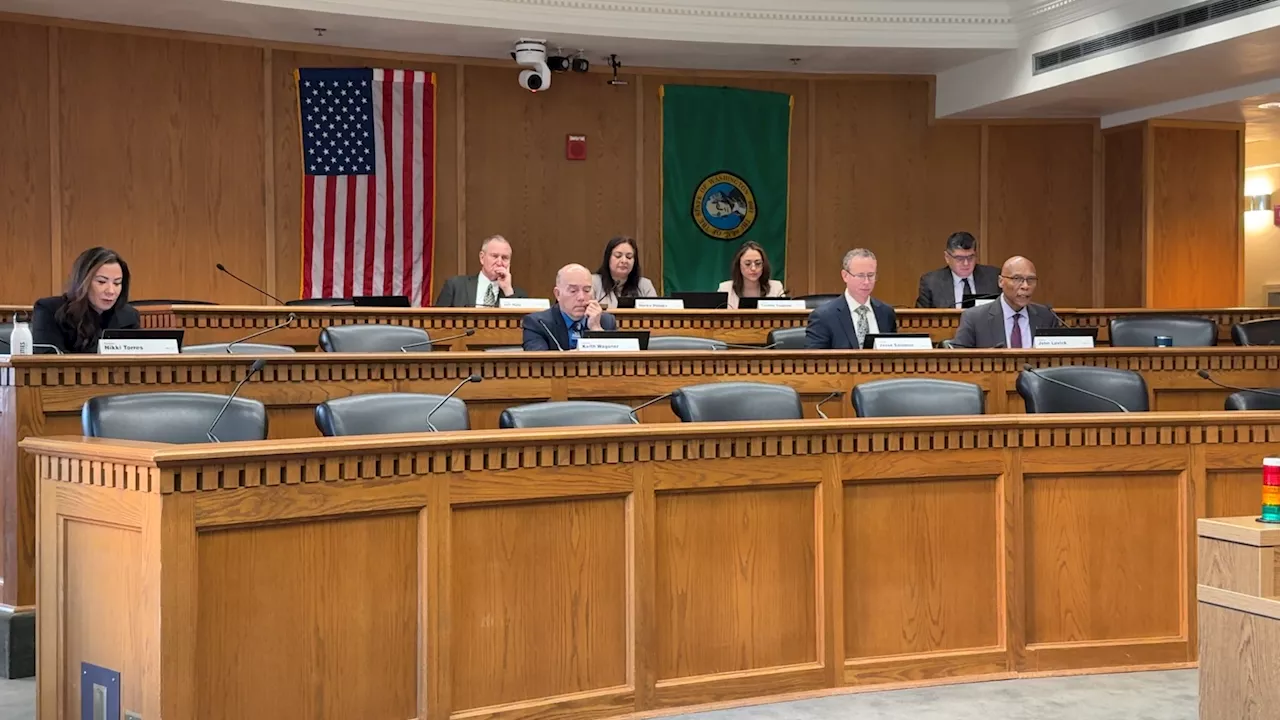 Legislators consider grant program to support police hiringSupporters of the bill, including newly sworn-in Gov. Bob Ferguson, say the police funding grant is necessary. However, the state's massive budget deficit looms over the session.
Read more »
 World Mobile and Tenity Launch $25 Million Grant Program to Boost DePIN InnovationWorld Mobile, a decentralized telecom platform, has partnered with global investor Tenity to launch a $25 million grant program aimed at fostering innovation in decentralized physical infrastructure networks (DePIN). The program will provide funding and mentorship to DePIN projects addressing key challenges in decentralization, blockchain adoption, governance, identity management, and tokenization of real-world assets (RWAs).
Read more »
 Pell Grant Program Faces $2.7 Billion Funding ShortfallThe federal Pell Grant program is projected to face a $2.7 billion funding shortfall later this year, potentially leading to eligibility or funding cuts for students for the first time in over a decade. The shortfall is partly attributed to increased enrollment and changes to eligibility criteria that expanded the program's reach. Congress may need to provide supplemental funding to avoid these cuts.
Read more »
 Looming $2.7 billion Pell Grant shortfall poses a new threat for college aidThe Congressional Budget Office last month released Pell Grant program projections, which now estimate a $2.7 billion funding shortfall later this year.
Read more »
 Pell Grant Program Faces Funding Crisis, Threatening Student AidThe federal Pell Grant program, crucial for college affordability, is projected to face a $2.7 billion shortfall. This potential crisis could lead to reduced eligibility or smaller grant amounts for students, highlighting the need for congressional action to address the funding gap.
Read more »
 Pell Grant Shortages Threaten Student AidWith a looming $2.7 billion funding shortfall for the 2025 fiscal year, the Pell Grant program, a vital source of aid for low-income college students, faces potential cuts that could impact eligibility and award amounts. While the simplification of the FAFSA application has led to increased Pell Grant eligibility, rising college enrollment, particularly among low-income students, has exacerbated the funding gap.
Read more »