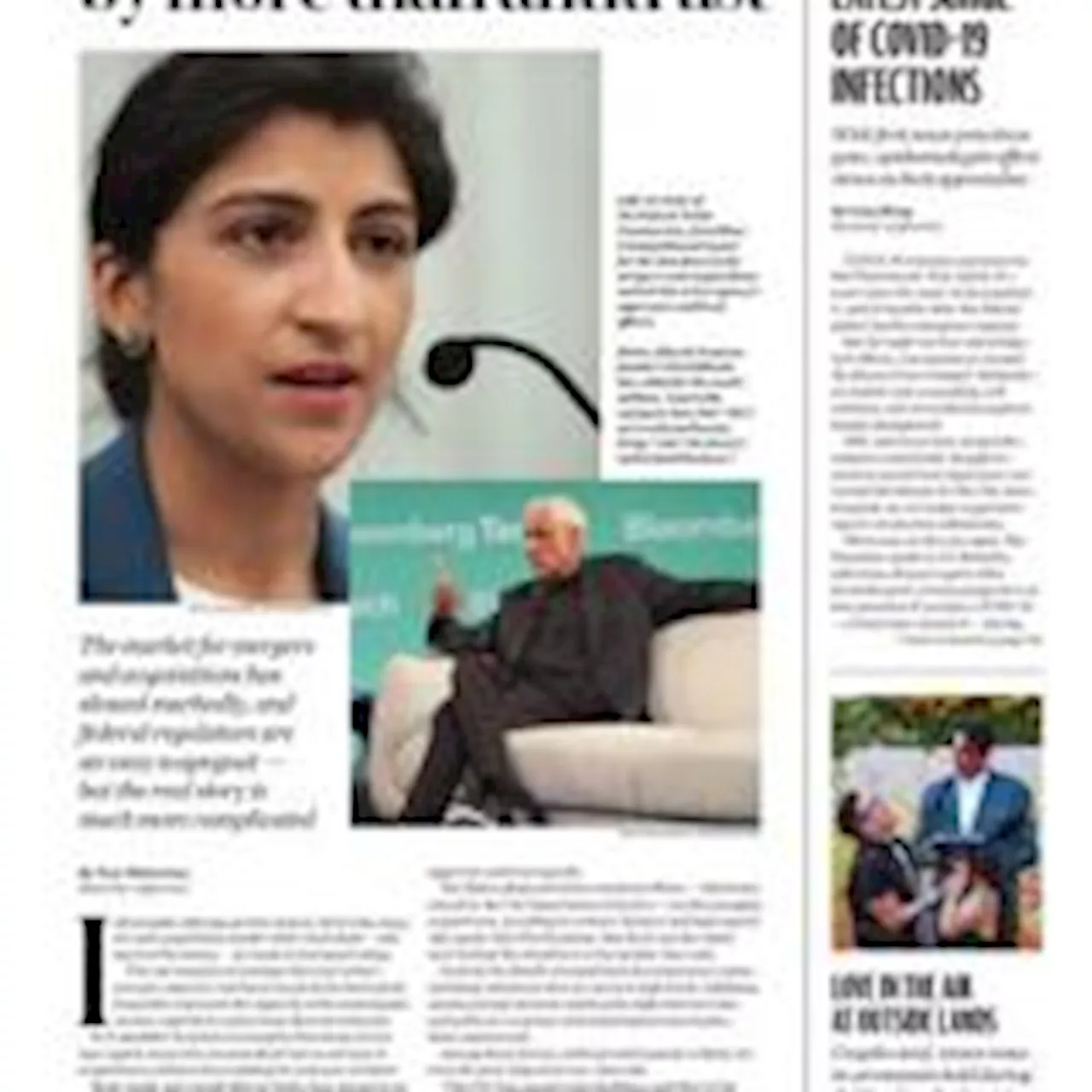
View the San Francisco for Wednesday, August 14, 2024
Lina Khan, the nominee for Commissioner of the Federal Trade Commission , speaks during a Senate Committee on Commerce, Science, and Transportation confirmation hearing, April 21, 2021 on Capitol Hill in Washington.
Khosla Ventures founder Vinod Khosla, right, discusses public policy matters with Bloomberg executive producer Emily Chang at the Bloomberg Technology Summit in San Francisco on May 9, 2024. Khosla has called for the ouster of FTC Chair Lina Khan. Initial public offerings get lots of press, but it’s the mergers-and-acquisitions market where most deals — and much of the money — are made in startup investing. The vast majority of startups that stay in business get acquired, and the proceeds from those deals frequently represent the majority of the annual gains venture capitalists realize from their investments. So it shouldn’t be much of a surprise that many in venture capital seem to be worried about the recent lack of acquisitions and have been looking for someone to blame. Many inside and outside Silicon Valley have zeroed in on Lina Khan, who, as Federal Trade Commission chair, has moved to quash several high-profile mergers as part of an aggressive antitrust agenda.— which also extend to the U.S. Department of Justice — are discouraging acquisitions, according to venture, finance and legal experts who spoke with The Examiner. But that’s not the whole story behind the slowdown in the market, they said. Instead, the dearth of acquisitions has numerous causes, including valuations that are stuck at high levels; infighting among startup investors and boards; high interest rates; and political, economic and technological uncertainty, those experts said.“The FTC has caused some problems, and they’re the easy scapegoat now,” said Kyle Stanford, a lead venture-capital analyst at PitchBook. But, he said, “they’re not the only problem right now.”President Joe Biden announces his administration’s plans to eliminate junk fees for consumers, Wednesday, Oct. 26, 2022, in the South Court Auditorium on the White House campus in Washington. Standing behind Biden are Rohit Chopra, left, director of the Consumer Financial Protection Bureau, and Lina Khan, chair of the Federal Trade Commission.Among startups, acquisition deals are clearly depressed. Last year, just 1,010 venture-backed businesses were acquired by other companies or purchased by private-equity firms, according to PitchBook, a venture-industry research firm. That was the lowest tally since 2016 and was down 40% from the 2021 market peak. Through the first half of 2024, there have been 465 acquisitions or private-equity buyouts of startups, per PitchBook. If the industry continues at that pace, it will see the fewest such deals in a year since at least 2013.Last year, companies and private-equity firms paid a combined $36.1 billion to acquire startups, among the deals that were disclosed, according to PitchBook. That was the lowest combined amount since at least 2013 and down 70% since 2021. The industry is on pace in 2024 for a more lucrative year, but the tally would still be the second lowest since at least 2013. M&A “is still happening,” said Zaheed Kajani, a senior managing director at Evercore, an investment-banking firm that advises on such deals. “It’s just not as much as I think people had hoped.” The decline in acquisitions and buyouts is important in part because of just how dependent the venture industry has become on such deals. In the early 1990s, around 90% of startups that didn’t go out of business went public, according to University of Florida finance professor Jay Ritter. These days, that ratio has completely flipped. In every year since 2014, the proportion of purchased startups ranged from 85% to 95%, according to PitchBook. So far this year, about 93% of venture-backed companies that have successfully exited have been purchased, whether by private-equity firms or by other companies. “The venture-capital business lives on companies willing to buy our product,” meaning startups, said Sean Foote, a professional faculty member at UC Berkeley’s Haas School of Business who is also a venture capitalist. “It’s all about M&A. It’s not about IPO.”for venture-backed startups. Just 37 such companies have gone public this year, according to PitchBook. That’s on pace to be the lowest number since 2016. Those companies have raised $28.4 billion by going public, an amount that’s on track to be well up from 2023’s full-year total of $29.3 billion, according to PitchBook. But even at that pace, the total raised in 2024 IPOs would be about 10% of that raised by the venture-backed companies that went public in record-setting 2021. Indeed, the total value that startups are slated to get via exits of any kind this year is on pace to be just 13% of 2021’s $711 million tally. Exits are important because it’s through those deals that venture firms realize the gains on their investments and are able to return money to their limited partners — the institutional investors, family offices and pension funds that provide them the cash they invest in startups.At the end of the fourth quarter last year, the amount of money venture firms had distributed to their limited partners over the past year was equal to just 5.1% of the net assets they had invested, according to PitchBook. That was down from a peak of 33.2% in the third quarter of 2021 and the 10-year average of 17.1%. When it works well, venture investing is something of a virtuous circle. The limited partners take some of the gains they’ve made from previous funds and invest them into the next round of funds that, in turn, invest in the next generation of startups. Now, many venture firms are struggling to raise their next funds and are instead facing pressure from their investors to find some way to return money to them, Stanford said.Wrath towards khan That’s likely prompted venture investors to find someone to blame for the downturn in exits, particularly acquisitions. Many have pointed their fingers at the Biden administration’s antitrust policies and at Khan in particular.Such moves — and the sense that the FTC is more closely scrutinizing deals in the tech sector — have drawn the ire of venture investors in particular., reportedly saying “she’s not a rational human being,” and “she doesn’t understand business.” Late last month, venture investor and former LinkedIn co-founder Reid Hoffman — a prominent contributor to Democratic presidential candidate Kamala Harris’ campaign — likewise Meanwhile, Andreessen Horowitz, in explaining its namesake partners’ decision to back former President Donald Trump in the presidential election, criticized the Biden administration’s antitrust efforts.Venture capitalist Marc Andreessen, seen on the left speaking at a June 5 Stanford AI event, and Andreessen Horowitz co-founder Ben Horowitz pointed a finger at the Biden administration’s efforts in announcing their decision to back former President Donald Trump in November. Antitrust scrutiny — or at least the perception of it — has particularly dissuaded the biggest tech businesses from pursuing acquisitions, experts said. In 2018, the 15 biggest tech companies collectively spent $10.5 billion to buy 41 startups, according to PitchBook. Last year, the tech giants bought just eight venture-backed companies, spending around $600 million. The big tech companies are also hesitating on bigger, strategic deals out of concern for the amount of effort it might take to get them through, said Rick Kline, who advises tech companies on M&A deals as the head of the technology industry group in Latham & Watkins’ Silicon Valley office. The tech giants, he said, are thinking, “Do we want to spend the time and money to tie ourselves up, when we’re not sure that the deal’s going to get done?”Still, the antitrust scrutiny is only part of what’s depressing startup acquisitions, experts said. A potentially much bigger factor has to do with valuations. In 2020 and 2021, cash flooded into the venture industry after the Federal Reserve cut interest rates and tried to boost the economy in the immediate wake of the COVID-19-related recession. With so much cash on hand, venture firms invested record amounts of money and bid up startup valuations. As one example, the number of U.S. unicorns — venture-backed companies worth $1 billion or more — Much of the justification for the jump in valuations was the similarly and simultaneously soaring market capitalization of public tech companies. But that changed in 2022. Amid rising inflation, soaring interest rates and concerns about a possible recession, But startups have been much less likely to recognize reduced valuations, experts said. Because their shares don’t trade on the open market, startups’ values aren’t reassessed on a real-time basis like those of public companies, making their worth harder to determine. And founders, investors and employees are often loath to accept a reduced valuation, as the value of investors’ and founders’ stakes would drop and employees’ stock options might instantly become worthless. Even so, Foote said, “ in terms of improving the performance of their existing portfolio,” Foote said. “But we increase burn rate more than we increase revenue right off the bat, and so the board did not make acquisition.” that some companies might be holding off on making purchases until after the November election on the hopes the next presidential administration — whether headed by Trump or Harris — will be more accommodating to potential deals. Additionally, there’s a good deal of technological uncertainty, including around artificial intelligence, the industry’s big trend. Many companies are interested in AI and want to incorporate it into their operations. But it’s not clear which AI startups are building sustainable businesses or just interesting products or features, Kajani said. It’s also not known how AI will affect particular industries or how companies will incorporate the technology, he said. Regardless of the cause, the slowdown in the acquisition market, coupled with the lack of IPOs, has put venture investors under the gun, Kline said. “When there’s a robust IPO and M&A market and there’s a lot of exits, that’s terrific for venture capital as an asset class,” he said. “When neither of them are hot, as has been the case for the last two years, absolutely that puts pressure on the funds.”Opponents of former interim Mayor Mark Farrell in his current run for office say his campaign consists of the same cadre of political insiders behind an ethics lapse in the 2022 recall election. Facing a $54,000 ethics fine for failing to disclose campaign contributions to the recall of former District Attorney Chesa Boudin, Neighbors for a Better SF — and those in its orbit — are fending off allegations that they’re up to more of the same for former interim Mayor Mark Farrell’s 2024 mayoral candidacy., a well-resourced political organization that has poured millions of dollars in recent years into unseating progressive politicians and shifting city policy rightward. The settlement serves as acknowledgement that Neighbors for a Better SF Advocacy violated the law when it failed to properly disclose that it paid communications consultant Riff City Strategies and its president, Jess Montejano, to work on the campaign it funded to recall Boudin in 2022. Neighbors was required by law to report its payments to Riff City for its work on the recall campaign as a political expense, but did not, “which deprived San Francisco voters of access to important information before the election,” the settlement states. Montejano is now a registered campaign consultant for Farrell, who is one of several candidates hoping to deny Mayor London Breed a second full term in office in November. Farrell’s opponents were quick to connect the 2022 ethics lapse with the current election, arguing that his campaign consists of the same cadre of political insiders, funded by the same wealthy patrons, who have proven willing to bend or break the law in order to win. “Bottom line, they are colluding with Mark Farrell to skirt Mark Farrell’s campaign finance limits,” said Board of Supervisors President Aaron Peskin, one of five prominent candidates in the mayoral race. Mayoral campaigns must adhere to $500 contribution limits. Groups like Neighbors for a Better SF have no such restrictions, but can not secretly serve as de facto campaign managers for mayoral campaigns. Jay Cheng, Neighbors for a Better SF’s director, told The Examiner in an email that it has taken steps to avoid repeating the violations made in 2022 and is not managing or consulting Farrell’s campaign. “All of our activities at Neighbors for a Better San Francisco and Neighbors for a Better San Francisco Advocacy are carefully vetted and cleared by our compliance and legal counsel,” Cheng said. “In addition, to doubly ensure there are no coordination violations or perception of coordination violations, we are not running an independent expenditure effort in the Mayoral race.”In 2022, Neighbors for a Better SF Advocacy — an organization backed by William Oberndorf, a billionaire donor to Republican candidates and causes — put $4.8 million behind the committee that operated the committee to recall Boudin, making it by far the largest contributor in the race. But it was Cheng and Neighbors’ direct involvement in the recall political operation that led to this week’s ethics settlement. The organization paid Riff City $101,000 to work on the recall that it didn’t report as a campaign expense as required under city law.following Boudin’s recall, $176,000 for consulting work from October 2021 through July 2022. The Ethics Commission said it did not find clear evidence of an ethics violation in Jenkins’ case. “Cheng sat at the fulcrum of this work. Cheng was executive director of both Neighbors and Neighbors Advocacy, and he served as the primary points of contact for both Jenkins and Riff City Strategies,” the settlement states. Cheng told Ethics Commission investigators that he participated in the recall committee’s organizing in order to protect Neighbors’ investment in the campaign, “including by weighing in on how the Recall Committee spent its resources.” In 2024, Neighbors for a Better SF does not have an independent expenditure committee, in large part to avoid the appearance of illegal coordination with its favored candidate, and it is not funding any independent expenditure committees. But lines between PACs, ballot-measure committees and the mayoral campaign continue to fuel speculation and controversy in the mayor’s race. Neighbors for a Better SF has dropped $950,000 into the committee leading the campaign for a ballot measure that aims to curtail San Francisco government’s reliance on commissions and increase government efficiency. The measure is proposed by political group TogetherSF Action, which is run by Kanishka Cheng, Cheng’s wife and a former staffer for both Breed and Farrell. Like Neighbors for a Better SF, TogetherSF Action has endorsed Farrell and Daniel Lurie as its top choices for mayor. Farrell has established his own independent expenditure committee to back the TogetherSF Action measure. He claims the committee is advocating for a measure that will carry out important reforms to government, but his opponents counter that it’s a vehicle for unlimited cash to benefit his mayoral candidacy, noting it has listed “shared expenses” with Farrell’s mayoral campaign committee. Neighbors for a Better SF has not donated to Farrell’s ballot measure committee, but some of its donors have. Farrell’s ballot measure committee has received $200,000 from Geolo Capital founder John Pritzker, who has also put $250,000 into Neighbors for a Better SF in 2022. Montejano continues to count both Neighbors for a Better SF and Farrell as clients, but promises there is not any prohibited coordination between the two. “As a communications consultant, I work with a diverse range of clients across various industries,” Montejano told The Examiner in a statement. “My firm and I take careful measures to ensure there are no conflicts of interest with any of the clients we represent or the work we perform.” Montejano and Margaux Kelly are registered campaign consultants for Farrell and for the primary committee to support TogetherSF’s government-reform ballot measure. Mission Local reported in May that Kelly — the former chief community officer for TogetherSF and now campaign consultant for Farell — described in an email TogetherSF, Neighbors, and Farrell have all maintained that they have kept firewalls between them where needed. Regardless of controversy over campaign ethics, the groups are having a major impact on San Francisco elections. A Mission Local analysis published in April found that the group has spent more than“ is like a parking ticket for William Obernorf,” Peskin said. “It’s chump change. These guys are billionaires. This is just the cost of doing business for them.” The Ethics Commission did not have a quorum Friday and thus could not vote to finalize the proposed settlement, which was continued to its next meeting. Editor’s note: This story was corrected on Aug. 12, 2024, to clarify that Neighbors for a Better SF endorsed Mark Farrell and Daniel Lurie as its top choices for mayor.A COVID-19 test sign is displayed at a store as a pedestrian walks past in Chicago, Monday, March 11, 2024. COVID-19 remains a presence in San Franciscans’ lives nearly 4½ years since the onset of the pandemic, and 13 months after the But through vaccines and mitigation efforts, circumstances around the disease have changed. Pandemic-era habits such as masking, self-isolation, and social distancing have largely disappeared.With cases on the rise again, The Examiner spoke to UC Berkeley infectious-disease expert John Swartzberg for a fresh perspective on best practices if you have COVID-19 — or have been around it — during this new era of the disease.Let’s start very simply: If you have COVID, what should you do?. If your symptoms are significantly improving and you’ve not had any fever for 24 hours, then you can come out of isolation, and you can be around others, although you should wear a mask for a total of five more days. So typically, what that translates to is that if you come down with COVID, usually by day three or four, you’re starting to get better. And typically, if it’s been five days and you’re clearly getting better, you’ve not had any fever, then on day six, you can come out of isolation. But for the next five days, you should wear a mask when you’re around others indoors who might be at risk of a severe case of COVID. So, since you don’t know who might be at risk, you should wear a mask when you’re indoors for a total of 10 days from the time your symptoms begin. That’s the CDC recommendation. I don’t completely agree with that. I would add to that. Let’s say on day five, you clearly turn the corner. Then on the morning of day six, I would test with a home rapid antigen test. If that test is negative, then I would follow exactly what the CDC said: another five days of wearing a mask when you’re indoors with the public. But if the test is positive, I would stay in isolation until that test becomes negative because if you’re still positive, you’re much more likely to be contagious.Yes, we’re clearly in a surge of cases, and it’s not clear if it’s peaked yet or not. We’re nearly at the number of cases of COVID that we had last January when we were masked. So I think that everyone should be masking indoors in public. It will reduce your chances of getting infected and will also reduce the possibility of you having an asymptomatic infection and spreading it to other people. I think people are really missing the mark right now in terms of not recognizing that there’s an awful lot of COVID going around and they ought to be taking more precautions than we were before July.Yes. Most of the respiratory illnesses that you’re going to see right now and close to half of everybody coming into many ERs in the Bay Area have COVID because that’s the major respiratory virus circulating right now, and it’s so contagious. Let’s say you have symptoms, and like most people, you use an at-home antigen test and test negative. How accurate is that test? How many times should you test negative before you’re confident that you don’t have COVID? The rapid test can be negative and you may still have COVID, particularly early on in the course. So you can’t count on a negative rapid test to completely rule out COVID. The PCR test is much better. I think that the axiom should be that if you have respiratory symptoms and you think you’re coming down with something, assume it’s COVID, until proven otherwise, and take precautions. I think that a reasonable approach would be, if you wake up and you’re symptomatic and you test yourself with an at-home test and it’s negative, and you retest yourself in 48 hours and it’s negative, the likelihood of this being COVID is very small.I think that’s a reasonable thing to do. Doing it right away probably doesn’t make sense, since the incubation period is usually two to three days. It can be longer, but it’s usually not less than a couple days. If it’s negative, then wait another couple days. If it’s still negative, the chances of you coming down with COVID at that point are very, very small.I think parents should push their schools to make sure that ventilation is really good in those schools. Schools should be emphasizing how important it is to follow the CDC recommendations. That is, if a kid wakes up in the morning and is sick, keep them home regardless of what the test shows. Don’t send your kid to school if he or she is sick. I think that’s all we can do right now. Society has lost its appetite for masking, so that’s not going to happen.Right now, we’re averaging around 600 deaths a week, which translates into a really bad flu season. The chances of a young, healthy person winding up in the hospital or dying from the COVID is very small. But there’s stillThe problem is that if you’re at higher risk for a bad outcome, 65 or over, especially 75 or over, or if you’re immunocompromised or have underlying diseases like obesity, diabetes, chronic blood and heart disease, these folks are at much greater risk of having a bad outcome, particularly if they’re not vaccinated. The disease isn’t nearly as serious as it was earlier on in the pandemic, but for people at increased risk, it’s still a serious threat.Click and hold your mouse button on the page to select the area you wish to save or print. You can click and drag the clipping box to move it or click and drag in the bottom right corner to resize it. When you're happy with your selection, click the checkmark icon next to the clipping area to continue.This is the name that will be displayed next to your photo for comments, blog posts, and more. Choose wisely!Create a password that only you will remember. If you forget it, you'll be able to recover it using your email address.Forgot Password An email message containing instructions on how to reset your password has been sent to the email address listed on your account.
Trending
 A gorgeous April afternoon in store across the Denver metro area
  ‘Artemis Mission Cannot Lead To Interplanetary Wild West,’ Astronomer Warns
  Trump says US forces will ‘finish the job’ soon in first prime-time speech since starting Iran war
  Former Wisconsin football player, who left the sport amid mental health struggles, dead at 24
  Drew McIntyre Gives Honest Take About His Recent WWE Title Reign
  U.S. Sen. Bernie Sanders introduces bill that could keep the Padres in San Diego
 United States Latest News, United States Headlines
Similar News:You can also read news stories similar to this one that we have collected from other news sources.
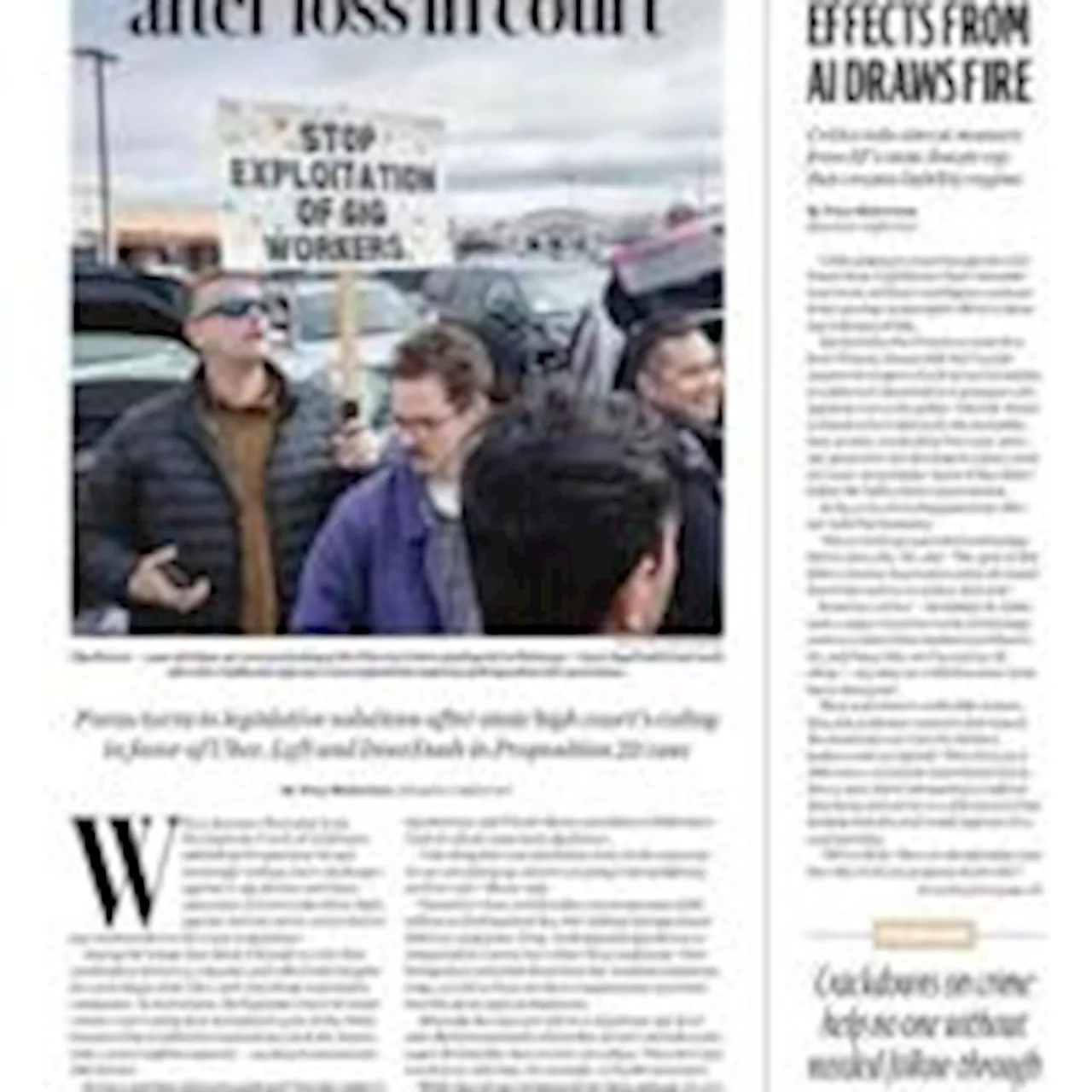 Page A1View the San Francisco for Wednesday, July 31, 2024
Read more »
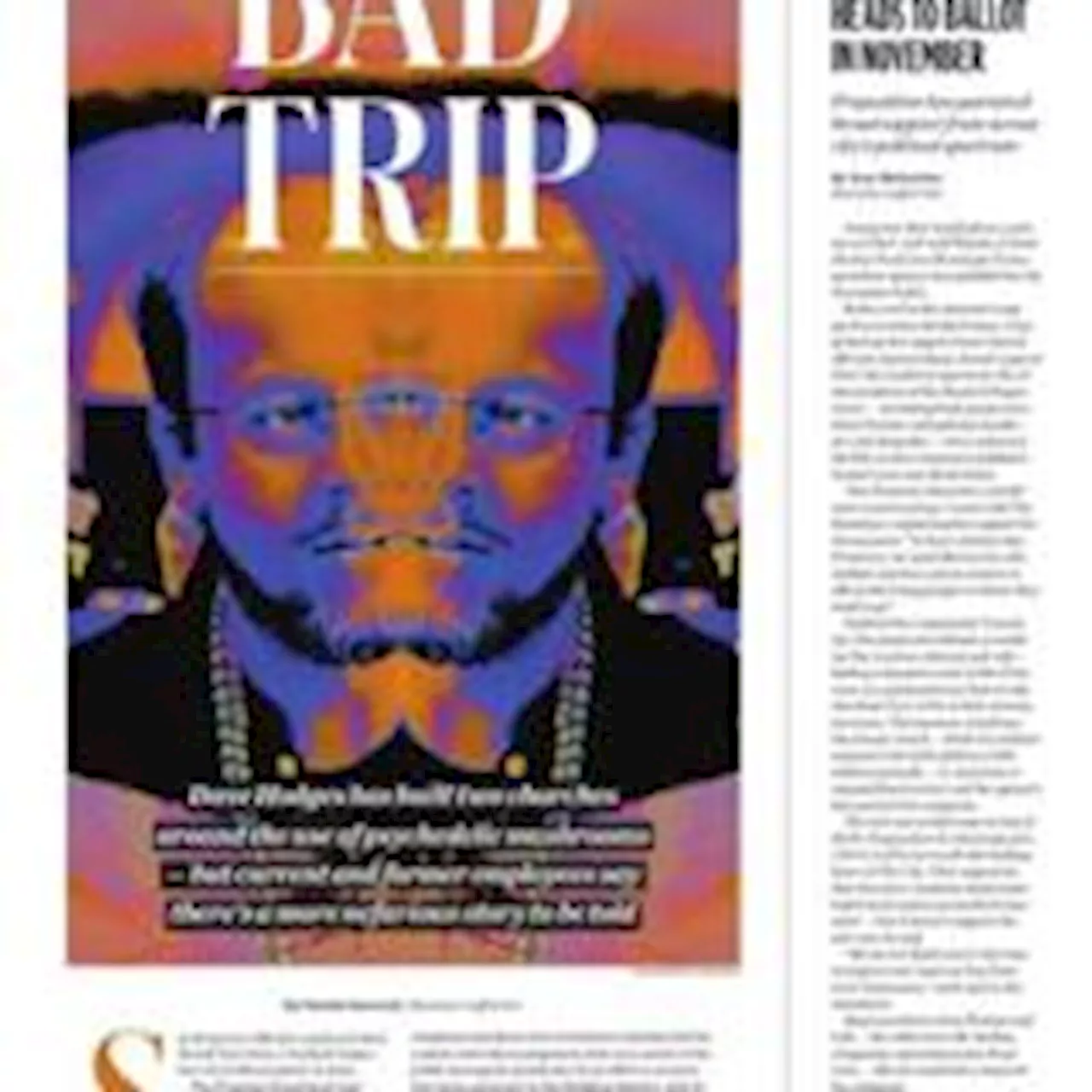 Page A1View the San Francisco for Thursday, August 1, 2024
Read more »
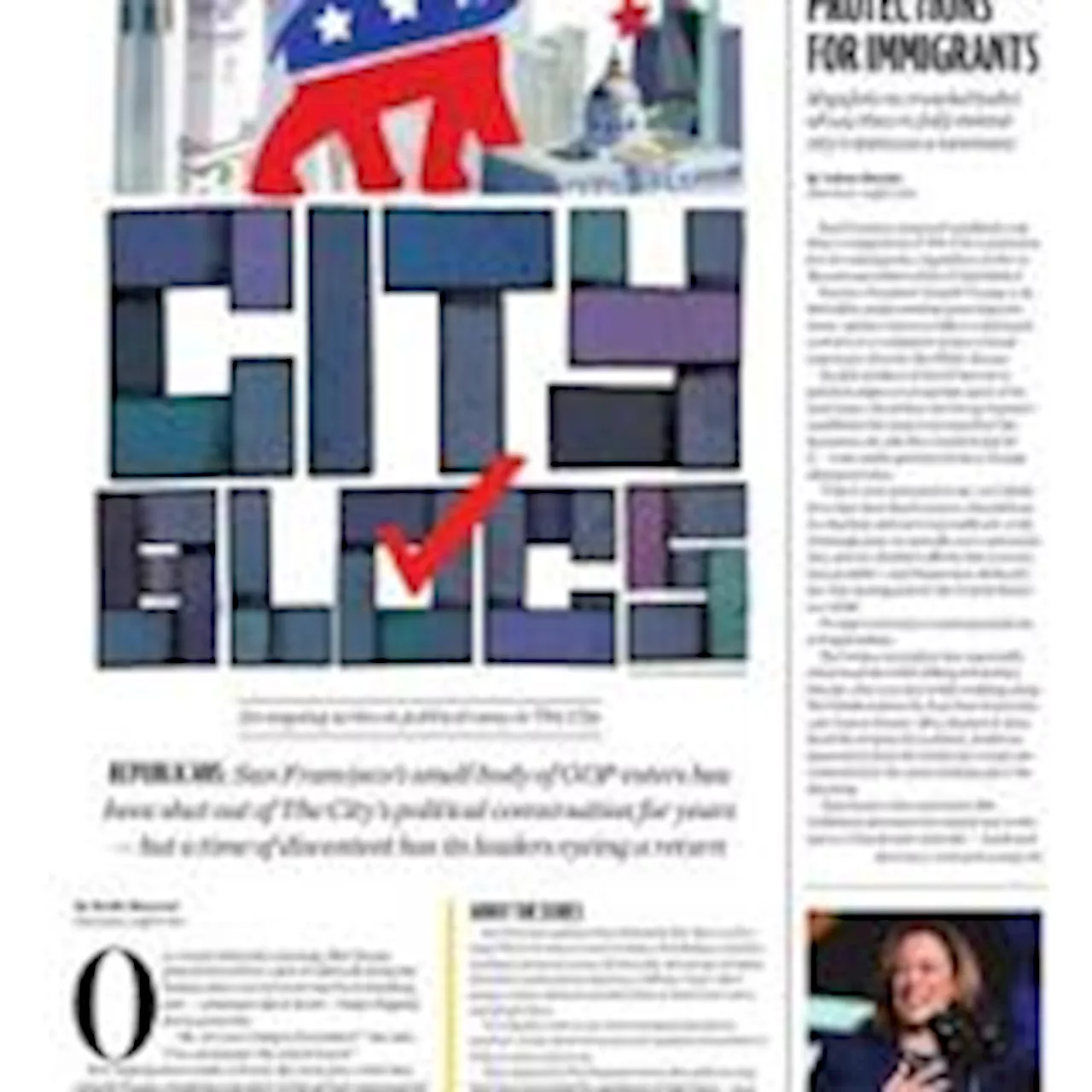 Page A1View the San Francisco for Sunday, August 4, 2024
Read more »
 Page A1View the San Francisco for Wednesday, August 7, 2024
Read more »
 Page A1View the San Francisco for Thursday, August 8, 2024
Read more »
 Page A1View the San Francisco for Sunday, August 11, 2024
Read more »