
US scientists have developed a solid-state lithium battery with a solid electrolyte, boosting EV safety, range, and efficiency.
A research team from the U.S. has developed an artificial intelligence-based framework that can potentially speed up the development of next-generation batteries by identifying molecules with ideal electrolyte properties.
The new method, developed by Ritesh Kumar, PhD, a postdoctoral fellow working in the Amanchukwu Lab at the University of Chicago Pritzker School of Molecular Engineering and his team, evaluates and ranks potential battery electrolyte candidates using a metric called the ‘eScore’.Using artificial intelligence and machine learning, the system assesses electrolyte molecules across three key performance criteria, including ionic conductivity, oxidative stability, and Coulombic efficiency, properties that are often difficult to optimize simultaneously.According to Kumar, while electrolyte development typically involves trade-offs, as molecules that offer high stability often lack conductivity, and vice versa, the new tool helps identify candidates that can meet multiple performance requirements simultaneously.Training AITo build the training dataset, the researchers manually compiled data from over 250 scientific studies spanning more than 50 years of lithium-ion battery research. Much of the relevant information existed only in image form, whether charts or tables embedded in journal figures, and required manual entry.Once trained, the AI system could score candidate molecules based on their predicted performance, including some it had never encountered. The model identified a molecule that matched the best existing commercial battery electrolytes in one case.According to the research team, the innovative approach shifts from the traditional trial-and-error methods often used in battery research.They further explained that exploring every possible electrolyte combination using lab testing alone would be nearly impossible, with the number of potential candidate molecules estimated to go as high as 10⁶⁰.“It would have been impossible for us to go through hundreds of millions of compounds to say, ‘Oh, I think we should study this one,'” Amanchukwu stated, and compared using AI in research to listening to music online.Like music recommendation algorithms, the AI learns patterns to predict the most promising molecules. Amanchukwu stated that the next step is developing an AI that doesn’t just pick songs, but also creates playlists, thus paving the way for the design of entirely new molecules.Next steps aheadThe team reportedly began manually curating the AI training dataset in 2020, extracting thousands of potential compounds from over 50 years of battery research, much of it buried in charts, figures, and diagrams. Since most large language models can only interpret text, they have to input the values by hand, which involves highlighting they highlight, which is time-consuming.“Even the models today struggle with extracting data from images,” Amanchukwu said in a press release, adding that manual data entry is necessary due to formatting issues, as key information is often embedded in images rather than text.The research team’s AI-driven workflow for electrolyte discovery.Credit: Kumar et al., Chemistry of Materials . DOI: 10.1021/acs.chemmater.4c03196Despite the dataset’s size, the researchers emphasized that training the model was only the beginning. The AI was evaluated on molecules it had never seen before to test its true potential. It performed well on those chemically similar to known compounds but struggled with unfamiliar ones.Now the team is focused on overcoming its next major challenge, which involves training the AI model to accurately predict the performance of molecules in completely different chemical spaces. This is an essential step toward advancing next-generation battery design.The study has been published in the journal Chemistry of Materials.
Anode Battery Battery Electrolytes Cathode Electrolyte Energy &Amp Environment EV Lithium Storage Sustainability
United States Latest News, United States Headlines
Similar News:You can also read news stories similar to this one that we have collected from other news sources.
 ‘We gotta vote’: South County turns out to elect their next District 1 county supervisorWith mail-in ballots the overwhelming preference, vote centers saw a slow Election Day morning — but voters say too much is at stake to skip voting.
Read more »
 Atkins becomes next SEC chair: What’s next for the crypto industryThe SEC now has a chairman in Paul Atkins, who’s state priority is to create a legal framework for crypto.
Read more »
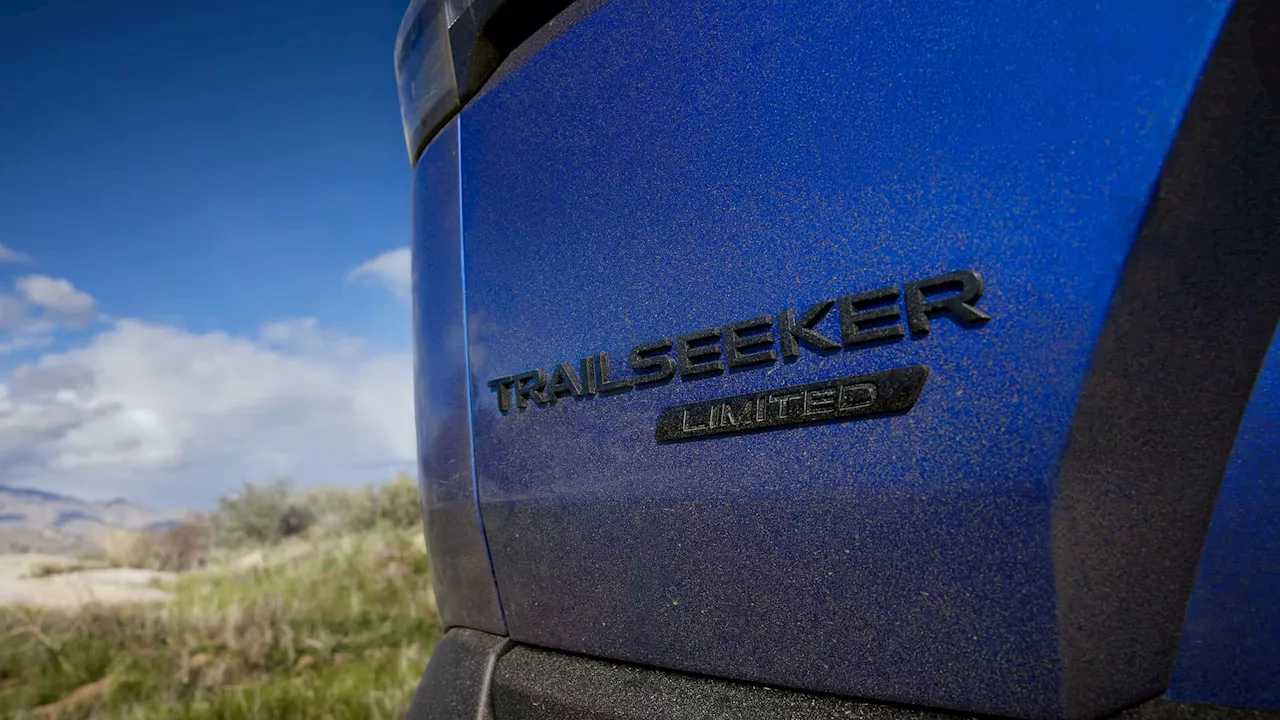 2026 Subaru Trailseeker: Finally, Another Subaru EVSubaru's next electric SUV will debut at the New York International Auto Show next week.
Read more »
 BenQ Unveils Two New 4K HDR Home Cinema Projectors—Including One With 4K/120Hz Gaming SupportBoth models will feature next-generation Solid-State Illumination and BenQ’s exclusive AI Cinema technology.
Read more »
 Date set for conclave to elect next pope, Vatican says: What to knowCatholic cardinals have set a date for the conclave to elect Pope Francis' successor.
Read more »
 Giannis Antetokounmpo next team odds: Where will 'Greek Freak' play next season?The Bucks have a decision to make regarding their franchise cornerstone. To keep or not to keep Giannis Antetokounmpo? See what the odds say.
Read more »