
The free tool takes 15 minutes to administer and could increase screening access for stroke survivors and fill an unmet need for health care professionals.
A new screening tool for visual perception difficulties after stroke that takes just 15 minutes to complete could help improve diagnosis of visual perception problems common in stroke survivors, new research suggested.
The Oxford Visual Perception Screen was developed at Durham and Oxford universities in the United Kingdom and contains 10 tasks including object and face recognition, item counting, and reading. Investigators said clinicians can use screening results to identify which in-depth follow-up assessments are needed and rehabilitation options. The paper-and-pen based screen was designed to meet the need for a quick and easy-to-administer standardized assessment after stroke, lead author Kathleen Vancleef, PhD, associate professor, Department of Psychology, Durham University, Durham, the United Kingdom, told“There is certainly a place for the OxVPS because it will give more people access to screening for visual perception issues and will improve clinical practice compared to now, which is using more subjective assessments like observations or just asking stroke survivors if they have issues,” she said. “People aren’t always aware they have issues and in that way a lot of things are missed.”by the researchers showed that 94% of clinicians involved in visual perception deficit screening relied primarily on self-reports, which typically identify only about 20% of cases. Standardized tests like the Rivermead Perceptual Assessment Battery and the Occupational Therapy Adult Perceptual Screening Test are available, but Vancleef pointed out the Rivermead takes 45 minutes to 2 hours to complete. The OT-APST takes about 20 minutes to administer but relies on chunky testing materials like blocks. To test the tool investigators conducted a cross-sectional study that included108 older adults with no history of neurological or psychiatric conditions that affect daily life. They were recruited through social media. The median time to complete the OxVPS was 20 minutes . Data available for 107 participants showed distributions of the scores for each task were highly skewed, with many healthy volunteers achieving the maximum score on each task. For most tasks, the fifth centile scores can be used as the cut-off score and taken as indicative for visual perception impairment, Vancleef and colleagues said. The exceptions are the self-evaluation task and the strategy score of the figure copy task, which are evaluated qualitatively.< .001). Although visual acuity is known to decrease with age, the authors noted the correlation between the two was low, likely because visual acuity was measured with participants wearing their usual glasses or contacts. The OxVPS was also tested in eight stroke patients, half of whom had sensory vision issues but did not have a brain injury and the other half who had a brain injury. “What we wanted to illustrate was that our tool is sensitive to pick up brain-related visual issues, that you don’t get false positives with people who have a brain injury but might not have difficulty with seeing things because of their cataracts or their glaucoma,” said Vancleef. “The people with only cataracts or glaucoma might make a mistake or two, nothing too serious, while the people with a brain injury have clear difficulties with the tasks,” she added.The authors noted that the age range of the normative sample is reflective of stroke patients, nearly all participants were white, 73% had higher education, and that a strong understanding of English language was needed to complete the screening test. A full validation study is underway in more than 200 stroke patients, with results expected later this year, Vancleef said. The OxVPS is currentlyIndividuals with basic training in therapy can learn to use the OxVPS by watching a 20-minute video, she added. “For interpretation, a stronger clinical background is required because you need to look at the results in the wider context of the patient.” The study was funded by the National Institute for Health and Care Research and the Stroke Association through fellowships awarded to Vancleef and co-author Nele Demeyere. The authors reported no relevant conflicts of interest.All material on this website is protected by copyright, Copyright © 1994-2025 by WebMD LLC. This website also contains material copyrighted by 3rd parties.
Cerebrovascular Accident CVA Cerebrovascular Accident (CVA) Preventive Screening Screening
United States Latest News, United States Headlines
Similar News:You can also read news stories similar to this one that we have collected from other news sources.
 New Portable Tool Uses Vortex Rings to Extinguish Fires EfficientlyResearchers at Ohio State University have developed a novel, portable firefighting tool that utilizes vortex rings and conductive aerosols to extinguish fires more efficiently and environmentally friendly than traditional methods. The device, worn on the arm, propels aerosol-filled vortex rings that disrupt combustion and quickly put out flames.
Read more »
 AI Tool DeepSeek May Pose National Security Risk by Sharing User Data with Chinese GovernmentDeepSeek, an AI platform developed by a Chinese-backed company, has raised national security concerns due to its potential to send user data directly to the Chinese government. Cybersecurity experts discovered hidden code in DeepSeek's programming that appears to facilitate data transfer to CMPassport.com, a Chinese government-owned website. This discovery fuels fears that DeepSeek, while offering advanced AI capabilities at a lower cost, may compromise user privacy and national security interests.
Read more »
 TikTok Owner’s New AI Tool Makes Lifelike Videos From A Single PhotoTikTok parent company ByteDance unveils OmniHuman, an AI system that can generate realistic videos of people from just one picture.
Read more »
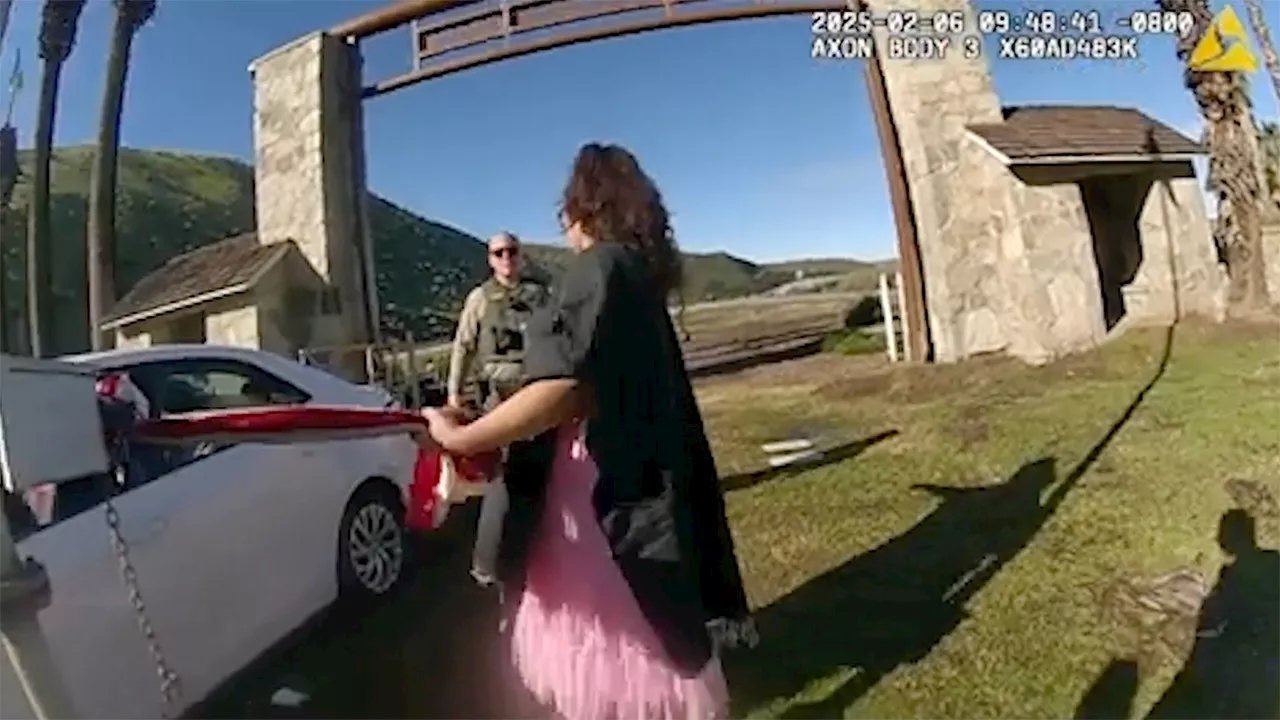 Woman Arrested After Replacing American Flag with Mexican Flag at California ParkA woman was arrested in California for replacing the American flag with a Mexican flag at a park and threatening law enforcement officials.
Read more »
 Germany Claims Green Extremist Anti-Car Vandalism May Have Actually Been Russian False FlagSource of breaking news and analysis, insightful commentary and original reporting, curated and written specifically for the new generation of independent and conservative thinkers.
Read more »
 Microbiome Biomarker May Flag Spondyloarthritis in Crohn’sPatients with Crohn’s disease and spondyloarthritis have a unique composition of enteric bacteria that may differentiate them from people without joint involvement.
Read more »