
Scientists have developed a prototype nuclear battery using radiocarbon that could power small devices for decades without recharging.
Lithium-ion batteries used in devices like cell phones and electric vehicles typically last only a few hours or days before needing a recharge. Over time, and with continued use, they degrade and require charging more frequently, prompting the need for innovative solutions to extend battery life and reduce the inconvenience of constant recharging.
To tackle this challenge, researchers from the Daegu Gyeongbuk Institute of Science & Technology in South Korea have developed a prototype nuclear battery using radiocarbon – a radioactive isotope of carbon – that could power small devices for decades without recharging, offering a safer and longer-lasting alternative to Li-ion batteries.Su-Il In, PhD, a DGIST professor and Royal Society of Chemistry fellow, says frequent charging isn’t just inconvenient but also limits the effectiveness of devices like drones and remote sensors and also harms the environment. Yet, with increasing demand for long-lasting batteries, he and his team have now shifted their focus to developing nuclear batteries as an alternative to lithium.Exploring the new approachWhile nuclear batteries generate power by harnessing high-energy particles from radioactive materials, not all radioactive elements emit harmful radiation. Some radiation, like beta particles, can be safely blocked with a thin sheet of aluminum, making betavoltaics a promising and safe option for nuclear batteries. In an interview with Interesting Engineering , In unpacked the science behind the concept and explained that radiocarbon, a by-product of nuclear power plants, is inexpensive, widely available, easy to recycle, and could theoretically power a battery for millennia as it degrades slowly.“I believe nuclear batteries are one of the few truly long-term solutions to the accelerating energy demand and environmental degradation,” In told IE. “Radiocarbon with its long half-life of 5,730 years and availability as a nuclear waste by-product, stood out as an ideal power source for safe, long-lasting energy.”Since a typical betavoltaic battery generates electricity when electrons strike a semiconductor, In and his team boosted the new design’s efficiency by using a titanium dioxide-based semiconductor – commonly used in solar cells – sensitized with a ruthenium-based dye.A citric acid treatment helps strengthen the bond between titanium dioxide and the dye, allowing beta rays from radiocarbon to trigger an electron avalanche that flows through the dye and is efficiently captured by the titanium dioxide. The new battery includes radiocarbon in both the dye-sensitized anode and cathode, increasing beta ray generation and reducing energy loss between the two electrodes. Tests showed a significant boost in energy conversion efficiency, increasing from 0.48 percent to 2.86 percent, compared to earlier designs that used radiocarbon only on the cathode. “As radiocarbon undergoes beta decay, it emits beta particles,” In says. “These beta electrons excite a dye material inside the battery, which then generates additional electrons, producing electricity.”Future potential of the nuclear batteryIn emphasizes that the battery needs no recharging, and that the aluminum shielding ensures zero radiation exposure to users. “They are extremely stable, safe from combustion or explosion, and function reliably under harsh conditions, whether hot or cold,” he continues. “This makes them ideal for use in remote sensors, space equipment, or medical devices.”The long-lasting potential could make nuclear batteries ideal for many applications, for instance, powering a pacemaker for a lifetime without the need for surgical replacements. Another positive aspect, according to In, is their environmental friendliness – unlike Li-ion batteries, which pose challenges through mining and disposal, radiocarbon batteries offer a cleaner alternative.Su-Il In, PhD, a professor at Daegu Gyeongbuk Institute of Science & Technology and Royal Society of Chemistry fellow.Credit: Photo courtesy of Su-Il InHowever, In notes that this betavoltaic design currently converts only a small fraction of radioactive decay into electricity, indicating that refining the shape of the beta-ray emitter and improving beta-ray absorbers could boost performance and power output. “By carefully selecting the isotope and optimizing the battery design, we can tailor the device to meet the required lifespan for specific applications – from years to decades,” In concludes. “As wireless power demand increases with AI, electric vehicles, and smart robotics, we must choose between continuing environmental damage or adopting safer, more sustainable nuclear battery technologies, the choice is ours.”
Cellphone Energy Innovation Nuclear Nuclear Battery Power Radiocarbon Research Science Sustainability
United States Latest News, United States Headlines
Similar News:You can also read news stories similar to this one that we have collected from other news sources.
 Scientists invent new drug candidates to treat antibiotic-resistant bacteriaThere's an arms race in medicine -- scientists design drugs to treat lethal bacterial infections, but bacteria can evolve defenses to those drugs, sending the researchers back to square one. A team describes the development of a drug candidate that can stop bacteria before they have a chance to cause harm.
Read more »
 Infinity Nikki’s spooky new event will put my cheapskate skills to the testInfinity Nikki’s new event Eerie Season adds new lore and new outfits to collect.
Read more »
 Scientists Discover New Coronavirus With Potential to Infect Humans: What to KnowScientists in China have found a new coronavirus in bats that could possibly infect humans, but the risk remains low for now.
Read more »
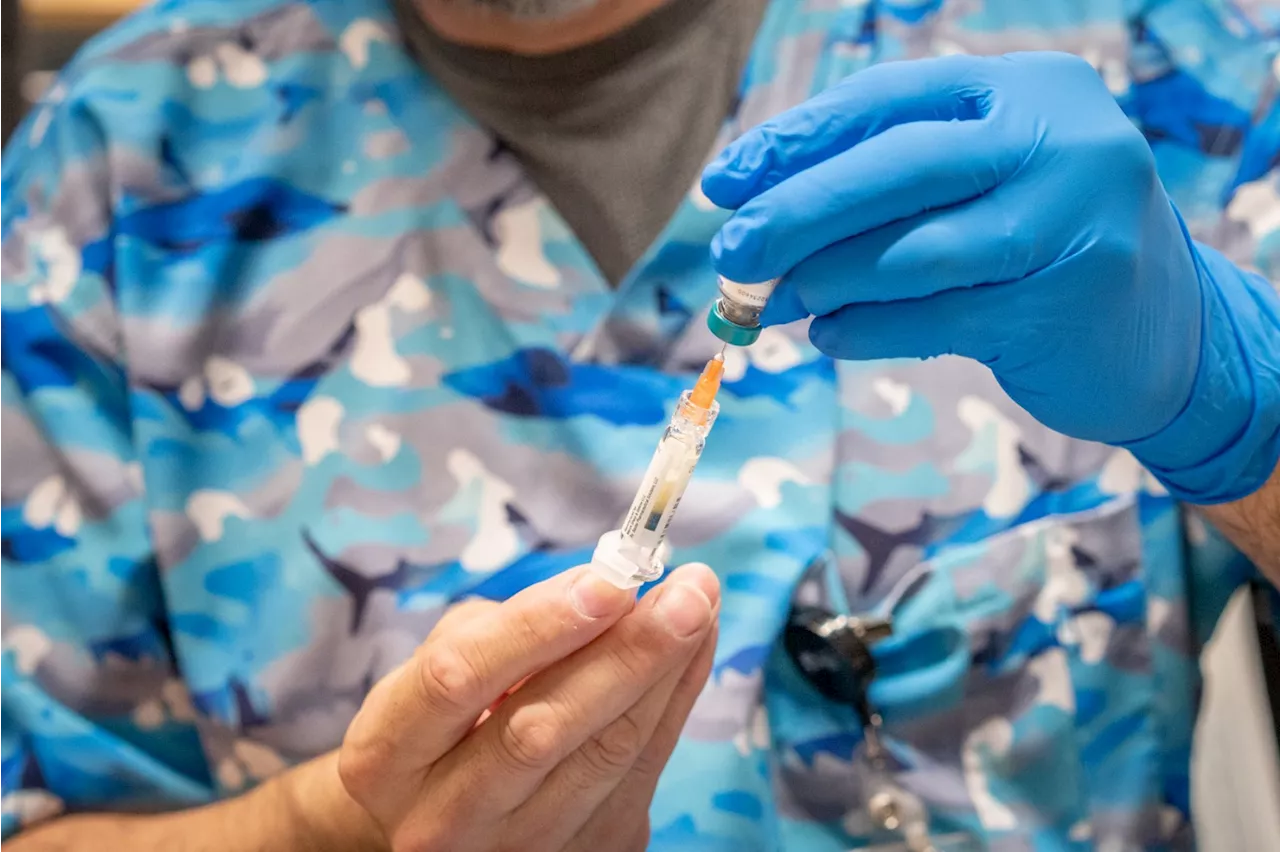 New Measles Cases Reported in New York City, New JerseyMore measles cases have cropped up in New York City and New Jersey as an outbreak, that's already left one child dead spreads, through Texas.
Read more »
 Meghan Markle's crew member describes what it was like working on Netflix show: 'Everyone has their own version of her'Royals Recap: Meghan Markle's new name, new Netflix show, new 'As Ever' products, more
Read more »
 Seahawks News 3/16: Seahawks roster will be markedly different in 2025New players, new schemes, and a new emphasis.
Read more »