
Nvidia has developed Cosmos, a platform that generates massive amounts of synthetic data to train AI-powered robots. Cosmos creates 'world foundation models' that simulate real-world environments and physics, enabling the creation of realistic video footage for training autonomous vehicles, humanoid robots, and other embodied AI systems.
Researchers have built a new"multiverse simulation" platform that can generate massive amounts of data to train advanced self-learning robots powered by artificial intelligence . The suite of tools, dubbed"Cosmos," lets researchers create"world foundation models" — neural networks that simulate real-world environments and the laws of physics to predict realistic outcomes, according to Nvidia, which engineered the platform.
These generative AI models can create synthetic data to train embodied or physical AI systems such as autonomous vehicles or humanoid robots. Training AI systems require massive amounts of data, but scientists estimate that we may run out of publicly available data by 2026. AI systems that interface with the real world, like robots, usually need real-world footage that is incredibly difficult to produce and costly to acquire. But creating genuinely useful synthetic data is also challenging, and one study previously warned that using poorly construed synthetic data could break down into unintelligible nonsense. Cosmos is designed to resolve these issues by letting scientists rapidly generate a monumental amount of artificial video footage based on real-world physics. Related: Robotics breakthroughs in 2024: Test your knowledge of the most exciting advancements in the field "Today's humanoid developers have hundreds of human operators performing thousands of repetitive demonstrations just to teach a couple of skills," Rev Lebaredian, vice president of Omniverse and simulation technology at Nvidia, said at a virtual news conference Monday at CES 2025 in Las Vegas."Today's AV developers need to drive millions of miles; even more resources-intensive is processing, filtering and labeling the thousands of petabytes of data captured, and physical testing is dangerous. Humanoid developers have a lot to lose when one robot prototype can cost hundreds of thousands of dollars." Simulating the multiverseA key component of this new platform is multiverse simulation, in which Cosmos combines with Nvidia's Omniverse software system to generate every possible future outcome in a specific scenario. This would then be fed into the training of a robot or self-driving car. Sign up for the Live Science daily newsletter nowGet the world’s most fascinating discoveries delivered straight to your inbox. By submitting your information you agree to the Terms & Conditions and Privacy Policy and are aged 16 or over.It uses diffusion models used in image generation — machine learning algorithms that generate data by adding"noise" to a dataset and then learning to remove the noise — as well as autoregressive models, which are statistical models used to predict the next step in a process. Together, the platform can take in text, images or videos and then generate footage to predict what comes next in a particular scenario in real time. RELATED STORIES—'This is a marriage of AI and quantum': New technology gives AI the power to feel surfaces for the 1st time—Chinese 'robot dog' that moves like a cat could revolutionize space exploration and asteroid mining "The ChatGPT moment for robotics is coming. Like large language models, world foundation models are fundamental to advancing robot and AV development, yet not all developers have the expertise and resources to train their own," Jensen Huang, founder and CEO of Nvidia, said in a statement."We created Cosmos to democratize physical AI and put general robotics in reach of every developer." The world foundation models created using Cosmos are also available under open-source licensing terms.
Artificial Intelligence Robotics Simulation Synthetic Data Autonomous Vehicles
United States Latest News, United States Headlines
Similar News:You can also read news stories similar to this one that we have collected from other news sources.
 Google's New Microchip Uses The Multiverse to Work Impossibly QuicklyThis is one of those rare moments reading something that makes it seem that science fiction will be with us now. Normally, advances creep up on us by a series of gradual improvements so that the boiled frog does not realise just how much its environment has changed.
Read more »
 Giants Have Best Chance at Top Draft Pick Per New SimulationFor the first time in modern seven-round draft history, the Giants have a good chance of landing the first overall pick.
Read more »
 Star Trek Just Introduced A New Starfleet To Explore The MultiverseThere's a Starfleet that explores the multiverse.
Read more »
 New simulation method sharpens our view into Earth's interiorHow does the Earth generate its magnetic field? While the basic mechanisms seem to be understood, many details remain unresolved. A team of researchers has introduced a simulation method that promises new insights into the Earth's core. The method simulates not only the behavior of atoms, but also the magnetic properties of materials.
Read more »
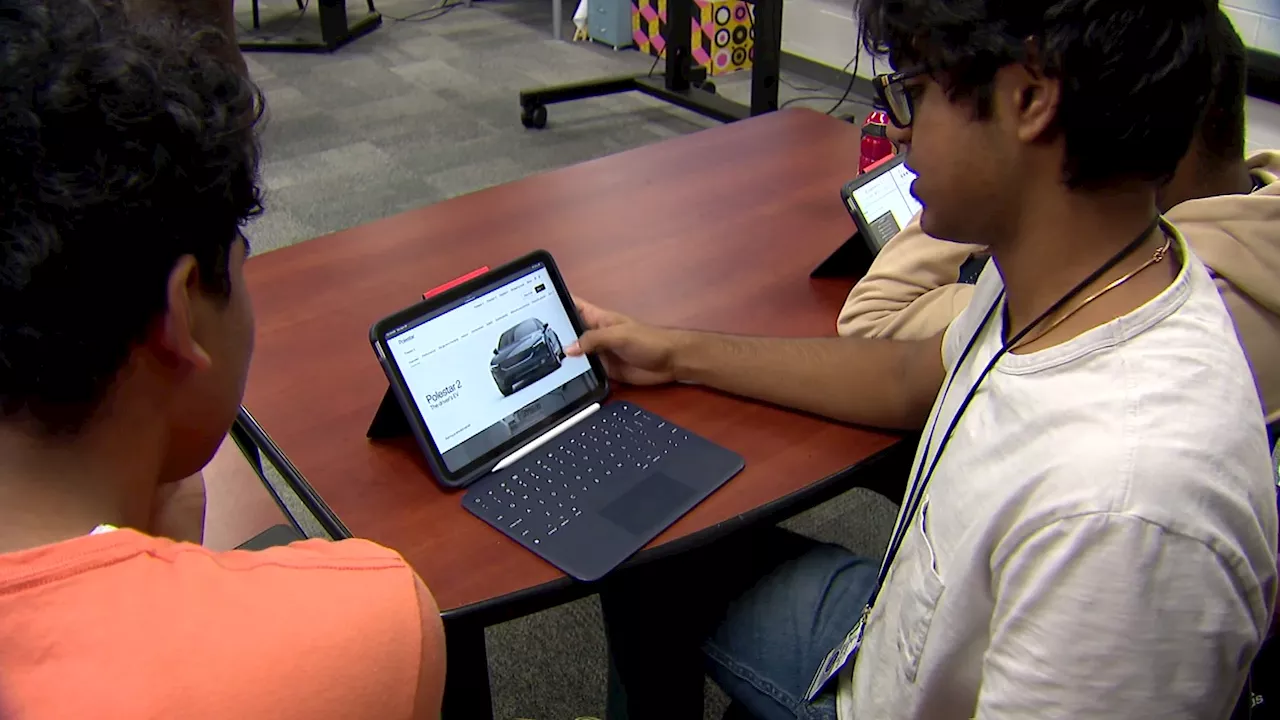 Math Comes to Life: New Tech High Students Learn Through Car Buying SimulationNew Tech High School students are learning about math's real-world applications through a car buying simulation. By calculating costs, negotiating prices, and understanding financing, they're connecting abstract concepts to tangible experiences.
Read more »
 Star Trek's New Multiverse Starship Has A Hidden MeaningCustom Star Trek: Lower Decks image of Captain Boimler and Lt. Boimler against a backdrop of the Anaximander flying into a rift
Read more »